How to Write Resume Skills Without Sounding Vague: 3 Principles That Turn Your Skills Section Into a Major Advantage
The 3 most common problems with resume skills sections: keyword stuffing, vague descriptions, and irrelevant listings. 3 principles to fix them — categorize for logic, add proficiency levels for credibility, and tailor to the job for relevance — turning your skills section from a liability into an advantage.
The skills section is the most easily ruined part of any resume. Most people either stuff it with keywords making it look hollow, write vague descriptions that reveal nothing about their actual level, or list irrelevant skills that waste precious space. 3 principles — categorize, add proficiency levels, and tailor to the job — will transform your skills section from a liability into a genuine advantage.
The 3 Most Common Problems with Skills Sections — Why Your Skills Look Shallow
Before discussing how to write it well, let's look at the 3 typical problems most people have with their resume skills section. Check which ones apply to you.
- Problem 1: Keyword stuffing, like reading a restaurant menu. This is the most common issue — listing every skill you've ever heard of, touched, or briefly used, terrified of missing any. For example: "Java, Python, C++, Go, Rust, JavaScript, TypeScript, React, Vue, Angular, Node.js, Docker, K8s, AWS, MySQL, Redis, MongoDB, Kafka, RabbitMQ..." — over 20 items listed in one breath. It looks like you know everything, but interviewers immediately recognize it as padding. Your skills section isn't a tech stack inventory. The more you list, the more insecure you appear — people who are truly proficient only write what they're most confident about.
- Problem 2: Vague descriptions that don't reveal actual ability. "Familiar with Java," "Basic knowledge of Python," "Proficient in SQL" — the problem with this approach is that "familiar," "basic knowledge," and "proficient" mean completely different things to different people. Your "familiar" might mean 3 years of experience across multiple projects; someone else's "familiar" might mean reading a few tutorials. Without specifics, interviewers can only default to the lowest interpretation. Worse, many people use "familiar" for every skill, making the entire list appear to be at the same level — which is clearly unrealistic.
- Problem 3: Irrelevant skills wasting valuable space. Applying for a front-end developer position with "Proficient in Word, Excel, PowerPoint" in your skills section — these skills add zero value for a front-end role and instead make interviewers think you have no impressive professional skills to showcase, so you're padding with office software. Similarly, listing "Expert in Linux administration" when applying for a product manager role is equally irrelevant. Every line of resume real estate is precious. Irrelevant skills don't just fail to add points — they dilute your core strengths.
Principle 1: Categorize — Give Your Skills Section Logic and Structure
Don't dump all your skills into a single list. Group them by category. The benefits: interviewers can quickly locate your core competencies, and you can highlight your areas of strength rather than letting all skills blur together and dilute each other.
- How to categorize: Group by your professional domain. For example, back-end development could be divided into "Programming Languages," "Frameworks & Middleware," "Databases," and "DevOps Tools"; front-end development into "Programming Languages," "Front-End Frameworks," "Build Tools," and "UI/Design"; data roles into "Programming Languages," "Data Processing," "Machine Learning," and "Visualization Tools." Categorization standards aren't fixed — the core logic is helping interviewers see your capability map at a glance.
- Another benefit of categorizing: Being honest about gaps looks better than hiding them. If you dump everything together, interviewers may suspect you're deliberately concealing weaknesses. But if you categorize and a particular category only has 1-2 skills, interviewers actually appreciate your honesty — knowing what you're good at and what you're not is itself a professional quality. Rather than padding with irrelevant skills, honestly showcase your areas of strength.
- Common categorization mistakes: First, too granular — splitting "Programming Languages" into "Object-Oriented Languages," "Functional Languages," and "Scripting Languages" is unnecessary; 3-5 major categories suffice. Second, too broad — dividing everything into "Technical Skills" and "Soft Skills" is basically no categorization at all. Third, inconsistent standards — some categories by tech stack, some by usage, some by proficiency level, creating logical confusion. Stick to one categorization dimension throughout.
- Should you include soft skills: In most cases, no. "Strong communication skills," "Team collaboration ability," "Ability to work under pressure" — these are unpersuasive in a skills section because they can't be verified. Soft skills should be demonstrated indirectly through project experience and work achievements, not self-labeled. The only exception: if the job explicitly requires a specific soft skill (e.g., "business negotiation" for a sales role), you can include it, but back it up with concrete examples.
Principle 2: Add Proficiency Levels — Give Your Skills Section Credibility and Differentiation
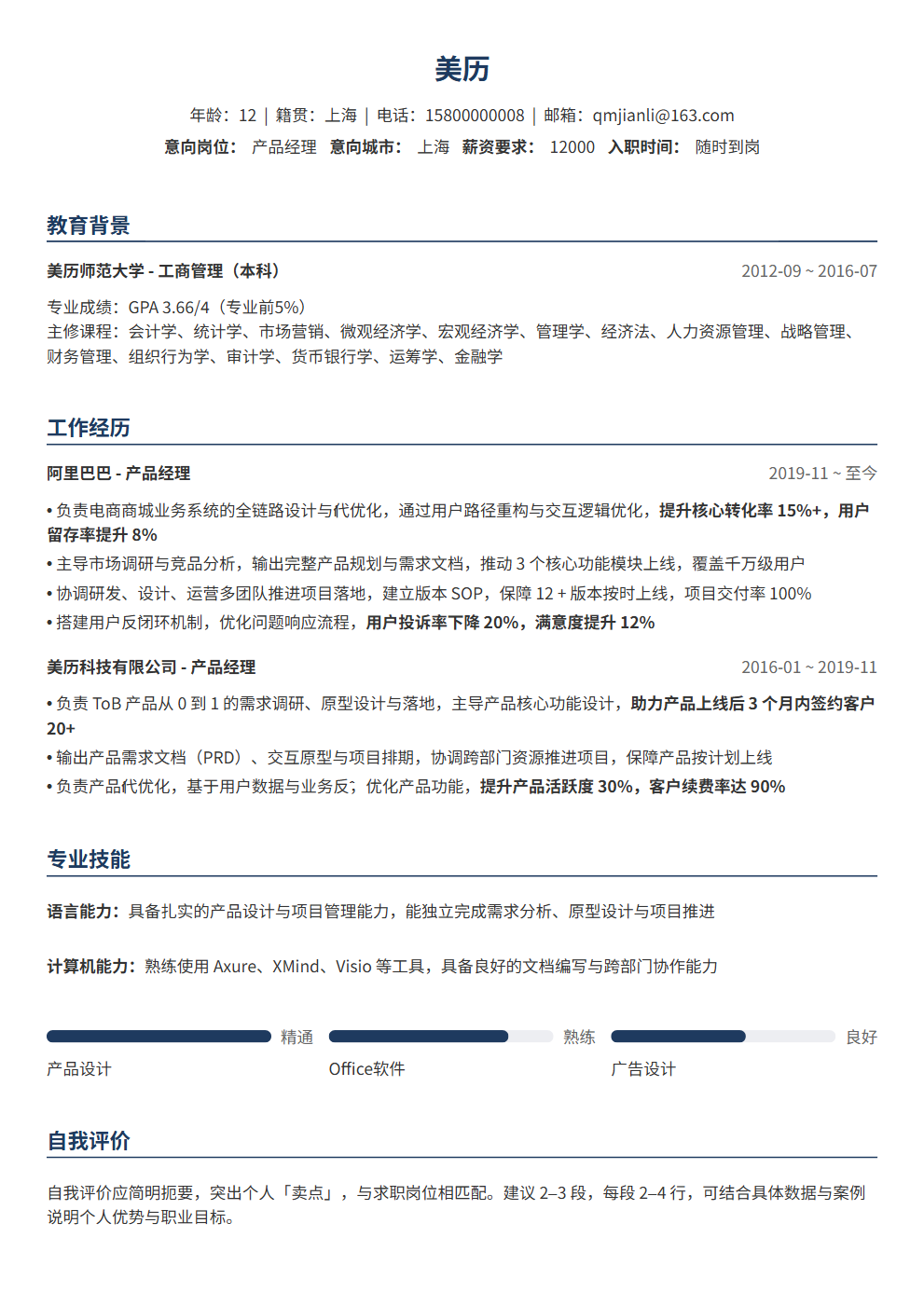
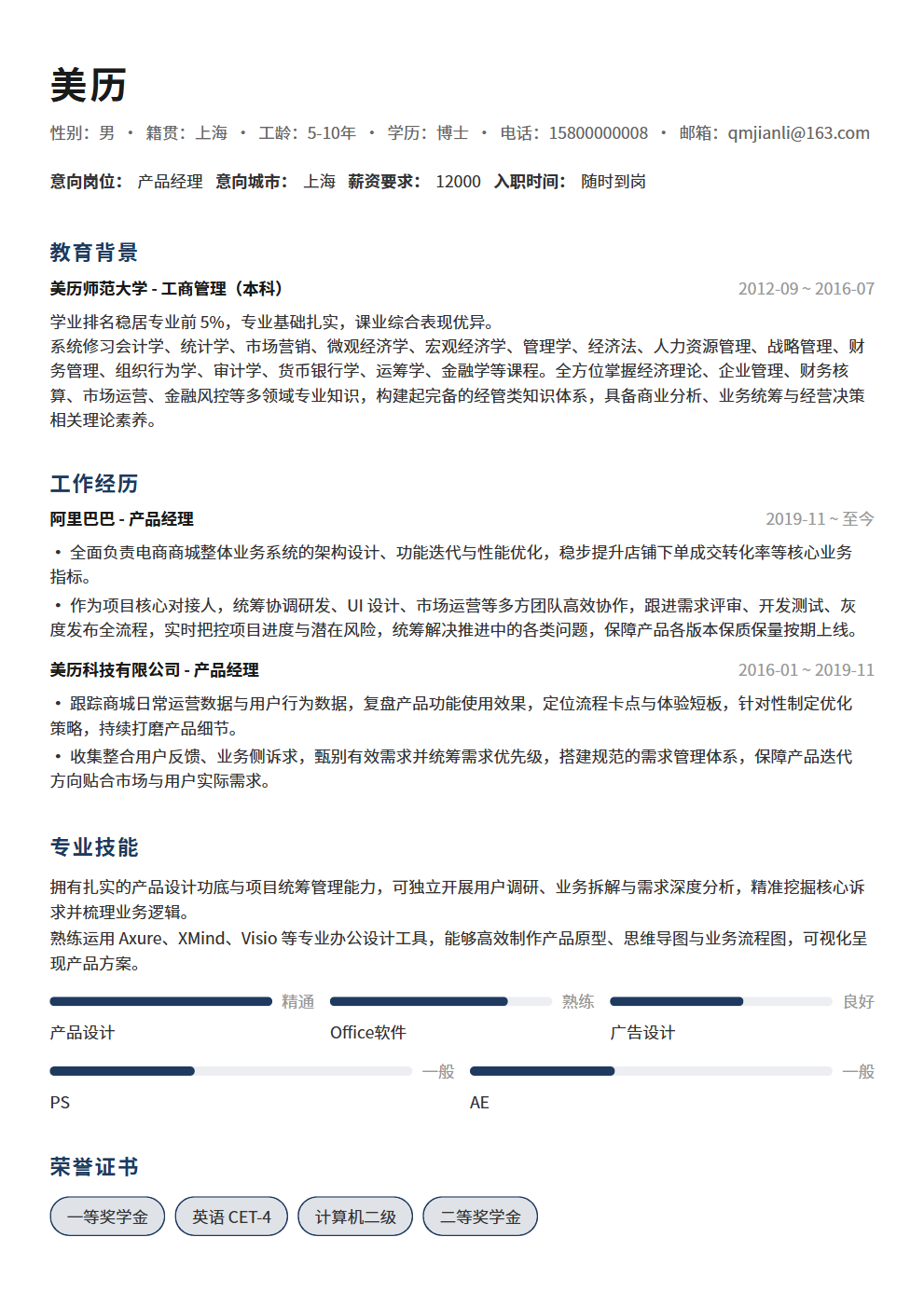
The worst thing about resume skill descriptions is a whole column of "familiar with." Adding proficiency annotations lets interviewers immediately see your strengths and weaknesses, and gives you more confidence in interviews — because your proficiency labels are honest and can withstand scrutiny.
- Three ways to indicate proficiency: First, text descriptions — "Expert/Proficient/Familiar" in three tiers, simple and direct but subjective. Second, duration of use — "3 years of Java development experience," "2 years of React project experience," objective but doesn't reflect depth. Third, capability descriptions — "Can independently complete XX," "Can optimize XX," "Understand the basic principles of XX," most specific but takes up space. Recommended approach: combine methods — use capability descriptions for core skills, text descriptions + duration for supporting skills.
- How to define "Expert," "Proficient," and "Familiar": This is the most frequently questioned aspect. Set yourself a strict standard — Expert: can solve 90%+ of problems in the domain, can mentor others, can make architectural decisions; Proficient: can independently handle routine work in the domain, can solve difficult problems through research; Familiar: knows basic concepts and usage, can complete simple tasks under guidance. By this standard, most people's "Expert" labels should be downgraded to "Proficient" or even "Familiar." Honest labeling beats inflated labeling — interviewers' expectations for "Proficient" are far lower than for "Expert," dramatically reducing the chance you'll be stumped by follow-up questions.
- Practical example of proficiency labeling: Basic approach — "Familiar with Java, Familiar with Spring, Familiar with MySQL" — zero differentiation. Labeled approach: "Java (Proficient, 4 years project experience, can independently design high-concurrency architectures) | Spring Boot (Proficient, 3 years experience, can customize Starters and perform sourcecode-level debugging) | MySQL (Proficient, 3 years experience, can perform index optimization and slow query analysis) | Redis (Familiar, 1 year experience, can design basic caching solutions)." Each skill has a level, duration, and capability boundary — interviewers immediately understand your actual abilities.
- Important notes on proficiency labeling: First, there should be variation between core and supporting skills — if every skill is labeled "Proficient," interviewers will question your self-assessment ability. Second, proficiency labels must align with project experience — listing "Expert in Python" but having zero Python projects is an immediate red flag. Third, be prepared for deep-dive questions in interviews — any skill labeled "Proficient" will be thoroughly probed, so make sure you can handle it.
Principle 3: Tailor to the Job — Give Your Skills Section Relevance and Hit Rate
Your resume skills section isn't your technical autobiography — it's a precision match for the target position. Every time you apply for a different role, your skills section should be adjusted accordingly. This yields a far higher hit rate than mass-submitting the same resume everywhere.
- Why tailoring is so important: The first step in HR resume screening is keyword matching. If the job description says "Familiar with React, TypeScript, Node.js," your skills section must contain these keywords, or you'll be filtered out in the first round. But keyword matching is just step one — you also need to show interviewers you have actual capability, not just keywords. Tailoring isn't simply copying words from the JD; it's precisely connecting your real skills with the job's requirements.
- Three steps to tailoring: Step 1, extract core skill keywords from the JD — typically listing 5-10 skill requirements marked as "Required" and "Preferred." Step 2, filter your skill inventory for JD matches — prioritize "Required" items, then "Preferred" items; don't include irrelevant skills. Step 3, adjust skill ordering — place the most relevant skills first, so interviewers immediately see the match. A well-crafted skills section should let interviewers determine "this person's skills match the role" within 5 seconds.
- Common tailoring mistakes: First, fabrication — if the job requires Kafka but you've never used it, don't write "Familiar with Kafka." You'll be exposed the moment they ask. Second, over-trimming — deleting all tangentially related skills to match the job, leaving only 3 items and making you look thin. Keep some related but non-core skills to demonstrate technical breadth. Third, one resume for all jobs — using the same skills section for both front-end and back-end positions pleases neither. Prepare at least 2-3 versions of your skills section for different directions.
- Advanced tailoring technique: Embed job keywords within your skill descriptions. For example, if the job requires "high-concurrency experience," don't just write "Familiar with Java concurrent programming" — write "Java concurrent programming (Proficient, with high-concurrency optimization experience on systems with 1M+ DAU)." Binding job requirement keywords to your specific experience is far more persuasive than simply listing skills. This approach eliminates the need for interviewers to guess whether your skills meet the job's requirements — you tell them directly.
Make Your Skills Section a Genuine Advantage
3 principles summarized: Categorize (give your skills section logic and structure — 3-5 major categories suffice; maintain one categorization dimension; soft skills generally shouldn't go in the skills section), add proficiency levels (give your skills section credibility and differentiation — combine text descriptions + duration + capability descriptions; strictly define Expert/Proficient/Familiar; create variation between core and supporting skills; ensure proficiency labels align with project experience), tailor to the job (give your skills section relevance and hit rate — extract JD keywords for precision matching; adjust skill ordering; don't fabricate or over-trim; embed job keywords within skill descriptions). Whether your skills section works isn't about how many skills you list — it's about whether interviewers can determine "this person's skills highly match the role" within 5 seconds. If you're optimizing your resume's skills section, try BeautyResume's resume editor — its skills module supports categorized display and proficiency annotations, helping you write every skill with logic and credibility, turning your skills section into a genuine advantage.