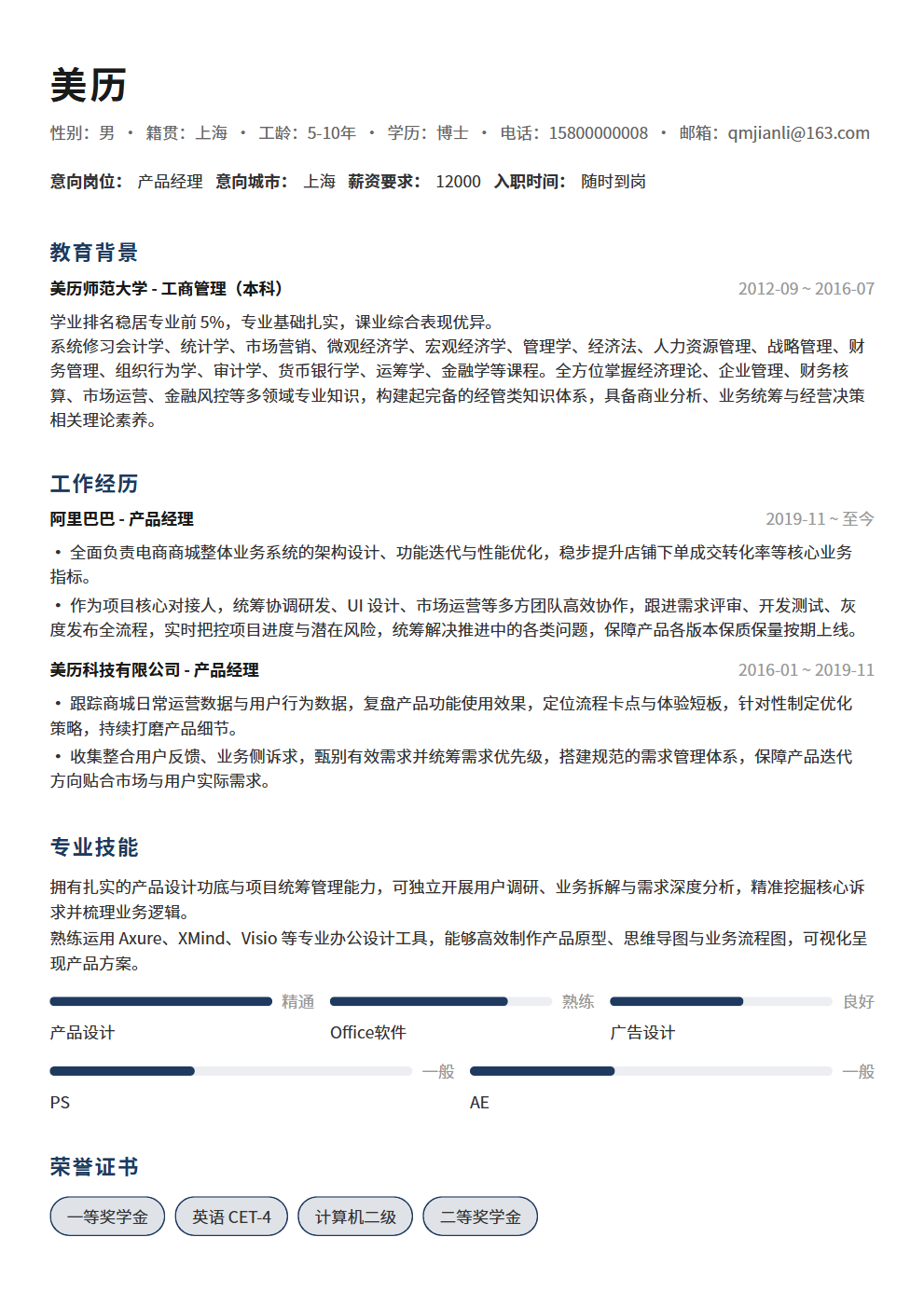
Stop Writing “Seeking Related Work”: 3 Resume Objective Formulas, Examples, and 5 Pitfalls
Writing "seeking related work" as your career objective? That vague phrase tells HR you don't know what you want. 3 precise positioning formulas help you craft a career objective HR understands at a glance: Role + Industry, Skill + Direction, Goal + Value. Make your resume hit the target from the very first line.
Is Your Career Objective Saying Nothing at All?
Open your resume and look at the career objective section. What does it say? "Seeking a related position," "Looking for growth opportunities," "Hoping for a challenging role" — if you wrote any of these, congratulations: HR reads that line and thinks only one thing — this person has no idea what they want.
Your career objective is the "positioning anchor" of your resume. HR scans it in 3 seconds, and the first thing they look for is what you're targeting. A vague objective makes everything that follows pointless. Today I'll give you 3 formulas to make your career objective precise down to the job title level.
Why "Seeking Related Work" Is a Fatal Mistake
This phrase commits the most deadly sin of career objectives — zero information value.
- HR can't tell what role you're applying for, so they can't assess your fit
- It signals a lack of clear career planning
- When another candidate writes "Applying for Social Media Manager" and you write "Seeking related work," the contrast is brutal
- Many ATS resume screening systems filter by keyword matching — vague phrasing gets you automatically rejected
Remember: a career objective is not a wish list — it's a positioning statement. Your job is to make HR think, "This person is specifically targeting our role."
Formula 1: Role + Industry Positioning
The most direct and commonly used approach, ideal for job seekers with a clear target.
Formula: Target Job Title + Target Industry/Domain
Examples:
- Product Manager in the Internet/Tech Industry
- Embedded Systems Engineer in the EV Industry
- Brand Marketing Specialist in FMCG
- Data Analyst in FinTech
The core logic here is "dual anchoring": the role anchors your function, and the industry anchors your lane. HR knows instantly what you do and where you want to do it.
Note: Always use standard job titles from the JD — don't invent your own. "Product person" is not "Product Manager"; "Data guy" is not "Data Analyst."
Formula 2: Skill + Direction Positioning
Ideal for career changers or those applying for broadly defined roles.
Formula: Core Skill/Experience + Target Development Direction
Examples:
- 5 years B2B sales experience, seeking Customer Success roles in SaaS
- 3 years content operations experience, aiming to deepen expertise in short-video operations management
- Full-stack development background, targeting AI application-layer product R&D
- Solid financial analysis skills, pivoting toward Business Analytics / FP&A
This approach benefits from "skill endorsement + clear direction." You tell HR what you can do first, then where you want to go — showing both capability and intent.
Best for: Career changers, fresh graduates, roles with fuzzy boundaries (like "Operations," which has too many sub-types).
Formula 3: Goal + Value Positioning
Best for mid-to-senior professionals, emphasizing the value you bring to the table.
Formula: Career Goal + Core Value You Deliver
Examples:
- Targeting E-commerce Operations Director, specializing in building user growth systems from scratch
- Seeking Tech Management role, capable of leading teams through high-concurrency system architecture design and delivery
- Aiming for Brand Strategy role, with experience independently managing 8-figure brand campaigns
This formula upgrades your objective from "what I want" to "what I can deliver." For senior roles, HR cares more about what problems you can solve than what title you're after.
Key point: Your value description must be specific. Don't write "extensive management experience" — write "led a 15-person team to deliver Project X."
How to Choose the Right Formula
Different people at different stages should pick different formulas:
- Fresh grads / Clear target: Use Formula 1 (Role + Industry) — simple, direct, HR gets it instantly
- Career changers / Fuzzy roles: Use Formula 2 (Skill + Direction) — showcase ability first, then state direction
- 3+ years experience: Use Formula 3 (Goal + Value) — let your value do the talking, outclass the competition
One iron rule: Only state one direction in your career objective. Don't write "Seeking Product Manager, Operations, or Data Analyst roles" — that's not an objective, that's a menu.
5 Common Pitfalls in Career Objectives
- Pitfall 1: Including salary expectations — the career objective is not the negotiation stage. Don't write "Expected salary: $8K–$12K/month"
- Pitfall 2: Listing multiple directions — "Product / Operations / Marketing" together makes HR think you're not specialized in any of them
- Pitfall 3: Stuffing with adjectives — "Passionate, proactive, challenge-seeking" barely works in a self-summary; in a career objective, it's a disaster
- Pitfall 4: Copying a senior title you can't back up — writing "Product Director" with only 2 years as a Product Assistant makes HR question your self-awareness
- Pitfall 5: Not tailoring per application — sending the same "Internet Operations" objective when Company B specifically wants "E-commerce Operations" kills your match rate
Career Objective Examples by Role
Here are standard examples for popular roles — feel free to adapt:
- Software Engineer: Backend Developer (Java), targeting Internet/FinTech industry
- Designer: UI/UX Designer, focusing on mobile product experience design
- HR: HR Specialist, specializing in recruitment and employee relations, targeting mid-to-large enterprises
- Finance: Financial Analyst, CPA qualified, aiming to develop toward FP&A
- Marketing: Brand Marketing Manager, 5 years FMCG integrated marketing experience, seeking to lead brand strategy
A Strong Career Objective Gives Your Resume Its Soul
Your career objective isn't decorative — it's the navigation system for your entire resume. When the objective is precise, your work experience, project highlights, and skills all revolve around that anchor point, forming a powerful logical chain. When the objective is scattered, your resume is just loose sand — HR finishes reading and still has no idea what you actually want.
Pick the right formula from these 3, and make your career objective the first selling point on your resume. If you're still struggling with overall resume optimization, BeautyResume offers professional templates and smart optimization suggestions — helping you express yourself precisely from the career objective all the way through every experience, so HR sees your value at first glance.