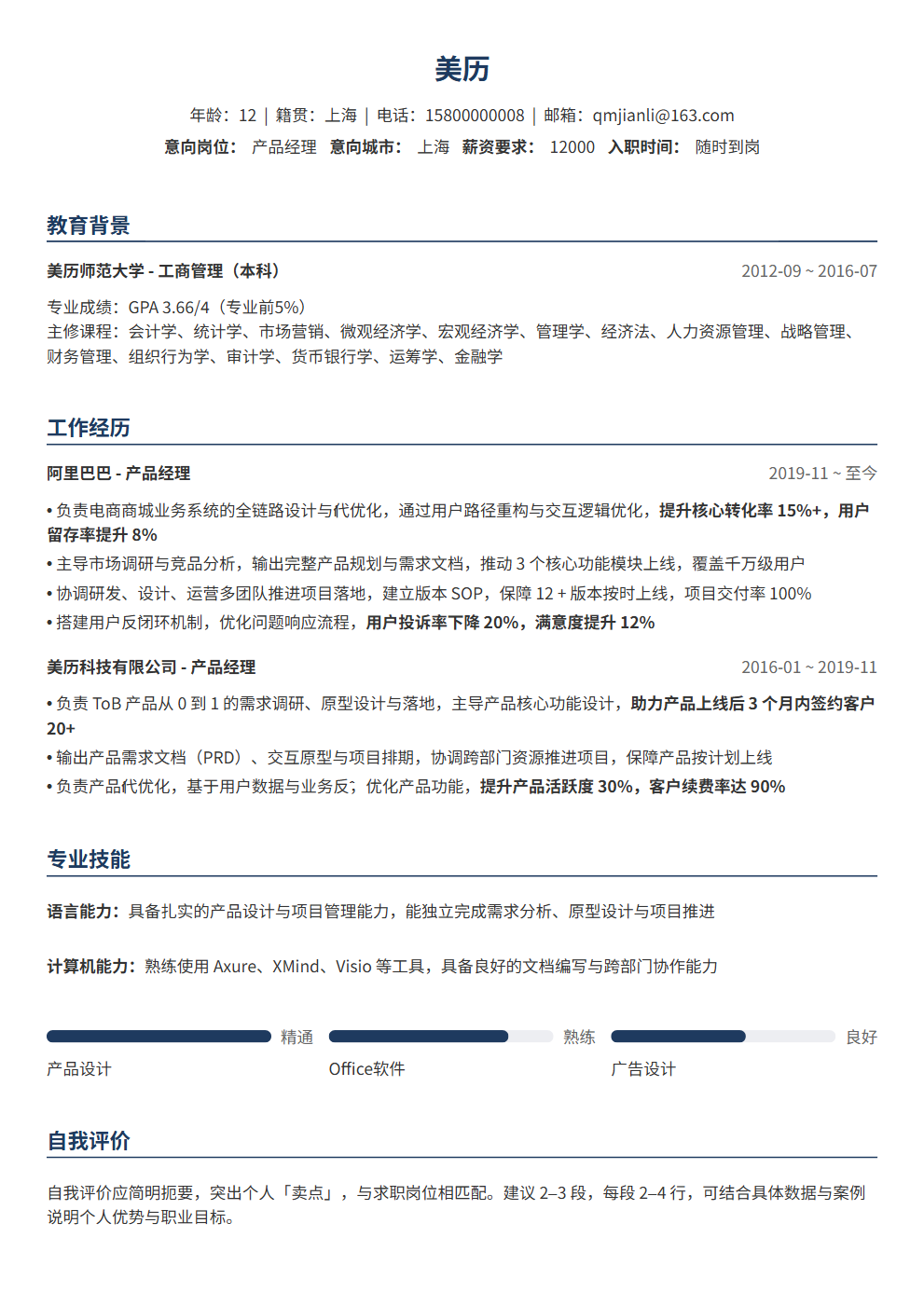
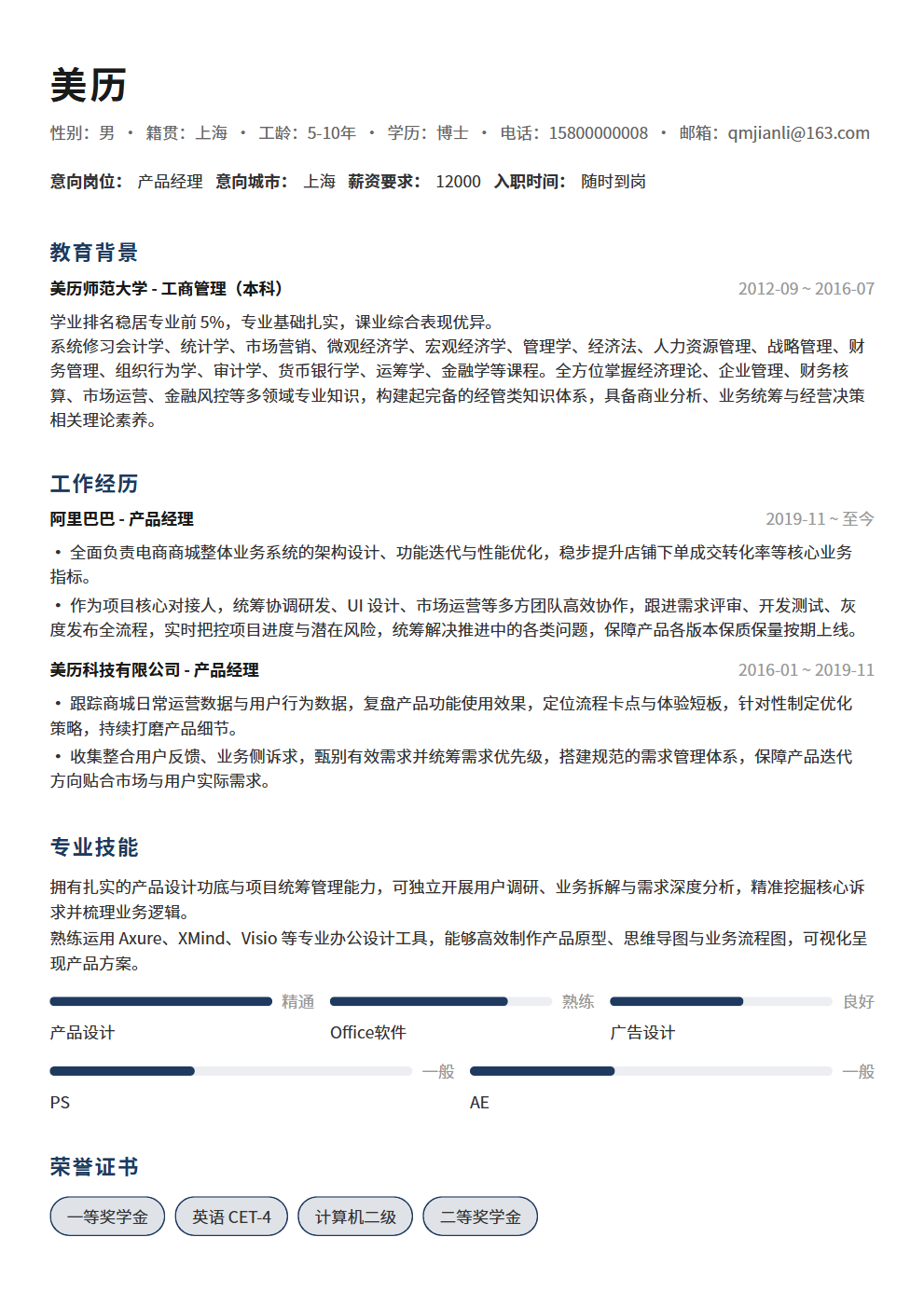
How to Write Project Experience on Your Resume? 3 Golden Formulas to Stand Out Even with Zero Experience — Master the core formulas for writing project experience, turn ordinary experiences into highlights, and let HR see your value at a glance. Includes before/after comparisons and copy-paste templates.
The most headache-inducing part of any resume is the project experience section.
How to Write Project Experience on Your Resume? 3 Golden Formulas to Stand Out Even with Zero Experience
The most headache-inducing part of any resume is the project experience section. Fresh graduates think "I haven't done any major projects," career changers feel "my previous projects aren't relevant," and even people with 3 years of experience think "I just did grunt work, nothing worth writing." But here's the truth: well-written project experience is the most compelling part of your resume; poorly written, it's just a boring list no one reads. Today I'm giving you 3 golden formulas that work for any background, helping you turn project experience into standout highlights.
Why Project Experience Is the Core Battleground of Your Resume
When HR reviews resumes, project experience gets the most attention. Skills can be learned, education is in the past — only project experience proves "what you've done, how well you've done it, and what results you can deliver." One data point: HR spends an average of 6 seconds scanning a resume, and 3 of those seconds are on project experience. How well you write it directly determines whether you get an interview.
- Project experience is the most direct proof of capability — Saying you have "strong communication skills" is weaker than writing "Coordinated 5 departments to complete a cross-team project with 100% on-time delivery rate"
- Project experience is the key differentiator — Candidates for the same position often have similar education and skills; project experience is what sets you apart
- Project experience drives interview questions — 80% of interview questions revolve around your project experience. Write it clearly so you can answer well
Golden Formula 1: STAR + Data Method — Give Every Project Substance
You may have heard of the STAR method, but most people use it wrong. The correct approach: STAR framework + quantitative data. Both are essential.
- S (Situation): What's the project background? How large is the team? What challenges did you face? Explain in one sentence
- T (Task): What were your specific responsibilities? Which module did you handle? What was the goal?
- A (Action): What did you do? What methods did you use? What problems did you solve? This is the key — be specific
- R (Result): What was the final outcome? Speak with data. How much improvement? How much saved? How much completed?
Bad example: "Participated in the company website redesign project, responsible for frontend development, launched on time." — Zero information value. HR reads it and learns nothing.
Good example: "Company website redesign project (3-person frontend team): Developed homepage and core interactive modules using Vue3+TypeScript rebuild, improved page load speed by 40%, increased mobile compatibility coverage from 60% to 98%, delivered 1 week ahead of schedule." — Background, responsibilities, methods, and data. HR immediately sees your value.
Golden Formula 2: Problem-Action-Result Method — Stand Out Even with Zero Experience
If you're a fresh graduate or have limited experience with no "major projects" to write about, this formula is perfect for you. The core idea: any experience can be broken down into "what problem you encountered → what you did → what effect it produced."
- Academic projects: Thesis/course project → your innovation point/technical challenge solved → evaluation or results achieved
- Internship experience: Efficiency issue discovered during internship → optimization solution you proposed → time saved or efficiency gained
- Club activities: Declining recruitment numbers → new promotional strategy you designed → growth in recruitment data
- Personal projects: Side project built during self-study → core problem you solved → GitHub stars/user count or other results
Example: "Noticed low efficiency in lab equipment booking at university (Problem), independently developed a WeChat mini-program for online booking + automatic reminders (Action), reduced booking conflicts from 30% to 5%, serving 200+ lab users (Result)." — Not a major project, but written as a highlight.
Golden Formula 3: JD Keyword Alignment Method — Precisely Match Your Project to the Position
The same project should be described differently for different positions. The core of this formula: extract keywords from the target position's JD, then highlight the corresponding content in your project experience.
- Step 1: Extract JD keywords — List all core skills, tools, and methodologies from the target position's JD
- Step 2: Select matching projects — From your experience, find projects that demonstrate these keywords
- Step 3: Adjust description focus — In project descriptions, prioritize highlighting parts that match JD keywords
Example: The same "e-commerce backend management system" project — applying for a product manager role, emphasize requirements analysis, user research, and feature planning; applying for a developer role, emphasize tech stack, performance optimization, and system architecture; applying for an operations role, emphasize data analysis, user growth, and conversion rate improvement. The project hasn't changed, but the description angle has, and the match rate is completely different.
5 Techniques to Make Project Experience Shine
Beyond the 3 golden formulas, these 5 techniques can elevate your project experience from "okay" to "impressive."
- Technique 1: Start with strong verbs — Begin each bullet with a powerful verb like "Led," "Built," "Optimized," "Refactored," "Drove" — much stronger than "Participated," "Responsible for," or "Assisted"
- Technique 2: Lead with results, then process — Put the most impressive data results first so HR sees them at a glance. For example: "Increased quarterly revenue by 35%: By optimizing the recommendation algorithm..."
- Technique 3: Highlight individual contribution — In team projects, clearly state your personal role and contribution. Avoid writing "the team did X" — write "I was responsible for X, driving Y"
- Technique 4: Control project count — Include 3-5 most relevant projects in your resume. Don't pile them on. Fewer but better is more convincing than more but messy
- Technique 5: Keep each project to 3-5 lines — Too long and HR won't read it; too short and there's not enough information. 3-5 lines is the sweet spot where every line carries weight
3 Most Common Project Experience Writing Mistakes
Nearly 80% of job seekers make these 3 mistakes. Check yours now.
- Mistake 1: Writing responsibilities instead of results — "Responsible for user operations" is a responsibility; "Added 20K new users in 3 months, increased activity by 25%" is a result. Anyone can list responsibilities; results prove capability
- Mistake 2: Using vague adjectives instead of data — "Significantly improved," "substantially increased," "great results"... These phrases tell HR nothing. Replace with specific numbers: how much improvement, how much growth, how much saved
- Mistake 3: Cookie-cutter project descriptions — Using the same template for every project, showing no differentiation. Each project should have a different focus, demonstrating different dimensions of your ability
Project Experience Strategies for Different Backgrounds
Everyone's experience is different, so your project experience writing should adapt accordingly.
- Fresh graduates: Focus on academic projects, thesis, internship projects, and competition experience. Use the "Problem-Action-Result" method to turn small projects into highlights
- 1-3 years experience: Focus on projects you actually participated in at work. Emphasize individual contributions and quantifiable results. Use the STAR + Data method for more persuasive descriptions
- 3+ years experience: Focus on high-impact core projects. Highlight project scale, management ability, and business value. Reduce project count, increase depth per project
- Career changers: Use the "JD Keyword Alignment" method. Mine transferable skills from past experience that relate to the new position. Downplay industry differences, emphasize capability match
Conclusion: Project Experience Is About What You Achieved, Not Just What You Did
Remember this core principle: the value of project experience lies not in what you "participated in," but in what you "contributed to" and "achieved." Use the 3 golden formulas to restructure your project experience: STAR + Data gives substance, Problem-Action-Result creates highlights from zero experience, and JD Keyword Alignment ensures precise position matching. After revising, you'll find your resume's value has completely transformed.
Want to write project experience more professionally? Try BeautyResume — smart templates with project experience writing guidance to make your resume highlights stand out at a glance.