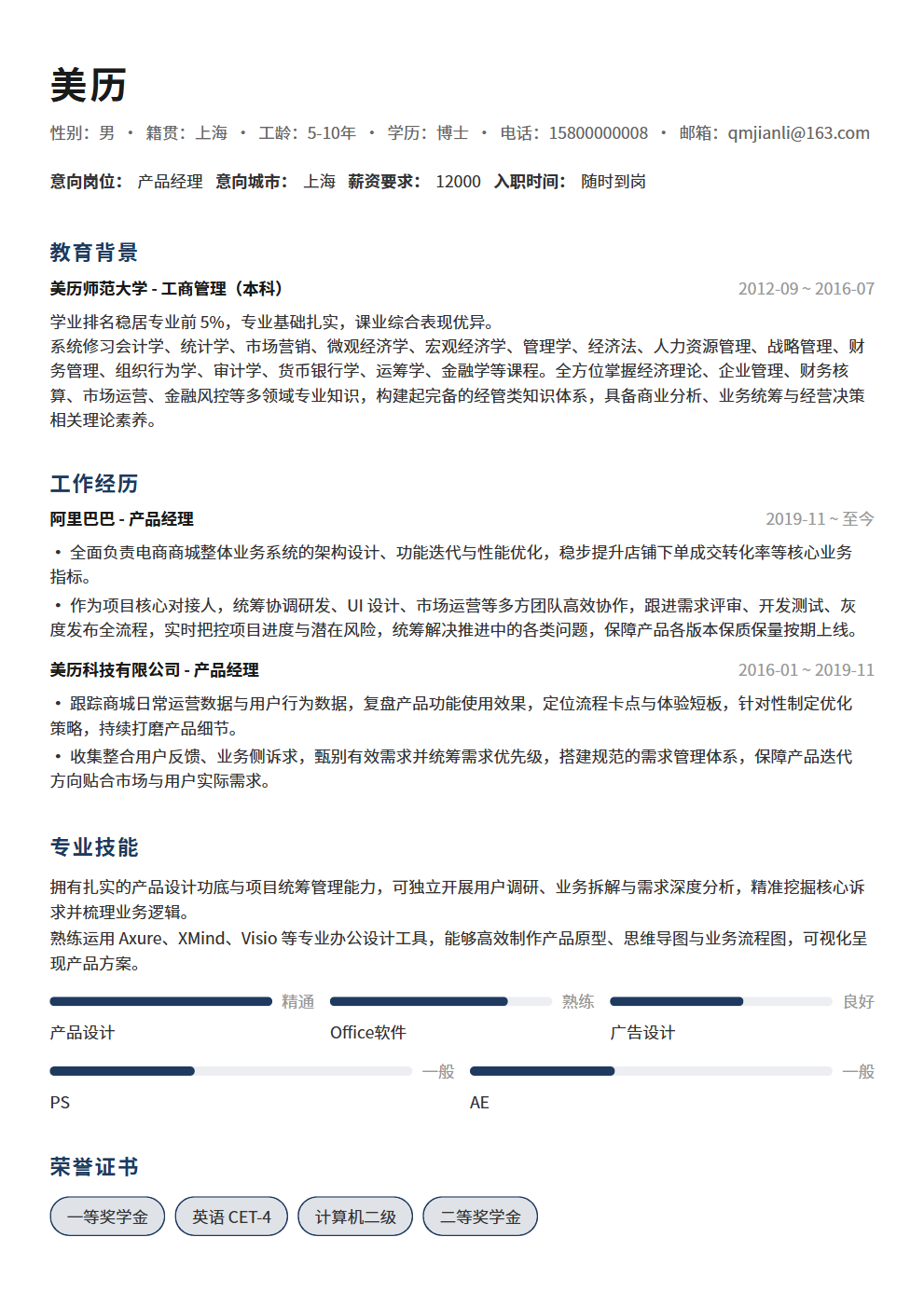
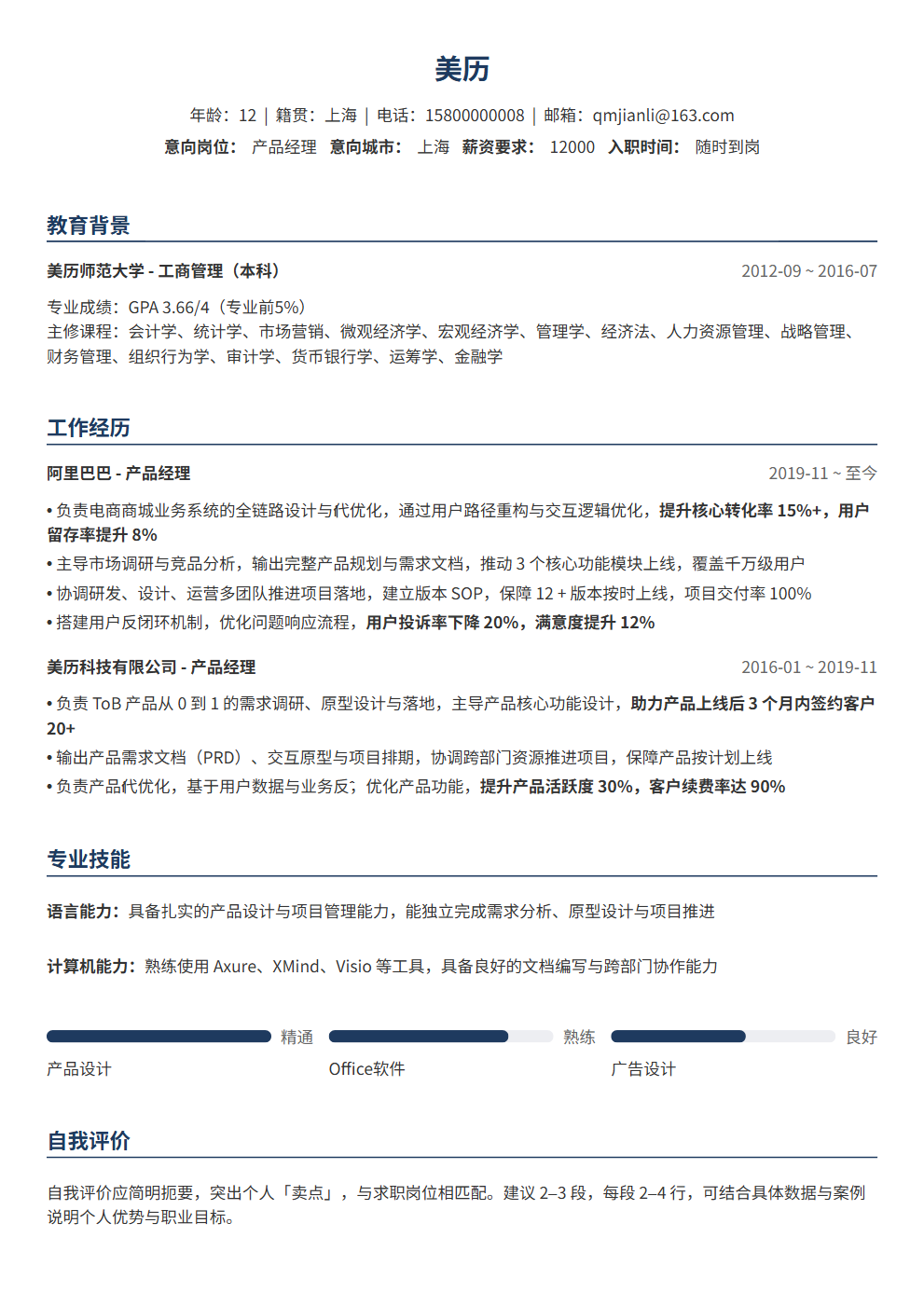
How to Write an Internship Resume: A Progression Roadmap from Freshman to Senior Year
An internship resume isn't static — it should evolve from "coursework-driven" to "project-driven" to "results-driven" as you progress from freshman to senior year. This guide breaks down resume writing by year, showing you what to highlight and downplay at each stage, and how to transform class assignments, club activities, and competition experiences into compelling resume highlights.
1. The Core Logic of Internship Resumes: Tell a Growth Story with What You Have
The biggest frustration when writing an internship resume is "I have nothing to write about." No formal work experience, no impressive projects — the resume looks empty and thin. But the essence of an internship resume isn't showing what work you've done; it's showing what capabilities you possess. Class assignments, club activities, competition experiences, self-taught projects — these are all proof of ability. The key is how you present them.
Internship resumes have a unique advantage: HR's expectations for interns are inherently modest. They know you lack formal work experience; they're looking at your potential, learning ability, and attitude. So don't self-reject because you lack "hardcore" experience — learn to maximize the materials you already have.
2. Freshman Resume: Coursework-Driven, Show Learning Ability and Initiative
Freshmen have the least resume material, but also the least reason to be anxious. Freshman internship targets are typically short-term experiential roles where HR expectations are low. You just need to prove "I'm serious, I'm willing to learn, and I'm reliable."
What to highlight in a freshman resume:
- Relevant courses and grades — if applying for tech roles, list programming courses and grades; for marketing roles, list marketing and statistics courses
- Self-taught achievements — skills learned outside class, completed online courses, personal mini-projects that demonstrate your proactive learning drive
- Clubs and student organizations — even if just a committee member, specify what you actually did, what events you organized, and how many people you impacted
- High school highlights — if you won competitions or served as student council president in high school, you can still include these freshman year, but phase them out starting sophomore year
Key writing tips for freshman resumes:
- Use "course projects" instead of "work experience" — treat major class assignments as projects, describing objectives, your role, methods used, and final results
- Quantify everything — "organized a welcome event" is weaker than "organized a welcome gala for 200 attendees, coordinating 5 departments"
- Show attitude over results — at the freshman stage, "proactively taking on extra tasks" impresses more than "achieving earth-shattering results"
3. Sophomore Resume: Transition Period, Shifting from Courses to Projects
Sophomore year is the turning point for internship resumes. You've accumulated experiences from freshman year — perhaps entered competitions, completed course projects, or been promoted in clubs. The core mission of a sophomore resume: show HR you're transitioning from "learner" to "practitioner."
What to highlight in a sophomore resume:
- Competition experience — mathematical modeling, programming contests, business case competitions; whether you won or not, they're all pluses
- Upgraded course projects — no longer simple homework, but in-depth group projects highlighting your contributions and technical choices
- Club leadership — moving from committee member to department head or leader, demonstrating your growth and ability to take on greater responsibility
- First internship or part-time job — even if unrelated to your target role, describe the workplace fundamentals you learned
Key adjustments for sophomore resumes:
- Reduce course listings — keep only courses strongly relevant to the target position; stop putting your entire course schedule on the resume
- Increase project descriptions — describe each project in 2-3 lines, including background, your role, technologies or methods used, and results
- Begin building a professional image — show your understanding of the industry, such as tech trends you follow or professional books you've read
4. Junior Resume: Project-Driven, Prove Your Strength with Results
Junior year is the golden period for internship resumes and the most critical stage. Summer internships are often the vanguard for major companies' fall recruitment — a strong junior resume directly impacts whether you land a return offer.
Core principle for junior resumes: let results speak, let data vouch for you.
What to highlight in a junior resume:
- Core project experience — at least 2-3 in-depth projects, each with clear results and data
- Internship experience — if you interned during sophomore summer, this is the most weighty section of your resume; describe it in detail
- Tech stack or professional skills — clearly list the tools, frameworks, and methodologies you've mastered so HR can quickly assess fit
- Industry knowledge — industry research you've participated in, analysis reports you've written, industry events you've attended
Writing upgrades for junior resumes:
- Restructure each experience using the STAR method — Situation, Task, Action, Result — let HR see the complete story
- Highlight uniqueness — "did XX" isn't enough; write "under XX conditions, used YY method, achieved ZZ results"
- Target the position — adjust resume order and emphasis for different roles; don't submit the same resume to every position
- Delete low-value content — high school experiences, irrelevant courses, generic "hobbies: reading, sports" all go
5. Senior Resume: Results-Driven, Demonstrate Immediate Readiness
A senior year internship resume is essentially a job-seeking resume. You're not looking for "learning opportunities" — you're looking for "work opportunities." A senior resume needs to make HR think: this person can hit the ground running without much training.
What to highlight in a senior resume:
- Complete internship experience — each internship should have specific responsibilities, projects, and results; ideally with references
- Independently completed projects — proving you can lead, not just participate
- Professional depth — not "familiar with XX" but "proficiently used XX to solve YY problem"
- Career planning — clearly express your career direction and long-term goals in your self-evaluation or objective statement
Common issues with senior resumes:
- Too many experiences with no focus — you may have 5-6 experiences, but the resume should only showcase the 3-4 most relevant ones
- Descriptions stuck on "what I did" rather than "what I achieved" — every experience needs results; experiences without results are better omitted
- Neglecting soft skills — communication, teamwork, project management matter even more in formal job-seeking than in internships
6. How to Transform Class Assignments into Project Experience
Many students feel class assignments don't count as "projects" and hesitate to include them on their resume. The key isn't whether the assignment was required by a course — it's what you did and what you accomplished.
Transformation methods:
- Add a title — don't write "Database course final project"; write "Design and Implementation of a University Course Selection System Based on XX"
- Add context — briefly describe what problem the project solves and what scenario it serves
- Add your role — clarify what you were responsible for in the team: frontend, backend, or project management
- Add technology — list the tech stack, tools, and methodologies you used
- Add results — data is best; without data, write "received XX evaluation" or "selected as outstanding project"
Comparison example:
- Weak: "Completed a group assignment for the marketing course, responsible for PPT creation"
- Strong: "Led the campus promotion strategy design for XX brand, identified 3 core touchpoints through user research, strategy received Best Project evaluation in the course"
7. Five Universal Principles for Internship Resumes
Regardless of your year, these principles apply:
- One-page rule — intern resumes must never exceed one page; HR won't turn to page two
- Reverse chronological order — most recent experiences first, letting HR see your best self first
- Quantification first — use numbers instead of adjectives whenever possible; "significant improvement" is weaker than "30% improvement"
- Strong targeting — adjust your resume for every position you apply to, placing the most matching experiences in the most prominent positions
- Zero errors — typos, formatting chaos, date contradictions — these basic mistakes are fatal in internship resumes
Summary
An internship resume isn't a static document — it's a capability proof that evolves with your growth. Freshman year, use courses and attitude to impress HR; sophomore year, use projects and competitions to prove you're progressing; junior year, use results and data to showcase your strength; senior year, use complete experience and immediate readiness to win formal offers. Each stage has its corresponding strategy — don't try to write a junior-level resume as a freshman (unrealistic), and don't use freshman thinking for your senior resume (too naive). The ultimate goal of an internship resume isn't to "write well" but to "write right" — right time, right stage, right focus. When you clearly document your growth at each stage on your resume, the resume itself becomes the most compelling growth record — and the best proof of what a professional resume tool can help you craft.