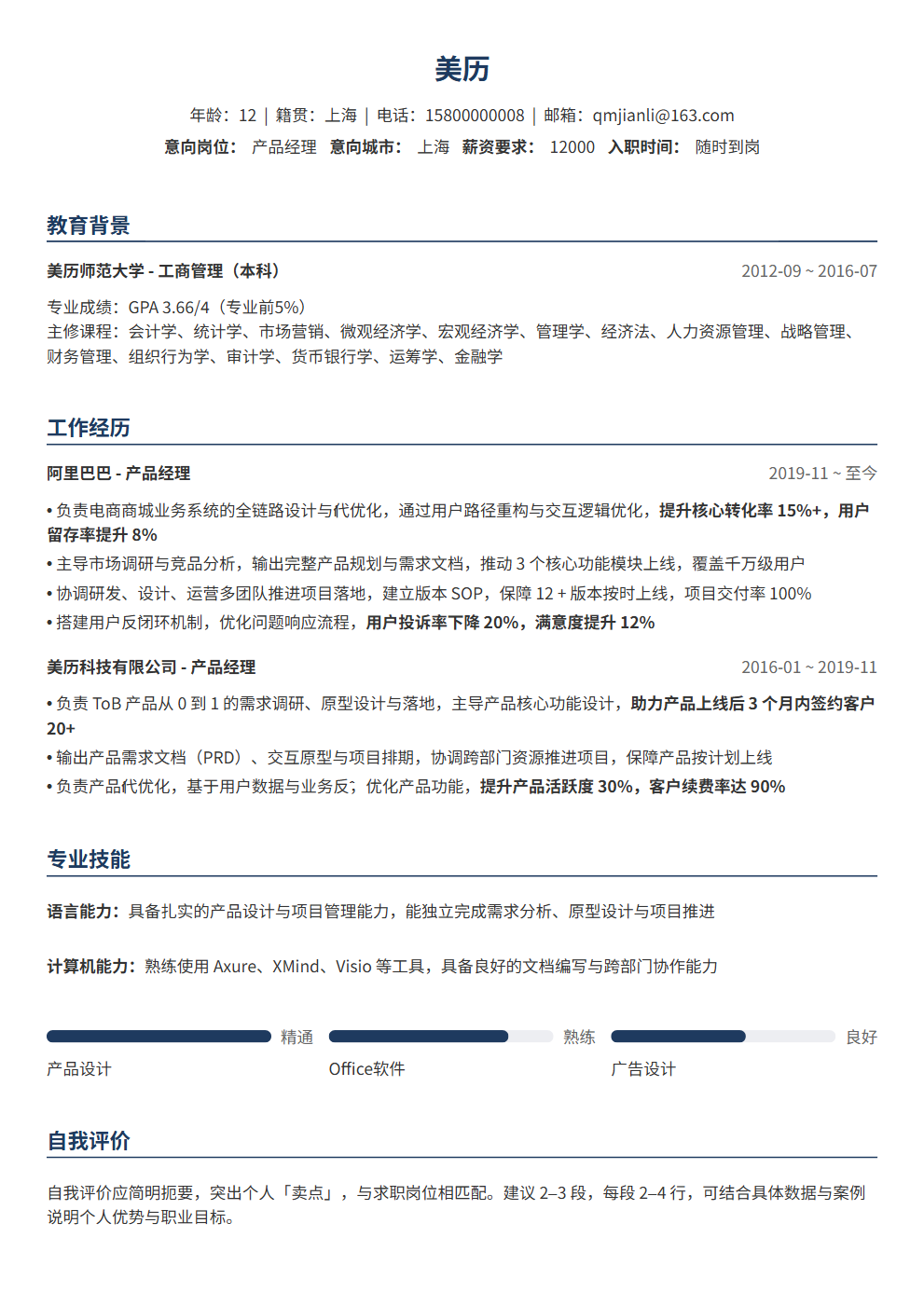
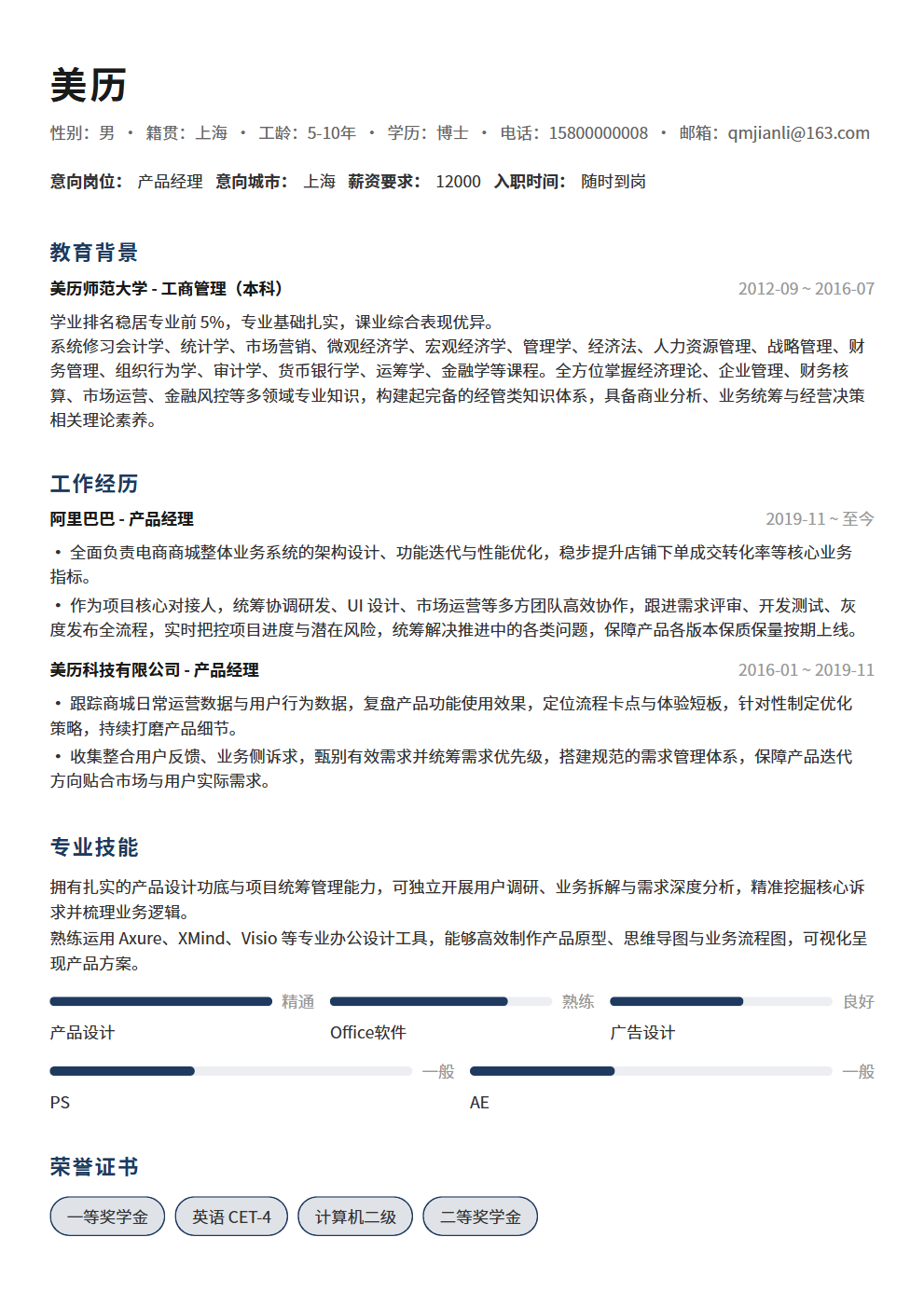
How to Write a Resume with Frequent Job Changes — 3 Strategies to Turn "Instability" Into "Rich Experience"
4 jobs in 3 years — HR takes one look at your resume and thinks "unstable." Frequent job changes aren't a resume death sentence. The key is how you explain and present them. 3 strategies to reframe your resume from "unstable" to "experienced and purposeful."
How to Write a Resume with Frequent Job Changes — "Instability" Isn't a Death Sentence; the Key Is How You Tell the Story
4 jobs in 3 years — HR takes one look at your resume and thinks "unstable." This is the headache that troubles many job seekers. Frequent job changes do raise concerns: Is this person bad at handling pressure? Are their eyes bigger than their stomach? Will they leave as soon as they arrive? But frequent job changes aren't a resume death sentence. The key is how you explain and present them. The same experience, told differently, produces vastly different results. Here are 3 strategies to reframe "unstable" as "experienced and purposeful."
Strategy 1: Use a "Narrative Thread" to Connect Your Experiences — Not "Random Hopping," But "A Deliberate Path"
The worst thing HR can see in frequent job changes is "random hopping" — no logic between roles, just thrashing around. But if you can string all your experiences into a single narrative thread, HR sees "purposeful exploration" instead.
- Find your career thread: No matter how many jobs you've changed, is there a consistent direction? For example, "transitioning from traditional industry to tech" — Job 1 was operations at a traditional company, Job 2 was operations at a tech company, Job 3 was product operations at a tech company, Job 4 was user growth at a tech company. Four jobs, but the thread is clear: from traditional operations to tech growth, each step moving closer to the goal.
- Write a career summary at the top of your resume: Below your personal info, add a 3-4 line career summary that captures your narrative thread in one sentence. For example: "5 years of operations experience, transitioning from traditional retail operations to tech user growth, with cross-industry operational perspective and the ability to build growth systems from scratch." When HR sees the thread first, they won't interpret individual roles as "random jumping."
- Connect each experience to the thread: When describing each role, highlight how it served your career narrative. The focus for Job 1 shouldn't be "what I did" but "the capabilities I built in the traditional industry that laid the foundation for my transition to tech."
Strategy 2: Use "Reasonable Explanations" for Departures — Not "Couldn't Hack It," But "Proactive Choice"
HR's concern about frequent job changes ultimately comes down to why you left — were you pushed out (laid off, couldn't handle it) or did you proactively choose (better opportunity, better fit)? Same departure, but "proactive choice" and "pushed out" are completely different in HR's eyes.
- Company-level reasons are most accepted: Business restructuring/layoffs, department elimination, company relocation, company closure — these are objective reasons, not your fault. If you left for these reasons, state them confidently. But note: if 3 out of 4 departures were "company layoffs," HR will suspect you might be the common factor.
- Career development reasons need logic: "To pivot toward XX direction," "To gain XX experience," "To take on greater responsibility" — these are proactive choices, but they need logical support. For example: "I left Company A because I wanted to move from an execution role to a management role, and Company A had no management openings in the near term" — that logic holds. But if your previous role was management and the next one was back to execution, the logic breaks.
- Never mention these departure reasons: "Didn't get along with my boss," "Work was too exhausting," "Pay was too low" — these are all red flags for HR. Even if these are the real reasons, don't state them directly on your resume or in interviews.
- How to handle roles under 6 months: If a role was particularly short (3-6 months), you can note the departure reason on your resume, such as "Company business restructuring, department eliminated." If you don't explain it, HR will assume "didn't pass probation" or "quit because they couldn't handle it" — worse than the real reason.
Strategy 3: Use "Achievement Density" to Compensate for "Short Tenure" — Not "Short Stay, No Output," But "High Output in Short Time"
Another concern about frequent job changes is "you didn't stay long anywhere, so what could you have accomplished?" The counter: use achievement density to compensate for short tenure — proving you didn't "stay short and produce nothing" but rather "produced results quickly."
- Highlight rapid onboarding and quick output: For example, "Independently completed the XX project within 2 weeks of joining," "Built the XX system within 1 month," "Drove XX to launch within 3 months." Quick output demonstrates strong learning ability and execution, and shows you weren't just coasting.
- Use numbers to make your case: Every role should have at least 1-2 quantifiable achievements. For example, "Led the XX project covering XX users," "Optimized the XX process saving XX time," "Built the XX system serving XX teams." The numbers don't need to be huge — they just need to exist. Numbers prove you actually did something, not just "dropped by and left."
- Emphasize transferable skills across experiences: A hidden advantage of frequent job changes is that you've accumulated diverse experience. Highlight these transferable skills on your resume: "Gained XX experience across 3 companies of different sizes, with dual capability for both 0-to-1 and 1-to-10 stages," "Cross-industry operations experience across 2 industries, able to quickly adapt to different business scenarios." Turn "jumped a lot" into "seen a lot."
- Consolidate short-tenure roles: If 2-3 short stints were in the same field or same type of company, consider combining them. For example, merge two 6-month operations roles into "1 year of operations experience, responsible for XX at Company A and Company B successively," reducing the number of "job changes" HR sees.
How to Handle "Why Do You Change Jobs So Frequently" in Interviews — 3 Response Templates
You can optimize your resume, but you will definitely be asked this in interviews. Here are 3 templates to help you handle this question confidently.
- Template 1 (Career Pivot Type): "My earlier roles did change fairly frequently, and the core reason was that I was exploring my career direction. The first job helped me discover I'm better suited for XX, the second job validated that judgment, and the third job helped me build core capabilities in XX. Now I'm very clear about my direction, which is exactly why I'm applying for this role — it's highly aligned with the career direction I want."
- Template 2 (Objective Reason Type): "The changes in my earlier roles were mainly due to objective circumstances: the first was a company restructuring that eliminated my department, the second was a company relocation to another city. These weren't changes I chose, but I delivered concrete results in each role (give examples). I'm genuinely looking for a role where I can develop long-term, which is why I'm interested in your company."
- Template 3 (Accelerated Growth Type): "I did move through several companies in a short time, but I had clear growth goals at each one. At Company A I learned XX, at Company B I mastered XX, at Company C I took independent ownership of XX. These experiences helped me accumulate XX capabilities faster than my peers. Now I want to go deep at one company and convert my accumulated capabilities into long-term results."
Frequent Job Changes Aren't a Death Sentence — The Key Is How You Tell the Story
Frequent job changes do raise HR concerns, but they're not a death sentence. 3 strategies: Use a career narrative thread to connect experiences (not "random hopping" but "a deliberate path"), use reasonable explanations for departures (not "couldn't hack it" but "proactive choice"), and use achievement density to compensate for short tenure (not "short stay, no output" but "high output in short time"). When pressed in interviews, use the career pivot, objective reason, or accelerated growth templates to respond confidently. Remember: the same experience, told differently, produces vastly different results. If you're struggling with a resume that shows frequent job changes, try BeautyResume's resume editor — smart experience analysis helps you find your career thread, and professional templates transform your resume from "unstable" to "experienced," helping you turn the tables in your job search.