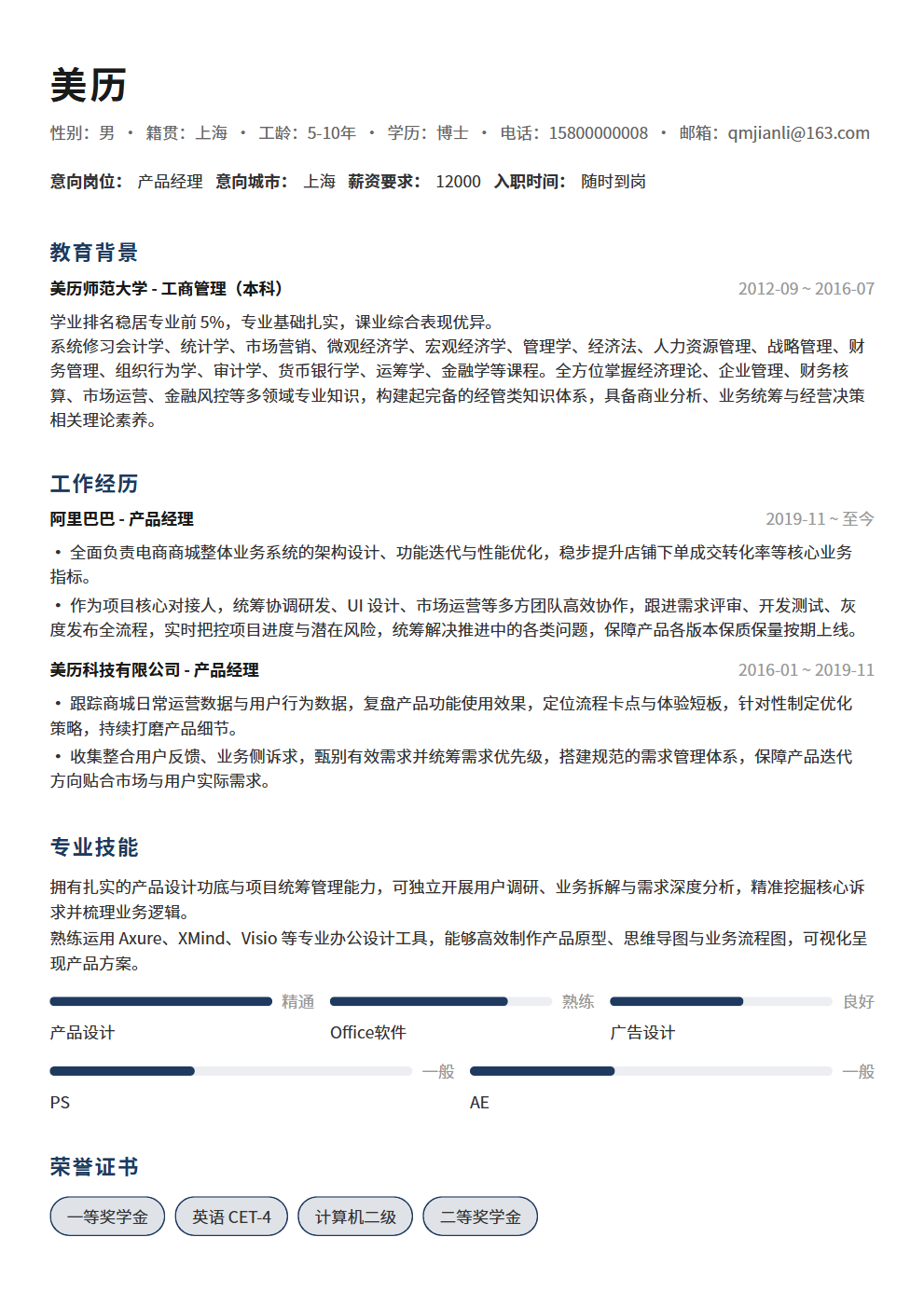
How to Write a Resume When You've Job-Hopped Frequently? 3 Strategies to Overcome the Instability Perception
Frequent job-hopping is a resume red flag—3 strategies to overcome it: consolidate short stints to reduce visual jumps, highlight achievements at each role to prove value, and use cover letters to explain transitions and show proactivity. Make HR see your capability, not instability.
Frequent job-hopping is a resume red flag. When HR sees someone who changed companies 4 times in 3 years, their first reaction is "this person can't commit." But the reality is that many people hop frequently for legitimate reasons—company closures, department layoffs, industry downturns, or being recruited away. The problem isn't your experience; it's how you present it. This article provides 3 strategies to help you overcome the frequent job-hopping dilemma on your resume.
1. Why Frequent Job-Hopping Is a Resume Red Flag—Understanding HR's Concerns First
Before diving into strategies, you need to understand why HR is so sensitive about frequent job-hopping. It's not just bias—it's the reality of hiring costs:
- High hiring costs: From posting to onboarding, the average cost per hire ranges from $3,000-$7,000 (including recruiter fees, interview time, and training). If this person leaves after six months, that investment is wasted
- Team stability: One person leaving frequently affects team morale. Others start wondering "is there something wrong with this company?" creating a chain reaction
- Business continuity: When someone in a key role suddenly departs, projects may stall, clients may leave, and business may suffer
- Management overhead: New employees need 3-6 months to become fully productive. Frequent turnover means managers must repeatedly invest time in training
Understanding these concerns reveals that the core strategy isn't "hiding" your job-hopping—it's convincing HR that your frequent transitions had legitimate reasons and won't recur at their company.
2. Strategy 1: Consolidate Short Stints—Reduce the Visual "Jumpiness"
What HR notices first when scanning a resume is the timeline's frequent jumps. Four short stints in 3 years look like 4 stubby bars—very jarring. The purpose of consolidation is to reduce this visual shock.
When consolidation is appropriate:
- Internal transfers or department changes within the same company can be merged into one entry with different roles noted
- Short-term freelance, part-time, or consulting engagements can be grouped into a single "Freelance/Consultant" period
- Short stints in the same industry and function can be organized by project rather than by company
- Positions you left during the probation period, if irrelevant to the target role, can be omitted
Specific consolidation methods:
- Method 1: Consolidate by function.If you did social media management at 3 different companies, each under 1 year, write "Social Media Management Experience (Mar 2022-Jun 2024)" with the companies and key achievements listed below, rather than 3 separate entries
- Method 2: Consolidate by project.If you completed multiple short-term projects, write "Independent Consultant/Project Consultant (Jan 2023-Mar 2024)" with representative projects and outcomes below
- Method 3: Omit very short stints.Experiences under 3 months that don't affect your career narrative's completeness can be left off. A resume isn't an autobiography—it doesn't need every detail
Important caveats:
- Consolidation is not fabrication. It's adjusting presentation, not inventing experiences. You must be able to explain every stint during background checks
- Don't consolidate experiences across different industries or functions—that will confuse HR more
- If asked about gaps, answer honestly but don't volunteer negative information unprompted
3. Strategy 2: Highlight Achievements at Each Role—Prove Your Value, Not Your Restlessness
HR's deepest concern about frequent job-hoppers is "this person left every job before accomplishing anything." If you can demonstrate clear achievements at each role, this concern diminishes significantly—even if your tenure was short, you clearly made contributions.
Principles for describing achievements:
- At least 1 concrete achievement per role.Even if you only stayed 8 months, you must show what you did and what changed. A short stint with no achievements is the most damaging combination
- Achievements must be specific and quantifiable."Optimized processes" is inferior to "Reduced approval process from 7 days to 2 days, saving 120 person-hours monthly"
- Achievements should demonstrate depth.If a short stint only describes execution-level tasks, it suggests you left before getting deeply involved. Try to show participation in core decisions or driving key changes
- Achievements should align with the target role.Each role's achievement descriptions should point toward capabilities the target role requires, forming a coherent competency thread
How to mine achievements from short stints?
Many people feel there's nothing to write about from a brief tenure, but that's usually because they haven't dug deep enough. Ask yourself:
- What was the biggest problem when you joined? What improvements did you contribute to?
- What state was your module/project in when you left? How much better than when you arrived?
- Did you lead anything from 0 to 1? Even a small process or tool?
- Did colleagues or managers benefit from your work? How specifically?
Even after just 6 months, you couldn't have done nothing. The key is upgrading "what I did" to "what I changed."
4. Strategy 3: Use a Cover Letter to Explain—Proactively Address HR's Concerns
A resume presents information passively; a cover letter explains proactively. For frequent job-hoppers, a cover letter isn't optional—it's essential. It gives you a chance to narrate your transition reasons fully, rather than letting HR fill in the blanks themselves.
Cover letter writing principles:
- Address it proactively, don't avoid it.Don't wait for HR to ask—explain your job-hopping reasons in the cover letter. Avoidance only makes HR suspect you're hiding something
- Keep reasons objective, not complaints."Company closed," "entire department was laid off," "business line was shut down" are objective reasons; "terrible boss," "toxic company" are subjective complaints. Even if true, a resume and cover letter aren't the place for venting
- Emphasize proactivity in each transition."Was recruited by a headhunter," "seized a better growth opportunity" is 100x stronger than "couldn't hack it anymore." Even for involuntary departures, frame the narrative around "why I chose the next company" rather than "why I left the previous one"
- Express commitment to stability.At the end of your cover letter, explicitly state your desire for long-term growth at the next company, with specific reasons (industry direction, company platform, role fit)
Cover letter template reference:
"Over the past three years, I've held three positions, each with objective reasons: the first company shut down its business after a failed funding round, the second had a department-wide layoff, and the third I chose to leave because my career direction diverged from the company's strategic pivot. At each role, I delivered clear results (see resume), and these experiences have clarified my career direction—the XX field, which is why I'm applying for the XX position at your company. I'm looking for a platform with long-term growth potential where I can truly settle in."
5. Combining the 3 Strategies
The three strategies aren't isolated—they need to be combined for maximum impact:
- Mild frequent job-hopping (2-3 roles in 3 years):Focus on Strategy 2—highlight achievements. HR's tolerance for this frequency is relatively high; as long as each role has results, it's not a major issue
- Moderate frequent job-hopping (4-5 roles in 3 years):Combine Strategy 1 + Strategy 2—first consolidate short stints to reduce visual impact, then highlight achievements at each remaining role
- Severe frequent job-hopping (6+ roles in 3 years):Use all three strategies—consolidate experiences + highlight achievements + cover letter explanation. Also consider adjusting your job search strategy, perhaps starting with short-term contract or project-based roles to rebuild a stability track record
6. Three Absolute Don'ts for Frequent Job-Hopping Resumes
- Don't 1: Fabricate to fill gaps.Inventing work experiences, extending tenure dates, or creating fictitious company names—these will 100% be exposed in background checks. Getting caught means instant blacklisting in the industry
- Don't 2: Blame everything on external factors."It was always the company's fault"—HR will only think "if every company was the problem, maybe you're the problem." At least one transition should be framed as a proactive, positive choice
- Don't 3: Include departure reasons on your resume.A resume showcases capabilities and achievements, not departure explanations. Save those for the cover letter or interview—on the resume, only write results
7. How to Handle Job-Hopping Questions in Interviews
Even with a well-crafted resume, HR will definitely ask about your transitions in interviews. Prepare with this framework:
- Use the "objective reason + proactive choice" framework:"The company's business was restructured (objective reason), and I chose to join XX because (proactive choice)"
- Prove each role's value with achievements:"Although my tenure was short, I completed the XX project at XX company, delivering XX results"
- Express long-term plans for the next role:"Through these experiences, I've become clearer about the direction I want to deepen my expertise in, and your company's XX role is a perfect match"
- Avoid emotional expressions:Don't complain about former companies, don't disparage former managers, don't express industry dissatisfaction. Stay professional and rational
Conclusion
Frequent job-hopping isn't a resume death sentence—the key is how you present it. Consolidate short stints to reduce visual jumpiness, highlight achievements at each role to prove your value, and use a cover letter to proactively explain your transitions. Combining these three strategies shifts HR's perception from "this person is unstable" to "this person has rich experience with results." And to write a resume that overcomes the frequent job-hopping stigma, you need a professional tool to optimize your presentation. Use BeautyResume's resume editor—flexible formatting and smart templates let you easily adjust how experiences are presented, maximizing the value of short stints and ensuring HR sees your capabilities, not your job-hopping count.