How to Write a Resume Summary: Stop Using Generic Clichés That Bore HR
What should you write in your resume summary to attract HR? Ditch clichés like 'hardworking' and 'detail-oriented' — learn to summarize your core competitive advantage in 3 sentences.
1. Why 90% of Resume Summaries Are Useless
Open any 10 resumes, and at least 8 will include phrases like: "hardworking," "responsible," "team player," "eager to learn." The problem isn't that these are false — it's that they're meaningless clichés anyone can claim. After reading hundreds of resumes, HR has become completely numb to these words.
The essence of a resume summary isn't self-praise — it's telling HR in the fewest words possible why you're a better fit than other candidates.
The deeper issue is that these hollow summaries don't just waste the most valuable space on your resume — they may create a negative impression that "this person has no standout qualities." When your summary is indistinguishable from everyone else's, HR will assume your abilities are equally undifferentiated. Writing a strong summary is essentially an exercise in differentiated positioning.
2. The "3-Sentence Formula" for Effective Summaries
An efficient resume summary needs only 3 sentences, each serving a different purpose:
- Positioning sentence: Who are you? What's your core professional focus?
- Value sentence: What's your most notable achievement? Use data.
- Alignment sentence: What unique value can you bring to the target role?
Example: 3 years of B2B product operations experience (positioning), led a user growth project from 0 to 500K users with 200% DAU increase (value), skilled in data-driven user growth strategies, seeking to deepen expertise in SaaS (alignment).
The power of this formula lies in its extremely high information density. Three sentences cover who you are, what you can do, and what you want — exactly what HR seeks during a 6-second resume scan. Each sentence acts as a filter: the positioning sentence eliminates irrelevant roles, the value sentence makes matching roles take notice, and the alignment sentence locks in the target position.
3. Summary Writing by Career Stage
Fresh graduates: No work achievements? Use academic results and practical capabilities instead.
Example: Journalism major, independently produced 20+ in-depth reports during college (positioning), 3 of which were republished by provincial media (value), strong interviewing and writing skills with news sensitivity, seeking content operations roles (alignment).
The most common mistake fresh grads make is listing course names and club activities. HR doesn't care what courses you took — they care what you can do with that knowledge. Transform "studied marketing and consumer behavior" into "applied consumer behavior theory to develop a promotion strategy for a campus startup, acquiring 500+ users in 3 weeks" — the information value is completely different.
3-5 years experience: Focus on professional depth and business impact.
Example: 5 years of e-commerce visual design experience (positioning), led 3 brand visual upgrade projects with average 35% conversion rate increase (value), skilled in design decisions based on user psychology, familiar with full-cycle e-commerce design (alignment).
At this stage, avoid creating the impression of "done everything but mastered nothing." Don't list every tool you've used or project type you've done — focus on 1-2 areas where you excel most, proving expertise through depth.
Management level: Highlight team management and strategic capabilities.
Example: 8 years of tech team management experience (positioning), led a 30-person team to rebuild the core system, improving availability from 95% to 99.9% (value), skilled in technology selection and team building, drove 3 architecture upgrades (alignment).
Management summaries require a perspective shift: upgrade from "what I can do" to "what changes I can drive." Emphasize your decision-making impact and organizational capabilities rather than specific execution skills.
4. Five Pitfalls to Avoid in Your Summary
- Don't stack adjectives: Replace "proactive, communicative, responsible" with specific examples
- Don't exceed 150 words: A summary is an elevator pitch, not an essay
- Don't include irrelevant content: Applying for PM? No need to mention your piano Grade 10
- Don't use first person: Drop "I" — direct statements are more concise and powerful
- Don't copy the job description: Matching keywords ≠ copy-pasting; substantiate with your own experience
One more common mistake: don't include salary expectations in your summary. Compensation negotiation happens after you receive an offer — mentioning it in your summary only makes HR think you're overly transactional. Similarly, don't explain your reasons for leaving previous roles in the summary — this information should emerge naturally during interviews, not occupy the most prominent position on your resume.
5. Placement and Presentation Tips
Where you place your summary matters:
- Best position: Below contact info, above work experience — HR sees it first
- Format tip: 3 sentences on 3 lines are more readable than a dense paragraph
- Bold key terms: Bold core skills and numbers to guide HR's eyes
Remember, your summary is the tagline of your resume, not the manual. Its sole purpose is to make HR think "this person is worth a closer look" and then read your work experience carefully.
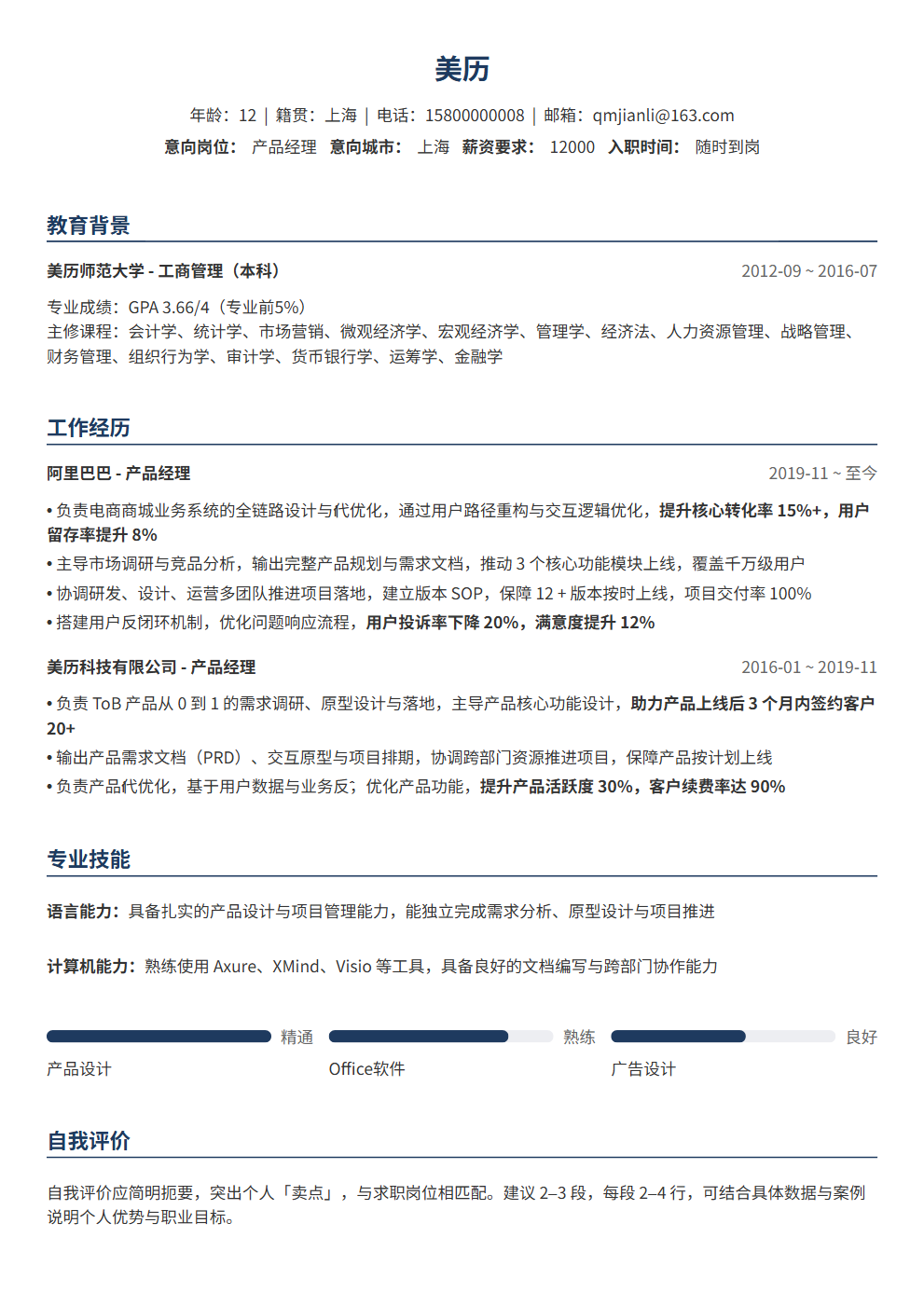
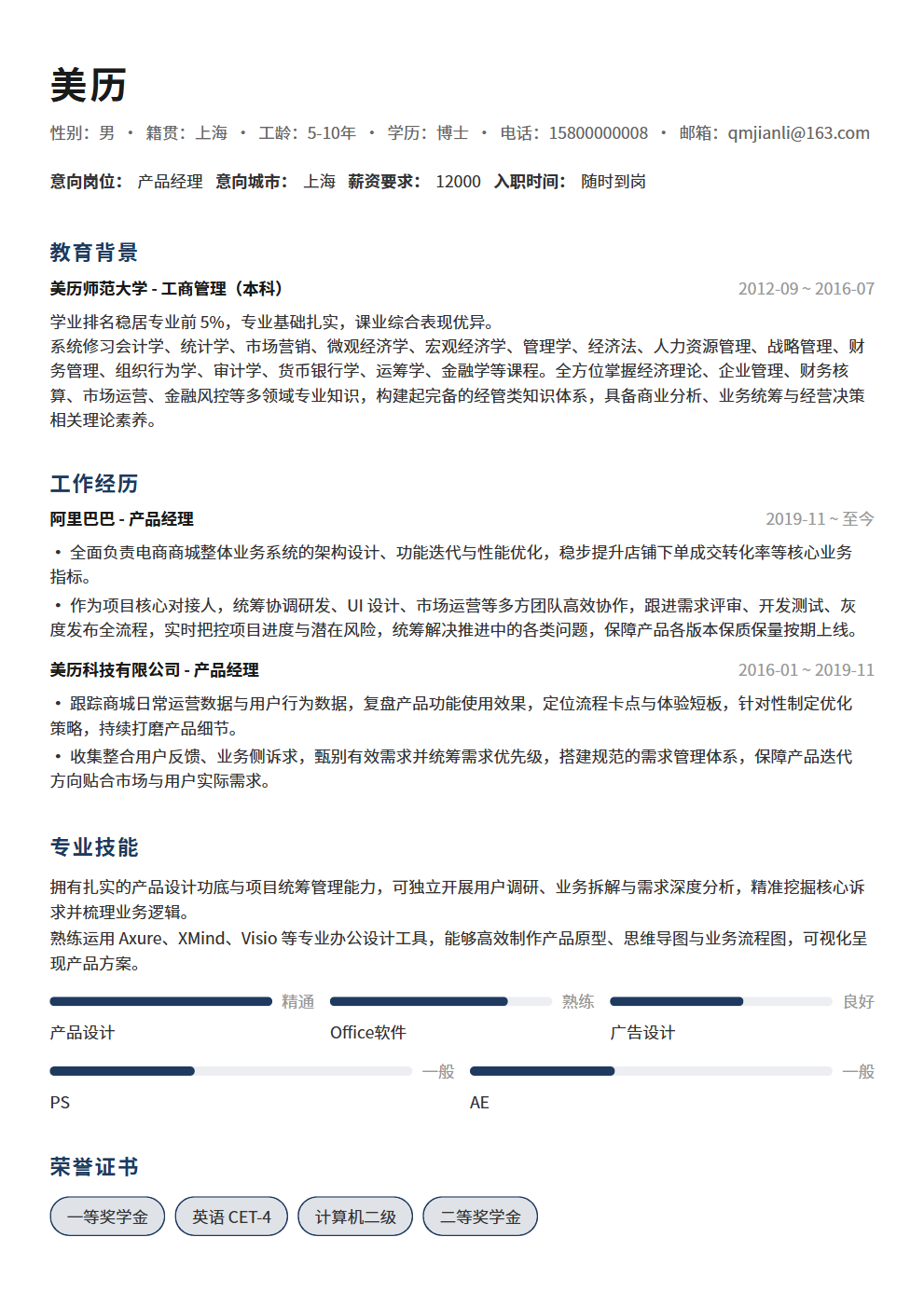
A practical formatting tip: use a divider line to separate your summary from work experience, allowing HR to quickly locate it during scanning. Also, make the summary font 0.5-1pt larger than body text, and use bold or a different color (like navy blue) for emphasis, ensuring it doesn't get visually lost.
6. Precisely Matching Your Summary to Job Descriptions
Many people know to match their summary to the role but don't know how. The core method is to break down JD keywords and find corresponding evidence in your experience:
- JD requires "data-driven" → your value sentence should include specific data achievements
- JD requires "cross-functional collaboration" → your alignment sentence should mention cross-departmental project experience
- JD requires "0-to-1 experience" → your positioning sentence should highlight ground-up building experience
Before each application, spend 5 minutes fine-tuning your summary's wording, front-loading the information most relevant to the target role. This simple habit can boost your resume pass rate by over 30%. When screening resumes, HR is essentially doing keyword matching — the more precisely your summary hits JD keywords, the higher your chances of selection.
But remember, matching ≠ copying. Don't transplant JD language directly into your summary. Use your own experience and voice to respond to the JD's requirements. HR can instantly tell which summaries are copied and which are backed by genuine capability.
7. Common Failed Summary Examples Analyzed
The following 3 real examples represent the 3 most common failure modes:
Failure Example 1: The Hollow Type
"I am an outgoing, responsible team player with strong learning ability, hoping to contribute to a company with growth potential."
Diagnosis: Zero specific information — swap in any name and it works equally well. HR learns nothing about your capabilities.
Failure Example 2: The Jack-of-All-Trades Type
"5 years of internet experience across product, operations, marketing, and business development. Proficient in Axure, SQL, Photoshop. Skilled in project management, data analysis, and user growth."
Diagnosis: Done everything = mastered nothing. No focused direction, so HR can't determine which role suits you.
Failure Example 3: The Boaster Type
"A top-tier product manager with exceptional user insight and unparalleled project execution ability."
Diagnosis: Overblown claims without data support only annoy HR. Let facts speak and let HR draw their own conclusions.
Summary
The core of writing a great summary: clear positioning + data support + role alignment. Ditch the hollow clichés from generic templates and use 3 sentences to precisely convey your irreplaceability. Spend 5 minutes before each application fine-tuning your summary to precisely match the target role's JD. If you're still using phrases like "hardworking," it's time to rethink your resume — a good template helps with structure, but the core content must be crafted by you.