How to Write a Resume Objective? 3 Formulas to Stop Wasting Applications
Your resume objective isn't just a job title—3 formulas (Role + Direction, Role + Skill, Role + Industry) help HR instantly see your fit. Stop wasting mass applications. Includes common mistakes and optimization examples.
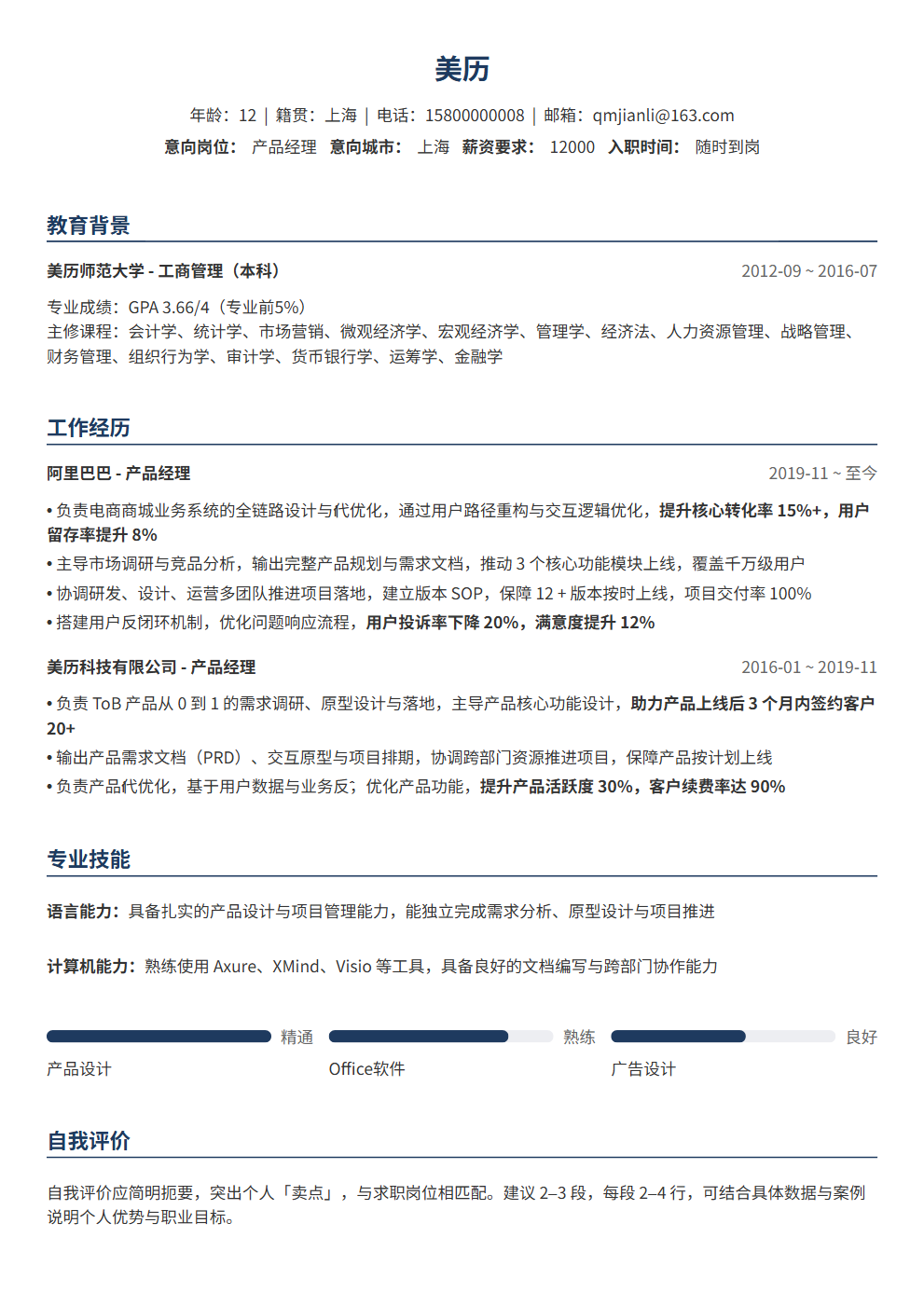
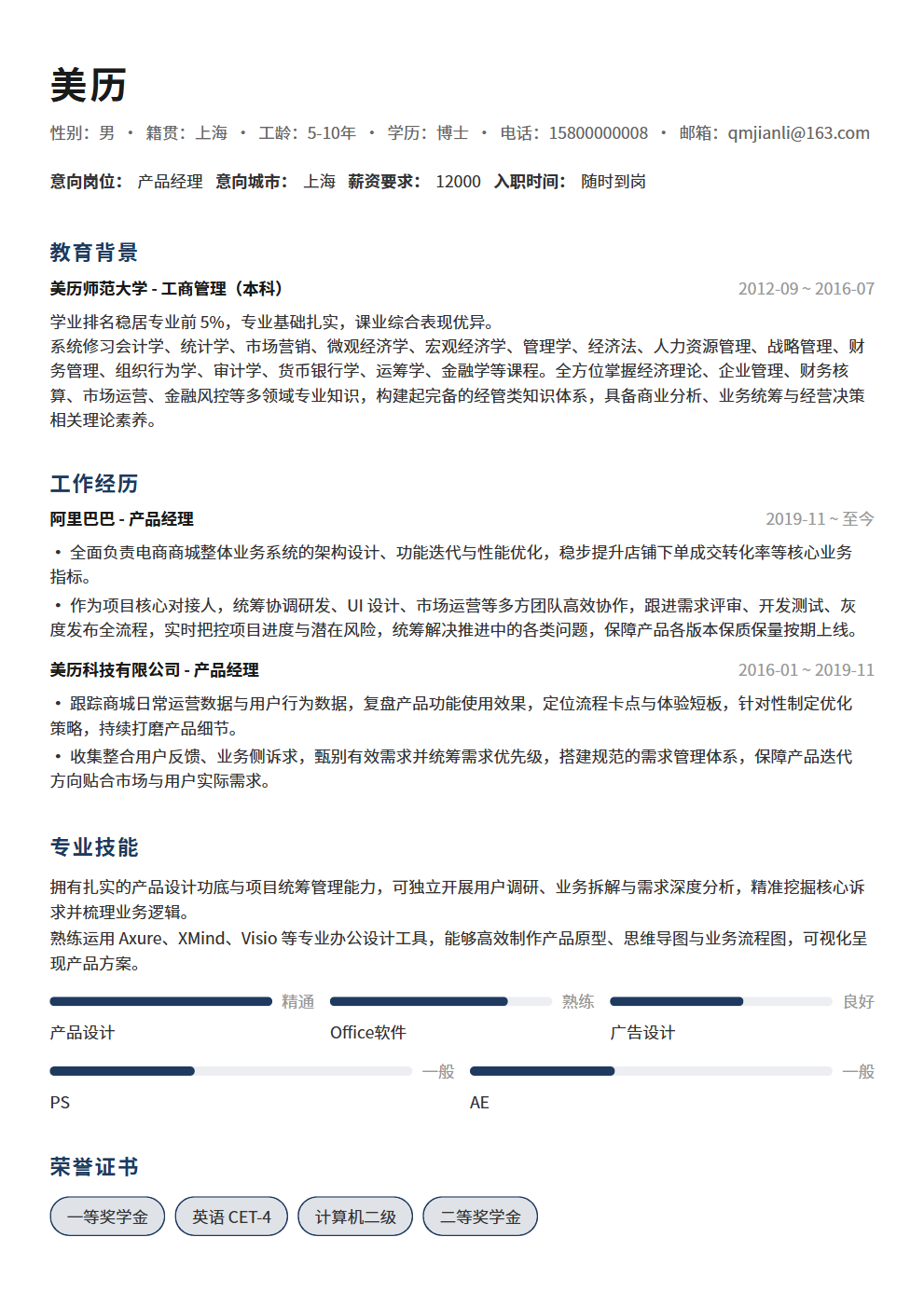
Just writing "Product Manager" as your resume objective and calling it done? HR will swipe past that resume in 10 seconds. Your resume objective is your "positioning device"—write it well, and HR instantly knows what role fits you; write it poorly, and your resume is just another piece of paper in the mass-application pile. Here are 3 formulas to make your resume objective precisely targeted, so you can stop wasting applications.
1. What Is a Resume Objective, Really? Why You Can't Just Wing It
Many fresh grads think a resume objective means "just fill in a job title"—that's the biggest misconception. A resume objective isn't a job title transporter; it's a concentrated expression of your career positioning. It tells HR three things: what you want to do, what you can do, and what you're a fit for. A well-written objective gives HR an instant "I get you" entry point.
- Your Objective Is the Resume's "Navigation Title": The first thing HR looks at is your resume objective—if it doesn't match the role, they won't read the rest no matter how good it is. It's like a search engine title—if the title isn't relevant, users won't click. Your objective determines whether HR continues reading your resume
- Your Objective Is a "Litmus Test" for Self-Positioning: If you can't write a clear objective, it means you haven't figured out what you want to do. A vague objective reveals vague career planning—when HR sees "Marketing/Operations/Product — all acceptable," their first thought is "this person doesn't know what they want," not "this person can do anything"
- Your Objective Is the "First Filter" for Match Quality: Large companies receive hundreds of resumes per role—HR can't read every one carefully. The objective is the first filter: matches stay, mismatches get cut. The more precise your objective, the higher your chance of passing the first screen. Conversely, a vague objective means you're voluntarily giving up the chance to be read seriously
- Your Objective Isn't a "Wishing Well": An objective isn't about what you "want"—it's about what you "can deliver." Don't write "seeking growth opportunities"; write "seeking a [Role] position to leverage [Skill] and create value for [Area]." HR cares about what you can do for the company, not what the company can do for you
2. Formula One: Role + Direction—Tell HR Exactly Which Area You Want
Just writing a job title is too broad—"Product Manager" has B2B vs. B2C, "Operations" has content/user/events, "Engineer" has frontend/backend/algorithms. Adding a "direction" tells HR which specific area you're targeting, instantly boosting your match quality.
- Formula Breakdown: Job Title + Sub-Direction: Break broad roles into specific directions. Product Manager → B2B Product Manager / B2C Product Manager / Data Product Manager; Operations → User Operations / Content Operations / Event Operations / Community Operations; Engineer → Frontend Developer / Backend Developer / Algorithm Engineer / Data Engineer; Designer → UI Designer / UX Designer / Visual Designer / Interaction Designer. The more specific the direction, the more HR sees you as "goal-oriented"
- Before vs. After: Wrong: "Objective: Operations"—HR doesn't know which type of operations you want and has to guess. Right: "Objective: User Operations (focused on growth and retention strategies)"—HR immediately sees you're targeting user growth; if that's exactly what they're hiring for, your resume instantly enters the "high match" queue
- Where Does the Direction Come From? Study the JD: Sub-directions aren't made up—they're extracted from the target role's JD (Job Description). Study your target role's JD carefully to see what direction it emphasizes—if the JD focuses on "user lifecycle management," write "User Operations (focused on user lifecycle management)"; if it emphasizes "content planning and distribution," write "Content Operations (focused on content planning and distribution strategy)." The tighter the alignment between your objective and the JD, the higher your pass rate
- Use Different Directions for Different Roles: When applying for different positions, adjust your objective's direction accordingly—for User Operations write "User Operations (focused on growth & retention)," for Content Operations write "Content Operations (focused on planning & distribution)," for Event Operations write "Event Operations (focused on planning & execution)." The era of one resume for all applications is over—prepare at least 2-3 versions of your objective
3. Formula Two: Role + Skills—Tell HR Why You're Qualified
Role + Direction tells HR "what you want to do"; Role + Skills tells HR "why you can do it." Adding core skill keywords to your objective lets HR see your competitiveness at first glance.
- Formula Breakdown: Job Title + Core Skill Tags: After the job title, use brief keywords to tag your core skills. For example, "Data Analyst (Python/SQL/Data Visualization)," "Marketing Specialist (Brand Strategy/Social Media/Event Execution)," "Frontend Developer (React/Vue/TypeScript)." Skill tags aren't about listing everything—they're about selecting 2-3 of the most core, most relevant skills
- Principles for Choosing Skill Tags: First, choose skills most relevant to the target role—if you're applying for a data role, write Python/SQL, not PPT/Excel. Second, choose skills you're genuinely strongest in—any skill you list will be questioned in interviews, and not being able to answer will hurt you. Third, choose skills with differentiating value—everyone knows Office, so listing it adds no differentiation, but if you know Tableau/Power BI, that's a differentiator
- Before vs. After: Wrong: "Objective: Data Analyst"—HR can't tell what skills you have and has to dig through the skills section. Right: "Objective: Data Analyst (Python Data Modeling/SQL Query Optimization/Tableau Visualization)"—HR immediately sees three core skills; if they match the role's requirements, your resume gets flagged as "priority review"
- Don't Overload Skill Tags: 2-3 core skill tags are enough—listing too many makes you look like a "jack of all trades, master of none." When HR sees "Product Manager (Requirements Analysis/Competitive Research/Prototyping/Project Management/Data Analysis/User Research/A/B Testing)," their first thought is "do you really know all of these?" Selecting 2-3 of your strongest skills is far more powerful than listing 7-8 mediocre ones
- Skill Tags Must Be Verifiable: Any skill tag you write must have corresponding experience in the body of your resume to back it up. If your objective says "Python data modeling," your project experience section must include an actual Python data modeling case. If what you write doesn't match what's in your resume, HR will think you're "padding your resume." Your objective and your experience sections must echo and validate each other
4. Formula Three: Role + Industry—Tell HR Which Domain You Know Best
Many roles span industries—Product Manager, Operations, Marketing, HR... these roles exist in every industry. But HR prefers candidates who "know the industry"—a Product Manager who understands education is more competitive than one who's "fine with any industry." Adding an industry tag to your objective transforms you from a "generalist" into an "industry specialist."
- Formula Breakdown: Job Title + Target Industry: After the job title, indicate your target or strongest industry. For example, "Product Manager (EdTech)," "Operations (E-commerce/Retail)," "Marketing (Fintech)," "HR (Tech/Internet)." Industry tags tell HR you're not mass-applying—you have clear industry preferences and relevant background
- Where Do Industry Tags Come From? Your Experience and Interests: If you interned at an education company, your industry tag is "EdTech"; if you're interested in finance and have taken relevant courses, write "Fintech"; if your capstone project was healthcare-focused, write "Healthcare." Industry tags aren't arbitrary—they're based on your actual experience and knowledge. During interviews, HR will definitely ask "why this industry?"—you need to have an answer ready
- Before vs. After: Wrong: "Objective: Product Manager"—HR doesn't know which industry you're strongest in and has to guess from your experience. Right: "Objective: Product Manager (EdTech)"—if the company makes education products, HR thinks "this person has industry insight and can ramp up faster," instantly upgrading your resume from "general candidate" to "industry-matched candidate"
- What If You Have No Industry Experience?: Fresh grads may lack clear industry credentials. In that case, write about an industry you're "interested in and actively learning about"—"Product Manager (SaaS, actively following the enterprise software space)." While less persuasive than having direct experience, it at least shows you have direction and aren't blindly mass-applying. More importantly, do thorough research on the industry before the interview—trends, key players, pain points, and opportunities—enough to discuss for at least 10 minutes
- Industry Tags Must Match the Target Company: If applying to an education company, write "EdTech"; if applying to a finance company, write "Fintech"; if applying to an e-commerce company, write "E-commerce/Retail"—don't write "Healthcare" on a resume you're sending to an e-commerce company. The more your objective's industry tag matches the target company, the more HR sees you as "someone who came prepared"
5. Common Resume Objective Mistakes (With Optimization Examples)
Now that you understand the 3 formulas, let's look at the most common mistakes—check yourself and fix any you find.
- Mistake 1: Only Writing the Job Title With No Modifiers: ❌ "Objective: Operations" → ✅ "Objective: User Operations (focused on growth & retention strategies)." Writing only the job title is the most common mistake—too little information for HR to judge which area you want or what you're good at. Use the "Role + Direction" formula to state your positioning in one line
- Mistake 2: Listing Multiple Unrelated Roles: ❌ "Objective: Product Manager / Operations / Marketing / HR" → ✅ Prepare 4 separate resumes, each with one clear objective. Writing 4 unrelated roles tells HR "I don't know what I want to do"—this isn't "versatility," it's "lack of positioning." If you're genuinely interested in multiple directions, at least group them by role type (e.g., "Product Operations / User Operations" can go together), but don't mix completely unrelated roles
- Mistake 3: Writing Subjective Wishes Instead of Objective Positioning: ❌ "Objective: Seeking a platform where I can utilize my abilities" → ✅ "Objective: Data Analyst (Python/SQL/Data Visualization)." HR doesn't care about your wishes—they care about your positioning. Anyone can write subjective wishes; objective positioning demonstrates professionalism
- Mistake 4: Objective Doesn't Match Resume Content: ❌ Objective says "Frontend Developer" but the resume is full of marketing internships → ✅ Your objective and experience must align. If your objective and resume body don't match, HR will think you're "unclear about your positioning" or "faking your resume." Your objective is a promise; your experience is the delivery—promise what you can deliver
- Mistake 5: Objective Too Long or Overly Embellished: ❌ "Objective: Passionate Marketing Specialist skilled in brand strategy, social media management, and event execution, with excellent communication skills and team collaboration spirit, seeking to contribute in the FMCG industry" → ✅ "Objective: Marketing Specialist (FMCG, Brand Strategy/Social Media)." Your objective isn't a self-introduction—don't turn it into a lengthy essay. 15-25 words, precise and to the point
6. How to Write Your Objective in Different Scenarios
The 3 formulas can be used individually or combined. Choose the best approach based on your specific situation.
- When Your Goal Is Very Clear: Role + Direction + Skills: If you know exactly what you want, combining all three elements works best. For example, "User Operations (Growth focus, Data Analysis/User Segmentation)"—both direction and skills are covered, and HR instantly understands your positioning and competitiveness. This approach suits candidates with deep understanding of their target role and highly matching experience
- When You Have Industry Experience: Role + Industry + Direction: If you have internship or project experience in a specific industry, prioritize showcasing the industry tag. For example, "Product Manager (EdTech, B2C Products)"—both industry and direction are clear, and HR will think "this person comes with industry knowledge and can hit the ground running." This approach suits candidates with clear industry preferences
- When You're a Fresh Grad With Limited Experience: Role + Skills: If you lack clear industry background or directional preference, at least highlight your core skills. For example, "Data Analyst (Python/SQL/Tableau)"—while direction and industry aren't specified, the skill tags tell HR "this person has hard skills and can do the work." This approach suits fresh grads with strong skills but unclear direction
- When Changing Industries: Role + Transferable Skills + Target Industry: If you're moving from Industry A to Industry B, your objective should emphasize transferable skills and your willingness to learn the new industry. For example, "Marketing Specialist (Content Marketing/Social Media, Target Industry: Healthcare)"—transferable skills prove you "can do it," and the target industry shows you "want to do it." The biggest risk in career changes is HR thinking you "don't understand the industry"—your objective preemptively addresses this concern
- When Considering Multiple Directions for the Same Role: Role + Primary Direction (+ Secondary Direction): If you want to do operations but aren't sure which specific direction, you can write one primary and one secondary direction. For example, "Operations (Primary: User Operations; Secondary: Content Operations)"—more precise than just "Operations," more restrained than listing 4 directions. The primary/secondary approach shows you have priorities, not that you'll take anything
7. Conclusion: A Well-Written Objective Doubles Your Resume Pass Rate
Your resume objective isn't decorative—it's your resume's "positioning device." The 3 formulas transform your objective from "whatever" to "precision-targeted": Role + Direction (tell HR which specific area you want), Role + Skills (tell HR why you're qualified), Role + Industry (tell HR which domain you know best). Avoid 5 common mistakes—only writing the job title, listing unrelated roles, writing subjective wishes, mismatching with resume content, and being too long or flashy. Choose the right approach for your situation—use the three-element combo when your goal is clear, highlight industry when you have domain experience, showcase skills first when experience is limited, and emphasize transferable skills when changing industries. Remember: 15-25 words, precise and on point, so HR can decide in 10 seconds whether to keep reading.
The first step to writing a great resume objective is choosing the right resume template. BeautyResume Editor provides a professional objective formatting module with smart prompts that help you precisely position yourself using the 3 formulas, and generate multiple resume versions for different roles with one click. Stop wasting mass applications—start by writing a great objective. Use BeautyResume to optimize your resume positioning and make every application hit the target!