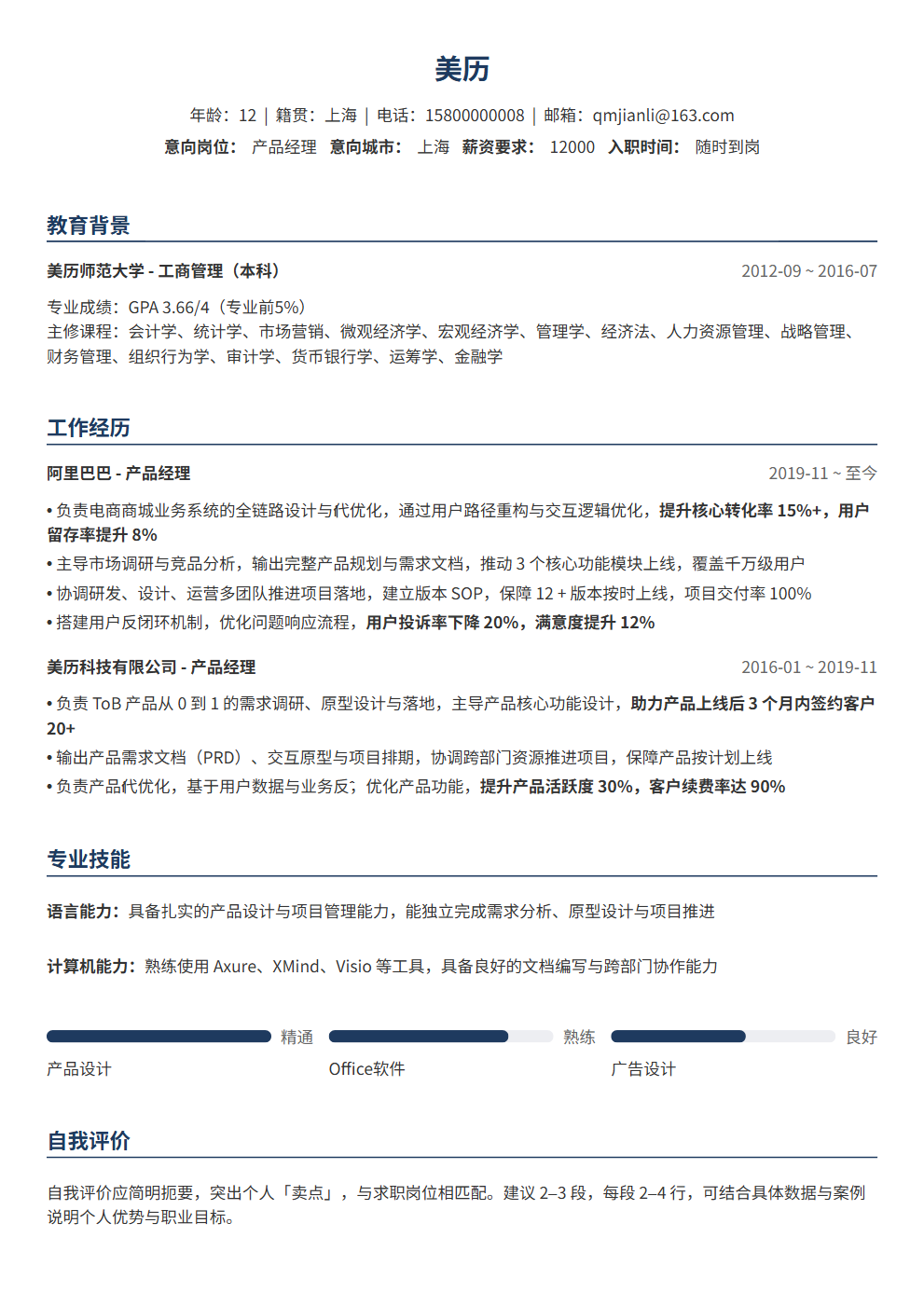
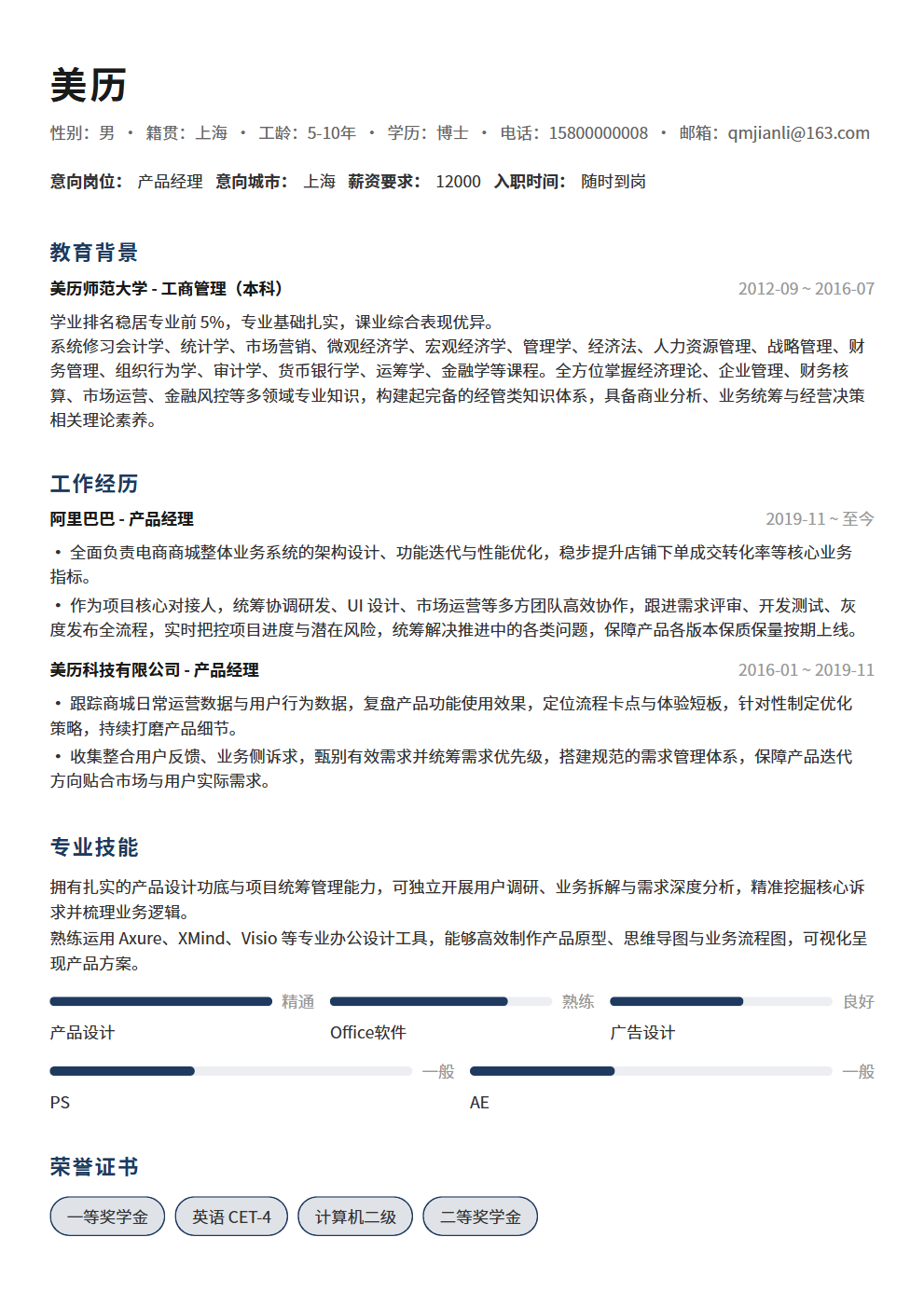
How to Write a Resume Job Objective: 3 Formulas for Precise Positioning
You open your resume, get to the "job objective" field, think for a long time, and type "seeking related work." Then you look at it, feel it's not quite right, and…
How to Write a Resume Job Objective? "Seeking Related Work" Means Nothing — 3 Formulas for Precise Positioning
You open your resume, get to the "job objective" field, think for a long time, and type "seeking related work." Then you look at it, feel it's not quite right, and change it to "seeking internet-related work." You look again, still feel it's not right, and finally change it to "seeking internet operations-related work." You breathe a sigh of relief, thinking you've written something "specific." But the recruiter's real reaction when seeing this line is — "So what exactly do you want to do?" Writing a job objective that reads like nonsense is one of the most common and fatal problems in resumes. It not only wastes prime resume real estate but also makes recruiters think your goals are unclear and your positioning vague. Today I'll give you 3 formulas to transform your job objective from "nonsense" to "precise positioning."
Formula 1: Target Position + Core Competency
This is the most direct and effective way to write a job objective — tell the recruiter what position you want and what capability you have to excel at it. The target position lets the recruiter immediately know if you're a match; the core competency lets them instantly see your value. Combined, these two pieces of information form a precise job objective.
- Bad example: "Seeking marketing-related work" — "related work" is meaningless, "marketing" is too broad. The recruiter doesn't know if you want to do brand marketing, digital marketing, content marketing, or channel marketing
- Good example: "Seeking Digital Marketing Manager — 5 years social media marketing experience, specialized in content strategy and user growth, led 3 brands' social media matrix from 0 to 1" — target position + core competency + results evidence, the recruiter immediately knows what you do and at what level
- Formula breakdown: Target position should be specific to the functional direction (e.g., "Digital Marketing Manager" not "Marketing Position"), core competency should highlight 1-2 strongest areas (e.g., "content strategy and user growth" not "know all kinds of marketing")
- More examples: "Seeking Senior Java Developer — 6 years distributed systems development experience, specialized in high-concurrency architecture design and performance optimization" "Seeking HRBP — 4 years internet industry HR experience, specialized in organizational diagnostics and talent development" "Seeking Supply Chain Manager — 7 years manufacturing supply chain experience, specialized in cost optimization and vendor management"
- Note: Don't list too many core competencies — 1-2 strongest areas suffice. Listing too many means no focus — "specialized in content strategy, user growth, data analysis, event planning, team management" — the recruiter thinks you want to do everything but excel at nothing
The target position + core competency formula essentially answers the two questions recruiters care about most: "what do you want to do" and "can you do it well." When both questions have clear answers, the recruiter has a reason to give you an interview.
Formula 2: Industry Direction + Functional Direction
If you don't want to limit your target position too narrowly (for example, you want to try different functions within a specific industry), you can use the "industry direction + functional direction" format. This expresses your industry preference while showing your functional inclination, while maintaining some flexibility.
- Bad example: "Seeking to develop in the internet industry" — only mentions industry, not function. The recruiter doesn't know if you want to do product, operations, tech, or marketing
- Good example: "Seeking product or operations roles in EdTech industry — 3 years online education product experience, familiar with K12 user needs and conversion funnels" — industry + function + experience evidence, the recruiter knows your industry background and functional inclination
- Formula breakdown: Industry direction should be specific to sub-sectors (e.g., "EdTech" not "Internet"), functional direction should specify 1-2 related functions (e.g., "product or operations" not "any position is fine")
- More examples: "Seeking supply chain or quality management roles in new energy vehicle industry" "Seeking data analysis or business analysis roles in healthcare industry" "Seeking brand marketing or user operations roles in consumer brands"
- Note: List at most 2 functional directions, and they must be intrinsically related — "product or operations" works (both are user-oriented), "product or finance" doesn't (too wide a gap, recruiters will think your goals are unclear)
The industry direction + functional direction formula suits job seekers who are "clear on industry but flexible on role." Its advantage is showcasing your industry knowledge while not narrowing your path too much — but the prerequisite is that both industry and function must be specific enough, otherwise it reverts to the meaningless "seeking related work."
Formula 3: Position Type + Years of Experience
If you have a clear position direction and rich work experience, you can use the "position type + years of experience" format. This is the most concise but has the highest information density — recruiters can immediately judge your seniority level and salary expectation range.
- Bad example: "Seeking product manager position" — no years of experience, the recruiter doesn't know if you're a 1-year novice or 8-year veteran, can't determine whether to match you with junior, mid, or senior positions
- Good example: "Seeking Senior Product Manager (5+ years B2B product experience)" — position type + years of experience, the recruiter immediately knows you're a seasoned B2B product manager who should be matched with senior positions and corresponding salary
- Formula breakdown: Position type should include level (e.g., "Senior Product Manager" not just "Product Manager"), years of experience should include direction (e.g., "5+ years B2B product experience" not "5 years work experience")
- More examples: "Seeking Senior Frontend Engineer (7+ years React/Vue tech stack)" "Seeking Marketing Director (10+ years FMCG brand management)" "Seeking Data Analyst (3+ years SQL/Python/BI tools)"
- Note: Years of experience must be truthful — don't exaggerate. During interviews, recruiters will calculate your actual years from your work history — if your resume says "8 years experience" but your work history only shows 5 years, your integrity will be questioned
The position type + years of experience formula essentially helps recruiters do "initial screening" — letting them determine in 1 second whether you meet the position's seniority requirements. If your years don't match, recruiters won't waste your time; if they match, they'll carefully review your experience. A precisely written objective saves time for both you and the recruiter.
5 Common Mistakes in Writing Job Objectives
The following 5 ways of writing job objectives each tell the recruiter "I don't know what I want to do" — if your resume has any of them, fix it immediately.
- Mistake 1: "Seeking related work" — What is "related work"? Related to what? This writing is equivalent to writing nothing; recruiters will only think your goals are unclear
- Mistake 2: "Seeking challenging work" — What's "challenging"? Everyone defines challenge differently. This only shows your subjective feelings without conveying any useful information
- Mistake 3: "Seeking work that utilizes my strengths" — What are your "strengths"? Recruiters don't know. This pushes the understanding cost onto the recruiter, who won't spend time guessing what you mean
- Mistake 4: "Seeking work in internet/finance/education industry" — Listing 3 industries makes recruiters think you're not genuinely interested in any of them and just casting a wide net
- Mistake 5: "Salary negotiable, location flexible" — Job objective is for writing job direction, not job conditions. Salary and location are conditions, not directions. Putting conditions in the objective field only makes recruiters think "anything goes" — and anything goes means nothing goes
The common problem with all 5 mistakes: none of them convey the core information of "what you actually want to do." The sole purpose of a job objective is to let recruiters quickly determine "whether this person's job direction matches our position" — if your objective writing can't help recruiters make this determination, then the objective is ineffective.
Job Objective Writing for Different Career Stages
Job objectives aren't set in stone — different career stages should have different writing approaches. Fresh graduates, early-career professionals, and senior professionals face completely different job search situations, and objective writing should adjust accordingly.
- Fresh graduates: Use "target position + academic background" format — "Seeking Product Manager — Computer Science major, with 2 product internships and 1 independent product project." Fresh graduates lack work experience, so use academic background and internship experience instead. Don't write "seeking XX-related work" — clearly state the specific position you want
- Early-career professionals (1-3 years): Use "position type + core skills" format — "Seeking New Media Operations — 2 years WeChat account operations experience, specialized in content planning and data analysis, single article peak reads 100K+." At this stage you have some practical experience, so use specific skills and results to support your job direction
- Senior professionals (5+ years): Use "position type + years of experience + industry domain" format — "Seeking Product Director — 8 years internet product experience, deep expertise in e-commerce and social tracks, led 3 products with 10M+ DAU." Senior professionals' job objectives should reflect "depth" — not that you can do anything, but that you have deep accumulation in a specific domain
- Career changers: Use "target position + transferable skills" format — "Seeking Data Analyst — 4 years market analysis experience, proficient in SQL/Python/Excel, specialized in data-driven business decision-making." Career changers should highlight "transferable skills" — let recruiters see that while the industry differs, core capabilities can transfer
- Cross-industry job seekers: Use "industry direction + functional direction + cross-industry advantage" format — "Seeking education industry operations — 5 years internet operations experience, specialized in user growth and community operations, hoping to apply internet methodologies to the education sector." Cross-industry job seekers must explain "why cross" and "what qualifies you to cross" — let recruiters see your cross-industry logic and capability support
The core logic of job objective writing across different career stages is the same: let recruiters quickly determine if you're a match. But the definition of "match" varies by stage — fresh graduates match on "potential," early-career on "skills," senior professionals on "depth," and career changers on "transferable skills." Choose the right writing approach for your stage to make the objective truly effective.
3 Techniques for Precise Positioning
Beyond the 3 formulas, here are 3 techniques to make your job objective even more precise and powerful.
- Technique 1: Write the objective using the JD's language. Carefully read the target position's JD and incorporate its keywords into your job objective — if the JD says "user growth operations," your objective should say "seeking user growth operations," not "seeking operations position." Using the JD's language makes recruiters feel you're "exactly who we're looking for"
- Technique 2: One objective per direction. Don't write 2+ job objectives in one resume — "seeking product manager or project manager or operations manager" only makes recruiters think you want to do everything. If you genuinely want to apply for different directions, prepare different resume versions, each with only one objective
- Technique 3: After writing the objective, do the "3-second test" — show your job objective to someone who doesn't know you, and after 3 seconds ask "what does this person want to do?" If they can answer accurately, your objective is precise; if they say "probably XX or something," it's not clear enough; if they say "can't tell," your objective is ineffective
The core of these 3 techniques: your job objective is written for recruiters, not for yourself. Use the recruiter's language, meet the recruiter's needs, pass the recruiter's test — only then will your job objective truly work.
Conclusion: The Job Objective Is Your Resume's "Headline," Not "Filler"
The job objective is one of the first things recruiters see on your resume — like an article's headline, it determines whether they continue reading. A meaningless objective like "seeking related work" is like an article titled "Some Stuff" — nobody will click to read it. The 3 precise positioning formulas — target position + core competency, industry direction + functional direction, position type + years of experience — help you write a job objective that's clear at a glance. Combined with avoiding the 5 common mistakes, adjusting for different career stages, and applying the 3 precise positioning techniques, your job objective will no longer be "filler" but the most powerful sentence in your resume. Remember: the first step in resume screening is looking at the job objective — if your objective isn't precise enough, nobody will read the rest, no matter how good it is.
Want your job objective and resume content to both be precisely on point? Use BeautyResume resume editor, with smart JD keyword matching and one-click objective optimization — from "seeking related work" to precise positioning in just 3 seconds, transforming your resume from "unclear goals" to "exactly who they're looking for" in the recruiter's eyes.