How to Write a Resume as a Fresh Graduate: A Complete Guide from Scratch
No work experience? Don't know how to write a resume? This guide walks fresh graduates through structure, content, and formatting to create an HR-worthy first resume.
1. The Fresh Graduate Resume Dilemma: Zero Experience ≠ Zero Opportunity
Every graduation season, countless fresh graduates stare at a blank resume — no internships, no projects, nothing to write. But zero experience doesn't mean zero opportunity. When HR reviews fresh graduate resumes, they're not looking at how long you've worked — they want to know what you can do, what you've learned, and whether you have potential. This guide walks you through structure, content, and formatting to create your first HR-worthy resume from scratch.
2. The Essential Structure of a Fresh Graduate Resume
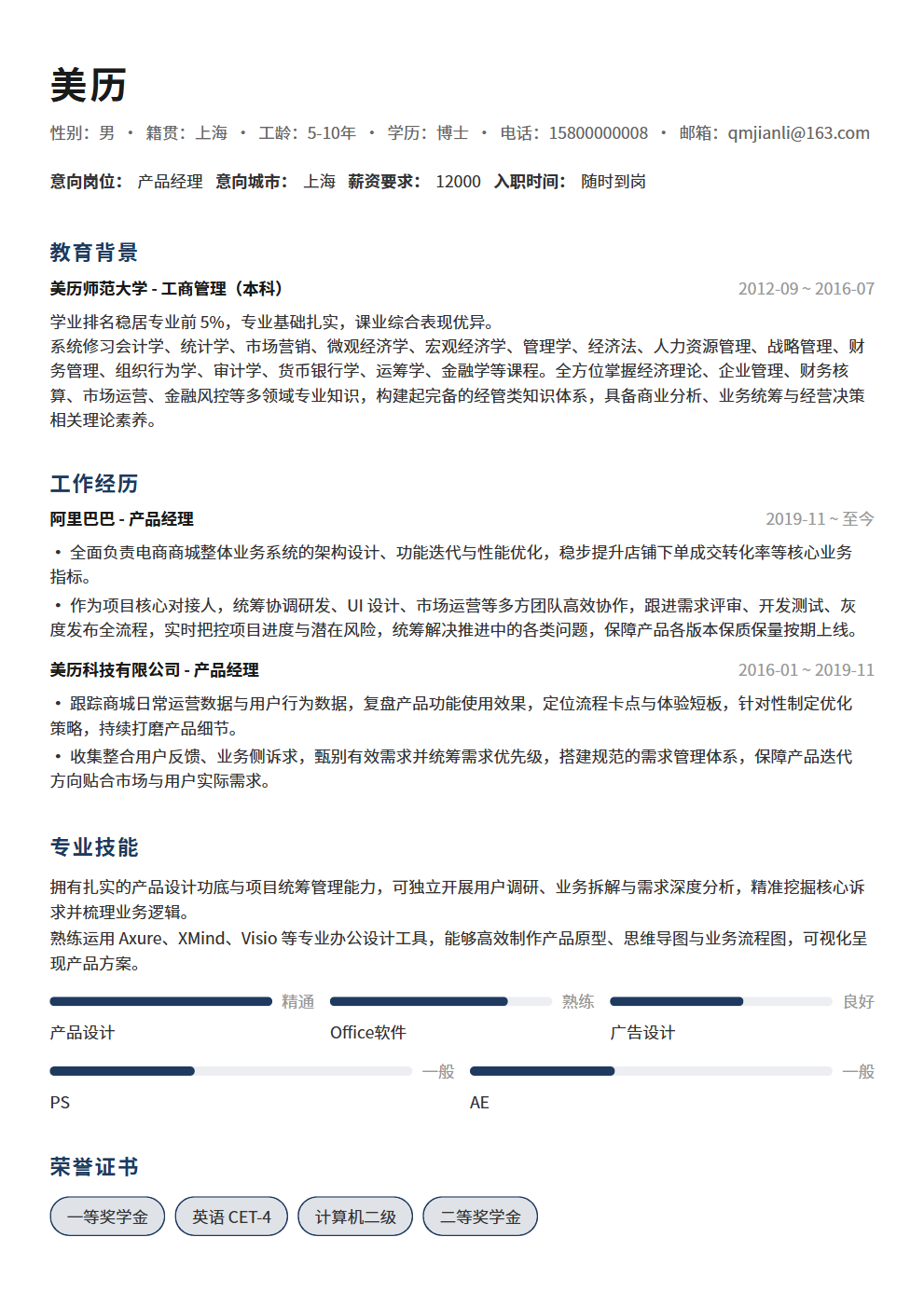
A standard fresh graduate resume should include these sections, ranked by importance:
- Personal Information: Name, phone, email, target position (skip photos and age unless specifically required)
- Education: University, major, degree, graduation date, GPA (only if 3.5 or above)
- Internship/Project Experience: The core of your resume — even one experience, if well-written, makes an impact
- Campus Activities & Competitions: Student government, clubs, academic competitions, volunteer work
- Skills & Certifications: Language proficiency, professional certificates, software tools
- Self-Summary: 3-4 sentences highlighting core strengths — avoid empty phrases like "hardworking and responsible"
Keep your resume to one page. Fresh graduate resumes exceeding one page are almost never read in full.
3. How to Write Education to Maximize Impact
Education is the strongest section for most fresh graduates. Here's how to make it count:
- Put your university and major front and center so HR sees them immediately
- If you have a double major, minor, or exchange experience, always include them
- Don't list every course — only include 3-5 courses relevant to the target position
- Scholarships and honors should be listed separately — they're more convincing than GPA alone
If your university isn't a top-tier school, use class ranking to compensate — "Top 10% of major" hits harder than "GPA 3.6."
4. Internship & Project Experience: Use the STAR Method
Experience is the soul of your resume. Many fresh graduates write experiences like a task list, leaving HR with no impression. The right approach is the STAR method:
- S (Situation): What was the context or background?
- T (Task): What were your specific responsibilities?
- A (Action): What methods or strategies did you use?
- R (Result): What measurable outcomes did you achieve?
Compare these examples:
- ❌ Weak: Responsible for managing the company's social media account
- ✅ Strong: Independently managed the company's WeChat account, publishing 24 original articles in 3 months, growing followers from 800 to 3,500, and increasing average views by 200%
Key principle: Let data speak, let results prove. When you don't have hard numbers, start with action verbs like "improved," "optimized," or "delivered," paired with specific details.
5. No Internships? Campus Experience Can Impress HR Too
If you genuinely have no internship experience, don't panic. Campus activities can demonstrate your capabilities just as effectively:
- Student government/clubs: Focus on what events you organized, how many people you managed, and what problems you solved
- Academic competitions: Name of competition, award level, and your role on the team
- Course projects/thesis: Treat major assignments as projects — highlight your research methodology and outcomes
- Volunteer work: Demonstrates social responsibility and teamwork
Remember, HR isn't looking at what activities you did — they're looking at what capabilities you demonstrated: leadership, execution, communication, and problem-solving.
6. Skills & Certifications: Precisely Match the Job Requirements
The biggest mistake in this section is listing everything you've ever touched. The right approach is to precisely match the job description (JD):
- Read the JD carefully and extract key requirements
- Put skills explicitly mentioned in the JD first
- Use proficiency levels — "proficient / familiar / basic understanding" — don't claim "expert" for everything
- Only list high-value certifications: CET-4/6 and computer skills are baseline; CPA, bar exam, and similar credentials are differentiators
If you're applying for a product manager role, listing "Axure, Figma, SQL" is far more valuable than "Microsoft Office."
7. Resume Formatting: Professionalism Makes the First Impression
HR spends an average of 6-10 seconds on each resume — poorly formatted ones get eliminated instantly. Core formatting principles:
- Consistent fonts: Use clean sans-serif fonts, 10-12pt body text
- Generous whitespace: 1.3-1.5x line spacing, clear separation between sections
- Highlight key points: Bold company names, job titles, and key metrics
- Export as PDF: Never send a Word document — formatting will break
- File naming: "Name-University-Position-Phone" for easy HR retrieval
If formatting isn't your strength, using a professional resume template is the most time-efficient choice. Good templates handle the layout so you can focus purely on content.
8. Five Fatal Mistakes in Fresh Graduate Resumes
- Writing 2-3 pages: One page is enough for a fresh graduate — too much information shows you can't prioritize
- Vague career objective: "Seeking a related position" means nothing — specify the exact role
- Generic self-summary: "Hardworking, responsible, good communicator" — every fresh graduate writes this, making it meaningless
- Typos and formatting errors: A single typo can cost you an interview — proofread at least 3 times before sending
- One resume for all positions: Different roles require different emphases — prepare at least 2-3 tailored versions
Summary
Writing a resume isn't filling out a form — it's self-marketing. Having no work experience isn't scary; what's scary is not knowing how to extract highlights from your experiences. Use the STAR method for experience, let data speak, and precisely match skills to job requirements — you can absolutely create a resume that catches HR's attention. A professionally formatted, precisely targeted resume is your first step toward landing interviews — and with BeautyResume's templates and optimization tools, you can take your resume's professionalism and relevance even further, ensuring every application counts.