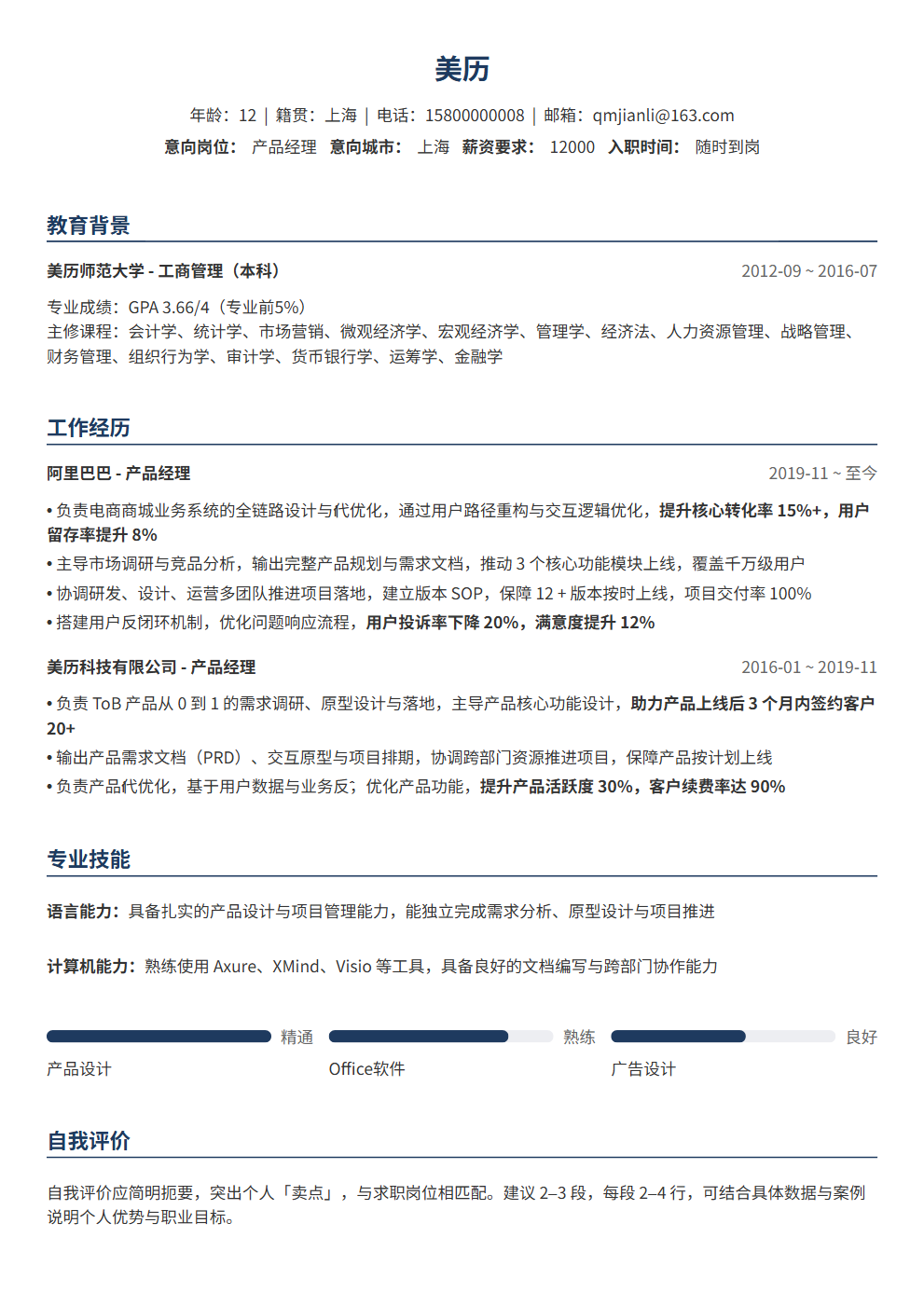
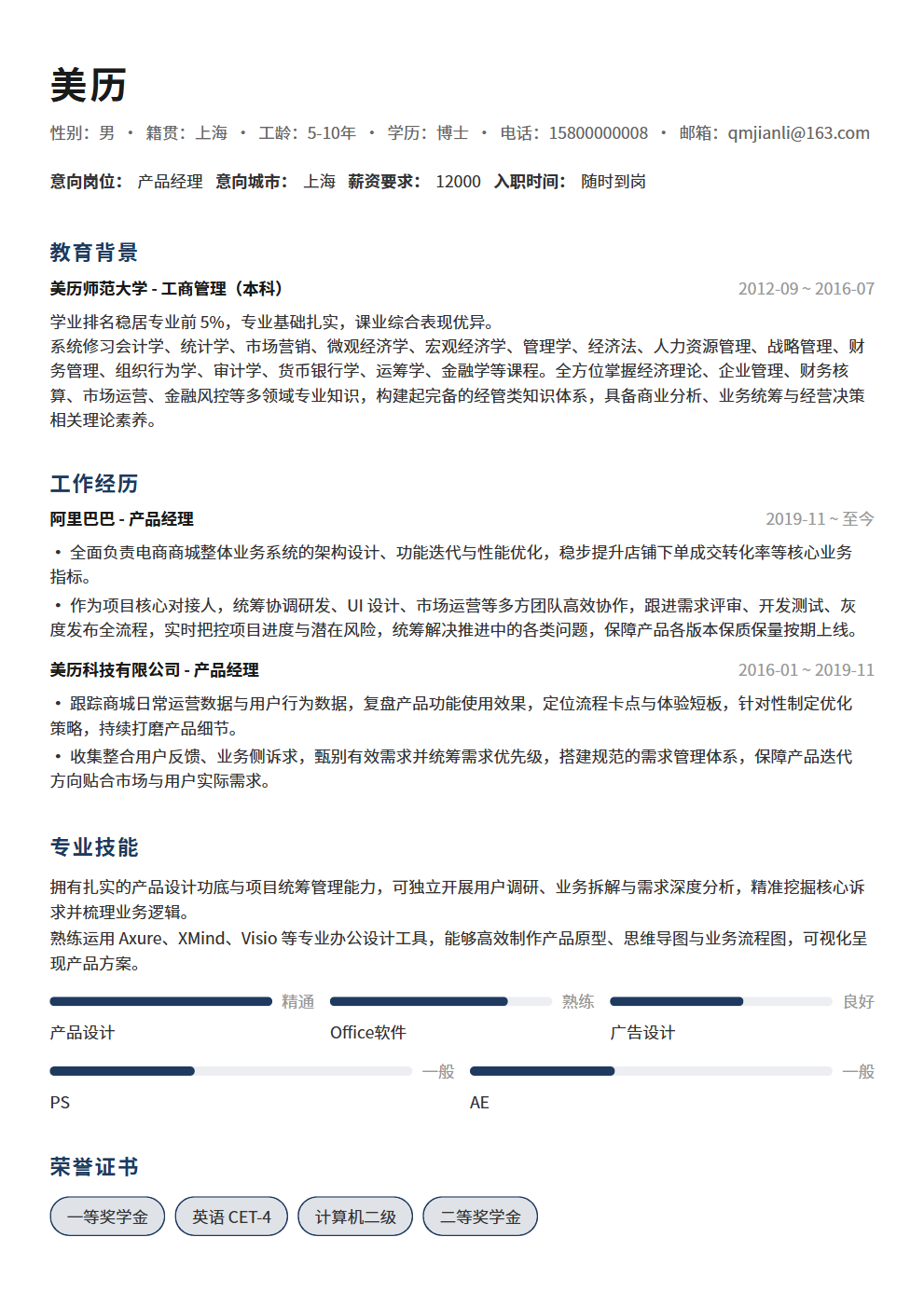
How to Write a Resume as a Freelancer? 3 Templates to Turn Scattered Projects into a Professional Track Record
Freelance experience looks like odd jobs? 3 resume templates (project collection / client list / results showcase) help you integrate scattered projects into a professional track record, with 5 key points and advice for returning to full-time work.
You've been freelancing for two years, completed twenty or thirty projects of all sizes, and you know you have rich experience and versatile skills. But when it's time to write a resume, you're stuck—these projects are scattered all over the place, and listing them looks like "odd jobs," while leaving them out creates an unexplained two-year gap. The freelancer's resume dilemma is exactly this awkward: you've clearly done a lot, but you don't know how to make HR see your professionalism. Don't worry—today I'm giving you 3 resume templates to help you integrate scattered projects into a compelling professional track record.
Template 1: Project Collection Mode—Showcase Your Professional Breadth and Depth Through Curated Project Groups
The project collection mode is best for freelancers with many projects across diverse types. The core idea: instead of listing every project chronologically, group them by type or capability to form "project collections," presented like a portfolio.
- Template structure: Professional Overview (3-4 sentences summarizing your freelance positioning and core capabilities) → Core Project Collections (3-4 groups organized by capability or domain, with 3-5 representative projects each) → Skills & Tools → Client Testimonials or Results Data
- Project collection grouping methods: By professional domain (e.g., "Brand Design Collection," "UI/UX Collection," "Illustration Collection"), by capability dimension (e.g., "Zero-to-One Collection," "Optimization & Iteration Collection," "Data-Driven Collection"), or by industry (e.g., "Internet Industry Collection," "Consumer Goods Collection"). Choose the grouping method that best showcases your professional depth
- Presenting each project: Project Name | Client Type (specific names optional) | Your Role → Project Summary (2-3 sentences) → Key Results (data-driven). Keep each project to 3-4 lines—don't write a running log
- Example: "Brand Design Collection → ① Completed full visual identity system from Logo to VI for a new consumer brand, reducing customer acquisition cost by 30% in the first month ② Redesigned brand visuals for a SaaS company, increasing client survey satisfaction by 45% ③ Designed brand upgrade plan for an education institution, supporting their Series A funding round"—see how 3 projects combined create far more professionalism and persuasiveness than individual listings
- Best for: Designers, developers, consultants, copywriters, and other project-based freelancers. The more projects you have and the more diverse they are, the greater the advantage of the project collection mode
The essence of the project collection mode is "consolidating the scattered"—bringing together dispersed projects into logically organized collections so HR can see your professional scope at a glance, rather than a pile of random fragments.
Template 2: Client List Mode—Use Client Endorsements to Demonstrate Market Recognition
The client list mode is best for freelancers who have served well-known enterprises or major clients. The core idea: use your client roster to build trust—make HR think, "If all these big companies hired them, they must be reliable."
- Template structure: Professional Overview → Core Client List (grouped by industry or project type) → Detailed Representative Projects (2-3 most compelling projects expanded) → Skills & Tools → Client Testimonial Excerpts
- Presenting the client list: If clients allow disclosure, write company names directly. If not, write industry + scale, such as "A leading internet company (50M+ DAU)" or "A listed manufacturing enterprise (5B+ annual revenue)." Don't write vague descriptions like "a well-known company"—the more specific, the more convincing
- Detailed representative projects: Select 2-3 most representative projects from your client list and expand using the "Project Background → Your Role → Solution → Results Data" structure. This is the "highlight" of your resume—make it substantial and detailed
- Client testimonial excerpts: If you have positive client feedback, include 1-2 quotes in your resume. "Marketing Director at XX Company: 'The most professional freelance designer I've worked with—delivery quality and speed both exceeded expectations'"—this third-party endorsement is 100x more powerful than self-evaluation
- Best for: Freelancers who have served B2B clients, especially well-known enterprises. If you primarily serve individual clients or small businesses, this template's impact will be diminished—consider the project collection or results showcase mode instead
The core of the client list mode is "leveraging others' strength"—using your clients' brands to vouch for you. HR may not know you, but they definitely know the companies you've worked with. This trust transfer is the most powerful weapon in a freelancer's resume.
Template 3: Results Showcase Mode—Let Data and Outcomes Speak for Themselves
The results showcase mode is best for freelancers whose outcomes are quantifiable and demonstrable. The core idea: instead of emphasizing "what projects you did," emphasize "what results you achieved"—using data, cases, and work samples to prove your value.
- Template structure: Professional Overview → Core Results (3-5 most impressive data points or outcomes) → Results Details (2-3 sentences per result explaining background and approach) → Representative Works/Cases → Skills & Tools
- Presenting core results: Use big numbers and comparisons to create impact. For example: "Generated over 5 million RMB in cumulative revenue for clients," "Average project delivery cycle 40% faster than industry standard," "Client repeat business rate 85%, far exceeding the industry average of 50%"—the more specific the data and the sharper the comparison, the more persuasive
- Results details: For each core result, use 2-3 sentences to explain "how you did it." For example: "By redesigning the user conversion funnel, increased a client's first-purchase conversion rate from 2.3% to 4.1%, adding 1,200+ new monthly orders"—with method, data, and results
- Representative works/cases: If your results are visible works (designs, articles, products), include links or QR codes. HR being able to directly see your work is more effective than any written description
- Best for: Freelancers with quantifiable outcomes—operations (growth metrics), technology (performance indicators), design (conversion rate improvements), sales (revenue data). If your results are hard to quantify (e.g., purely creative work), consider the project collection mode instead
The logic of the results showcase mode is "outcome-oriented"—HR doesn't care how many projects you completed; they care what results you can deliver. Put results front and center, make them data-driven and comparative, so HR can judge "this person has value" within 3 seconds.
5 Essential Points for Freelancer Resumes
Regardless of which template you use, these 5 points are essential for every freelancer's resume.
- Point 1: Eliminate concerns about "gap periods." The biggest resume risk for freelancers is HR assuming you were "unemployed." Clearly state "2022.06-2024.12 | Independent Designer / Freelancer" in your professional overview—don't leave gaps. If you have a registered company or studio, writing the company name is even more professional
- Point 2: Use a consistent professional identity. Don't write "freelance writer" in one place, "content operations consultant" in another, and "content creator" somewhere else—choose one identity that best captures your core value and use it throughout your entire resume. "Content Marketing Specialist" is more powerful than three scattered labels
- Point 3: Quantify everything. The biggest disadvantage of freelancers is the lack of "big company endorsement," but the biggest advantage is that "results are directly quantifiable." Turn every outcome into numbers—project count, client count, revenue data, growth percentages, satisfaction scores. Numbers are the fairest language
- Point 4: Highlight initiative. Freelancers need to find their own clients, manage their own projects, and ensure their own delivery—these are inherently strong professional capabilities. Emphasize keywords like "independent client acquisition," "self-managed," and "end-to-end delivery" in your resume to show HR your self-motivation and execution ability
- Point 5: Keep updating. Freelance projects are ongoing, and your resume should be too. Update your resume after completing each significant project. Don't wait until you're job hunting to update—by then you may have forgotten many details and data points
How to Explain Your Freelance Period in Interviews
Even with a well-crafted resume, you'll be asked about your freelance experience in interviews. Here are common questions and response strategies.
- Question 1: "Why did you become a freelancer?"—Answer positively, never say "I couldn't find a job." Good responses: "I wanted to develop XX capabilities across a broader range of projects," "I wanted to validate whether my XX idea could work," "I saw an opportunity in the XX market and wanted to try"—frame freelancing as an "active choice" rather than a "passive fallback"
- Question 2: "Why do you want to return to full-time work?"—This is guaranteed to come up. Good response: "Freelancing helped me build XX capabilities and experience, but I've found that a larger platform and team collaboration can help me create greater value," "I want to deepen my expertise in XX, and your company's XX project/team is the ideal platform"—this affirms the value of freelancing while expressing enthusiasm for the new opportunity
- Question 3: "Freelancing and full-time work are very different—can you adapt?"—Use specific examples to prove your adaptability. "During my freelance period, I simultaneously managed 5 projects' timelines and deliveries—this multi-task management skill translates directly to full-time work," "I'm used to quickly adapting to different clients' needs and working styles, which makes me more flexible in team collaboration"
- Question 4: "What's your view on teamwork?"—HR is testing your transition from "solo work" to "team collaboration." Key points: Emphasize that you also had collaborative experiences during freelancing (working with client teams, other freelancers), and express enthusiasm for team collaboration
3 Tips for Returning to Full-Time Employment
Beyond resumes and interviews, here are 3 practical tips for freelancers returning to full-time work.
- Tip 1: Adjust salary expectations—get on board first, then negotiate up. Freelance income is volatile, and HR may question your acceptance of a fixed salary. If market conditions allow, consider modestly lowering your starting salary expectations and proving your value during the probation period to negotiate higher pay later. Get the offer first, then prove your worth after joining
- Tip 2: Choose companies that are open to freelance experience. Some companies naturally welcome candidates with freelance backgrounds—startups, small teams needing versatile players, and innovation departments at large companies that value creativity. These companies won't treat freelancing as a "minus"—they'll value your versatility and self-motivation
- Tip 3: Preserve some of the flexibility freelancing gave you. Returning to full-time work doesn't mean completely abandoning the resources you built as a freelancer. If possible, choose companies that allow personal projects in off-hours, or opt for remote/hybrid positions. This way you gain the stability of full-time work while retaining some of freelancing's flexibility
Conclusion: Freelancing Isn't a Resume Gap—It's Your Most Unique Professional Asset
Freelancers don't need to "hide" on their resumes—every project you completed, every client you served, and every result you created is a professional asset. The key is finding the right presentation method: the project collection mode for freelancers with many diverse projects, the client list mode for those who've served major clients, and the results showcase mode for those with quantifiable outcomes. Remember the 5 essential points: eliminate gap concerns, maintain a consistent identity, quantify everything, highlight initiative, and keep updating. In interviews, frame freelancing as an "active choice," and when returning to full-time work, get on board first then adjust. Your freelance experience isn't a weakness—it's your unique differentiator from other candidates. Used well, it becomes your strongest competitive advantage.
Worried about scattered freelance experience looking disorganized on your resume? Use BeautyResume resume editor to flexibly combine project modules and adjust presentation order—integrating your freelance experience into a professional, logical track record that shows HR your professionalism, not "odd job" fragments.