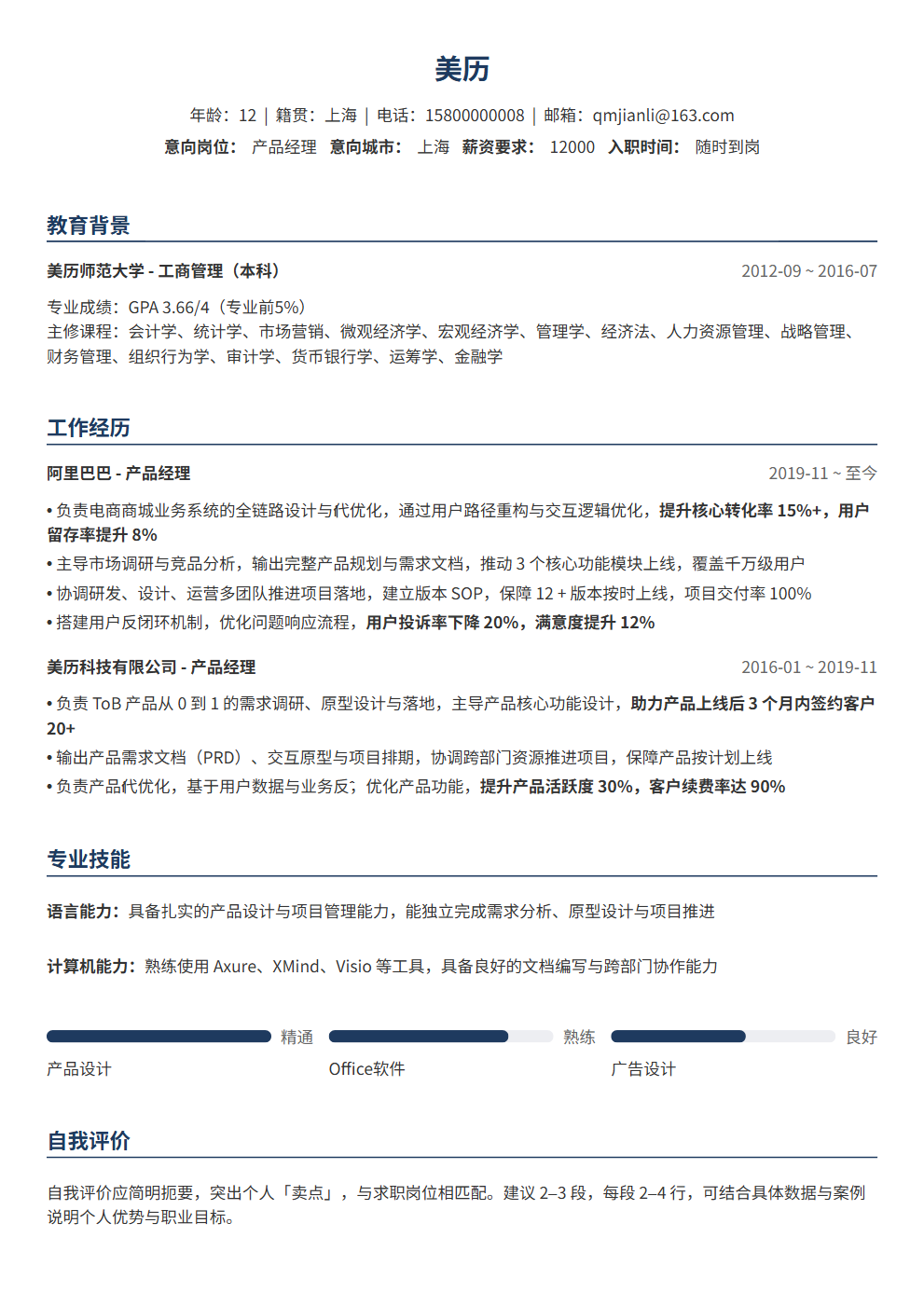
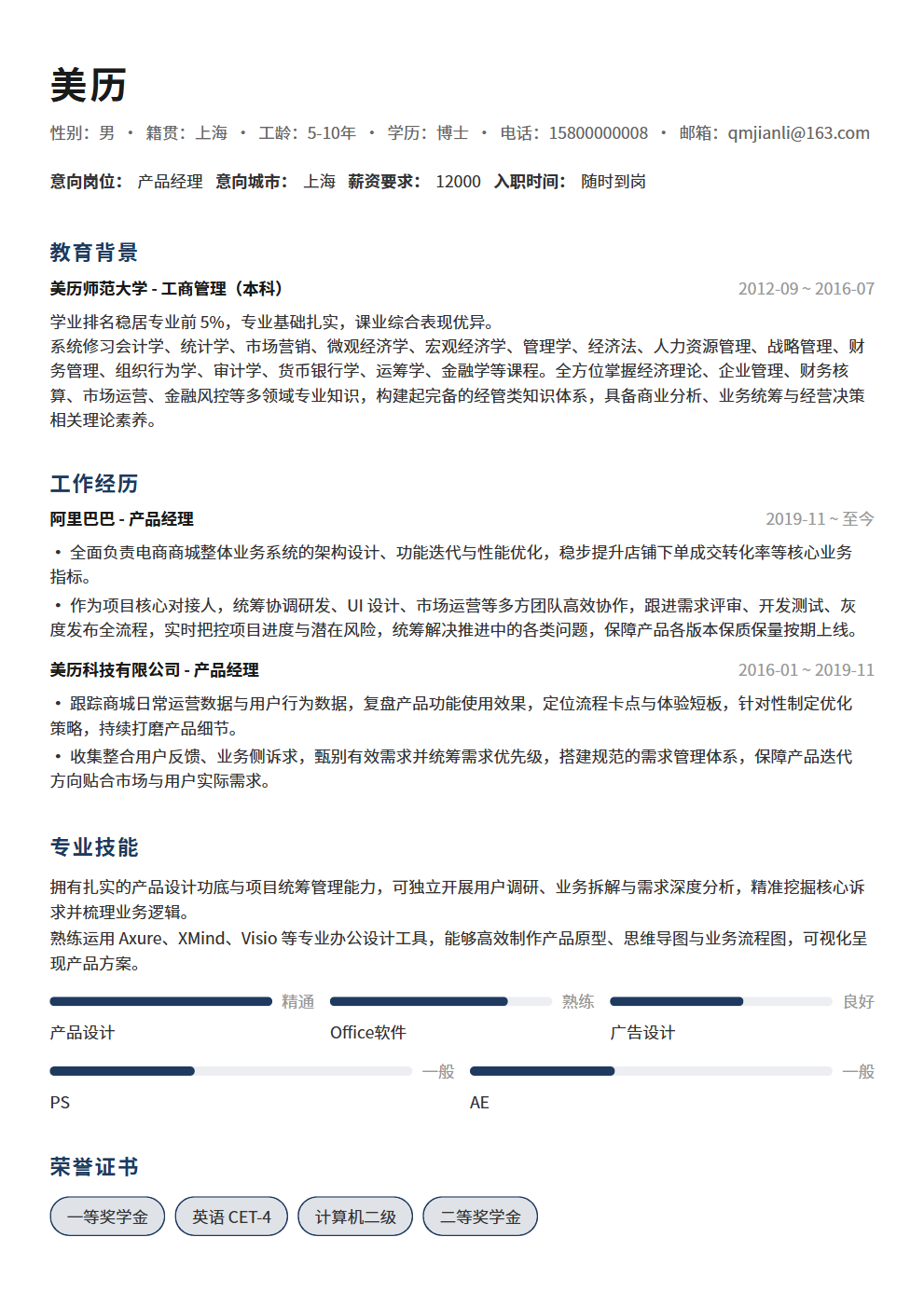
The Complete Freelancer Resume Guide: Project Groups, Skill Matrix, Client Proof, and Gap Explanations
Freelancer experience is scattered, lacks corporate backing, and your resume looks like odd jobs? 3 resume templates help you consolidate scattered projects into a professional portfolio, showing HR your systematic capabilities rather than fragmented gigs.
The Biggest Pain Point for Freelancer Resumes — Scattered Experience, No Corporate Backing, Looking Unstable
When freelancers write resumes, they most commonly face three questions: First, "You've done so many projects, but they're all short-term — what's your core capability?" — lots of projects but scattered, HR can't see your systematic approach. Second, "You don't have experience at a major company — how do you prove your professional level?" — without corporate backing, your abilities lack a trust anchor. Third, "You've been freelancing for so long — can you adapt to the pace of a corporate environment?" — freelancing gets equated with "instability." These problems aren't unsolvable — the key is how you organize and present your experience.
3 Core Challenges for Freelancer Resumes and How to Solve Them
Challenge 1: Projects are scattered, making it look like "odd jobs." Solution: Don't list projects chronologically one by one. Instead, group them by capability dimension or project type to demonstrate your systematic approach. Challenge 2: No corporate backing, so professional capabilities lack credibility. Solution: Use client testimonials, project outcome data, and industry certifications to replace corporate backing — let the facts speak. Challenge 3: "Gaps" during freelancing make HR think you're unstable. Solution: Treat freelancing itself as a complete work experience, emphasizing active choice and consistent output rather than passive unemployment.
Template 1: Project Collection Method — Group by Project Type to Showcase Systematic Capabilities
If you've done many similar projects, the project collection method is ideal for you. The core idea is to group scattered projects by type, showcasing 2-3 representative projects under each category so HR sees your depth in a particular field rather than breadth across many.
- Classification approach: Group by project type (e.g., brand design, product operations, technical development) or by industry (e.g., e-commerce, finance, education). Choose the classification that best demonstrates your core capabilities.
- Project descriptions under each category: Project name + client type + your role + core results. For example: "Built brand visual systems from scratch for 3 new consumer brands, increasing average brand awareness by 40%."
- Highlight commonalities: After classification, add a summary that distills your core methodology in that area. "Completed major promotional campaign planning for 8 e-commerce brands, developing a standardized operations SOP from pre-heat to viral launch."
Template 2: Capability Matrix Method — Organize by Core Skills, Show Related Projects Under Each
If your project types are diverse but the core skills involved are concentrated, the capability matrix method suits you better. The core idea is to organize your resume by capability dimension, showing related projects as evidence under each skill.
- Distill 3-5 core capabilities: Extract the 3-5 most essential capabilities from your projects, such as "user growth strategy," "data analysis and insights," "cross-team project management." These capabilities form the backbone of your resume.
- List 2-3 projects under each capability as support: "User growth strategy — Designed a viral growth plan for an education app, adding 50,000+ new users in 30 days; optimized user activation flow for an e-commerce platform, improving 7-day retention by 25%."
- Logical relationships between capabilities: Arrange core capabilities in a logical sequence so HR sees your skills as a coherent system rather than scattered pieces. For example, "user insights → growth strategy → data validation" forms a complete closed loop.
Template 3: Client Testimonial Method — Use Client Reviews and Outcome Data to Replace Corporate Backing
If your clients include well-known companies or industry leaders, the client testimonial method can help you build credibility. The core idea is to use client reviews and project outcome data to replace the experience of working at a big company.
- Select 3-5 representative clients: You don't need to list every client. Choose the 3-5 that are most well-known, have the most significant results, and gave the best reviews. Under each client, write the project overview, your contribution, and quantified results.
- Include client testimonials: If clients have given you positive feedback (emails, chat screenshots, recommendation letters), select 1-2 quotes for your resume. "XX Brand CEO: 'The most professional freelancer I've worked with — delivery exceeded expectations.'"
- Let data speak: Every project should have quantified results. "Optimized advertising strategy for XX Company, improving ROI from 1:3 to 1:5.2" — data is more persuasive than any self-assessment.
5 Essential Elements Every Freelancer Resume Must Include
- Project overview: One sentence explaining what the project is, who the client is, and what the goal was. HR doesn't have time to guess what you were doing.
- Your role: Clarify your specific responsibilities in the project. Did you work independently or as part of a team? Strategy or execution? Don't make HR guess your level of contribution.
- Skills used: List the core skills and tools used in the project so HR can quickly assess whether you match the position requirements.
- Deliverables and results: Use data to show what you completed and what effects you achieved. Results without data lack persuasiveness.
- Client testimonials: If available, include positive client feedback. Third-party endorsements are 10 times more credible than self-assessments.
How to Explain the "Gap" During Freelancing — Treat Freelancing Itself as a Work Experience
Many freelancers don't know how to write about their freelancing period on their resume, so they leave it blank — and what HR sees is a "gap." The correct approach is to treat freelancing itself as a complete work experience:
- Title it "Independent Consultant / Freelancer" rather than leaving it blank or writing "unemployed." Give this period a formal identity.
- Specify the time range and primary service area: "2023.06-2025.03 | Independent Brand Consultant | Provided brand strategy and visual design services for 8 new consumer brands."
- Emphasize active choice: In interviews, when asked why you freelanced, don't say "I couldn't find a job." Say "I chose independent practice to XX" — to accumulate more diverse project experience, explore a specific vertical, or validate your business model. Active choice and passive unemployment are entirely different narratives.
Resume Strategy for Returning to Corporate from Freelancing — Make HR See You as More Mature, Not Less Stable
When freelancers return to corporate roles, the biggest concern is HR thinking you're "unstable." Counter-strategies: First, emphasize project continuity and client repeat rates during your freelancing period in your resume — "80% of clients had repeat engagements" shows your capabilities are recognized, not that you do one gig and disappear. Second, highlight the comprehensive skills developed during freelancing — independent project management, client communication, business acumen — these are rare capabilities in corporate settings. Third, proactively explain your reason for returning in your cover letter — "After X years of independent practice, I want to apply my capabilities on a larger platform" — this is far more persuasive than "freelancing wasn't working out."
Freelancing Isn't a Resume Liability — It's a Differentiating Asset
Freelancing isn't a negative on your resume — it's a differentiating advantage. The key is how you present it. The project collection method, capability matrix method, and client testimonial method — these 3 templates help you consolidate scattered projects into a professional portfolio, showing HR your systematic capabilities rather than fragmented gigs. If you're struggling with how to organize and present your freelancing experience, try BeautyResume's resume editor — professional templates help you consolidate scattered projects into a clearly structured portfolio, smart word suggestions help you precisely extract the value of each project, and your freelancing experience becomes the most eye-catching differentiating label on your resume.