How to Write a Cover Letter as a Fresh Grad: 3 Templates That Make HR Want to Interview You
A cover letter isn't a resume rehash — it's your敲门砖 to impress HR. 3 templates for different scenarios, with writing formulas and pitfall tips that fresh grads can use immediately.
1. The Core Logic: Don't Repeat Your Resume — Answer "Why Me"
90% of fresh grads make the same mistake with cover letters — rewording their resume content. HR reads both and finds identical information, so they skip it. A good cover letter does one thing: answers "Why is this person the only one for this role?"
The golden formula: 1 role understanding + 1 capability match + 1 value commitment. Role understanding shows you did your homework, capability match proves you're qualified, and value commitment shows your initiative. Three-part structure, concise and powerful.
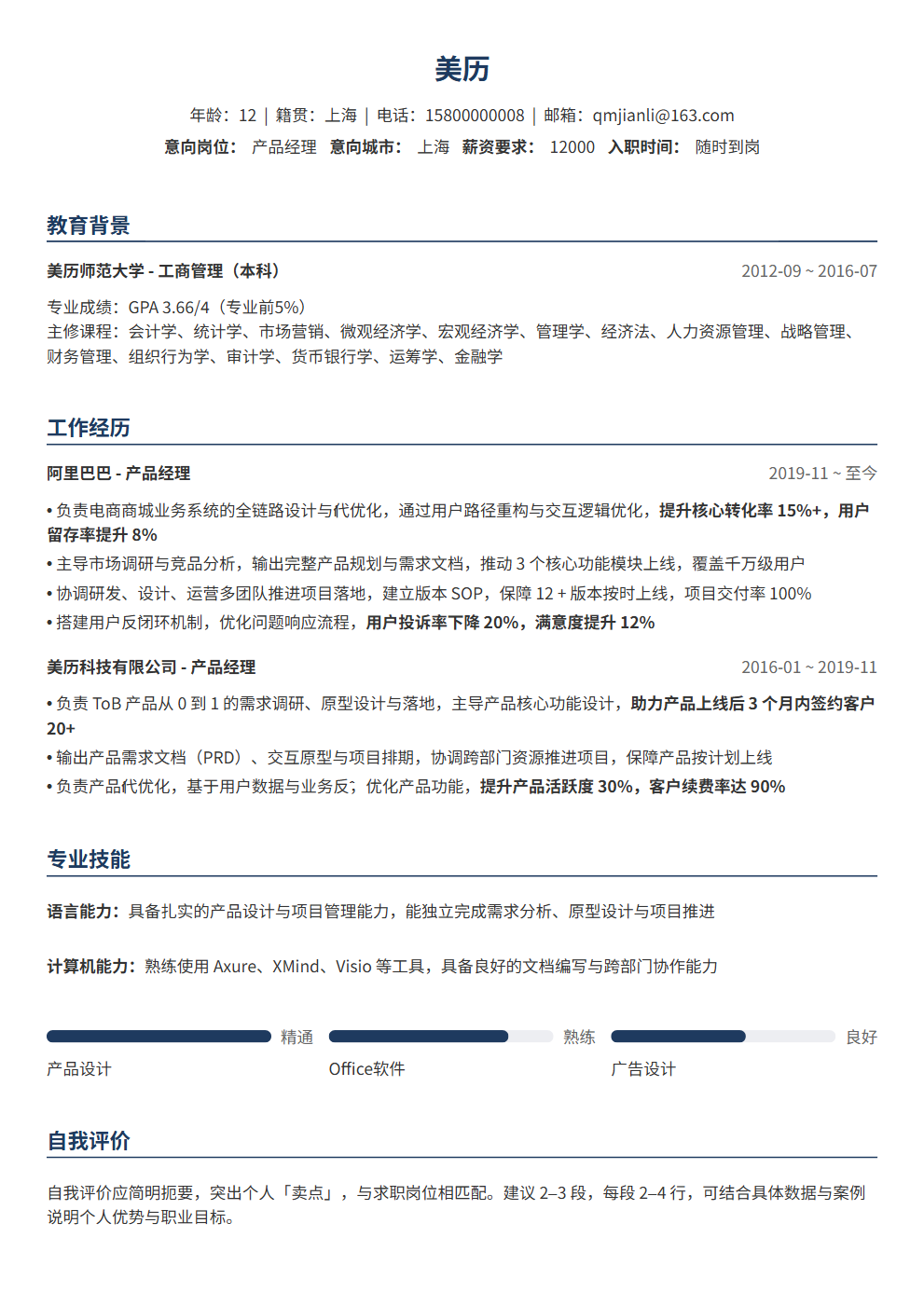
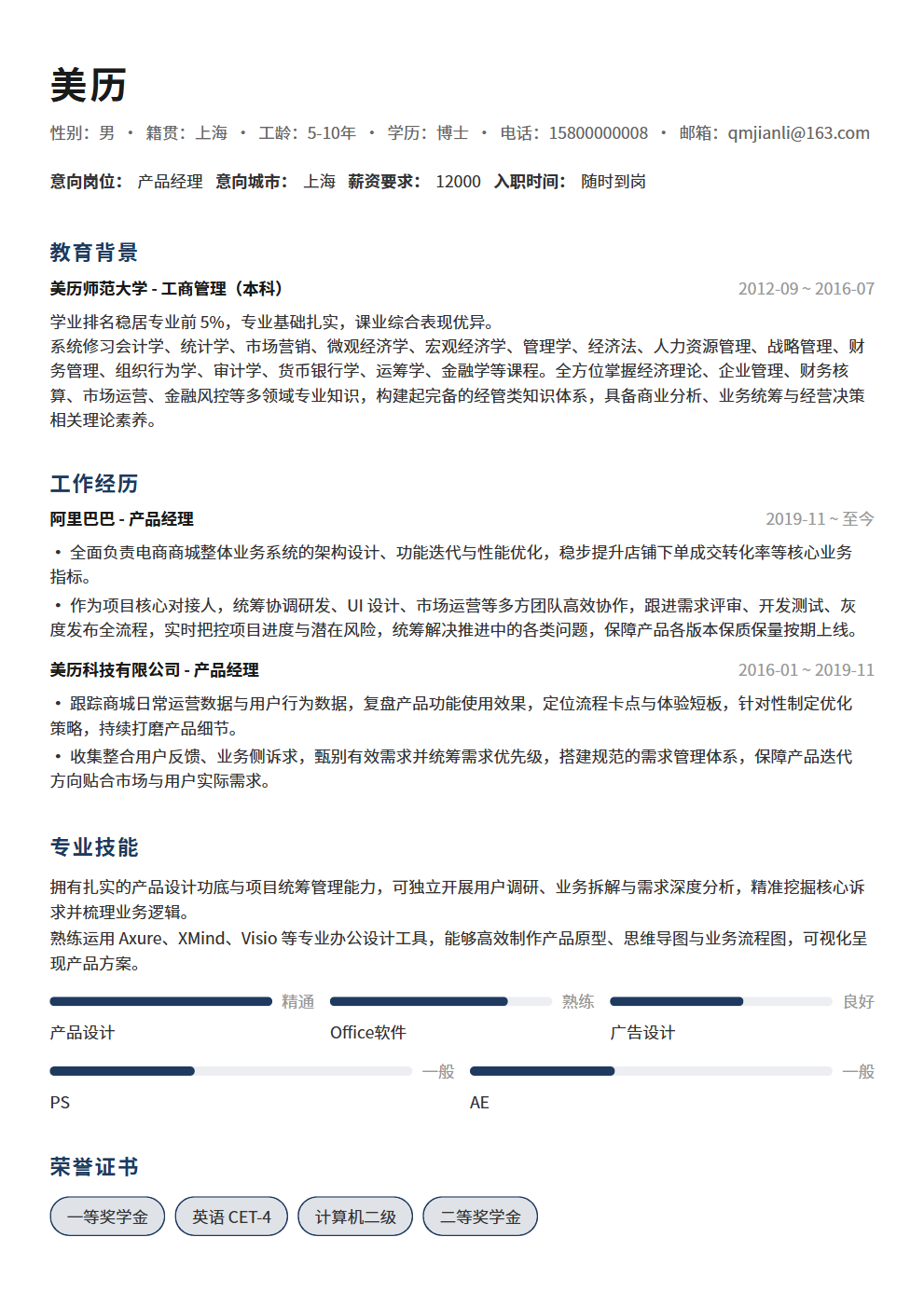
The relationship between cover letters and resumes is complementary, not repetitive. Resumes answer "what you've done," while cover letters answer "why you fit this role." If a resume is a product manual, the cover letter is the sales pitch — not listing features, but making targeted recommendations based on customer needs.
2. Template 1: Standard Cover Letter for a Specific Position
Best for: You've seen a clear job description and need to apply specifically. Structure:
- Opening: Name the position + source, e.g., "Learned through your company website that the Product Manager position is hiring"
- Middle: Use 2-3 sentences to highlight your core matching points, citing JD keywords, e.g., "The JD mentions data analysis skills — I independently completed user behavior analysis in the XX project"
- Closing: Express interview interest + contact info, e.g., "Looking forward to further discussion. My contact: XXX"
Keep it to 200-300 words — HR should grasp the key points in a 10-second scan. Don't write an essay; nobody has the patience.
The most common mistake with standard cover letters is being too generic. The correct approach is to extract 3 core requirements from the JD and match each one to your experience. For example, if the JD requires "data analysis + cross-department collaboration + user growth," your cover letter should address these three points, each with a sentence referencing a specific case. This shows HR you've carefully read the JD, not mass-applied.
3. Template 2: Exploratory Cover Letter Without a Specific Opening
Best for: You want to join a company but don't see a suitable position. The key is creating a position need:
- Opening: Express understanding and alignment with the company, e.g., "I've been following your company's expansion in XX, especially the XX product line"
- Middle: Show what problems you can solve, e.g., "I noticed you're expanding into the XX market — I led a similar market research project during school"
- Closing: Leave room for dialogue, e.g., "I wonder if you have relevant position openings? Looking forward to connecting"
The core of this type is making HR feel "this person actually understands us, they're not mass-applying." The deeper your company research, the higher your success rate.
The challenge with exploratory cover letters — how do you get HR to spend time on a candidate with "no position"? The answer is providing incremental value. Attach a brief analysis report, competitive research, or improvement suggestions for the company's product — even just 300 words can make HR feel your sincerity and professionalism. This "knocking on the door with a solution" approach has a much higher response rate than pure text cover letters.
4. Template 3: Cover Letter with a Referral
Best for: You have an internal referrer or acquaintance — this is the highest-pass-rate channel. Key points:
- Open with the referrer's name immediately, e.g., "Referred by XX, I learned your company is hiring for the XX position"
- Middle: Briefly state your relationship with the referrer + core strengths — don't write a novel
- Closing: Thank them for their time, attach resume link
The biggest mistake with referral cover letters is being verbose — since the referrer vouches for you, HR already gives initial trust. Don't waste it with lengthy text. Concise, confident, focused — all three elements are essential.
One detail often overlooked with referral cover letters — communicate with your referrer in advance. Make sure they know what position you're applying for and what your core strengths are, so when HR asks "how's this person?", the referrer can give a specific positive evaluation rather than a dismissive "they're okay." The power of referrals isn't just priority screening — it's the credibility endorsement from your referrer's reputation.
5. Three Major Cover Letter Pitfalls
- ❌ Mass-sending templates without changing the company name — HR spots this instantly, instant deduction
- ❌ All about "me me me" — switch to "You need XX, and I happen to have XX," shifting perspective from self to them
- ❌ Emotional expressions — "I desperately want" and "I've dreamed of" are too vague; replace emotions with facts and data
6. Cover Letter Format and Sending Details
Great content means nothing if the format and delivery fall short:
- Email subject: Write "Application for XX Position - Name - University" directly. Don't use vague subjects like "Job Application" — HR receives hundreds of emails daily, and unclear subjects get ignored
- Email body: Put the cover letter directly in the email body, not as an attachment — opening attachments requires an extra step that many people skip
- Resume attachment: PDF format, filename standardized as "Name-Position-University," not "Resume Final Version.pdf"
- Send time: Best sent on weekday mornings between 9-10 AM, when HR is just starting to process emails and yours appears at the top
These details may seem trivial, but in such competitive job markets, every detail can be the difference between being seen or overlooked. Your cover letter is the "vanguard" for your resume — a well-formatted, precisely targeted cover letter dramatically increases the probability of your resume being opened.
Summary
A cover letter is essentially a targeted marketing letter, and the product is you. Three-part structure, JD keyword matching, and audience-perspective storytelling — these three principles run throughout. After writing your cover letter, pair it with a well-crafted resume for submission — the pass rate will far exceed sending just a resume. Your resume is the product manual; your cover letter is the sales pitch — together, they double your impact. Don't underestimate this few-hundred-word letter — it may be the key that opens the door to your interview.