How to Write a Career Change Resume: 3 Steps to Turn Cross-Industry Experience into an Advantage
The biggest fear in career change job hunting is HR saying 'you lack relevant experience.' Learn the 3-step transformation method to package transferable skills from your old industry as advantages for your target role.
1. The Core Challenge: HR Can't See Your "Relevance"
The biggest barrier in career change job hunting isn't your ability — it's that HR can't find the connection to the target role when scanning your resume. HR's screening logic prioritizes "fit," so if your resume is full of old industry jargon and experience, HR will judge "not a match" within 6 seconds and reject you.
So the core task of a career change resume isn't proving how excellent you are — it's proving how relevant you are to the target role.
2. The 3-Step Transformation: Turn Old Experience into New Advantages
Step 1: Extract Transferable Skills
Every role has hard skills (industry-specific) and soft skills (cross-industry). Focus on extracting soft skills:
- Project management: From "managed e-commerce projects" to "managed cross-functional projects"
- Data analysis: From "analyzed sales data" to "data-driven decision support"
- Communication: From "coordinated with vendors" to "cross-stakeholder coordination"
- Problem-solving: From "resolved technical failures" to "systematic problem diagnosis and resolution"
Cross-Industry Conversion Examples
- Teacher → Corporate Trainer: From "designed lesson plans and assessed learning outcomes" to "designed training systems and quantified training ROI"; from "managed a class of 50 students" to "managed a training program for 50 participants, covering needs analysis, content delivery, and impact tracking"
- Journalist → Content Marketer: From "conducted interviews and wrote in-depth reports" to "conducted user research and developed content strategies"; from "produced 3,000 words of original content daily" to "high-frequency content production with average 50K+ reads per piece"
- Military → Project Manager: From "led a 30-person team on tactical missions" to "led a 30-person cross-functional team to deliver projects"; from "made rapid decisions under high-pressure conditions" to "performed risk management and decision-making under tight timelines"
- Nurse → Health Tech Product Manager: From "assessed patient conditions and developed care plans" to "conducted user needs analysis and designed product solutions"; from "coordinated multi-department consultations" to "coordinated cross-functional resources and drove project execution"
Step 2: Redescribe Using Target Industry Language
Replace old industry jargon with universal expressions from the target industry:
- ❌ "Responsible for user growth of K12 education products" → ✅ "Responsible for B2C product user growth strategies"
- ❌ "Managed daily operations of 3 retail stores" → ✅ "Managed operations of 3 business units, covering team management, goal decomposition, and performance tracking"
- ❌ "Wrote press releases and media advisories" → ✅ "Developed brand communication strategies and managed media channel portfolios"
Step 3: Add Target Industry Knowledge
Include preparation you've done for the career change on your resume:
- Completed relevant courses or certifications
- Self-study research reports or industry analyses
- Industry events or communities you've joined
- Personal projects or portfolios
3. Restructuring Your Career Change Resume
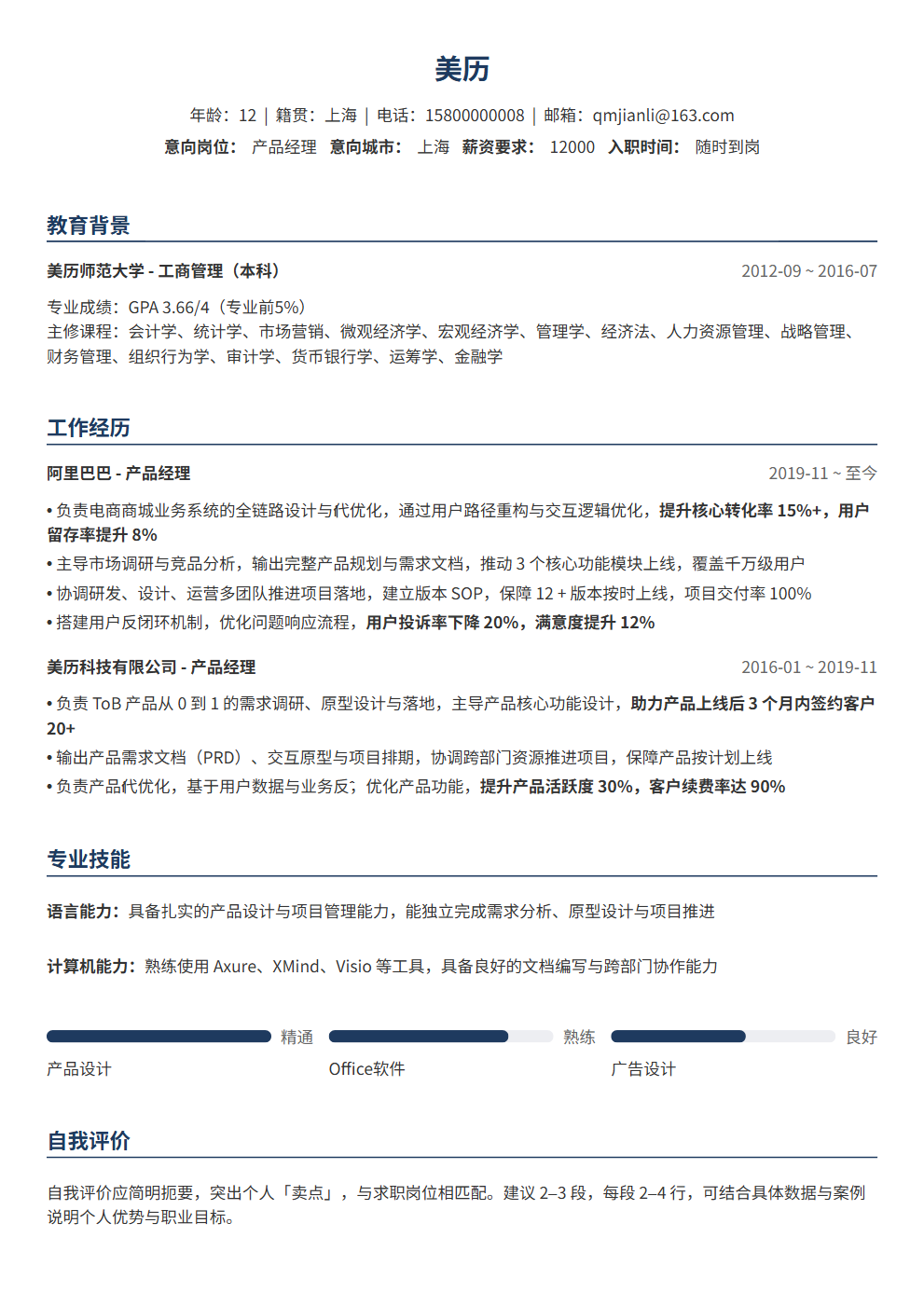
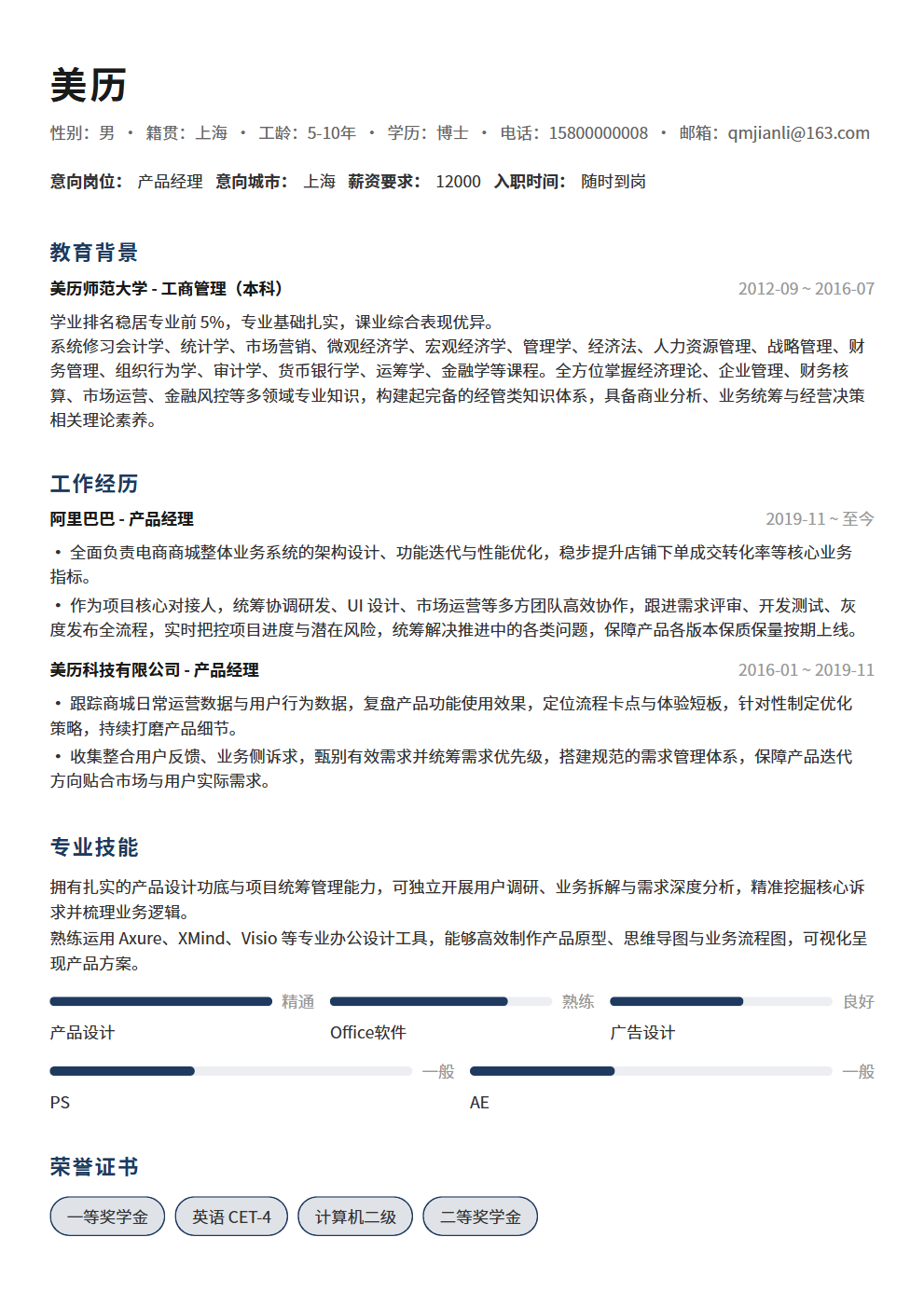
Traditional resumes list work experience chronologically, but career changers need to adjust priorities:
- Put your summary in the most prominent position: Use 3 sentences to explain your career change motivation, transferable skills, and target direction
- Move skills section up: Place transferable skills before work experience so HR sees relevance first
- Emphasize achievements over industry details: Focus on "what you did and achieved," de-emphasize "which industry you did it in"
- Add project/learning experience: Show proactive preparation for the career change
4. Common Interview Challenges and Responses
- "You don't have experience in this industry" — "True, but my skills in X are cross-industry applicable. For example, the X project I did in my previous industry shares the same core logic as your company's X business."
- "Why do you want to change careers?" — Answer with "career passion + rational judgment," showing the change is a carefully considered decision, not an impulse
- "Can you adapt to a new industry?" — Prove your learning speed with specific examples: "In the X project, I went from zero to mastering X skill within 2 weeks and independently completed X task."
5. Three Self-Checks Before Career Change Job Hunting
Before officially starting your career change search, ask yourself 3 questions:
- What are my transferable skills? — List at least 5
- How well do I know the target industry? — Can you talk with industry insiders for 30 minutes without revealing gaps?
- Can my resume show "relevance" within 6 seconds? — Have a friend do the 6-second test
If you can confidently answer all 3, your career change preparation is solid.
6. Writing Your Career Change Resume Summary
The summary is the most critical section on a career change resume because HR looks there first. A well-written summary serves as a "reading guide" for the rest of your resume.
The 3-Sentence Formula
- Sentence 1: Who you are — state your background and target direction
- Sentence 2: What you bring — list 2-3 core transferable skills
- Sentence 3: What you've done to prepare — show your investment in the target industry
Example Templates
- 5 years in education, transitioning into corporate training. Skilled in curriculum design and learning outcome evaluation, having independently built training workflows serving 2,000+ learners. Completed XX certification and delivered 3 corporate training simulation projects on XX platform.
- 8 years in media, seeking opportunities in content marketing. Strong user insight and high-volume content creation skills, with original content accumulating over 5 million reads. Currently running a personal newsletter with 3,000+ monthly subscriber growth.
Common Mistakes
- ❌ Writing only "passionate about the new industry, fast learner" — too vague, adds zero information
- ❌ Spending paragraphs on past industry achievements — HR cares about your relevance to the target role, not your past glory
- ❌ Belittling your old industry to elevate the new one — comes across as unprofessional and raises questions about your judgment
7. Submission Strategies for Career Change Resumes
A great resume means little if it gets filtered out before anyone reads it. Career changers need smarter submission strategies since standard channels often screen them out.
- Target companies that value diverse backgrounds: Startups, expanding business lines, and companies with rotation programs often prioritize capability over industry pedigree. Job descriptions mentioning "cross-industry experience preferred" or "diverse backgrounds welcome" are your best entry points.
- Leverage referrals: Referrals get your resume directly to the hiring manager, bypassing HR's initial screen. Build connections through industry communities, alumni networks, and events. Ask your referrer to highlight your transferable skills in their recommendation.
- Customize for every application: Never send the same resume to every posting. Adjust skill descriptions, reorder achievements, and refocus your summary based on each job description's keywords. Higher customization means higher pass-through rates.
- Follow up after applying: Three to five days after submitting, send a polite follow-up via email or LinkedIn, briefly restating your fit. Many recruiters say proactive candidates stand out more — for career changers, following up is itself proof of initiative.
Summary
The core strategy for career change resumes: extract transferable skills → redescribe using target industry language → add industry knowledge preparation. Restructure your resume so HR sees your connection to the target role first, rather than being "scared off" by your old industry experience. A career change isn't starting from zero — it's showcasing your existing abilities in a new way.
Crafting a strong summary and choosing the right submission strategy are the two steps that move your resume from "overlooked" to "noticed." If you're still struggling with layout and emphasis, consider using a professional resume optimization tool to make your career change story visible to more people.