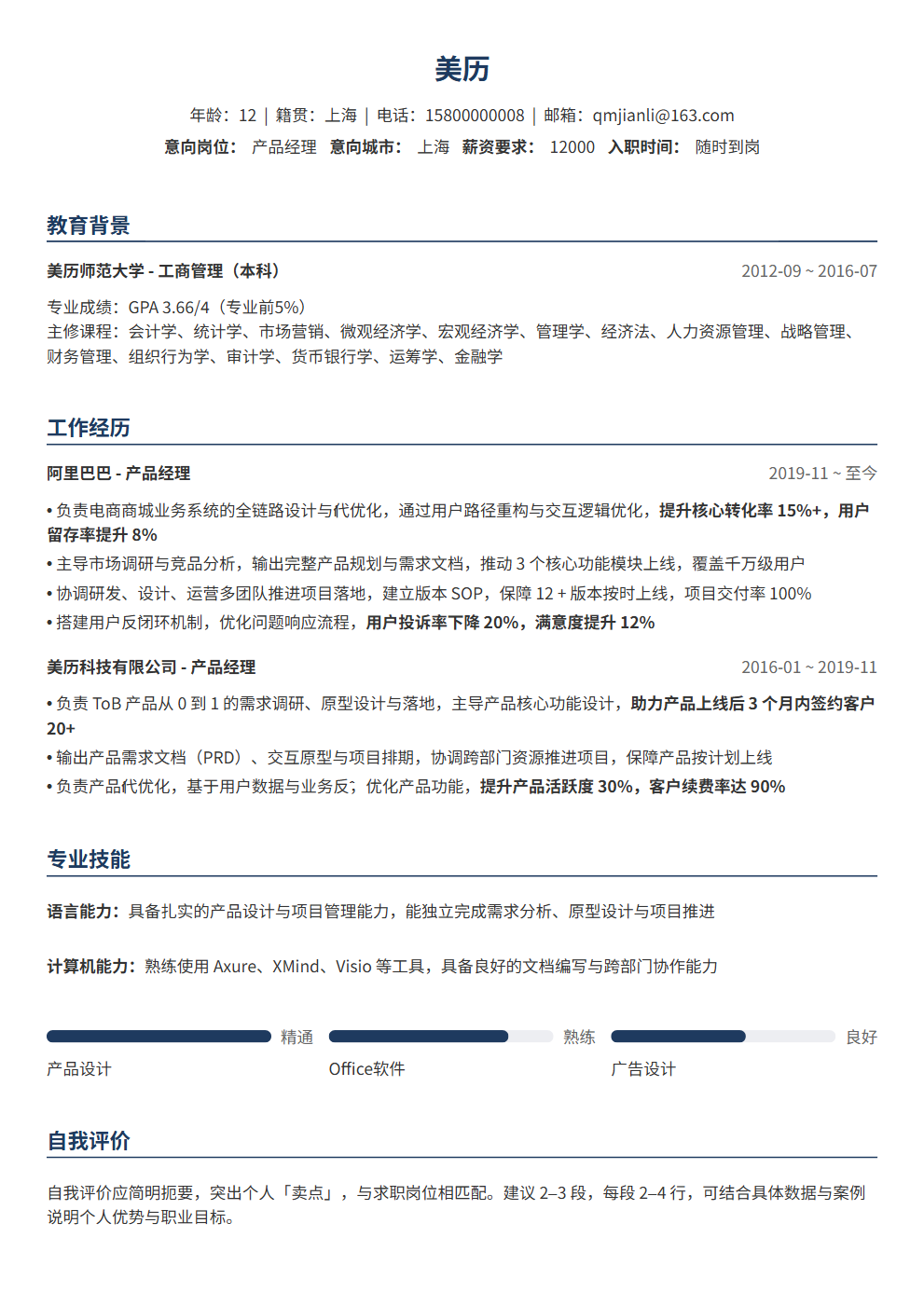
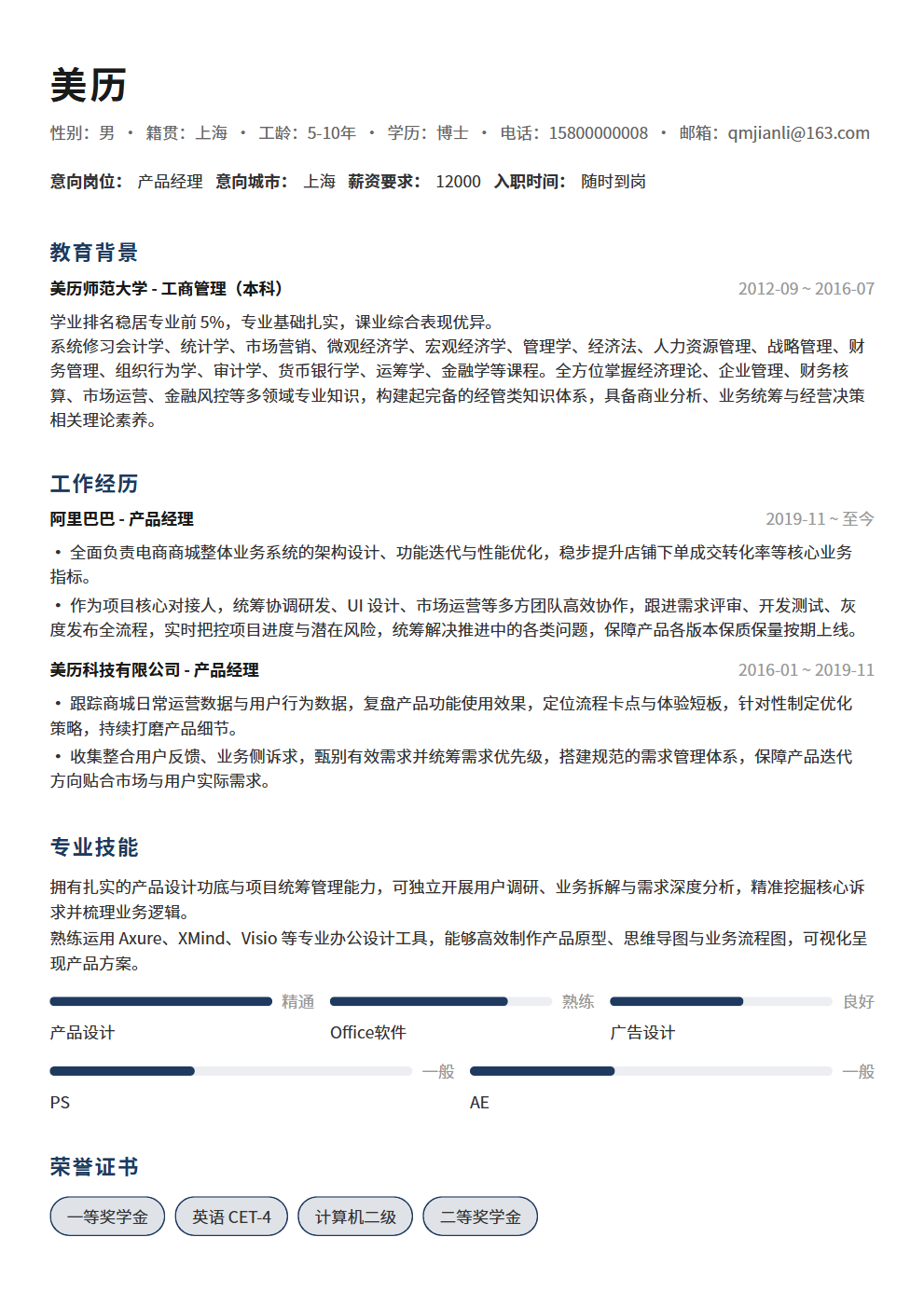
How to Tailor Your Resume for Different Positions? 3-Level Strategy for One Resume, Multiple Jobs
Using one resume for all positions is the least effective approach—3-level strategy (Micro-adjust: change objective and keywords; Mid-adjust: reorder experiences and highlights; Major-adjust: restructure resume framework) ensures you hit the mark for every position. Includes step-by-step tailoring guide.
Using one resume for all positions is the laziest and least effective job search strategy—HR can spot a "mass-applied resume" at first glance. But starting from scratch for every application is too time-consuming. A 3-level modification strategy, from 5-minute micro-adjustments to 30-minute major overhauls, helps you hit the mark for every position while balancing efficiency and quality.
1. Why Is Using One Resume for All Positions the Least Effective Approach?
Many people think "my experience is what it is, what's the point of changing things around?"—this is one of the biggest misconceptions in job searching. The same experience, written differently, produces vastly different matching results. Using one resume for all positions is like using one key for every lock—if it opens, you just got lucky.
- HR can spot "mass-applied resumes" instantly: The first thing HR does when reading a resume is determine "did this person apply seriously, or are they mass-applying?" The criteria are simple—does the objective match, do keywords appear, is the experience emphasis relevant to the position? If the objective says "Product Manager" but you're applying for an Operations role; if all keywords are about "product design" but the JD asks for "user growth"—HR immediately labels it "mass application" and closes the resume within 10 seconds. Mass-applied resumes have less than 5% pass rates, while targeted resumes can reach 30%+
- Different positions value completely different "selling points": The same "managed company WeChat account, grew followers from 10K to 100K"—for a content operations role, emphasize "content planning ability and viral article production"; for a user operations role, emphasize "user growth strategy and retention optimization"; for a brand operations role, emphasize "brand identity shaping and communication impact." The same achievement has completely different selling points for different positions—not tailoring your resume means blurring all your selling points
- Keywords determine whether your resume can be found: Large companies use ATS (Applicant Tracking Systems) to automatically filter resumes—the system scores resumes based on keywords from the JD. If your resume lacks the JD's keywords, even if your experience is perfectly matched, the system will filter you out. Different positions have different keywords in their JDs—not adjusting keywords means voluntarily giving up the chance to be identified by the system
- The "Golden 6 Seconds" rule: HR spends an average of 6-10 seconds per resume. In those 6 seconds, HR only looks at three things: the objective (is this what I need), the most recent experience (what have they done), and core keywords (how's the match). If these three things don't match the position, HR won't keep reading. Tailoring your resume means ensuring everything HR sees in those 6 seconds is "highly matched"
2. Micro-Adjust: Change Objective and Keywords—5 Minutes, for Same-Type Positions
Micro-adjustment is the lightest modification strategy—only change the objective and keywords, done in 5 minutes. Suitable for applying to same-type positions with different sub-directions, like "User Operations" vs. "Content Operations," or "Frontend Development" vs. "Full-Stack Development."
- Step 1: Change the objective: The objective is the first thing HR sees—it must perfectly match the target position. For user operations, write "User Operations (focused on growth and retention)"; for content operations, write "Content Operations (focused on planning and distribution)"; for event operations, write "Event Operations (focused on planning and execution)." The more your objective matches the position title, the more HR thinks "this person came specifically for us." Changing the objective takes just 1 minute but produces immediate results
- Step 2: Insert JD keywords: Carefully read the target position's JD, extract 3-5 core keywords, and insert them into your resume. For example, if the JD says "responsible for user lifecycle management, developing growth strategies, optimizing retention rates"—your resume should include terms like "user lifecycle," "growth strategy," and "retention optimization." Keyword insertion priority: Objective > Personal Summary > Work Experience Description > Skills Section. Don't force them—naturally integrate keywords into experience descriptions
- Step 3: Adjust skill keyword order: The keyword order in your skills section should also be adjusted—put the skills most relevant to the target position first. For a data role, lead with "Python/SQL/Tableau"; for a product role, lead with "Requirements Analysis/Prototyping/User Research." HR only looks at the first 3 skills—put the most relevant ones up front to ensure they're seen
- When to use micro-adjustment: Applying to same-type positions with different sub-directions (user ops/content ops/event ops); applying to the same position at different companies (Product Manager at Company A vs. B, with slight JD differences); applying to similar positions at the same company (large companies often have multiple similar positions hiring simultaneously). Micro-adjustment is NOT suitable for cross-type positions—applying for product and operations requires more than just changing the objective and keywords
- Common micro-adjustment mistakes: ❌ Changing the objective but not keywords—HR sees a matching objective but mismatched experience descriptions and thinks "this person changed the objective but not the content, still mass-applying." ❌ Unnatural keyword stuffing—"I am an operations professional with user lifecycle management, growth strategy development, retention optimization, data-driven, and A/B testing capabilities"—this is too deliberate, HR can tell you're stuffing keywords. ❌ Forgetting to change the email subject—email subjects should also match the position, don't use the same subject for every application
3. Mid-Adjust: Reorder Experiences and Shift Focus—15 Minutes, for Cross-Sub-Direction Positions
Mid-adjustment is a moderate modification strategy—on top of micro-adjustments, reorder experiences and shift description focus. Done in 15 minutes. Suitable for applying to positions across sub-directions, like from "User Operations" to "Marketing," or from "Frontend Development" to "Full-Stack Development."
- Step 1: Reorder your experiences: Resume experiences don't have to be in chronological order—put the experience most relevant to the target position first. For a marketing role, put marketing-related internships/projects first; for an operations role, put operations-related experiences first. HR's attention decreases as they read—the first experience is 3x more likely to be carefully read than the last one. Putting the most relevant experience first means placing your best content where HR's attention is most concentrated
- Step 2: Shift the focus within the same experience: The same experience can be described from different angles. For example, "Managed company WeChat account at XX Company, grew followers from 10K to 100K, produced 3 viral articles with 100K+ reads"—for content operations, emphasize "Content Planning: Independently planned 3 viral articles with 100K+ reads, average readership increased 200%"; for user operations, emphasize "User Growth: Developed growth strategies, grew followers from 10K to 100K in 3 months, monthly retention rate 85%"; for brand operations, emphasize "Brand Communication: Built brand content matrix, single article maximum reach 500K+." Same experience, three description angles—this is the core of targeted modification
- Step 3: Remove irrelevant content: Resume space is limited (1-2 pages)—irrelevant content should be decisively removed. For a data role, cut "organized company team-building activities"; for a marketing role, cut "wrote Python scripts" technical details. The purpose of removing irrelevant content isn't "hiding"—it's "focusing"—ensuring everything HR sees in 6 seconds is highly relevant
- Step 4: Add highlights the target position needs: If you have relevant but previously unmentioned highlights in your experience, mid-adjustment is the time to add them. For example, if you didn't mention "independently planned offline events with 500+ attendees" when applying for operations—when applying for marketing, this experience is a highlight worth adding. Mid-adjustment isn't just "cutting"—it's also "adding" content that better matches the target position
- When to use mid-adjustment: Applying across sub-directions (operations→marketing, frontend→full-stack, product→project management); applying to positions with different skill combination requirements (Company A wants data analysis skills, Company B wants project management skills); applying to companies of different sizes (large companies value systematic capabilities, small companies value full-stack capabilities). Mid-adjustment is NOT suitable for cross-career directions—going from operations to tech requires more than reordering experiences and shifting focus
4. Major-Adjust: Restructure Resume Framework—30 Minutes, for Cross-Career Positions
Major-adjustment is the deepest modification strategy—restructure the entire resume framework, including section structure, core narrative, and value proposition. Done in 30 minutes. Suitable for applying to positions across career directions, like from "Operations" to "Product," from "Engineering" to "Management," or from "Sales" to "Marketing."
- Step 1: Redefine your core narrative: Your core narrative is the "soul" of your resume—it answers "who am I, what am I good at, what value can I bring." For an operations role, the core narrative is "I'm a data-driven growth-focused operator"; for a product role, it becomes "I'm a user-insightful product manager." When the core narrative changes, the entire resume framework must follow—personal summary, experience descriptions, and skill presentation must all be reorganized around the new core narrative
- Step 2: Adjust resume section structure: Different positions require different section structures. For tech roles: Skills section first (tech stack is the primary filter) → Project Experience → Work Experience → Education. For product roles: Project/Product experience first (product thinking is core) → Work Experience → Skills Section → Education. For management roles: Management experience first (team leadership is core) → Project Outcomes → Work Experience → Education. Adjusting section structure essentially means "putting what HR cares about most in the most prominent position"
- Step 3: Connect old experiences to new roles with "transferable skills": The biggest challenge in cross-career job searching is "experience mismatch"—your old experience seems unrelated to the new position. The solution is finding "transferable skills"—which abilities from your old experience can transfer to the new role. From operations to product: transferable skills are "user insight, data analysis, requirements understanding"—emphasize these in experience descriptions, de-emphasize "event planning, community management" and other operations-specific skills. From engineering to management: transferable skills are "technical judgment, project decomposition, cross-department collaboration"—emphasize these, de-emphasize "code implementation, technical architecture" and other engineering-specific skills
- Step 4: Rewrite your personal summary: The personal summary is your resume's "elevator pitch"—3-4 sentences summarizing your core value. When switching career directions, the personal summary must be rewritten. From operations to product: "3 years of internet operations experience, skilled in user insight and data analysis, successfully drove 3 product features from 0 to 1 launch, seeking to bring user perspective into product decisions." This summary accomplishes three things in 3 sentences: old identity (operations experience), transferable skills (user insight, data analysis), new direction (product decisions)
- When to use major-adjustment: Cross-career direction job searching (operations→product, engineering→management, sales→marketing); cross-industry job searching (internet→finance, education→e-commerce); major transitions (execution level→management level, specialist→generalist). Major-adjustment is the most time-consuming strategy but also the most impactful—a resume after major-adjustment can improve match rate from 20% to 80%+
5. Practical Workflow: From Assessment to Execution
Understanding the 3-level strategy is one thing—knowing "when to use which level" and "how to execute efficiently" is what matters.
- Step 1: Determine which level to use: Look at the "distance" between the target position and your current resume—same type, different sub-direction: micro-adjust (5 min); cross sub-direction but same general direction: mid-adjust (15 min); cross career direction: major-adjust (30 min). Decision criteria: if changing only the objective and keywords achieves a match, use micro-adjust; if you need to shift experience description focus, use mid-adjust; if you need to redefine "who I am," use major-adjust
- Step 2: Build a "master resume": Don't start from zero every time—first create a "master resume" containing complete descriptions of all your experiences. Then, based on different positions, "extract" needed content from the master for micro/mid/major adjustments. The master is your "asset library," targeted resumes are "finished products." With a master: micro-adjust 5 min, mid-adjust 15 min, major-adjust 30 min—without one, starting from zero every time is extremely inefficient
- Step 3: Batch process same-type positions: If you're applying to 5 user operations positions, you don't need 5 micro-adjustments—after 1 micro-adjustment, that resume can go to all user ops positions. Only when JD differences are significant (e.g., Company A emphasizes growth, Company B emphasizes retention) do you need a second micro-adjustment. Batch processing dramatically improves efficiency
- Step 4: Use tools for efficiency: Manually modifying resumes is error-prone—use a resume editor's "multi-version management" feature to maintain multiple resume versions simultaneously with one-click switching. Use "keyword highlighting" to check whether your resume contains the JD's core keywords. Use "comparison view" to ensure no conflicts between versions (e.g., Version A says "3 years experience," Version B shouldn't say "2 years experience")
6. Common Misconceptions About Resume Tailoring
Resume tailoring is not "fabrication," not "flattery," and not "unlimited pandering"—it's a professional job search strategy. Here are common misconceptions and corrections.
- Misconception 1: Resume tailoring = resume fabrication: Tailoring is "adjusting presentation," not "inventing experiences." You can adjust description focus, order, and angle, but you must never fabricate experiences that don't exist. For example, if you actually managed a WeChat account, you can choose to emphasize "growth data" or "content quality," but you cannot write "managed XX project" if you never did. The底线 of resume tailoring is "all content is true, only the presentation angle differs"
- Misconception 2: Starting from zero for every application: This is the opposite extreme—writing a resume from scratch every time is extremely inefficient and error-prone. The correct approach is building a "master resume" and choosing micro/mid/major adjustments based on position distance. Same-type positions use the same version; cross-type positions need new versions. Generally, 3-5 resume versions are enough to cover most positions
- Misconception 3: Changed the resume but forgot the email/cover letter: You updated the resume but the email subject still says "Application for Operations—Zhang San" while you're applying for a product role—this basic mistake is worse than not tailoring at all. Before every submission, check three things: does the objective match the position, is the email subject correct, is the cover letter targeted. Three checks take 1 minute, but missing any one can undo all your work
- Misconception 4: Over-tailoring until the resume loses personal identity: Resume tailoring isn't about becoming a "chameleon"—presenting a completely different self for every position. Your core experiences, core abilities, and core values remain unchanged—what changes is the "presentation angle" and "priority ordering." Over-tailoring makes HR feel "this person has no authentic self," which actually reduces trust
- Misconception 5: Changing content but not layout: Content changed but layout didn't keep up—after removing an experience, there's a large blank space, or after adding content, the resume becomes 3 pages. After every modification, check the layout: is a 1-page resume still 1 page? Is a 2-page resume still 2 pages? Is the whitespace reasonable? Are visual priorities clear? Layout matters as much as content
7. Conclusion: 3-Level Strategy Makes Every Resume Hit the Target
Using one resume for all positions is the least effective job search approach—HR can spot mass applications, different positions value different selling points, and keywords determine whether you can be found. The 3-level strategy helps you tailor efficiently: Micro-adjust (5 min) changes the objective and keywords, for same-type positions with different sub-directions; Mid-adjust (15 min) reorders experiences and shifts description focus, for cross sub-direction positions; Major-adjust (30 min) restructures the resume framework and core narrative, for cross-career positions. The key is building a "master resume" as your asset library, choosing the modification level based on position distance, batch processing same-type positions, and using tools for efficiency. Avoid 5 misconceptions—tailoring isn't fabrication, don't start from zero every time, don't forget emails and cover letters, don't over-tailor and lose yourself, and change layout along with content. Remember: the core of resume tailoring is "same experiences, different presentation"—truth stays constant, angles can change.
Tailoring your resume doesn't require starting from scratch—BeautyResume Editor provides multi-version management, intelligently generating multiple targeted versions from one master resume. Keyword highlighting checks ensure every version includes the JD's core terms, comparison view ensures no conflicts between versions, and one-click switching doubles your submission efficiency. From micro-adjustments to major overhauls, BeautyResume makes every resume precisely hit the target position!