How to Stand Out in Group Interviews: 6 Survival Rules for Leaderless Group Discussions
Want to stand out in leaderless group discussions? Learn 6 survival rules and role-fit analysis to choose the right role, control the pace, and win your group interview.
Leaderless group discussions — the most dreaded part of campus recruitment interviews. Eight to ten strangers sitting in a circle, expected to reach consensus in 30 minutes. Some people dominate while others stay silent, and chaos often ensues. How do you stand out in group interviews? It's not about being the loudest or talking the most. Master these 6 survival rules and you'll score consistently well.
Understanding the Scoring Logic: What Are Interviewers Actually Evaluating?
Before diving into strategies, you need to understand the scoring dimensions. Interviewers aren't looking for "the most talkative person" — they're evaluating these competencies:
- Communication skills: Can you express ideas clearly and logically?
- Team collaboration: Can you listen to others, integrate different opinions, and drive consensus?
- Analytical thinking: Can you identify the core issue and propose valuable solutions?
- Leadership potential: Can you naturally drive the discussion forward without being designated as leader?
- Emotional management: Can you stay calm under conflict and pressure?
Once you understand the scoring logic, the core principle becomes clear: group interview technique isn't about showcasing yourself — it's about demonstrating your capabilities through the process of helping the team achieve its goal. Individual heroism is the most fatal point-deduction in group interviews.
Survival Rule 1: Choose the Right Role — Multiply Your Effectiveness
Although leaderless group discussions don't assign roles, natural role divisions emerge during the conversation. Choosing the right role for yourself is the first step to standing out.
Five Key Roles and Who They Suit
- Ice-breaker (Leader): Speaks first, proposes the discussion framework and direction. Suited for confident, quick-thinking individuals with leadership experience. Risk: if the direction is wrong, you'll be seen as leading the team astray.
- Time Keeper: Manages time allocation and progress reminders. Suited for detail-oriented, organized people. Note: don't just report time — combine time updates with actionable suggestions.
- Recorder: Documents key discussion points and organizes the logical framework. Suited for strong writers with clear logical thinking. Advantage: natural authority during the summary phase.
- Contributor: Proposes high-quality insights and solutions. Suited for individuals with deep expertise and analytical depth. Key: contributions must add value, not just fill airtime.
- Coordinator: Integrates different opinions, resolves conflicts, and drives consensus. Suited for emotionally intelligent people with strong communication skills. This is the most underrated yet highest-scoring role in group interviews.
The key principle for role selection: don't force yourself into an unsuitable role. If you're introverted, fighting for the Leader role only exposes your weaknesses. If your logic isn't strong, forcing yourself to be a Contributor leads to empty statements. Play to your strengths and excel in your natural role — that matters more than anything.
Survival Rule 2: Don't Interrupt, But You Must Speak
Two common extremes in group interviews: total silence and aggressive interruption. Both lose points.
For the completely silent, interviewers can't evaluate any of your competencies — you essentially didn't participate. For the aggressive interrupter, interviewers see "lack of team awareness" and "disrespect for others."
The right approach is "rhythmic participation":
- In the early discussion phase, speak at least 1-2 times so interviewers register your presence
- At key disagreement points, offer constructive input rather than simple agreement
- In the later phase, make one summarizing statement to demonstrate your synthesis ability
- When speaking, first acknowledge the previous speaker's valid points, then add your own: "I agree with XX's point, and I'd like to add..."
Remember this number: speaking 3-5 times in a group interview is the ideal frequency. Too few means low visibility; too many comes across as domineering. What matters is the quality of each contribution, not the quantity.
Survival Rule 3: Drive the Discussion Forward, Don't Create Chaos
What's the most point-earning behavior in group interviews? Moving the discussion from "chaos" to "order." Many groups fall into these traps:
- Going off-topic: The discussion drifts away from what the prompt asks
- Deadlock: Two people argue over a minor detail and can't move on
- Divergence: Many ideas but no convergence toward a conclusion
Whoever steps up to get the discussion back on track earns the most points. Specific approaches:
- When off-topic: "I think we've drifted from the prompt. The question asks about XX — let's address that first"
- When deadlocked: "Your perspectives aren't actually contradictory — A is looking at it from the XX angle, B from the XX angle. We could combine both"
- When diverging: "Great ideas everyone, but we have 10 minutes left and need to start converging. I suggest we pick one of these directions to discuss first"
The person who drives progress doesn't need to be the smartest — but they must have the best big-picture awareness. Interviewers highly value this ability to "make the team more efficient."
Survival Rule 4: Engage the Silent Participants — Show Team Awareness
There's always someone who barely speaks in group interviews. Many people overlook an important scoring opportunity: proactively inviting silent participants to share their thoughts.
This seemingly small gesture sends rich signals:
- You care about everyone's participation, not just your own performance
- You have empathy and notice people who are being overlooked
- You have leadership potential — true leaders don't talk the most; they enable everyone to contribute value
Specific phrases:
- "XX hasn't had a chance to share yet — what are your thoughts on this?"
- "Let's hear from XX — the point they raised earlier about XX was quite insightful"
Note: When inviting silent participants, keep your tone genuine and natural — don't come across as condescending. This is an "invitation," not a "roll call."
Survival Rule 5: Deliver the Summary — Your Final Moment to Shine
The last 3-5 minutes of a group interview are typically the summary phase. This is your final moment to shine and when interviewers are paying the most attention.
Those who deliver the summary need to ensure it's:
- Comprehensive: Cover all key points from the discussion without omitting important content
- Well-structured: Organize content by logical framework, not just a simple list
- Conclusive: Clearly state the group's final answer or solution
- Concise: Control the time — typically 2-3 minutes is sufficient
If you're the Recorder, you have a natural advantage for the summary — you have complete discussion notes. If you're not the Recorder, you can proactively say in the later phase: "Let me help organize our discussion outcomes," naturally earning the summary opportunity.
Summary template:
- "After our discussion, our group's conclusion is..."
- "This is based on the following considerations: First... Second... Third..."
- "During our discussion, we also considered the XX approach, but ultimately didn't adopt it because of XX"
- "That concludes our group's discussion outcomes. Thank you, everyone"
Survival Rule 6: Time Management — The Invisible Critical Skill
The most overlooked yet critically important skill in group interviews is time management. In a 30-minute discussion, without time awareness, it's easy to start slow and rush at the end.
Good time management strategy:
- First 5 minutes: Read and understand the prompt, ensure everyone has the same interpretation
- 5-15 minutes: Divergent discussion — propose various ideas and solutions
- 15-25 minutes: Convergent discussion — filter options and build consensus
- 25-30 minutes: Organize conclusions and prepare the summary
If you take on the Time Keeper role, don't just mechanically report the time. A more advanced approach is to combine time updates with suggestions:
- "We have 15 minutes left and two key points to discuss — I suggest allocating about 7 minutes to each"
- "Five minutes remaining — we need to start wrapping up. Let me summarize what we've discussed so far"
This kind of Time Keeper isn't just managing time — they're driving the discussion forward. Double points.
Common Mistakes and How to Fix Them
Beyond mastering the survival rules, avoid these common mistakes:
- Being overly aggressive: Interrupting others, dismissing opinions without room for discussion. Fix: Acknowledge valid points before presenting your own, using transitions like "at the same time" or "additionally"
- Being a yes-person: Only echoing "I agree with XX" without independent thinking. Fix: Add new angles or supporting evidence when you agree
- Getting stuck on details: Spending too much time on minor points. Fix: Keep the core discussion objective in mind and distinguish between "critical issues" and "minor points"
- Losing emotional control: Getting defensive or agitated when challenged. Fix: Take a breath, respond to challenges with data or logic rather than emotion
- Ignoring team goals: Focusing only on self-promotion rather than whether the team has reached consensus. Fix: Always prioritize "driving the team toward its goal"
Pre-Interview Preparation Checklist
Prepare well before the group interview to be more composed on the day:
- Familiarize yourself with common group interview formats: ranking exercises, resource allocation, dilemma choices, and open-ended solution design — each requires a different problem-solving approach
- Practice structured expression: Use "first, second, third" or "from the XX perspective" to organize your language
- Simulate group interviews: Gather 6-8 friends for a complete mock session to get used to the pace and pressure
- Prepare versatile frameworks: SWOT analysis, PEST analysis, stakeholder analysis — quickly deployable during discussions
- Adjust your mindset: Group interviews aren't zero-sum competition — they're a demonstration of team collaboration
Conclusion: The Core of Group Interviews Is "Making the Team Better Because of You"
How to stand out in group interviews? The answer isn't "talk the most," "be the loudest," or "grab the Leader role." The core logic is simple: make the team better because of your presence. Whether you're driving progress, integrating viewpoints, engaging silent participants, or managing time — you're fundamentally creating value for the team. What interviewers want to see is someone who plays an active role in the team, not a "lone wolf" focused only on their own performance.
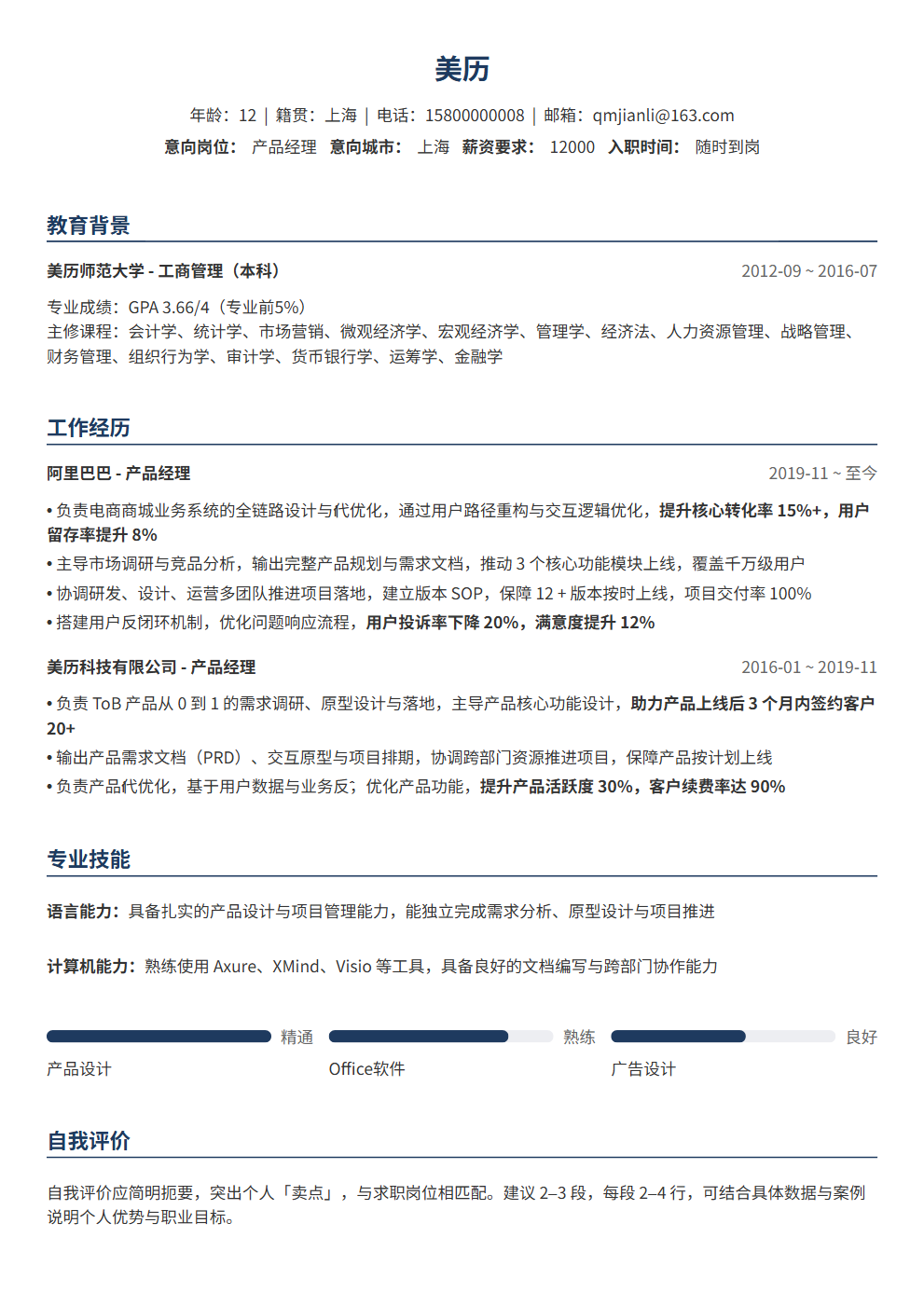
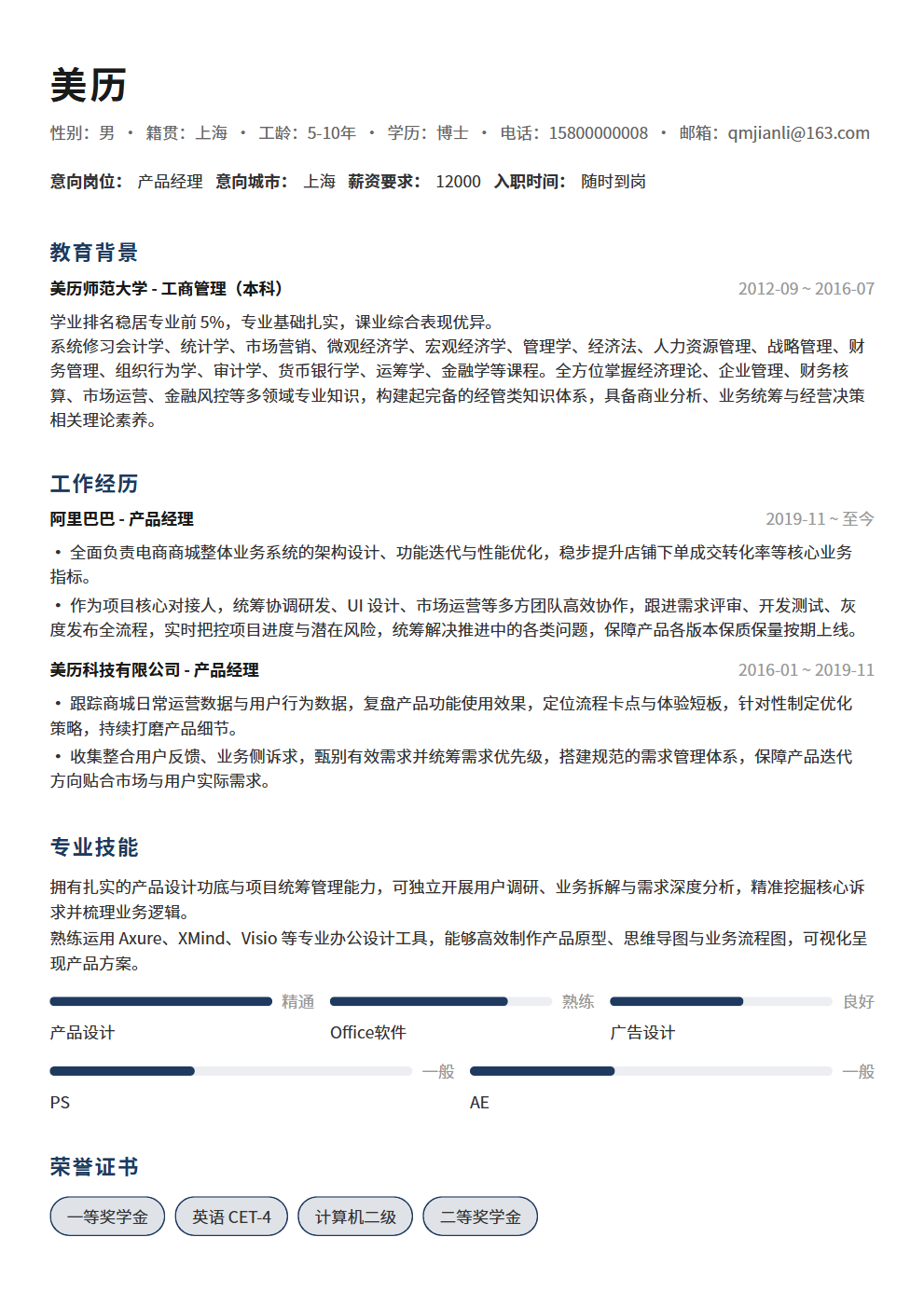
Group interviews are just one part of the process — and the prerequisite for getting that group interview opportunity is a strong resume. BeautyResume offers professional templates and smart formatting to help you craft a resume that catches HR's eye. Your resume is the key that opens the door; the group interview is where you win the battle — clear the resume hurdle first, then conquer the group interview!