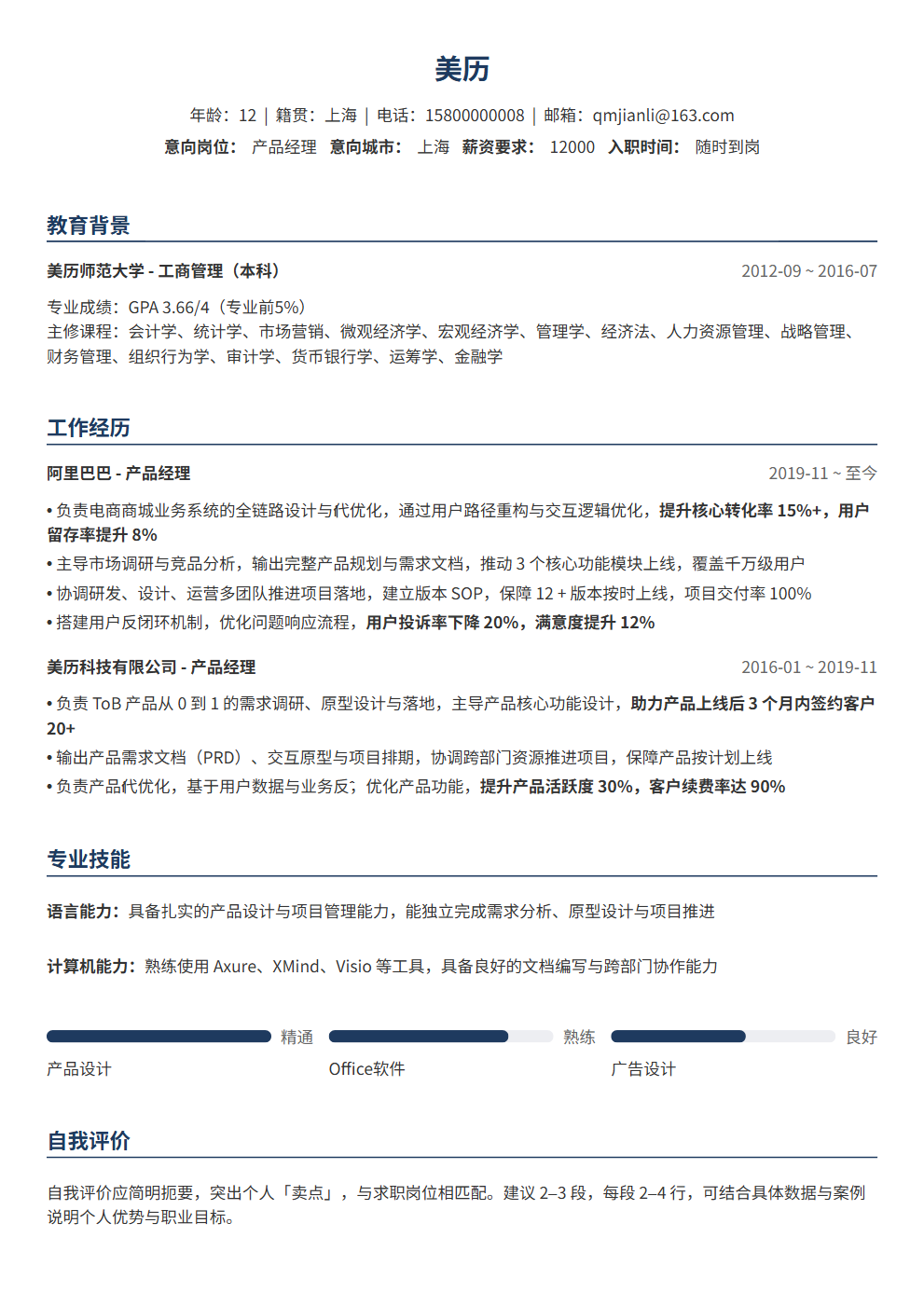
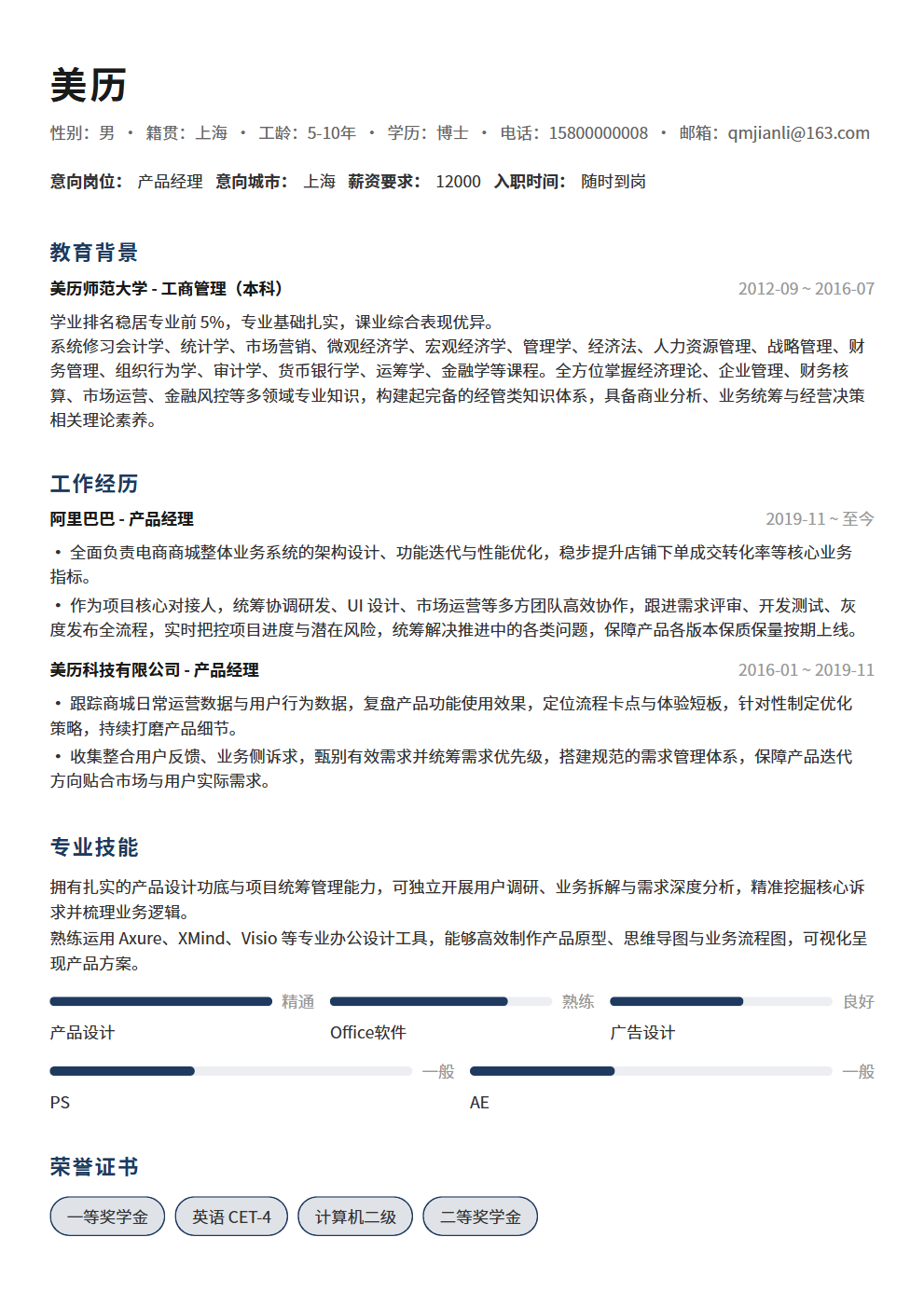
How to Quantify Achievements on Your Resume — Writing Persuasive Results Even Without Hard Numbers
"Optimized processes" "Improved efficiency" — achievement descriptions without numbers are basically empty. But what if your role genuinely doesn't have KPI data? 4 quantification methods help you turn vague results into persuasive numbers, even without hard metrics.
How to Quantify Achievements on Your Resume — Making HR See Your Value at a Glance, Even Without Hard Numbers
"Optimized processes" "Improved efficiency" "Enhanced team collaboration" — to HR, these achievement descriptions might as well be blank. Results without data are like conclusions without evidence — anyone can claim them. But the reality is, many roles genuinely don't have KPI data: administration, HR, design, operations support... it's hard to measure your work with "revenue grew 30%." What can you do? Here are 4 quantification methods to turn vague achievements into persuasive numbers.
Method 1: Quantify with "Scale" — How Big Was What You Handled?
No outcome data? Use process data instead. Write about the scale of what you managed so HR can feel the volume and complexity of your work.
- Management scale: Not "responsible for company administration" but "managed daily administrative operations across 3 office locations and 200 employee workstations." The numbers immediately tell HR you handled something significant.
- Processing volume: Not "handled customer complaints" but "processed 80+ customer complaints monthly across 5 product lines." Volume itself is proof of capability.
- Scope of involvement: Not "organized company events" but "organized annual team-building for 200 people, coordinating across 3 departments and 5 vendors." The more people and departments involved, the stronger your coordination skills appear.
- Budget scale: Not "responsible for procurement" but "managed annual procurement budget of 1.2M, covering 3 categories: office equipment, IT supplies, and welfare materials." How much money you've managed directly reflects your trust level and responsibility.
Method 2: Quantify with "Frequency" — How Often Did You Do It?
Some tasks seem unremarkable individually, but high frequency is value in itself. Write out the frequency of your routine work so HR can see your consistent output.
- Weekly/monthly frequency: Not "wrote weekly reports" but "produced 3 data reports per week, totaling 150+ over the year." 150 reports is far more persuasive than "regularly wrote reports."
- Concurrent projects: Not "managed multiple projects" but "drove 6 projects simultaneously across 3 business lines." The number of concurrent items demonstrates your multitasking ability.
- Response speed: Not "handled requests promptly" but "responded to internal requests within 2 hours on average, delivered first drafts within 24 hours." Speed itself is a quantifiable metric.
- Coverage period: Not "maintained systems long-term" but "maintained core OA system with zero downtime for 18 consecutive months, supporting 300 employees' daily operations." Duration + zero downtime = reliability.
Method 3: Quantify with "Comparison" — What Changed After You Arrived?
No absolute numbers? No problem. Use before-and-after comparisons to demonstrate your impact. Comparisons don't need to be precise to the decimal point — directional change is enough.
- Before-and-after: Not "optimized the reimbursement process" but "reduced reimbursement approval cycle from an average of 5 days to 2 days, with noticeable improvement in employee satisfaction." 5 days to 2 days — the change is immediately clear.
- With-or-without: Not "built a knowledge base" but "built team knowledge base from scratch; after launch, new hire onboarding time dropped from 2 weeks to 3 days." The value of creating something from nothing is highlighted by "what it was like before."
- Replacement comparison: Not "improved the design process" but "after introducing a component-based design process, design time for similar pages decreased by approximately 40%." Using "before replacement" as a reference is far more powerful than just saying "improved."
- Peer comparison: Not "high customer satisfaction" but "customer renewal rate of 85% in my territory, above the team average of 72%." Beating the average is a standout point.
Method 4: Quantify with "Structure" — What Did Your Work Consist Of?
Some achievements are hard to measure with a single number, but you can break them down into multiple dimensions so HR can see the depth and breadth of your work.
- Dimension breakdown: Not "responsible for brand design" but "independently completed brand visual upgrade, including logo redesign, VI guidelines manual (48 pages), 3 marketing material templates, and 2 online campaign hero visuals." Breaking a big achievement into specific deliverables makes each one verifiable.
- Process breakdown: Not "responsible for recruitment" but "independently managed full-cycle recruitment: needs analysis → channel selection → resume screening (200+ monthly) → interview scheduling (30+ monthly) → offer negotiation → onboarding follow-up, totaling 12 hires." Process breakdown demonstrates your professionalism and completeness.
- Role breakdown: Not "participated in the project" but "served as core project member, responsible for requirements analysis (30%), solution design (40%), and cross-department coordination (30%)." Clarifying your role and contribution ratio is ten times more precise than "participated."
Quantification Is Not Fabrication — 3 Bottom-Line Principles
Quantifying achievements makes your resume more persuasive, but you must never fabricate data to make things look impressive. Remember these 3 bottom-line principles:
- Principle 1: All numbers must withstand follow-up questions. During interviews, HR may ask "where did this number come from?" — you need to be able to explain it. If you can't clearly explain the source, don't use that number.
- Principle 2: Use qualifiers like "approximately," "nearly," or "over" to leave yourself room. When you're unsure of exact numbers, use phrases like "approximately 40%," "nearly 200," or "over 3 departments" — this preserves the persuasiveness of quantification while giving yourself a buffer.
- Principle 3: Quantification serves persuasiveness — bigger numbers aren't always better. "Managed a team of 3" is better than "managed a team," but "managed a team of 100" that you fabricated will fall apart the moment you're asked in an interview. A real small number is more valuable than a fake big one.
You Can Write Standout Points Even Without Data — The Key Is Finding Your "Quantification Angle"
Quantifying resume achievements isn't just about "revenue grew XX%." Use scale to quantify how big what you handled was, frequency to quantify how often you did it, comparison to quantify what changed after you arrived, and structure to quantify what your work consisted of. Combine these 4 methods flexibly, and you can write persuasive achievements even without KPI data. Remember the bottom line: numbers must be real and withstand scrutiny — it's better to use "approximately" than to fabricate. Quantification is about helping HR see your value faster, not about making your resume look impressive. If you're still struggling with achievement descriptions, try BeautyResume's resume editor — smart achievement quantification suggestions help you turn vague work into persuasive numbers, and professional templates make your resume stand out.