How to Prepare for Technical Interviews? 5 Strategies to Stop Shaking and Going Blank
Technical interviews are completely different from regular interviews — you need to write code on whiteboards, solve algorithm problems live, and get grilled on project details. 5 strategies (LeetCode practice, project deep-dive prep, system design framework, whiteboard coding practice, soft skills matter), plus 3 common mistakes and a preparation checklist, helping you systematically conquer technical interviews.
Technical interviews are completely different from regular interviews — in a regular interview you can say "I was responsible for XX project and achieved XX results," but in a technical interview you have to write code live, solve algorithm problems on the spot, and answer follow-up questions like "Why did you choose this approach over that one?" Many people write code just fine in their daily work but start shaking and going blank during interviews, unable to solve problems they definitely know. This isn't because your technical skills are lacking — it's because you haven't mastered the "exam technique" for technical interviews. Today I'll share 5 strategies to help you systematically conquer technical interviews.
What Makes Technical Interviews Different
Technical interviews are nerve-wracking because they differ fundamentally from everyday work. Understanding these differences helps you prepare more effectively.
- Difference 1: Different coding environment. In daily development, you have IDE auto-completion, Google to search, and colleagues to ask; in technical interviews, you only have a whiteboard (or an online editor) — no hints, no search, no one to help. Many people who rely on IDEs can't write code without them
- Difference 2: Different time pressure. In daily development, a feature might take a day or even a week; in technical interviews, you have only 20-40 minutes per problem to understand the question, devise a solution, write the code, and verify correctness
- Difference 3: Different observation pressure. In daily development, you work independently; in technical interviews, "someone is watching you write" — this observation pressure causes many people to underperform, the opposite of the "social facilitation effect" in psychology
- Difference 4: Different evaluation dimensions. Daily development only looks at results; technical interviews evaluate not just results but also process — whether your thinking is clear, your communication is effective, and how you adjust when stuck
Strategy 1: Smart LeetCode Practice — Quality Over Quantity
Practicing coding problems is the foundation of technical interview prep, but many people practice wrong — blindly chasing quantity, solving 500 problems but still blanking during interviews. The right approach: practice by category, summarize patterns, and review regularly.
- Practice by category: Don't practice randomly — practice by topic. Start with high-frequency topics (arrays/strings/hash tables/two pointers/sliding window/binary search/BFS/DFS/dynamic programming), solving 10-20 classic problems per topic to ensure you've grasped the core approach
- Summarize patterns: After finishing each topic, summarize common patterns. For example, the sliding window pattern is "left and right pointers, right pointer expands window, left pointer shrinks window, maintain window state"; the dynamic programming pattern is "define state, derive transition equation, determine base cases, determine traversal order"
- Review regularly: Practiced problems without review equals wasted effort. Use the Ebbinghaus forgetting curve to schedule reviews — review on day 1, day 3, day 7, and day 14 after first practice. Anki is recommended for spaced repetition
- Practice rhythm: 2-3 new problems + 3-5 review problems daily, for 6-8 weeks. Don't solve 10 problems in one day then skip a week — it's far less effective than consistently doing 2-3 daily
- Practice platforms: LeetCode (most comprehensive, active Chinese community), NowCoder (more domestic interview problems), Codeforces (competition-oriented). For domestic interviews, LeetCode + NowCoder is the best combination
- Practice targets: Junior roles 150-200 problems (covering high-frequency topics), mid-level roles 200-300 problems (covering medium difficulty), senior roles 300+ problems (covering hard problems + system design)
The core of practice isn't "how many problems you've solved" but "how many approaches you've mastered." Solving one problem 3 times (first attempt on your own, second time studying the editorial and optimizing, third time rewriting from scratch) is far more effective than solving 3 problems once each.
Strategy 2: Project Deep-Dive Preparation — Your Resume Is the Interviewer's Question Bank
In technical interviews, every project on your resume can be probed deeply. Interviewers will go from "what did you do" all the way to "why did you do it this way" and "what would you do differently if you started over." If you don't understand your own projects well enough, the interviewer will assume you didn't really do the work.
- Prepare STAR descriptions for each project: Situation (project background and challenges), Task (your responsibilities and goals), Action (what technical approach you took and why), Result (what outcomes you achieved, with data)
- Prepare technical deep-dive questions for each project: Why this tech stack over that one? What are the limitations of this approach? Could your solution handle 10x the data volume? What was your biggest technical challenge and how did you solve it?
- Prepare trade-off discussions for each project: Every technical decision involves trade-offs — what did you give up to gain what? If you say "there were no trade-offs," the interviewer will think you haven't thought deeply enough
- Prepare quantified results for each project: Don't just say "optimized performance" — say "reduced API response time from 800ms to 200ms, increased QPS by 3x." Quantified data makes the interviewer believe you actually did the work
- Prepare failure experiences for each project: Interviewers love asking "what's the most failed project you've worked on." Prepare 1-2 failure cases, focusing on what you learned and how you improved afterward. Failure experiences demonstrate growth better than success stories
The core of project deep-dive preparation is "you understand your projects better than the interviewer." If the interviewer asks something you haven't considered, don't panic — honestly say "I haven't thought deeply about this before, but my initial thinking is..." — it's much better than making up an answer.
Strategy 3: System Design Framework — Building Design Skills from Zero
System design is a must-test item for mid-to-senior technical interviews and the part most people fear — because daily work rarely requires designing a complete system from scratch. But system design has fixed frameworks and patterns — mastering the framework matters more than memorizing answers.
- The four-step system design method: Step 1, Understand requirements (confirm functional and non-functional requirements with the interviewer); Step 2, Estimate scale (user count, QPS, storage volume, etc.); Step 3, High-level design (draw the system architecture diagram, explain each component's role); Step 4, Deep dive (choose one component to discuss in detail, handle bottlenecks and optimizations)
- Common system design questions: Design a URL shortener, design a news feed, design a chat system, design a search engine, design a rate limiter, design a message queue. Each type has established design patterns
- Must-know concepts: Load balancing (round-robin/weighted/consistent hashing), caching strategies (Cache Aside/Read Through/Write Through/Write Behind), database sharding (horizontal/vertical), message queues (async decoupling/peak shaving), CDN (static asset acceleration), microservices (service decomposition/service discovery/circuit breaking)
- Practice method: Pick 2-3 system design problems and walk through the four-step method completely. Draw the architecture yourself first, then compare with reference solutions. The focus isn't memorizing answers but understanding "why it's designed this way"
- Presentation tips: System design isn't a closed-book exam — draw and explain simultaneously. "I plan to add a caching layer here because it's read-heavy, and caching can significantly reduce database pressure." Let the interviewer see your thought process, not just the final result
The core of system design isn't "designing a perfect system" but "demonstrating your design thinking." Interviewers want to see if you can start from requirements, weigh trade-offs, and make reasonable design decisions. There are no perfect systems — only systems appropriate for the current scenario.
Strategy 4: Whiteboard Coding Practice — Writing Code Without an IDE
Whiteboard coding (or online editor coding) is the most nerve-wracking part of technical interviews — no auto-completion, no syntax checking, no running and debugging. You need to write mostly correct code in a "bare writing" state. This skill can only be acquired through deliberate practice.
- Practice method: Write code on a whiteboard or in a plain text editor (no syntax highlighting, no auto-completion). Practice 1-2 LeetCode easy/medium problems daily for 2-3 weeks, and you'll noticeably feel that you can "write code without an IDE"
- Practice focus: Write your approach first (pseudocode or comments), then write the actual code. Don't start coding immediately — spend 2-3 minutes clarifying your approach with pseudocode or comments, then translate into formal code. This way, even if your code has bugs, the interviewer can see your approach is correct
- Common error types: Array out-of-bounds, null pointers, variable name typos, loop condition errors, missing edge cases. These are automatically detected in IDEs but you need to watch for them yourself on a whiteboard
- Talk while writing: Whiteboard coding isn't silent dictation — explain as you write. "I'll handle edge cases first — if the array is empty, return immediately; then use two pointers traversing from both ends toward the middle..." Even if your code has bugs, the interviewer can see your approach
- Verify after writing: After finishing the code, manually trace through a simple example — "Assuming input is [1,2,3,4], first step i=0, j=3..." This not only catches bugs but also demonstrates your thoroughness to the interviewer
The core of whiteboard coding is "approach first, code follows." Interviewers care more about whether your approach is correct than whether your code is 100% bug-free. If your approach is clear but the code has minor errors, interviewers will usually give you hints; if your approach is muddled but the code happens to be correct, you won't get high marks either.
Strategy 5: Soft Skills Matter — Technical Interviews Test More Than Just Tech
Many people think technical interviews only test technical skills, neglecting communication, collaboration, and attitude. But interviewers evaluate not just "can this person code" but also "is this person easy to work with." Even with strong technical skills, poor communication or an arrogant attitude will result in rejection.
- Communication skills: When you encounter a problem you can't solve, don't go silent — verbalize your thought process, even if it's incomplete. Interviewers can give you hints, but only if you let them know what you're thinking. Silence for 30+ seconds makes interviewers think you're stuck but unwilling to ask for help
- Question-asking skills: After receiving a problem, confirm requirements first — "What's the input range?" "Are there time complexity requirements?" "Can I modify the original array?" Good questions not only help you understand the problem but also demonstrate your thoroughness
- Ability to accept hints: When interviewers give hints, don't feel "it's embarrassing to be hinted" — they're helping you. Respond positively rather than resisting. Saying "I see, I can approach it from this angle" is much better than staying silent
- Time management: You have 20-40 minutes per problem. If you haven't made progress after 5 minutes, proactively ask the interviewer "I'm currently thinking in the XX direction but I'm not sure if it's right — could you give me a hint?" Don't spend 30 minutes stuck on one problem with nothing to show
- Attitude and emotions: Even if the problem is hard and you're not performing well, maintain a positive attitude. Interviewers have seen too many candidates who "give up when they can't solve it" — they'd rather give a chance to someone who "keeps trying despite difficulties"
3 Common Mistakes in Technical Interviews
These three mistakes are the most common "point-losers" in technical interviews. Knowing them helps you avoid these pitfalls.
- Mistake 1: Starting to code without confirming requirements. Many people start writing as soon as they get the problem, only to realize 10 minutes later they misunderstood the question. The right approach: spend 2-3 minutes confirming requirements and discussing your approach before starting to code. Sharpening the axe doesn't delay the woodcutting
- Mistake 2: Going silent when stuck. Many people go silent when they encounter a difficult problem, thinking alone and getting increasingly anxious. The right approach: verbalize your thought process, even if it's incomplete. Interviewers can give hints, but only if they know what you're thinking
- Mistake 3: Focusing only on correctness, ignoring communication. Some people write code quickly and correctly but don't speak at all, leaving the interviewer with no idea what they're thinking. Technical interviews aren't closed-book exams — your thought process and communication matter equally. Think out loud and explain as you write to give the interviewer a complete picture
Preparation Checklist
Before your technical interview, use this checklist to verify your preparation is thorough.
- Algorithms & data structures: Arrays/linked lists/stacks/queues/hash tables/trees/graphs/heaps — do you know the core operations and time complexity of each? Sorting/binary search/BFS/DFS/dynamic programming/greedy/backtracking — do you know the applicable scenarios and can you write templates from memory?
- Project preparation: Do you have STAR descriptions ready for each project on your resume? Can you answer technical deep-dive questions for each project? Have you organized quantified results?
- System design: Are you proficient with the four-step method? Have you practiced common system design problems? Do you understand core concepts (load balancing/caching/sharding/message queues)?
- Whiteboard coding: Can you write code without an IDE? Have you practiced thinking out loud? Have you practiced manually tracing test cases?
- Programming language fundamentals: Do you know the core features of your programming language? Are you aware of common pitfalls? (e.g., Java's HashMap isn't thread-safe, Python's GIL, Go's goroutine scheduling)
- Company research: Do you know the target company's tech stack, tech blog, and open-source projects? Do you know their interview preferences (algorithm-heavy or project-heavy)?
Summary: Technical Interviews Are "Exams" That Need "Exam Techniques"
Technical interviews and daily development are two different things — daily development evaluates "can you do the work well," while technical interviews evaluate "can you demonstrate your technical skills and thought process under time pressure, limited tools, and observation." The 5 strategies — smart LeetCode practice (categorized, pattern-summarized, regularly reviewed), project deep-dive preparation (STAR + technical deep-dive + quantified results), system design framework (four-step method + core concepts), whiteboard coding practice (approach first, think out loud), soft skills (communication + questioning + attitude) — each helps you build "exam techniques." Remember: technical interviews don't test "whether you know it" but "whether you can show you know it." Master the methods, and you can fully demonstrate your everyday capabilities.
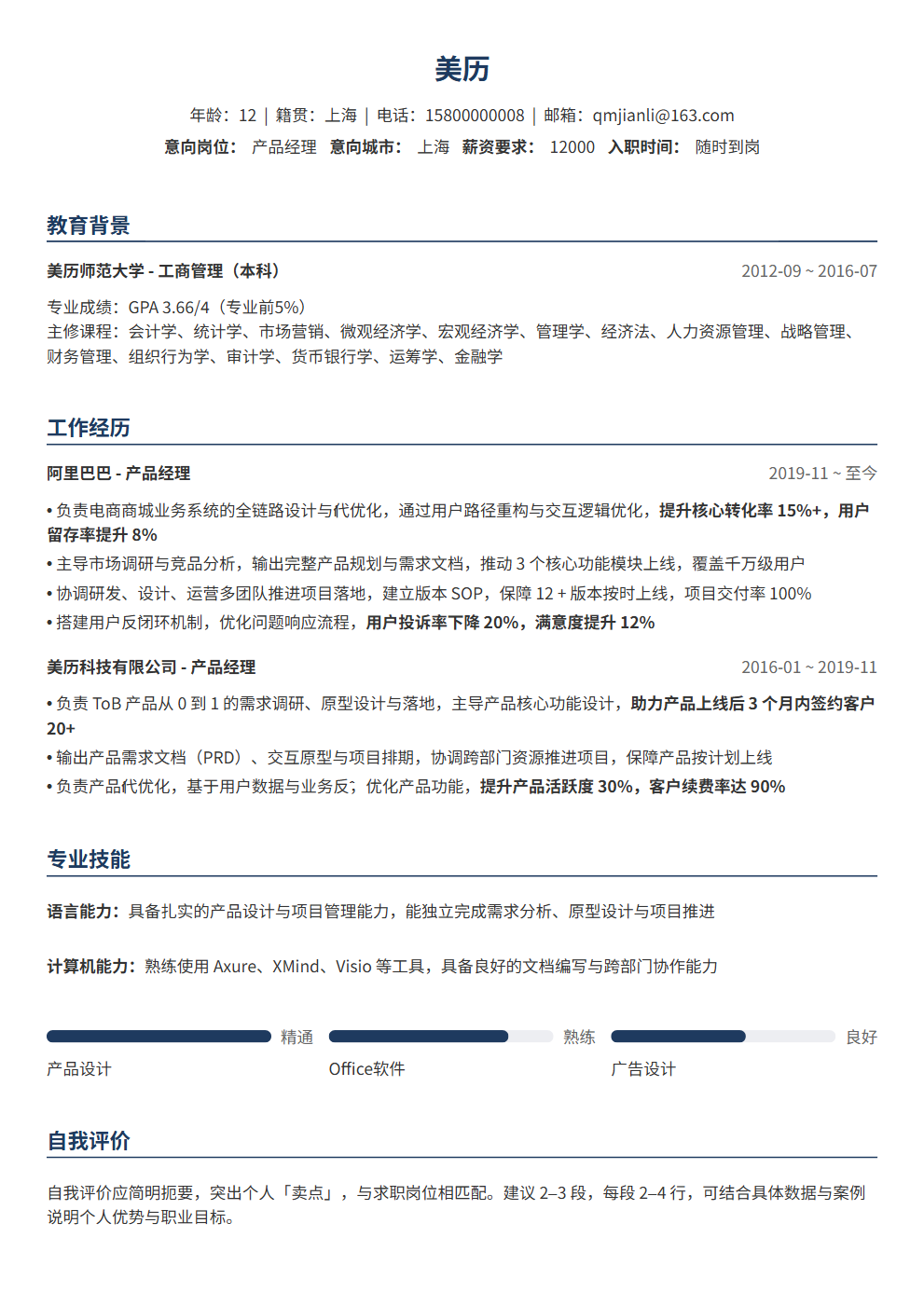
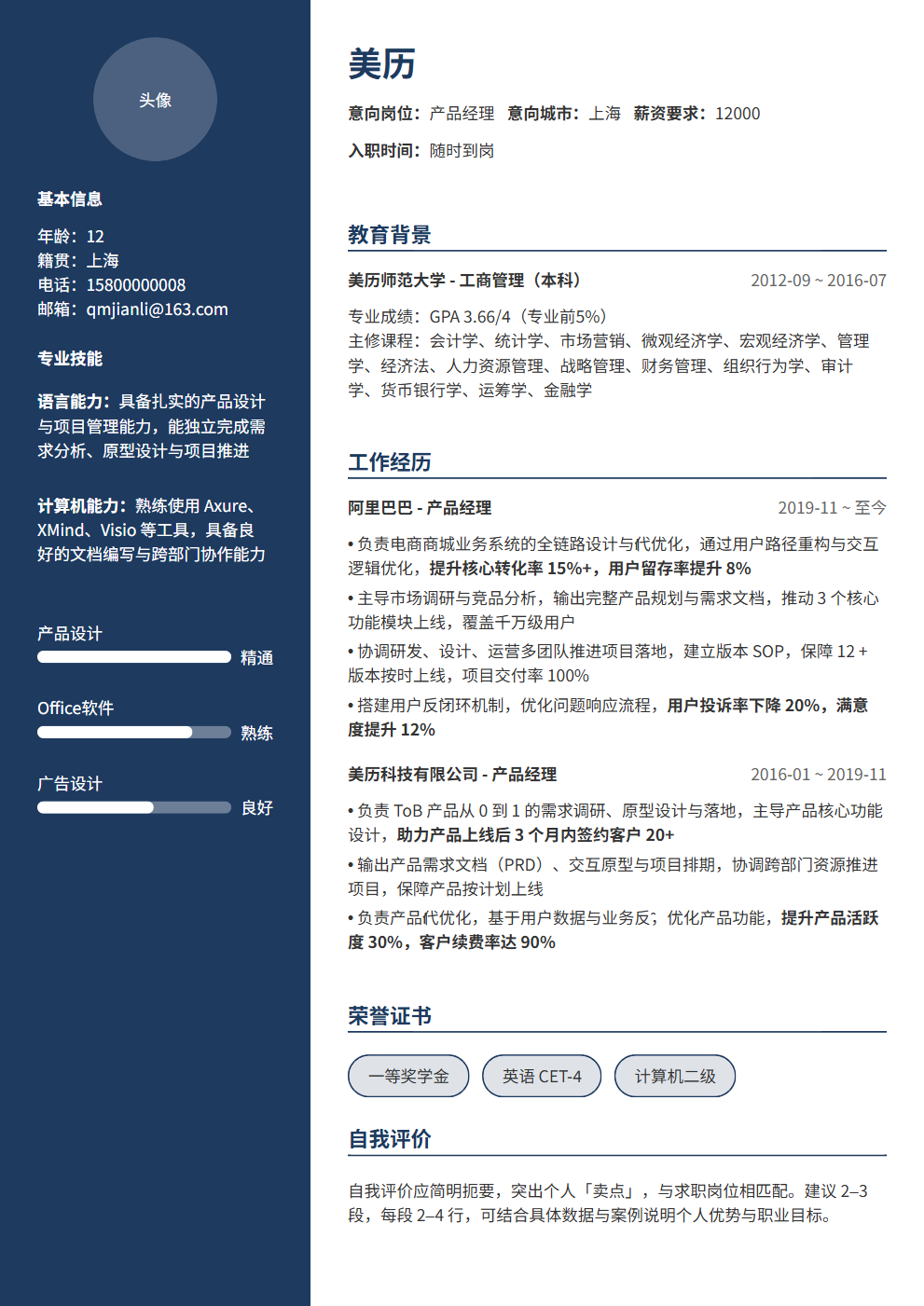
Technical interview preparation starts with a great resume — every project on it may be probed deeply. Use BeautyResume to precisely present your technical projects and achievements, so interviewers can see your technical strength at a glance. A great resume is your ticket to technical interviews.