How to Prepare for Structured Interviews? 5 Question Types and Answer Frameworks
A systematic breakdown of 5 core structured interview question types—comprehensive analysis, planning & organization, interpersonal relations, emergency response, and self-awareness—with answer frameworks and scoring tips.
Structured interviews are the dominant format for civil service, public institution, and state-owned enterprise recruitment. Many candidates memorize countless templates yet still fail to score well—the root cause is a lack of understanding of the underlying logic behind each question type. This article systematically breaks down the 5 core structured interview question types, helping you build clear answer frameworks and move beyond the ineffective "template-memorization" approach.
1. What Is a Structured Interview
A structured interview is a standardized format where all candidates answer the same set of questions, and evaluators score responses using a uniform rubric. Its core characteristics are standardization and comparability, meaning the completeness, logical coherence, and relevance of your answers directly determine your score.
Structured interviews typically include 3-5 questions with 15-25 minutes of response time. The 5 common question types are: comprehensive analysis, planning & organization, interpersonal relations, emergency response, and self-awareness. Let's break down each one.
2. Comprehensive Analysis: Position + Argument + Elevation
Comprehensive analysis questions appear most frequently in structured interviews. You're typically given a social phenomenon, policy, or viewpoint and asked to share your perspective. These questions test depth of thought and logical reasoning.
Answer Framework:
- State your position: Use 1-2 sentences to clearly state your core viewpoint—avoid being vague
- Multi-angle analysis: Expand from at least 2 dimensions (causes, impacts, pros/cons), supporting each with specific examples or data
- Propose solutions: Offer 2-3 actionable recommendations based on your analysis—make them specific and implementable
- Conclude and elevate: Wrap up with one sentence that raises the discussion to a broader level or connects back to the role
Scoring Tips: Avoid empty openings like "we should look at this dialectically"—stating your position directly earns more points. Your analysis should have layers, not repeat the same point. Solutions must be concrete; saying "strengthen supervision" or "raise awareness" is meaningless without specifics on how.
3. Planning & Organization: Goal + Process + Highlight
Planning and organization questions ask you to design an event, research project, or training program. They test your coordination skills and ability to plan holistically. Many candidates fall into the trap of listing steps like a checklist.
Answer Framework:
- Define the goal: State the purpose and expected outcomes of the activity upfront
- Pre-event preparation: Determine time, location, participants, materials, and budget; develop a plan and get approval
- During execution: Walk through the process, emphasizing key execution details like breakout discussions or interactive sessions
- Post-event follow-up: Compile results, produce a report, capture lessons learned, and establish ongoing mechanisms
Scoring Tips: Don't just say "I'll develop a plan"—describe what's in the plan. Each phase needs specifics: how will you design the survey questions, where will you source the trainers? Most importantly, include a "highlight design"—an innovative element within the standard process that makes your answer stand out from the rest.
4. Interpersonal Relations: Positioning + Communication + Action
Interpersonal relations questions present a workplace conflict scenario involving supervisors, colleagues, or the public. They test your communication skills and emotional intelligence. The core principle: "respect superiors, collaborate with peers, care for subordinates."
Answer Framework:
- Clarify your role: State your position and responsibilities in the relationship
- Analyze the root cause: Examine the problem from both objective and subjective perspectives—don't rush to assign blame
- Communicate to resolve: Use different approaches for different parties—report and seek guidance from supervisors, communicate openly with colleagues, listen patiently to the public
- Reflect and improve: Summarize lessons learned to prevent similar issues
Scoring Tips: Avoid either "total capitulation" or "confrontation"—demonstrate a balance of principle and flexibility. Don't oversimplify conflicts as "poor communication"—dig deeper. Your resolution should show initiative, not passivity.
5. Emergency Response: Stabilize + Handle + Follow Up
Emergency response questions present a sudden crisis—public complaints, equipment failure, PR disaster. They test your ability to handle pressure and manage crises. The biggest mistake is panicking or trying to address everything at once.
Answer Framework:
- Stabilize the situation: Immediately control the scene, calm emotions, ensure safety
- Gather information: Quickly understand the cause, people involved, and scope of impact
- Prioritize and handle: Rank issues by urgency; address the most critical first while managing others concurrently
- Follow up and summarize: After the situation is resolved, conduct follow-up, capture lessons, and improve contingency plans
Scoring Tips: You must demonstrate a sense of priority—don't tackle everything simultaneously. Show awareness of escalation protocols for major incidents. The follow-up phase is often overlooked but is key to demonstrating systematic thinking.
6. Self-Awareness: Fit + Examples + Planning
Self-awareness questions revolve around "why you're a fit for this role"—including self-introduction, strengths/weaknesses, and career plans. These seem simple but are the most likely to expose inadequate preparation.
Answer Framework:
- Role understanding: Share your understanding of the position—its responsibilities, requirements, and challenges
- Self-fit: Use 2-3 specific experiences to prove you have the required capabilities and qualities
- Acknowledge gaps: Honestly mention 1 relevant but improvable weakness, along with your plan to address it
- Future planning: Discuss your 3-5 year career development vision tied to the role
Scoring Tips: Don't recite your resume in your self-introduction—curate content around the role's requirements. Use the STAR method (Situation-Task-Action-Result) for examples, with data and details. When discussing weaknesses, avoid fake ones like "I'm too much of a perfectionist"—share a genuine gap that doesn't undermine core competencies.
7. Three Key Reminders for Structured Interview Preparation
- Reject templated answers: Evaluators hear dozens of candidates daily—template answers are instantly recognizable. Frameworks are skeletons; you must fill them with your own thinking and experience
- Speaking practice is 10x more valuable than reading: Structured interviews test oral expression. Reading without practice equals zero. Complete at least 2 full mock sets daily, record yourself, and fix filler words and logical jumps
- Stay current on policy and industry trends: Comprehensive analysis questions draw from real-world events. Regularly read news commentary and policy analysis to build your own perspective library
Conclusion
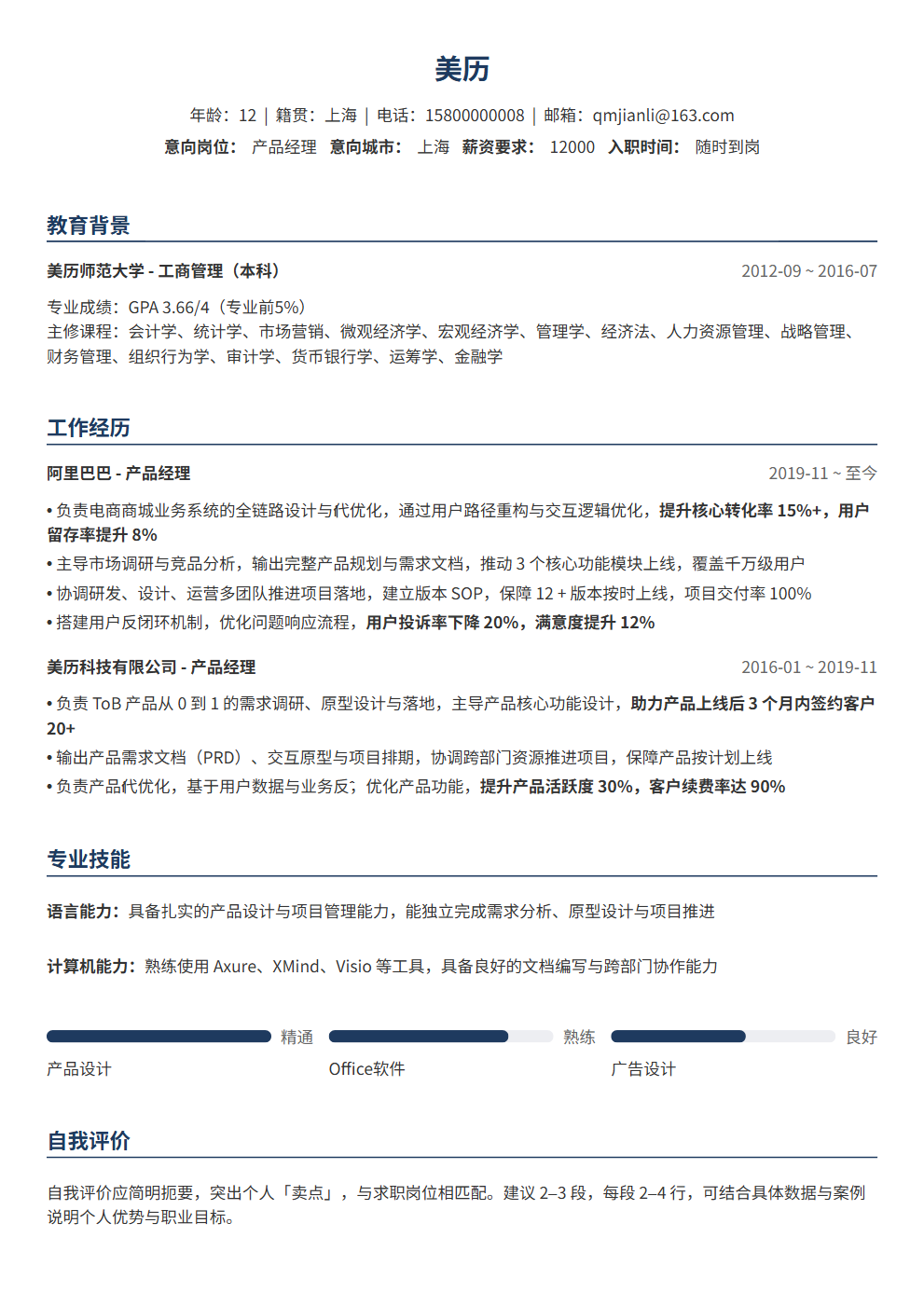
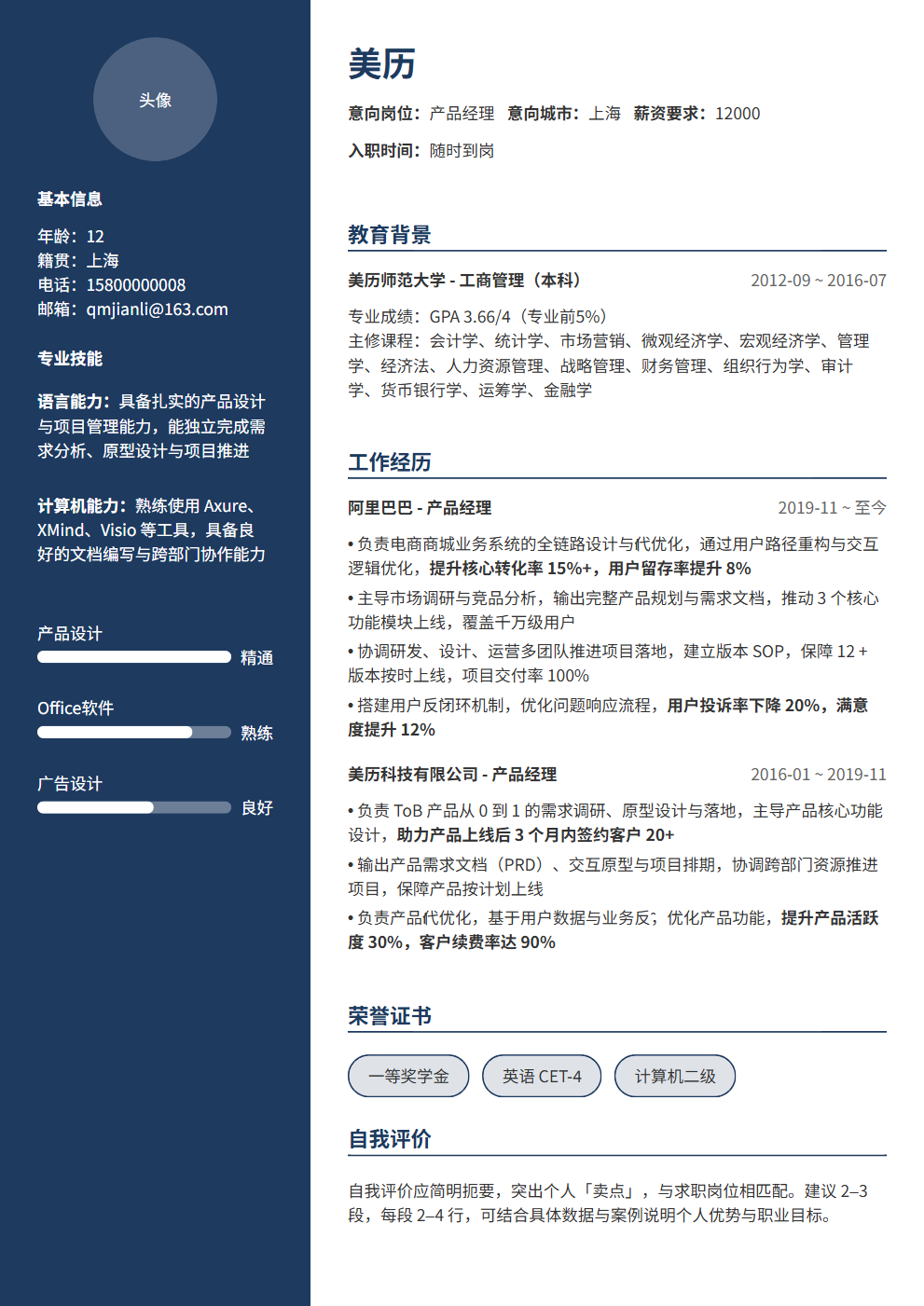
The 5 structured interview question types each have different emphases, but the core logic is consistent: precise comprehension, clear framework, substantive content, and fluent delivery. Mastering answer frameworks is only step one—what truly differentiates candidates is the depth of thinking and personal character demonstrated within those frameworks. During preparation, we recommend organizing your experiences and strengths into a high-quality personal asset library—the same logic behind resume optimization. If you're still struggling with your resume, try BeautyResume's resume editor—professional templates and smart formatting help you quickly create a resume that makes interviewers take notice. From resume to interview, we support your entire journey to landing your dream offer.