Restarting Your Career at 35: Management, Specialist, Freelance Paths, and Interview Strategy
Career anxiety at 35 isn't an individual problem — it's structural. Three transition paths can help you break through: the management track, the specialist track, and the entrepreneurship/freelance track, combined with resume reinvention strategies to turn age from a liability into an asset.
35 Is Not the End of Your Career — But You Do Need to Replan
Career anxiety at 35 isn't just your problem. Job postings with "under 35" requirements, companies prioritizing high-salaried veterans for layoffs, interviewers asking "why are you still in an individual contributor role" — these are structural issues, not personal shortcomings. But complaining won't help. After 35, you need an entirely new career strategy: move up into management, go deeper as a specialist, or go out on your own. One of these three paths will work for you.
3 Truths About the Age 35 Crisis — It's Not You, It's the Market Structure
Understanding the nature of the age 35 crisis is essential to finding the right breakthrough:
- Truth 1: Companies want cost-effectiveness, not just experience. Your experience may exceed that of younger workers, but your salary is 2 to 3 times higher. If a company just needs someone who can do the work, they'll choose the cheaper option.
- Truth 2: Industry cycles are accelerating, and 10-year-old experience may be obsolete. The "10 years of experience" you're proud of may be worthless in the face of new technologies. The ability to keep learning matters more than experience itself.
- Truth 3: Middle management roles are shrinking. Flat organizational structures mean fewer middle management positions. The path "up" has narrowed, but the paths "deeper" and "outward" have always been open.
Path 1: The Management Track — Transitioning from Individual Contributor to Leader
The management track is the most mainstream transition at 35, but it's not for everyone. The core shift is in mindset:
- From "I can do it well myself" to "I can help my team do it well": A manager's value isn't personal output — it's output through others. You need to learn delegation, coaching, and performance management.
- From "solving specific problems" to "defining problems and direction": Individual contributors execute tasks; managers must discover problems, set priorities, and formulate strategies.
- From "professional depth" to "cross-functional integration": Managers don't need to be experts in every area, but they must integrate resources across disciplines to achieve goals.
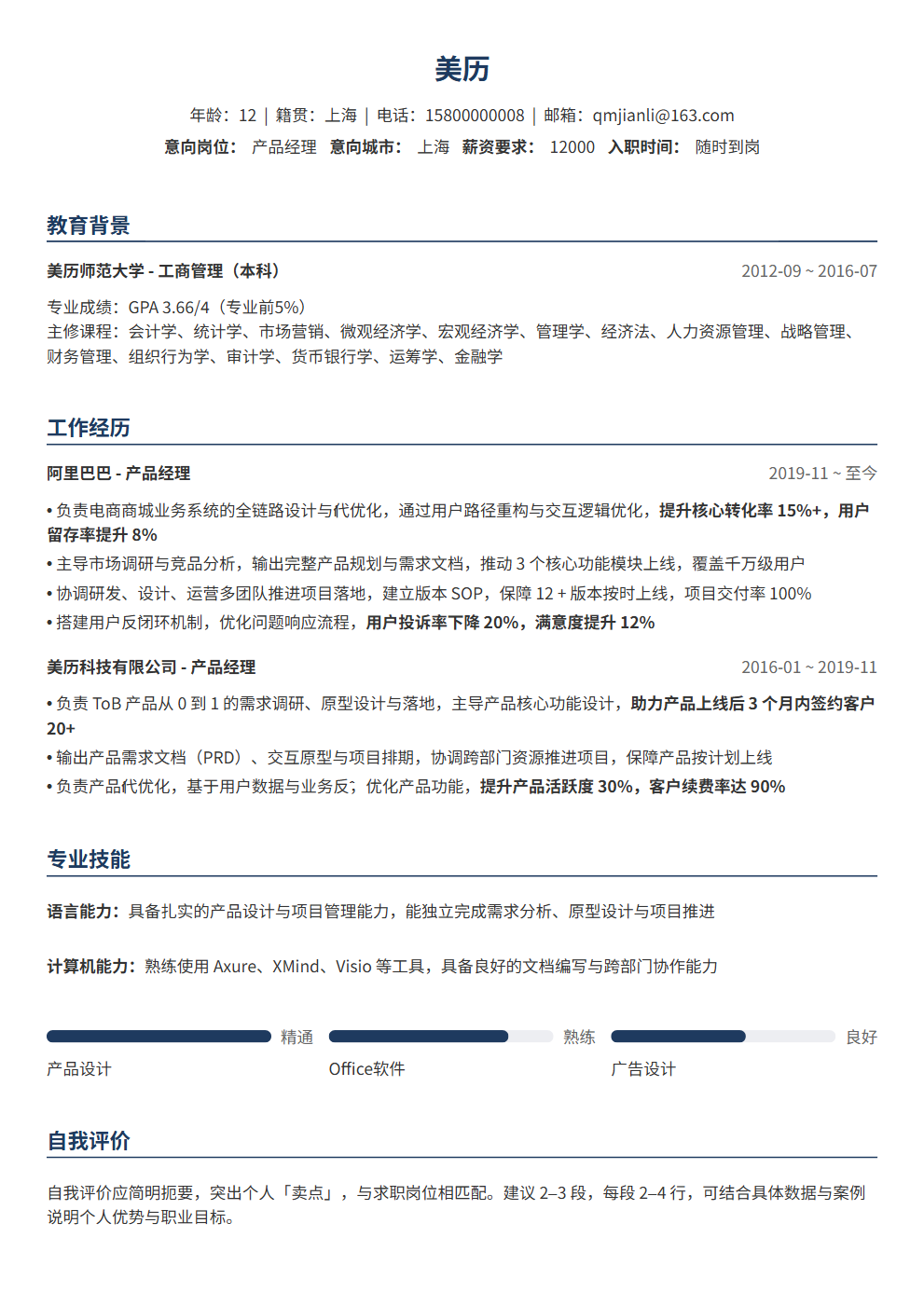
How to highlight management skills on your resume: Don't just write what you did — write what your team achieved under your leadership. Replace "responsible for X" and "participated in X project" with "managed a team of X people," "drove X project to completion," and "built X system." Quantify management results: team performance improved by X%, project delivery cycle shortened by X%, team turnover reduced by X%.
Path 2: The Specialist Track — Going Deep in One Area to Become Irreplaceable
If you don't want management and don't want to be eliminated, the specialist track is your best option. A specialist's core value is "irreplaceability" — you can do what others can't, and you finish in half a day what takes others three:
- Choose a niche to go deep: Don't be a "jack of all trades." Be the person who knows the most about a specific niche. Not "frontend developer" but "large-scale frontend performance optimization specialist."
- Build professional influence: Write technical blogs, speak at industry conferences, contribute to open source, publish professional books. Influence is a specialist's moat.
- Stay on the cutting edge: The biggest risk for specialists is stagnation. Learn at least 1 to 2 new technologies or methods every year to keep your knowledge current.
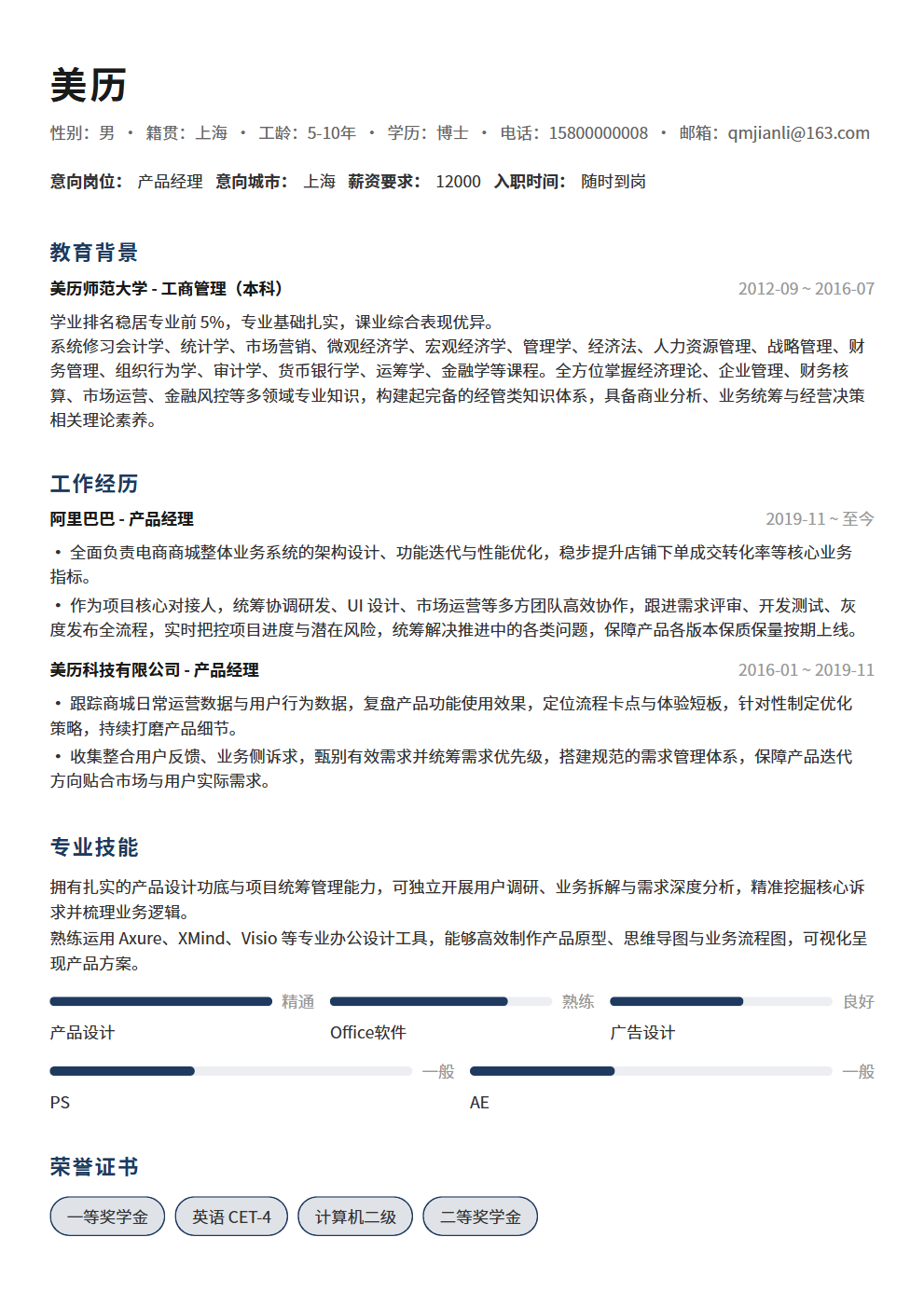
How to highlight professional depth on your resume: Use phrases like "led the design of X architecture, supporting X-scale traffic," "solved an industry-level technical challenge in X," and "presented on X topic at X conference" to demonstrate depth and influence. Replace empty claims like "proficient in X technology" with concrete results and case studies.
Path 3: Entrepreneurship/Freelance — Monetizing Your Accumulated Experience and Resources
Starting a business or going freelance after 35 isn't escaping the workplace — it's monetizing years of accumulated experience, connections, and resources. This path suits those with some savings and industry connections:
- Consulting: Leverage your industry experience to provide consulting services, charging by project or by day. Hourly rates are typically 3 to 5 times what you'd earn in a full-time role.
- Independent developer/creator: Use your professional skills to build products or content, monetizing through subscriptions, advertising, or direct sales.
- Small-team startup: Find 2 to 3 complementary co-founders and build a small, profitable business. Don't chase funding and scale — pursue profit and freedom.
How to present diverse capabilities on your resume: Don't write entrepreneurship and freelance experience as "unemployed." Highlight your business insight, client acquisition, project delivery, and revenue results. Use "served X enterprise clients," "achieved X in annual revenue," and "independently took X project from 0 to 1" to demonstrate your comprehensive abilities.
3 Keys to Reinventing Your Resume After 35
Writing a resume at 35 is fundamentally different from writing one at 25. The core shifts are:
- Trim early experience: Internships and your first job from 10 years ago don't need to be on your resume. Focus on the most recent 5 to 8 years of core experience. HR spends an average of 6 seconds on a resume — the more concise, the better.
- Highlight achievements, not responsibilities: Don't write "responsible for X." Write "achieved X result through Y method." Results must be quantified — achievements without data lack persuasiveness.
- Emphasize industry insight and network resources: Your biggest advantage at 35 isn't stamina — it's your deep understanding of the industry and accumulated professional network. Appropriately showcase your industry judgment and resource integration capabilities in your resume.
Interview Strategy for Job Seekers Over 35 — How to Respond to "Aren't You Too Expensive?"
The most common challenge in interviews at 35 is "your salary expectations are too high" or "your age doesn't quite match this role." The response strategy: don't defend your age — convert it into value. "My salary expectations are indeed higher than a fresh graduate's, but I don't need a 3-month training period — I can deliver in my first week. I've handled similar projects before and can help the team avoid many detours." Counter the "too expensive" concern with "immediate impact" and "experience compounding," making the interviewer see you're not expensive — you're worth it.
35 Is the Golden Age of Accumulation, Not a Countdown to Elimination
35 is not the end of your career — it's an inflection point for career strategy. The management track, specialist track, and entrepreneurship/freelance track — one of these three paths will work for you. The key is to stop making 35-year-old decisions with a 25-year-old mindset. You need a transition strategy, not more overtime. If you're going through a career crisis at 35 and need a resume that redefines your professional value, try BeautyResume's resume editor — professional templates help you cut through the noise and highlight your core value, smart word suggestions help you transform "10 years of experience" into "10 years of achievements," and show HR that behind your age lies irreplaceable accumulation, not a cost to be optimized.