Annual Raise Negotiation Playbook: Prepare Data, Your Ask, and Objection Responses 3 Months Ahead
Every raise season you just wait for HR to announce the result? Passively accepting means you'll always get less than expected. The 4-step preparation method helps you speak with data and results, getting 10%-20% more during annual reviews instead of relying on "what your boss thinks you're worth."
Your Annual Raise — The Biggest Sum of Money You Lose Every Year
Every raise season, most people's approach is: wait for HR's notification, grumble "that's all?" when they see the number, then quietly accept it. But have you ever done the math? If you get 5% less each year, your cumulative loss over 10 years could exceed an entire year's salary. Annual raises aren't about what your boss "gives you" — they're about what you "can prove you're worth." A 4-step preparation method helps you speak with data and results during raise season, getting 10%-20% more.
Step 1: Start Preparing 3 Months Ahead — Raise Negotiation Isn't Improv
The worst thing you can do in a raise negotiation is "wing it." You need to start preparing 3 months before raise season because your achievements need time to accumulate and your arguments need time to refine.
- Build an "achievement file": Starting now, record every significant piece of work you complete — what you did, what methods you used, what results you achieved, and what the numbers were. Don't wait until raise time to rely on memory — you will definitely forget things.
- Track the raise timeline: Most companies do annual raises between March-May or July-September. You need to know your company's schedule in advance and communicate with your manager 1-2 months before the raise window opens.
- Understand your company's raise rules: Some companies have fixed raise percentage ranges (e.g., 3%-8%), while others adjust by performance tier. Understanding the rules tells you how much negotiation room you have.
Step 2: Build Your "Raise Case" with Data — Not "I Want More," but "I'm Worth More"
The core of raise negotiation isn't expressing "I want more money" — it's proving "the value I create exceeds my current salary." You need three types of data to build your case:
- Performance data: How much work you completed, what goals you hit, your KPI achievement rate. For example, "Completed 12 projects this year, KPI achievement rate of 115%, ranking in the top 20% of the team" — speaking with numbers is 100x more convincing than "I work really hard."
- Incremental data: What you did more than last year, what additional value you created. For example, "Took on the new XX business line this year, generating XX million in revenue" or "Optimized the XX process, improving team efficiency by 30%" — increments are more convincing than baselines because they show growth.
- Market data: The salary levels for equivalent roles and experience in the market. You can reference job sites, salary reports, and peer conversations. For example, "The median salary for the same role with 3 years of experience in our industry is XX, and I'm currently at XX" — market data is an objective reference, not a subjective demand.
Step 3: Choose the Right Communication Strategy — How You Ask Matters More Than What You Ask
Having data and reasons isn't enough — you need the right communication approach. Many people prepare thorough cases but see their impact diluted by poor delivery.
- Pick the right timing: Don't discuss raises when your manager is swamped or the team just had a problem. Choose a time when your manager is in a good mood and the work pace is relatively stable — ideally in a 1-on-1 setting.
- Open with a "seeking advice" tone: Don't lead with "I want a raise." Instead say, "I'd like to discuss my career development and compensation with you — I'd appreciate your perspective." An advice-seeking opening reduces defensiveness and makes your manager more receptive.
- Present achievements first, then expectations: Show your contributions and value from the past year before stating your salary expectations. Sequence matters — if you state expectations first, your manager feels you're "making demands"; if you present achievements first, they feel you're "making a case."
- Give a specific number: Don't say "I hope for a bigger increase." Say "Based on my performance and market levels, I'm targeting a raise of around XX%." A specific number gives your manager a clear reference point and shows you've done your homework.
Step 4: Prepare for Your Manager's "Rejection Scripts" — Have Counter-Arguments Ready
Even with thorough preparation, your manager likely won't agree immediately. Here are the 3 most common rejection scripts and how to counter them:
- Script 1: "The company's overall raise budget is tight this year." Counter: Don't argue with company policy — push for individual exceptions. "I understand the overall situation, but I'd like to know if differentiated adjustments are possible within the overall range based on individual contributions? My performance data this year shows..."
- Script 2: "Your salary is already on the higher end for the team." Counter: Respond with market data. "I understand the team situation, but based on my market research, the salary level for the same role and experience is around XX, and there's still a gap."
- Script 3: "Keep up the good work and we'll definitely adjust next year." Counter: Push for specific commitments, not empty promises. "Thank you for the recognition. If we're looking at next year's raise, what standards would I need to meet for a XX% adjustment? Can we make the targets explicit?" — Turn vague promises into measurable goals.
3 Bottom-Line Principles for Raise Negotiation
- Principle 1: Never threaten to quit. Saying "Give me a raise or I leave" is the worst negotiation strategy — even if it works this time, your manager will see you as a flight risk and won't give you key opportunities going forward.
- Principle 2: Don't compare salaries with colleagues. "XX joined later than me but makes more" — this comparison only makes you look immature and may trigger salary confidentiality issues.
- Principle 3: If the raise result is genuinely disappointing, don't lose your temper on the spot. You can say "I understand the company's decision, but I'd like to understand the plan for future adjustments" — leave yourself an out. Raise negotiation is a long game, not a one-shot deal.
Raises Aren't Given — They're Negotiated — 4 Steps of Preparation End Your Passive Position
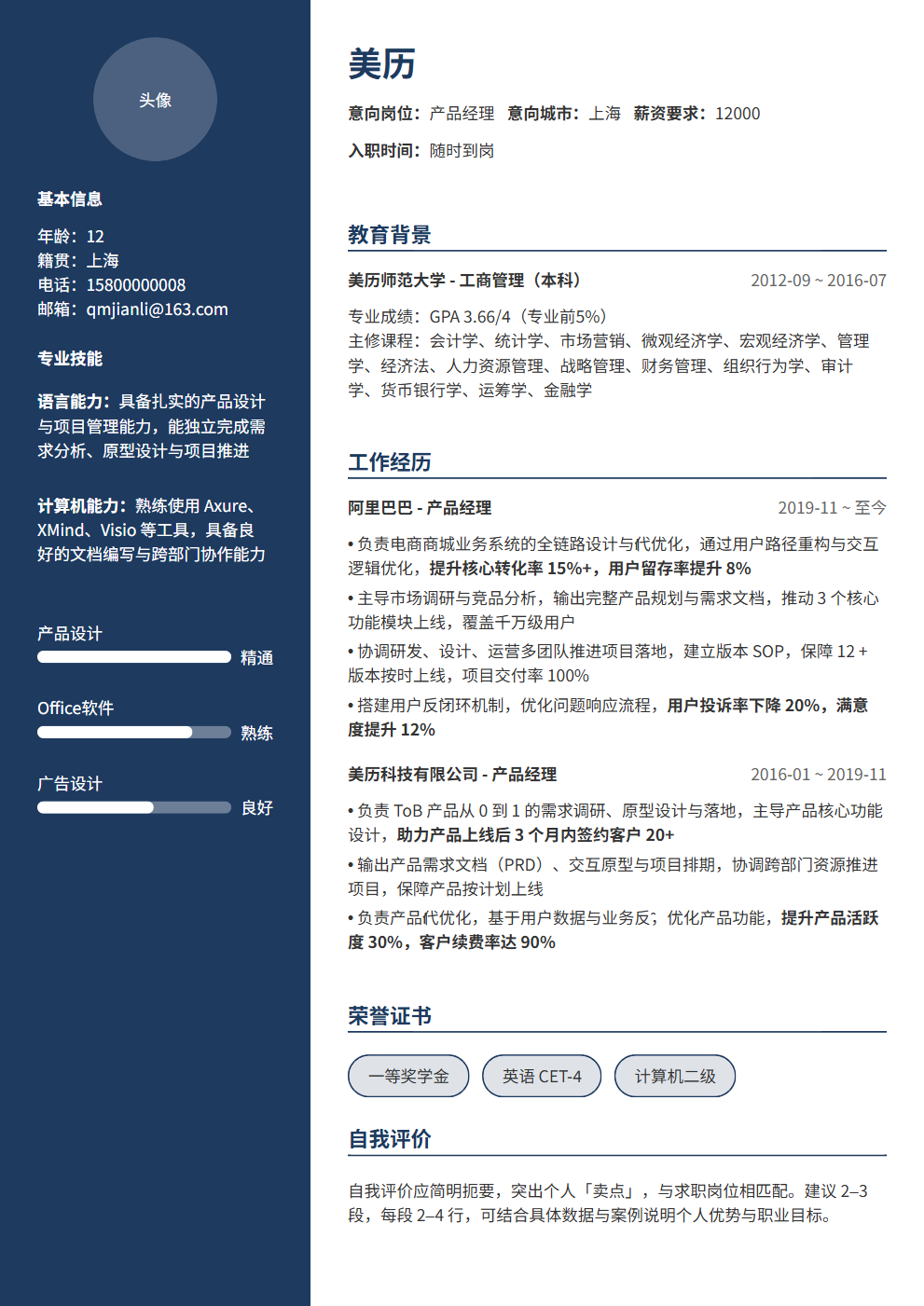
Annual raises aren't about what your boss "bestows" upon you — they're about proving your worth with data and results. Prepare 3 months ahead, build your case with data, choose the right communication strategy, and prepare counter-arguments in advance — 4 steps to get 10%-20% more during raise season. Remember: the core of raise negotiation isn't "I want more" — it's "I'm worth more." If you're preparing for career development and salary growth, try BeautyResume's resume editor — professional achievement display templates help you organize your performance highlights, and smart wording suggestions make your resume more convincing, helping you speak with data in raise negotiations.