How to Land Your First Job in a New Field with Zero Experience? 4 Steps from Outsider to Insider
Want to change careers but have no experience and nobody wants you? 4 steps to go from outsider to insider — spend 3 months systematically learning new industry knowledge, create 2-3 industry projects, find referrals in the new field, and tailor your resume. Plus 3 resume writing methods for zero-experience career changers and how to demonstrate learning ability in interviews.
You want to change careers, but every time you open a job board and see "3+ years of relevant experience required," your heart sinks halfway. You've sent out a few resumes, all rejected for the same reason: "lack of relevant experience." You start wondering: is zero-experience career change even possible? The answer: yes, and many people have done it. But they didn't succeed through luck — they succeeded through strategy. The core logic of zero-experience career change is: use "provable ability" to replace "work experience," letting employers see that "even though you haven't done this before, you can definitely do it well." This article will help you start from scratch, taking 4 steps from outsider to insider to land your first job in a new field.
Want to Change Careers but No Experience and Nobody Wants You: What's the Real Problem
Let's clarify one thing: employers aren't discriminating against "zero experience" — they're mitigating "risk." Hiring someone without relevant experience means spending more time training, uncertainty about whether they can handle the role, and the possibility of discovering they're not a fit after a few months — all of these are costs and risks for employers. So your task isn't to "convince employers to give you a chance" but to "reduce employers' risk perception" — making them feel "hiring this person has manageable risk and promising returns." How? With provable ability and portfolio pieces that show employers "this person hasn't worked in this field before, but they're already prepared."
- 3 common misconceptions about zero-experience career change: 1) Thinking "interest" equals "ability" — enjoying cooking doesn't mean you can be a chef; 2) Thinking "studied" equals "can do" — reading 10 product management books doesn't mean you can be a product manager; 3) Thinking "willing to learn" equals "worth hiring" — every job seeker says they're willing to learn; employers are tired of hearing it
- What employers really want to see: Not "I'm willing to learn" but "I've already learned, and I've produced results." The former is a promise; the latter is evidence — evidence is always more persuasive than promises
Step 1: Spend 3 Months Systematically Learning New Industry Knowledge
The first step in career change isn't sending resumes — it's learning. But not "casual browsing" learning — it's "systematic" learning. Spend 3 months building up the core knowledge framework of the new industry. You don't need to become an expert, but you need to reach a level where you can "have a normal conversation with industry insiders." Is 3 months enough? Yes — if you invest 2-3 hours daily, 3 months is 180-270 hours, enough to build a basic knowledge framework for any industry.
- Learning path design: First understand the industry landscape (industry reports, white papers, analysis of leading companies), then learn core skills (online courses, professional books, hands-on practice), finally dive into a niche area (choose one direction to go deep and build differentiated advantage). Don't dive into details right away; build the big picture first
- Recommended learning resources: Online course platforms (Coursera, Udemy, Jike Time, Dedao), industry reports (iResearch, QuestMobile, McKinsey reports), professional books (every industry has classic introductory books), industry communities (Zhihu columns, WeChat public accounts, professional forums)
- Learning method: Don't just "read" — "do." After reading a chapter, do an exercise; after completing a module, do a project. "Input + output" learning efficiency is 3x+ that of pure "input"
- Learning outcome verification: After studying, can you explain core industry concepts in your own words? Can you analyze an industry case? Can you identify an industry pain point and propose a solution? If yes to all, you've reached "entry" level
- Learning notes and knowledge base: Use Notion, Feishu Docs, or a blog to record your learning process and insights. These notes aren't just learning tools but also evidence of learning ability during interviews — "Look, I spent 3 months systematically studying XX; here are my learning notes and reflections"
The core logic of 3 months of systematic learning: use "verifiable learning outcomes" to replace "relevant work experience." You may not have formal work experience, but you have systematic knowledge reserves and learning records — far better than "zero preparation."
Step 2: Create 2-3 Industry Projects
Learning knowledge is only the first step; more importantly, turn knowledge into "portfolio pieces." 2-3 industry projects are your most powerful weapon in career change job seeking — they directly prove "I can not only learn but also do." Projects don't need to be grandiose, but they need to be complete, have results, and be demonstrable.
- Project selection principle: Choose projects that showcase core skills, not "show-off" projects. For example, transitioning to product management, don't build a "full-featured app" — create a "complete product proposal" including user research, requirements analysis, product planning, prototype design, and data analysis plan
- Project 1: Basic capability showcase project. Demonstrate your mastery of the new industry's fundamental skills. For example, transitioning to data analysis, create a "use Python to analyze XX dataset and produce a data report" project; transitioning to UI design, create a "redesign of XX product's interface"
- Project 2: Comprehensive capability showcase project. Demonstrate your ability to solve complex problems. For example, transitioning to operations, create a "build XX community from 0 to 1, growing to 1000 members in 3 months" project; transitioning to frontend development, build a "complete web application including frontend, backend, and database"
- Project 3 (optional): Industry insight showcase project. Demonstrate your deep understanding of the industry. For example, write a "current state analysis and trend forecast for XX industry" in-depth report, or do a detailed "XX competitive analysis" comparison
- Project presentation method: Don't just write projects on your resume; have "accessible" showcases. GitHub repositories, live demos, Figma prototype links, Notion documents — let interviewers directly see your work, not just read your descriptions
The core logic of creating 2-3 projects: use "demonstrable results" to replace "unverifiable promises." When interviewers see your project work, they no longer need to "believe" you can do it — they "see" you can do it. This is the qualitative shift from "zero experience" to "having evidence."
Step 3: Find Referrers in the New Industry
With zero experience in career change, the probability of your resume being filtered out by systems is extremely high — because you have no relevant work experience, ATS systems will filter you out directly. Referrals are the most effective way to bypass system screening, especially for career changers — a referrer can deliver your resume directly to the hiring manager, and with internal endorsement, the hiring manager will evaluate you more seriously.
- Find referrers from learning communities: Industry communities you joined during learning, classmate groups from online courses, active users on tech forums — these are all potential referrers. Build the relationship first, then ask for a referral
- Attend industry offline events: Industry salons, tech meetups, product manager gatherings — offline events are the best places to meet potential referrers. Bring business cards, initiate conversations, showcase your learning outcomes and project work, leave an impression
- Use professional networking platforms: Search for employees at target companies on Maimai, LinkedIn, proactively add connections, politely introduce yourself and your career change plan, and ask for referral help. Note: showcase your project work and learning outcomes first, then ask for a referral — make them feel "this person has no experience but is truly prepared"
- Ask "similar people" for help: People who've successfully changed careers understand your situation best and are most willing to help. Search for "XX career change experience sharing" on Zhihu, Xiaohongshu, find those who've successfully transitioned, proactively reach out for advice, and ask for referrals after building a relationship
The core logic of finding referrers: when the system won't give you a chance, create opportunities through relationships. Referrals not only get your resume seen but also let the hiring manager evaluate you with the positive impression of "someone recommended this person" — especially important for zero-experience career changers.
Step 4: Tailor Your Resume
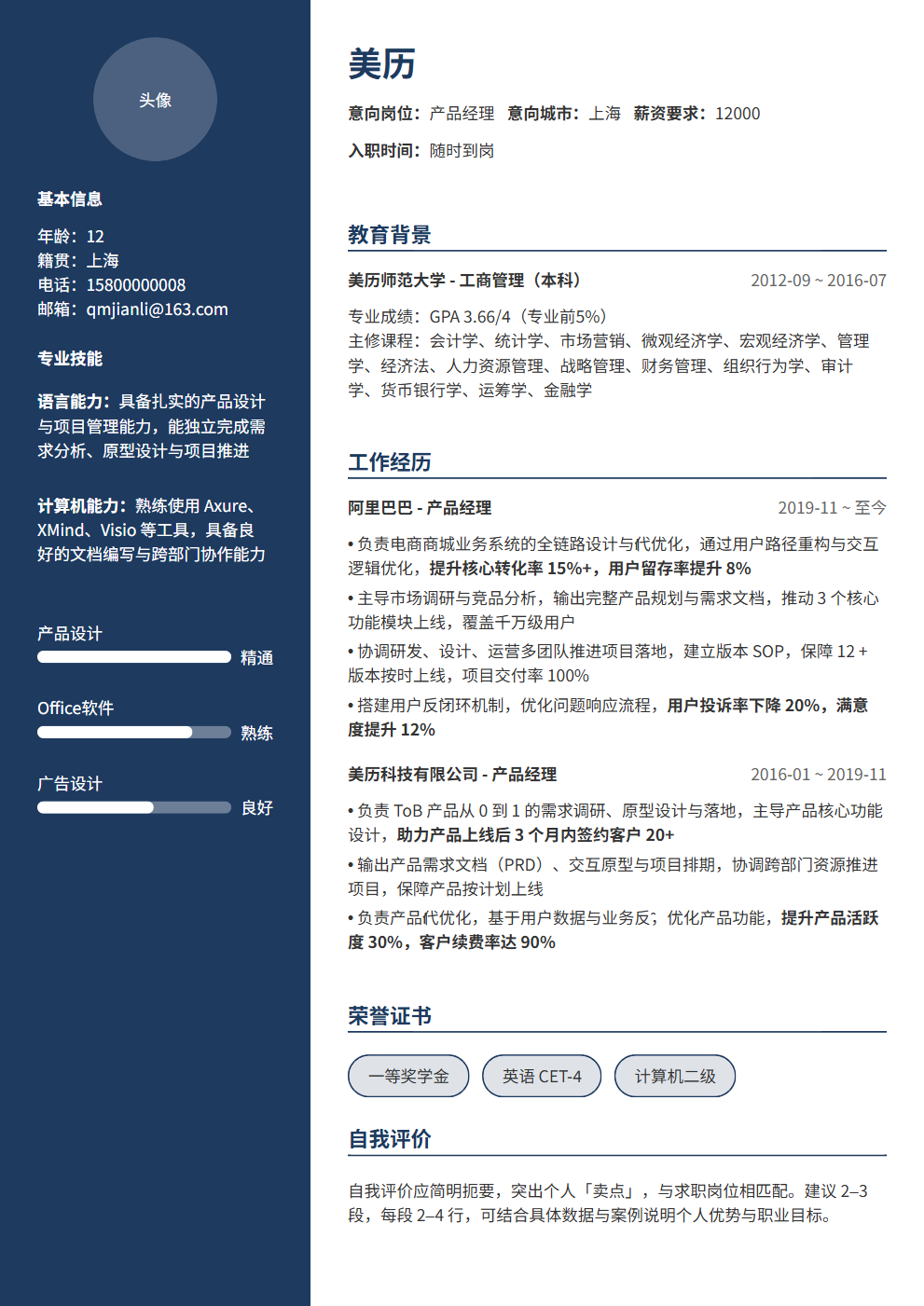
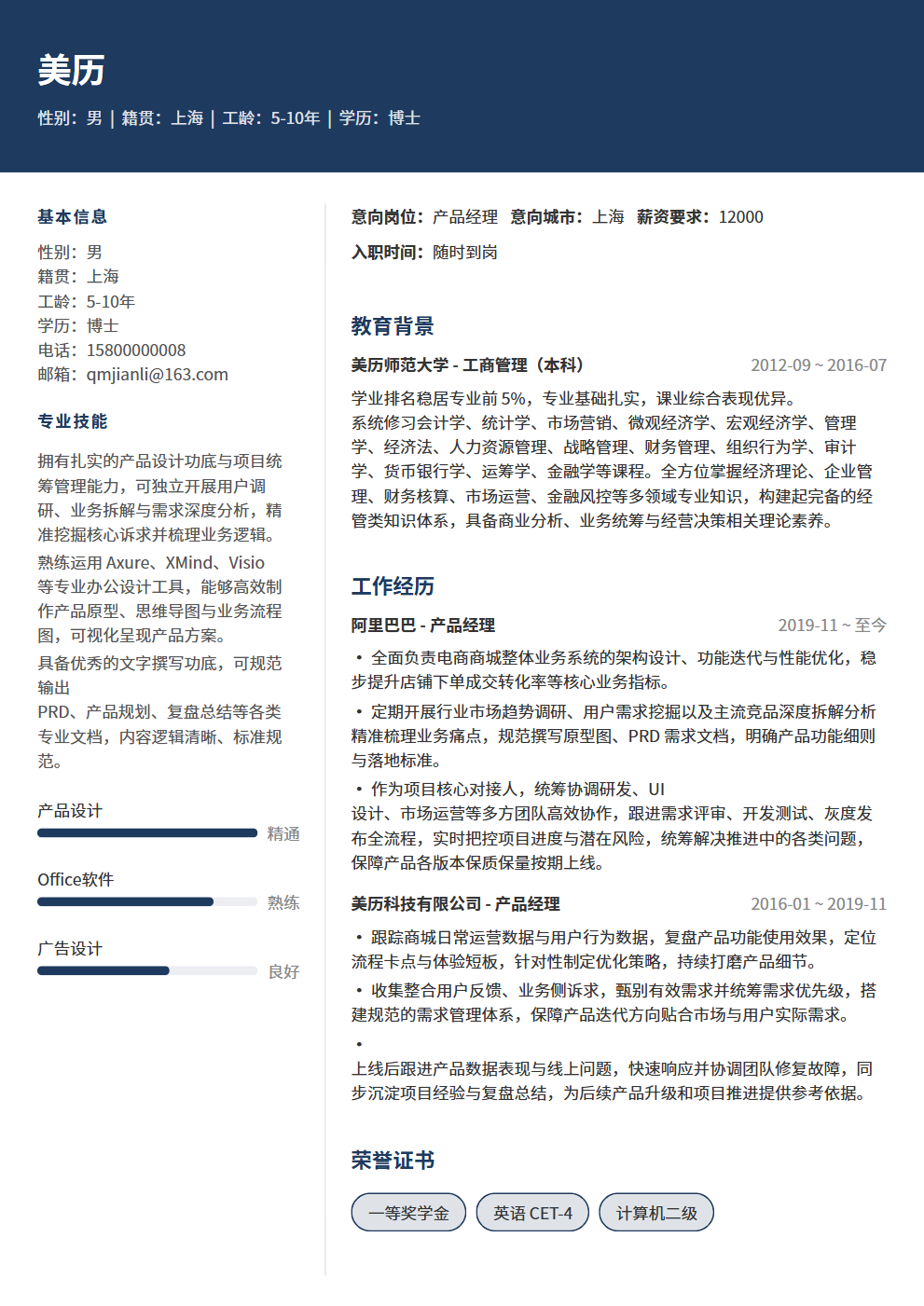
A resume for zero-experience career change can't follow the same approach as your original industry. You need to rewrite your resume from "what I did in the past" to "what I can do for the new industry" — this requires a targeted modification strategy. The following 3 writing approaches each make your career change resume more persuasive.
- Approach 1: Skill transfer method. Extract "transferable skills" from your original industry experience, then map them to the new industry's job requirements. For example, transitioning from teacher to product manager — "instructional design ability → product solution design ability," "student needs analysis → user needs analysis," "classroom interaction design → product interaction design." The key is describing your old industry experience using the new industry's language
- Approach 2: Project highlight method. Place your 2-3 new industry projects in the most prominent position on your resume (before work experience), described with results + data. For example, "independently completed XX product solution design, including user research (50+ user interviews), requirements document (30-page PRD), prototype design (Figma high-fidelity prototype)" — let HR see your new industry capabilities at first glance
- Approach 3: Learning proof method. Add a "continuous learning" section to your resume, listing evidence of your systematic study of the new industry — completed courses, earned certificates, written learning notes, attended industry events. This proves you're not someone "just trying it out" but someone "seriously preparing"
The core logic of tailoring your resume: let HR see "this person hasn't worked in this field before, but they're well prepared." A resume isn't a "list of past experiences" but "proof of future capability" — especially for career change job seekers.
3 Resume Writing Methods for Zero-Experience Career Change
The above mentioned the thinking behind 3 approaches; here's a detailed breakdown of the specific operations for each.
- Skill transfer method steps: 1) List the core capability requirements for the target position (extracted from job descriptions); 2) Compare each one with your original industry experience to find transferable corresponding capabilities; 3) Redescribe these capabilities using the target position's language. For example, "managed a 30-student class → team management ability," "designed teaching plans → project planning ability," "handled classroom emergencies → crisis management ability"
- Project highlight method steps: 1) Place new industry projects at the top of your resume (after personal information); 2) Present them in "project name + project description + results data" format; 3) Describe each project in 3-5 lines, emphasizing what problem you solved, what method you used, and what results you achieved
- Learning proof method steps: 1) Add a "professional learning" or "self-improvement" section to your resume; 2) List completed course names and platforms, earned certificates, links to learning notes, attended industry events; 3) Summarize your learning outcomes in one sentence — "3 months of systematic product management study, completed 2 full product proposals, earned XX certificate"
How to Demonstrate Learning Ability in Interviews
In zero-experience career change interviews, what interviewers care about most isn't "what you've done" but "what you can learn." Learning ability is the most core competitiveness for career change job seekers — you need to make interviewers believe "this person has no experience but can learn quickly and well." The following methods help you effectively demonstrate learning ability in interviews.
- Prove learning speed with specific examples: Don't just say "I learn things quickly" — prove it with specific cases. "I learned Python basics in 2 weeks, completed my first data analysis project in 1 month, and independently produced a complete data report in 3 months." Specific timelines give interviewers an intuitive sense of "fast"
- Showcase learning methods and thinking: Interviewers want to know not just that you learn fast but how you learn. Share your learning method — "I first used XX course to build a knowledge framework, then practiced with XX project, asked questions in XX community when encountering problems, and finally reviewed and summarized using XX method." A systematic learning approach shows you're not "learning randomly" but "learning strategically"
- Impress interviewers with "pre-change preparation": Show your 3-month learning plan, 2-3 project works, learning notes, and knowledge base to the interviewer — "This is the preparation I did for my career change: 3-month learning plan, completed projects, written notes." This preparation itself is the best proof of learning ability
- Proactively propose probation period goals: During the interview, proactively say "If I'm fortunate enough to join, my goals for the first 3 months are XX" — this shows you not only have learning willingness but also a learning plan. The interviewer will think "this person has even planned their probation period; they're clearly serious"
The core principle of demonstrating learning ability: don't say "I can learn" — prove "I've already learned." Promises are cheap; evidence is priceless — when you prove your learning ability with specific learning outcomes and project work, interviewers don't need to "believe" you can learn; they "see" you've already learned.
3 Career-Change-Friendly Directions
Not all industries are suitable for zero-experience career change. Some have high entry barriers, steep learning curves, and require long-term accumulation (like medicine, law, academic research), making career change extremely difficult. But the following 3 directions are relatively friendly to zero-experience career changers — they have lower entry barriers, abundant learning resources, and focus more on practical ability than background.
- Direction 1: Product Manager/Operations. Product management and operations are among the most popular career change directions — because they have no hard professional requirements and value logical thinking, user insight, and execution more. Transitioning from teaching, sales, or customer service to product/operations has a high success rate — because these roles' core capabilities (communication, analysis, execution) are transferable
- Direction 2: Data Analysis. Data analysis is another career-change-friendly direction — entry only requires Python/SQL basics + statistics fundamentals, learning resources are extremely abundant (Kaggle, DataCamp, Bilibili tutorials), and project work is easy to showcase (data reports, visualization charts). Transitioning from finance, marketing, or operations to data analysis naturally comes with the advantage of business understanding
- Direction 3: Frontend Development/Design. Frontend development and UI design are the hottest career change directions — because the learning path is clear, learning resources are massive, and project work can compensate for lack of experience. You can transition from any role to frontend/design; the key is whether you're willing to invest time in systematic learning and practice
The common characteristic of these 3 directions: relatively low entry barriers, abundant learning resources, project work can compensate for lack of experience, and the industry is relatively inclusive of "non-traditional backgrounds." Choosing these directions for career change will yield higher success rates.
Conclusion: Zero Experience Doesn't Mean Zero Possibility — It Means Zero Excuses
Career change with zero experience is indeed harder than for those with experience — that's a fact. But "harder" doesn't mean "impossible." The 4 steps — spend 3 months systematically learning new industry knowledge, create 2-3 industry projects, find referrers in the new industry, and tailor your resume — each step helps you transform "zero experience" into "being prepared." The 3 resume writing methods let HR see your transferable skills and learning outcomes, demonstrating learning ability in interviews makes interviewers believe "this person hasn't done this before but can definitely do it well," and the 3 career-change-friendly directions tell you "where to go" rather than "where to escape." Remember, zero experience isn't your disadvantage — "zero preparation" is. When you prove yourself with 3 months of learning, 2-3 project works, and a systematic job search strategy, you're no longer "an outsider with zero experience" but "a prepared newcomer" — and many companies need exactly that kind of prepared newcomer.
For career change job seeking, your resume is your "career change declaration." Use BeautyResume resume editor — professional templates + skill-transfer formatting — making your transferable skills and new industry project results immediately clear. From outsider to insider, starting with your resume.