How to Know When It's Time to Job-Hop? 5 Signs You Should Change Jobs
Not sure if you should job-hop? 5 clear signs to help you decide—stagnant growth, salary far below market rate, toxic team culture, health issues, and better opportunities. Plus 3 situations where you shouldn't jump, so you can make rational decisions.
Dreading work every day but unsure whether you should actually quit? That's the reality for most professionals. Job-hopping is a big decision—jump too early and you waste your accumulated progress, jump too late and you burn yourself out. So when should you actually make the move? This article gives you 5 clear signs and 3 anti-signs to help you rationally decide your job-hopping timing, no more agonizing.
1. Sign 1: Your Growth Has Stagnated—You're Not Learning Anything New
Growth stagnation is the most fundamental sign it's time to leave, but many people mistake "easy work" for "good work." Here are the hard metrics to judge whether your growth has stalled:
- Skill level: Have you learned any new skills in the last 6 months? If you're repeating the same operations every day, your market value is depreciating
- Cognitive level: Have you been exposed to higher-level decision-making? If you're always executing and never strategizing, your ceiling has been locked
- Network level: Do you have the opportunity to work with people who are better than you? If nobody on your team can teach you anything, your growth environment has dried up
- Project level: Have you participated in challenging new projects? If you're always maintaining legacy projects, your resume is shrinking
A simple self-test: compare your current work with what you were doing two years ago. If the core work hasn't fundamentally changed, you're treading water. The first 5 years of your career are especially critical for growth—this is your foundation-building golden period, and every year should show visible progress.
2. Sign 2: Your Salary Is Seriously Below Market—Your Contribution Isn't Being Fairly Priced
Being below market rate doesn't automatically mean you should leave, but being "seriously below" is a different story. How do you define "seriously"?
- Gap exceeding 30%: If your salary is more than 30% below the market rate for the same role, experience level, and city, your company isn't pricing you by market rules
- No raises for an extended period: If you haven't had a salary adjustment in 2+ years and it's not due to performance issues, the company doesn't value talent retention
- Severe internal inversion: New hires at the same level earning 20%+ more than you, and your performance isn't worse than theirs—this is the most direct signal
- Promotion without pay: Your title got upgraded but your salary didn't move, or the increase is far below market rate—the company is trading a hollow title for your real output
But note: below-market salary doesn't mean you should immediately jump. You can try negotiating a raise first—if things improve after the conversation, you can stay; if your manager clearly states they can't adjust or gives vague promises, then job-hopping is the rational choice. The average salary increase from switching jobs is 20%-30%, far exceeding the 5%-10% from internal adjustments. That's market reality.
3. Sign 3: Toxic Team Culture—Your Work Environment Is Draining You
Toxic team culture is worse than low pay. Low pay can be recovered through a job switch, but the confidence and energy drained by a toxic culture are hard to rebuild. Here are the classic signs:
- PUA-style management: Your manager regularly belittles your character rather than evaluating your work. Phrases like "How can you be this stupid?" or "Anyone else would've finished by now" are commonplace
- Blame culture: When problems arise, the first reaction is finding someone to blame rather than solving the issue. Teams deflect responsibility onto each other
- Pointless overtime: Overtime isn't driven by actual workload but by distorted values like "you can't leave before the boss" or "working late proves you're dedicated"
- Information black box: Important decisions are opaque. Promotions and raises depend on connections rather than competence. You never know the rules of the game
- Zero feedback: Your achievements go unrecognized, while minor mistakes are magnified infinitely. You're constantly in an environment where "doing well is expected, doing poorly means you're incompetent"
If you've been in a toxic culture for over a year, your mental health has likely already suffered. Don't try to "just endure it"—toxic culture doesn't improve because you've adapted to it. It only slowly grinds away your edge and confidence. Leaving promptly is the greatest protection you can give yourself.
4. Sign 4: Your Health Is Suffering—Your Body Is Making the Decision for You
This is the most easily overlooked but most serious sign. When a job starts affecting your physical health, leaving isn't a choice—it's a necessity. Specific manifestations:
- Sleep problems: Chronic insomnia, frequent nightmares, waking up early, especially anxiety so severe on Sunday nights that you can't fall asleep
- Physical symptoms: Recurring headaches, stomach pain, hair loss, weakened immunity with frequent illness, but medical exams find no organic causes
- Emotional problems: Persistent anxiety, depression, irritability, loss of interest in life, wanting to just collapse and do nothing after work
- Relationship problems: Snapping at family members due to work stress, or having zero energy to maintain close relationships
Many people rationalize their situation by thinking "what job isn't tiring?" But there's a difference between normal work fatigue and toxic exhaustion—the former is physical tiredness that a good night's sleep can fix; the latter is mental depletion that rest can't replenish. If your body is sending warning signals, take them seriously. No job is worth trading your health for.
5. Sign 5: A Better Opportunity Exists—External Options Are Clearly Superior
The first 4 signs are "push forces"—pushing you out of your current job. This sign is a "pull force"—a better opportunity drawing you in. When both forces exist simultaneously, the decision to job-hop becomes clearest.
What counts as "better"? It's not just about a slightly higher salary—it requires comprehensive evaluation:
- 20%+ salary increase: Job-hopping carries risks and costs. If the salary bump is under 20%, it's not worth taking those risks
- Platform upgrade: Moving from a small company to a larger one, from a peripheral business to a core one, from a traditional industry to a high-growth one
- Role upgrade: Moving from executor to manager, from individual contributor to team lead, from a support role to a core business role
- Growth potential: The new role exposes you to new skill domains, higher-level decision-making, and a higher-quality professional network
But be careful: don't jump just because one dimension looks good. For example, 30% higher pay but a toxic team culture and chronic overtime—this "great opportunity" might just be another trap. Evaluate comprehensively—at least 3 dimensions should be better than your current situation before it's worth the jump.
6. Three Situations Where You Shouldn't Job-Hop—Don't Let Emotions Drive
After covering the signs that you should leave, it's even more important to discuss when you shouldn't. Many people job-hop driven by emotion and regret it afterward:
- Situation 1: Impulsive emotional reaction.Got criticized by your boss, had a fight with a colleague, messed up a project—these are emotional events, not job-hopping reasons. Give yourself a 2-week cooling-off period. If you still want to leave after 2 weeks, then evaluate seriously
- Situation 2: Quitting without another offer.Unless your health is seriously compromised, don't quit naked. The job search pressure after quitting will force you to accept suboptimal offers, potentially jumping from a small pit into a bigger one. Job hunting while employed is always more strategic than job hunting while unemployed
- Situation 3: Running away rather than running toward."I can't stand my current job" is escaping; "I want better development" is pursuing. Escape-driven job-hopping creates a cycle—every job has things you can't stand, and if you only know how to flee, you'll find the same problems everywhere. Figure out what you want first, then decide whether to leave
7. A Decision Framework for Rationally Judging Job-Hopping Timing
Integrate the signs and anti-signs above into a simple decision framework:
- Step 1: Check the 5 signs—how many apply to you? 0-1: keep observing; 2-3: seriously consider job-hopping; 4-5: act promptly
- Step 2: Rule out the 3 anti-signs—are you being driven by emotion? Are you planning to quit without an offer? Are you just trying to escape?
- Step 3: Evaluate external opportunities—what's the market like? What's your competitiveness level? Do you have target companies in mind?
- Step 4: Set a timeline—if you decide to jump, give yourself 3-6 months of preparation, including resume optimization, skill enhancement, target company screening, and interview preparation
Job-hopping isn't gambling—it's a carefully considered career decision. When the signs are clear, act decisively; when they're not, be patient and keep building. The worst thing is agonizing without either committing to staying or seriously preparing to leave—that's the biggest waste of time.
Conclusion
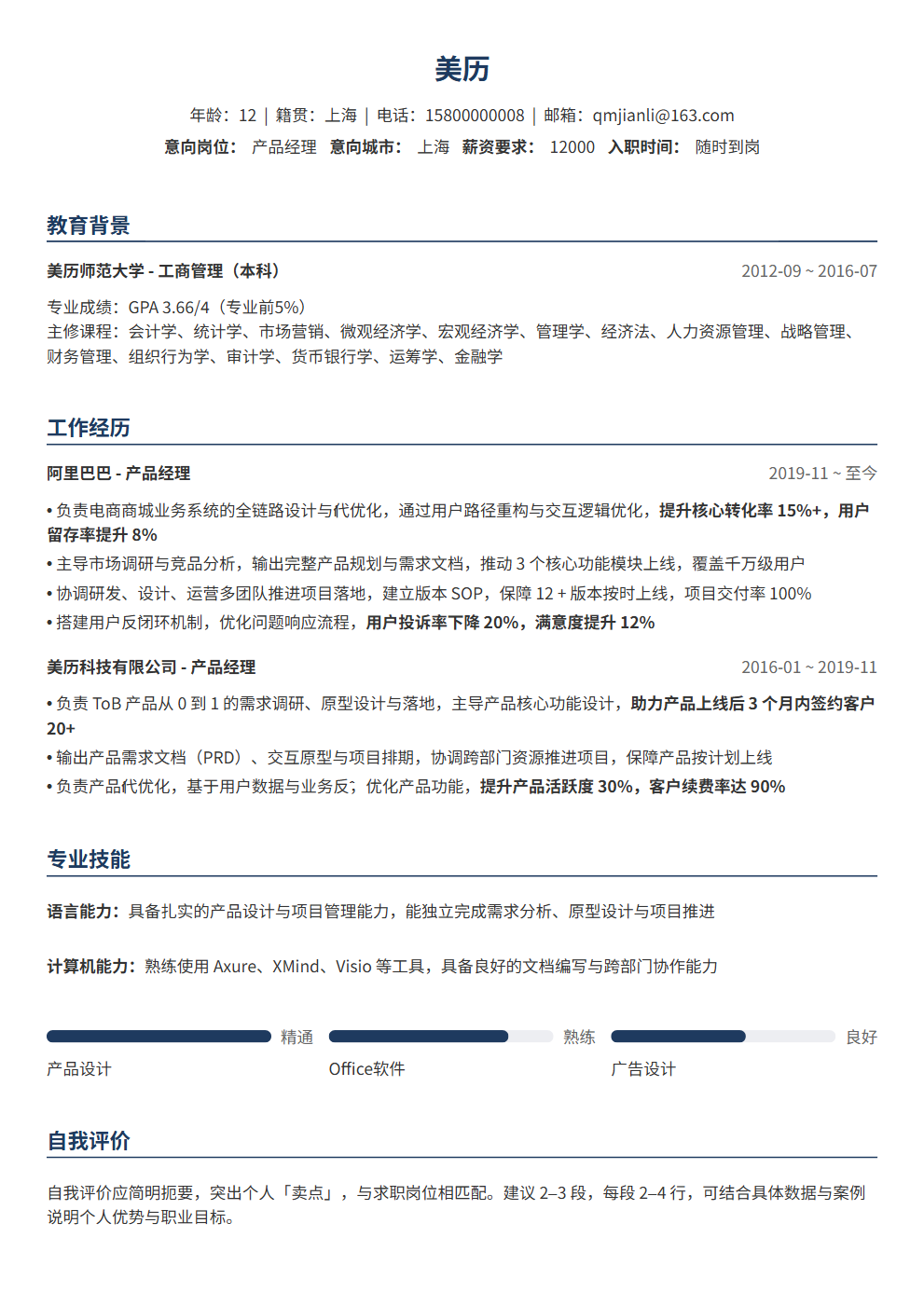
Judging when to job-hop comes down to 5 signs: whether your growth has stagnated, whether your salary is seriously below market, whether your team culture is toxic, whether your health is suffering, and whether a better opportunity exists. Meanwhile, rule out 3 traps: impulsive emotions, quitting without an offer, and escape-driven hopping. Use the decision framework to evaluate rationally—leave when you should, stay when you should. If you've decided to job-hop, your first step is preparing a resume that showcases your value. Use BeautyResume's resume editor—professional templates and smart formatting help you quickly create a high-quality resume, giving your job search a winning start right out of the gate.