How to Introduce Yourself in an Interview: A 3-Minute Template That Makes You Memorable
An interview self-introduction isn't reciting your resume! Master the 'Past-Present-Future' structure to precisely showcase your core competitiveness in 3 minutes.
1. Why Do 90% of Self-Introductions Fail?
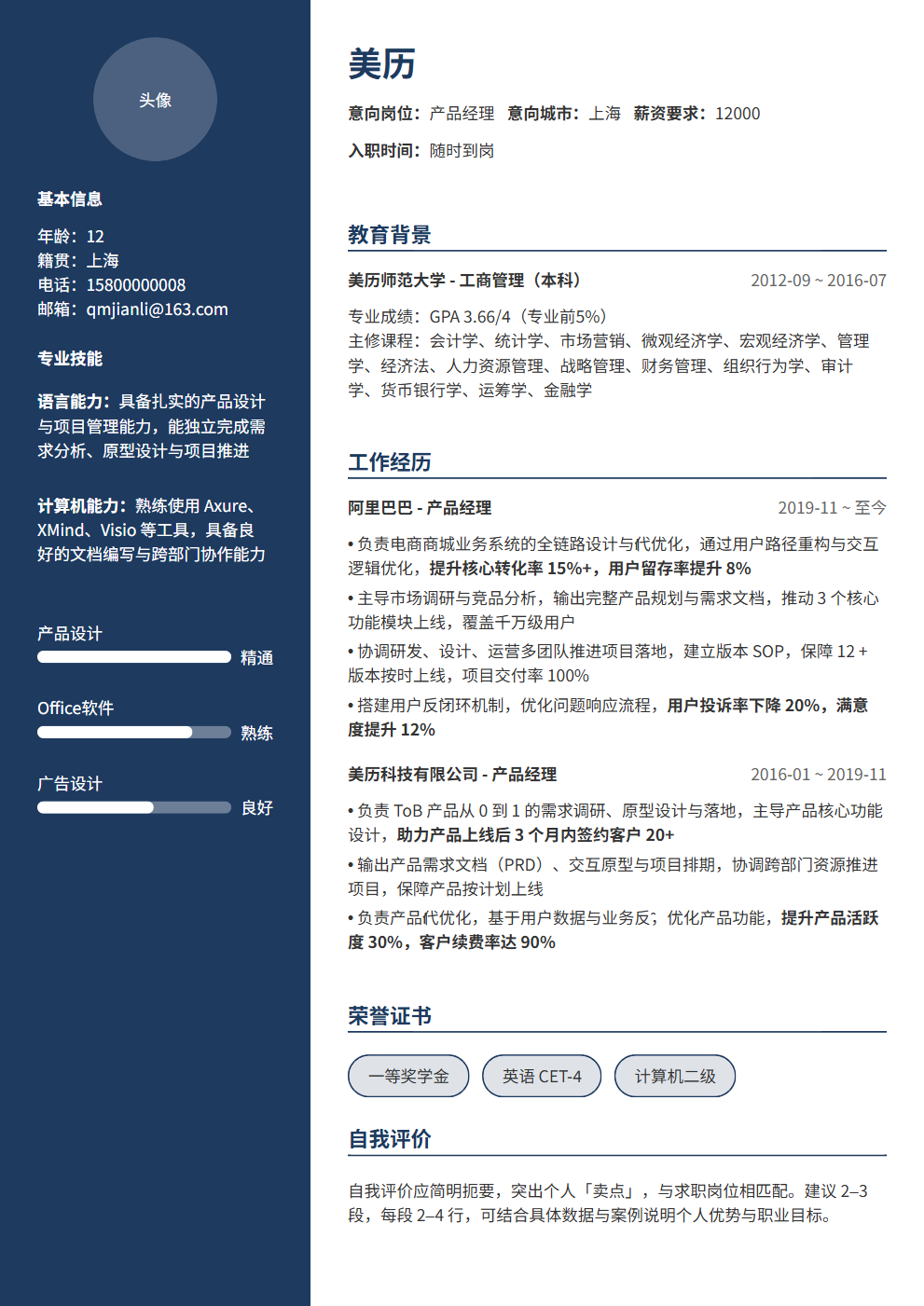
When interviewers say "Please introduce yourself," most people respond by reading their resume from start to finish. This is the worst approach because the interviewer already has your resume — they don't need you to recite it. The real purpose of a self-introduction isn't to list your experience but to make the interviewer interested in you within 3 minutes and set the direction for follow-up questions.
A great self-introduction should be like a movie trailer — not spoiling the entire plot, but showcasing the best scenes to make people want to see the full film.
Deeper understanding: the self-introduction is the only fully controllable segment in your interview. In the Q&A that follows, the interviewer directs questions based on their thinking, and you can't predict the direction. But the self-introduction is your prepared "home turf" — you decide what to say, what to skip, and what to emphasize. Making full use of this opportunity means seizing the initiative in the interview.
2. The "Past-Present-Future" Three-Part Structure
This is the most classic and efficient self-introduction framework:
Part 1: Past (30 seconds) — Summarize your career starting point and key accumulation in 1-2 sentences. No chronological lists — only the most important turning points.
Example: "I graduated from XX University with a Computer Science degree, then joined Company A as a backend developer, where I participated in building their core trading system from scratch."
Part 2: Present (90 seconds) — This is the core. Describe your 1-2 most outstanding current achievements using data.
Example: "Over the past two years at Company B, I led performance optimization of the order system, reducing API response time from 2 seconds to 300 milliseconds and increasing daily system capacity by 5x. I also led a 5-person team through a microservices architecture migration."
Part 3: Future (60 seconds) — Explain why you're interviewing and how you match this role.
Example: "I understand your company is expanding internationally, and I have hands-on experience with B2B product internationalization. I'm eager to continue deepening my expertise in this direction."
The essence of the three-part structure lies in its logical progression: the past establishes your foundation, the present proves your capability, and the future shows your direction. After hearing it, the interviewer naturally follows your logic when asking questions rather than firing random inquiries.
3. Self-Introduction Strategies by Experience Level
Fresh graduates: No work achievements? Focus on learning ability, project experience, and career passion.
Strategy: Academic achievements + internship highlights + understanding and enthusiasm for the role. Replace "I was responsible for X" with "I independently completed X in the Y project."
The most common mistake fresh grads make is trying to cover everything — internship, courses, clubs, competitions all in one go, resulting in nothing being covered well. The right approach is selecting 1-2 most impressive experiences and diving deep, using details and data to prove your capability.
1-3 years experience: Focus on independent delivery capability.
Strategy: Select 1-2 most representative projects, emphasizing your personal contribution and quantifiable results. Don't try to cover everything — depth is more persuasive than breadth.
At this stage, avoid creating a "supporting role" impression. Many say "I participated in project X," but "participated" is too weak. Replace with "I led," "I independently completed," or "I drove" to highlight your initiative.
5+ years: Focus on leadership and strategic thinking.
Strategy: Upgrade from "what I did" to "what changes I drove." Emphasize team management, business decisions, and industry insights.
Senior professionals' self-introductions should demonstrate vision. Don't just discuss technical details and execution processes — talk about your decision-making logic, the industry trends you see, and the organizational changes you've driven. Interviewers want to see someone who can make decisions, not just execute tasks.
4. Five Fatal Self-Introduction Mistakes
- Going over time: Interviewers lose focus after 3 minutes. Practice and time strictly
- Reciting your resume: The interviewer has already read it — repeating wastes precious time
- Being too vague: "I'm hardworking and responsible" carries zero information — replace with specific examples
- Lack of customization: Tailor your introduction for each interview, highlighting the most relevant experience
- Flat delivery: Self-introduction is your best chance to show enthusiasm — vary your tone and pause at key points
One more easily overlooked mistake: don't reveal negative information in your self-introduction. For example, "My previous company wasn't great" or "I left because I didn't get along with my manager" — even if true, these shouldn't be proactively mentioned in your introduction. This is your moment to showcase your best self; negative information should be handled cautiously in the Q&A that follows.
5. Practice Method: Record + Time + Iterate
Writing your introduction isn't enough — you must practice repeatedly:
- Record and listen back: You'll discover filler words and rambling you didn't notice
- Strict timing: Aim for 2:30-3:00, leaving a small buffer
- Iterative refinement: After each practice, cut unnecessary information until every sentence earns its place
- Mock interviews: Have a friend play interviewer and practice under real pressure
An advanced practice method: elevator pitch training. Try delivering your core self-introduction in 30 seconds, then expand to 1-minute and 3-minute versions. This way, you can flexibly adjust duration based on the interviewer's reactions — wrap up quickly if they seem impatient, or elaborate on details if they're nodding along.
Also pay attention to eye contact and body language during practice. A self-introduction isn't reciting a script — it's a conversation. Maintain eye contact with the interviewer, use appropriate gestures, and slow down with emphasis at key achievements. These non-verbal signals make your introduction more compelling.
6. Transitioning After Your Self-Introduction
Many job seekers prepare only the self-introduction itself without thinking about what comes after. In reality, your introduction's final sentence often determines the interviewer's next line of questioning.
If you mention "I'm very interested in your company's X business" in the "future" section, the interviewer will likely probe in that direction. So your last sentence should point toward what you most want to be asked about.
Conversely, if you don't want to be questioned about a certain topic, don't mention it in your introduction. For example, if you'd rather not discuss a short-term role, leave it out. Interviewers typically find clues from your introduction for follow-up questions — you can guide the interview direction by controlling your self-introduction's content.
7. Self-Introduction Tips for Virtual Interviews
Virtual interviews have subtle differences from in-person ones:
- Network latency: Speak slightly slower than in person, giving the interviewer time to process
- Camera presence: Look at the camera, not the screen — this creates the impression of eye contact
- Background and lighting: Choose a clean background with good front lighting; avoid backlighting
- Clear audio: Use an external microphone or headset to ensure your voice doesn't cut in and out
- Test in advance: Check equipment and network 10 minutes before — don't discover problems at the start
In virtual interviews, the interviewer's attention is more easily divided (they may be looking at other things simultaneously), so your self-introduction needs to be even more concise and impactful. Every sentence must carry information value — avoid lengthy setups.
Summary
The core of interview self-introductions: use the "Past-Present-Future" structure to tell a compelling career story, showcasing your core competitiveness and role fit within 2-3 minutes. Don't recite your resume, don't go over time, and customize content for each role before every interview. The self-introduction is your only fully controllable interview segment — use it to guide the interview direction. Practice with recording, timing, and iterative refinement; for virtual interviews, focus on camera presence and audio clarity. A strong start makes the rest of the conversation flow much more smoothly.