How to Include Side Income on Your Resume? Turn Your Side Hustle into a Plus, Not a Minus
Worried HR will think you're not focused? 3 scenarios to decide whether to include it, 3 writing methods to turn your side hustle into a resume plus, with interview tips and 3 pitfalls to avoid.
You have a decent side hustle bringing in a few thousand or even tens of thousands extra each month—great news, right? But when it comes to updating your resume, you start second-guessing yourself. Include it, and you worry HR will think you're scattered and unfocused. Leave it out, and you feel like you're wasting valuable experience. I totally get this dilemma—side hustles still feel like a "gray area" for many people. But here's the truth: a well-presented side hustle is absolutely a plus; a poorly presented one is the minus. The key isn't whether to include it, but how to present it.
3 Scenarios to Decide Whether Your Side Hustle Belongs on Your Resume
Not every side hustle belongs on a resume, and not every side hustle should be hidden. The criteria are simple—figure out which of these 3 scenarios applies to you.
- Side hustle is highly relevant to your main job—definitely include it. If you're a frontend developer doing freelance website projects, a social media manager running your own content accounts, or a designer taking on brand design projects—your side hustle doesn't make you look unfocused. It proves your professional capability and market validation. HR sees a candidate who deeply engages with their field and has been validated by the market
- Side hustle is unrelated but demonstrates transferable skills—selectively include it. If you're a programmer who creates online courses, that showcases communication and knowledge-structuring skills. If you're in sales and run an e-commerce store, that shows business acumen and operational capability. In these cases, your side hustle serves as "skill evidence" rather than "distraction proof"—but keep the篇幅 controlled so it doesn't overshadow your main experience
- Side hustle conflicts with your main job or clearly drains your energy—absolutely don't include it. If you're a marketing manager doing agency work for competitors, a finance professional offering bookkeeping services that might involve confidential information, or your side hustle requires 4+ hours daily and clearly affects your main job performance—writing it on your resume will only make HR question your professional ethics and commitment. It does far more harm than good
Simple summary: relevant → include it; unrelated but useful → selectively include it; conflicting → don't include it. Once you've decided whether to include it, the next question is how to present it.
Method 1: Present Your Side Hustle as Project Experience
This is the most recommended approach, especially when your side hustle is related to your main job. Treat your side hustle as a "project" and describe it using the project experience format—it looks natural, professional, and unforced to HR.
- Project name: Write the actual project name directly, such as "Independently Developed XX Mini Program," "Operated XX Social Media Account," "Provided Brand Design Services for XX Company." Don't use labels like "side hustle" or "part-time"—name it with a project mindset
- Project timeframe: Include start and end dates, which can overlap with your main job experience. Overlapping timelines are normal—HR won't penalize you for doing two things simultaneously; what matters is your output and results
- Project description: Summarize the project in 2-3 sentences, emphasizing your role and contributions. For example: "Independently managed end-to-end product design and development," "Responsible for content strategy and operations, growing followers to 50K in 6 months," "Provided brand visual upgrade services for 3 enterprises"
- Project results: Let data speak. For example: "Reached 10K users within 3 months of launch," "Monthly average readership 500K+," "Client satisfaction rate 100%, repeat business rate 80%." Data is the most persuasive language—more powerful than any adjective
- Example format: Project Name | Timeframe | Role → Project Description → Key Results (3-5 bullet points). Keep it concise—each project experience should be 5-8 lines maximum
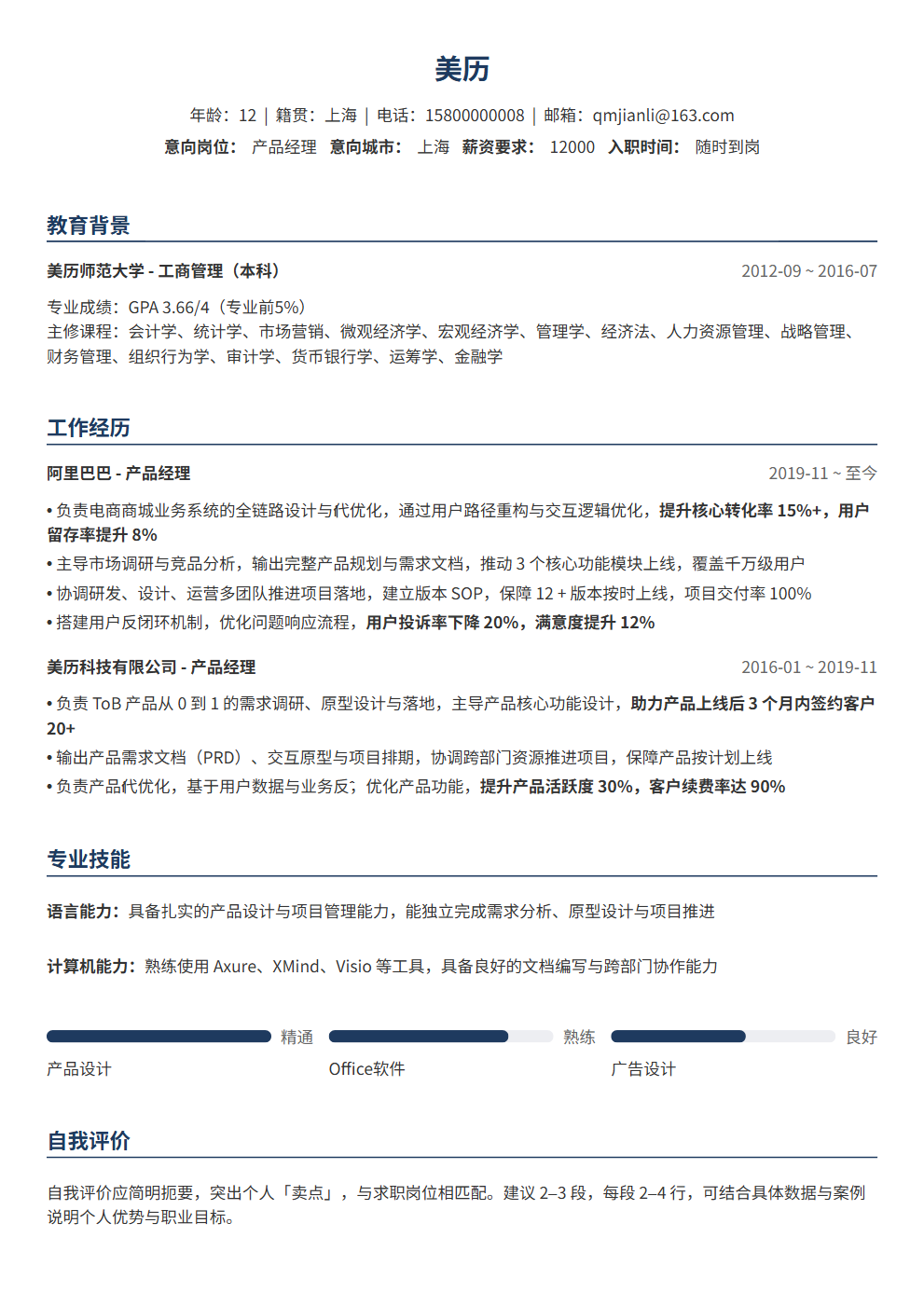
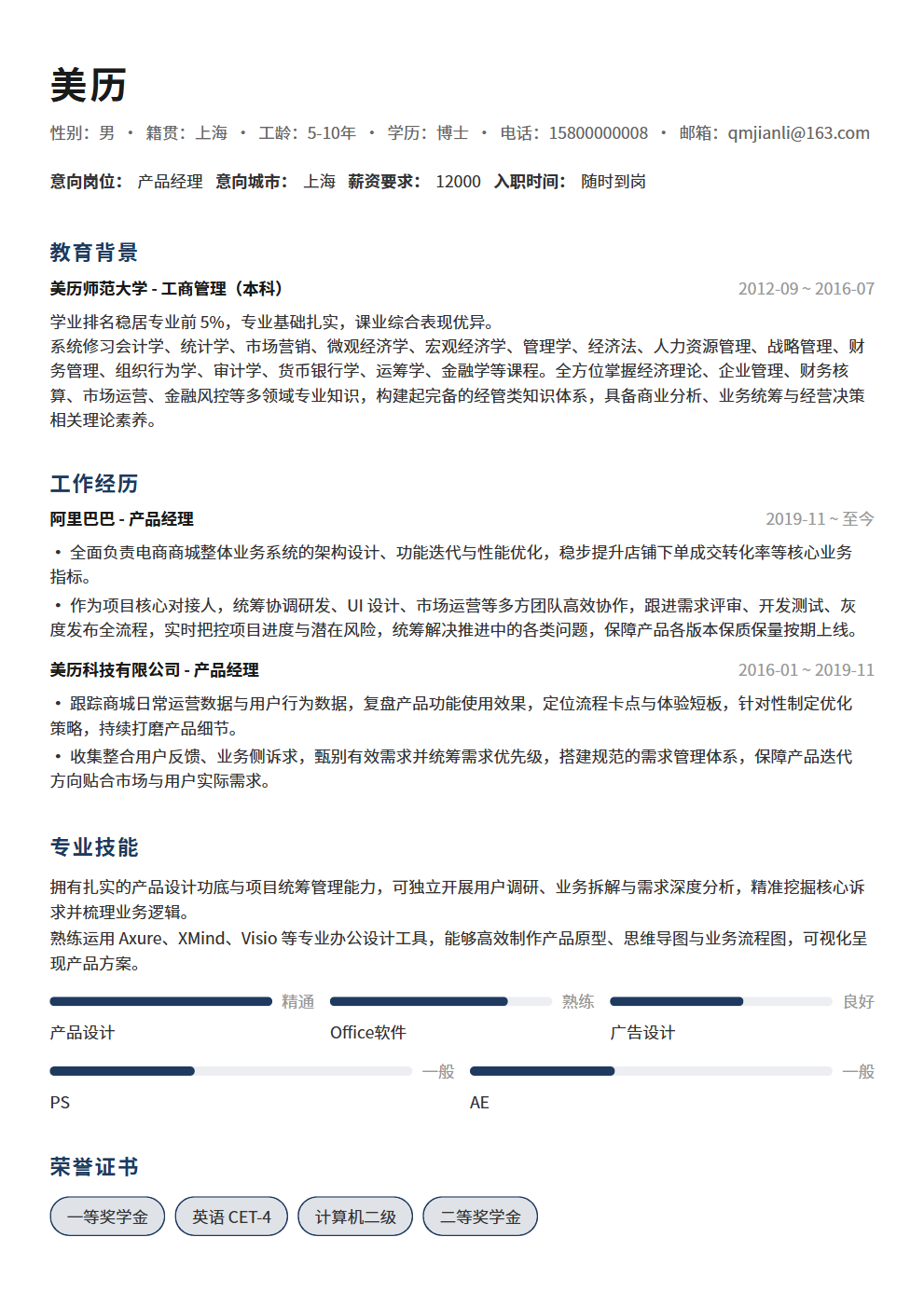
Here's an example: You're a UI designer with freelance design projects. Your resume could read—"Independent Design Projects | 2024.03-Present | Independent Designer → Provided brand visual design services for SMBs, including Logo, VI systems, and marketing materials → Served 15+ clients, 100% project delivery satisfaction, average monthly income 5000+ RMB." See? That's a complete, professional, and compelling project experience.
Method 2: Use Your Side Hustle as Skill Evidence
If your side hustle isn't directly related to your main job but demonstrates certain transferable skills, you can present it as "skill evidence." Instead of listing it as a separate experience, reference your side hustle results within your skills or self-evaluation section to substantiate your capabilities.
- Mention it in the skills section: For example, "Project management skills: Independently operated a knowledge monetization course, managing everything from topic selection to course launch, with first-month sales exceeding 10K"—your side hustle becomes concrete evidence of your project management ability
- Mention it in the self-evaluation section: For example, "Strong self-motivation and business acumen—operate an e-commerce store in my spare time with average monthly GMV of 30K RMB"—your side hustle becomes proof of your drive and business capability
- Mention it in the portfolio section: If your side hustle produces visible work (designs, articles, code), include it directly in your portfolio without specifically labeling it as a "side hustle"—the work speaks for itself
- Keep it concise: Skill-evidence style mentions should be brief—1-2 sentences max. The focus is on "evidence" rather than "showcase"—don't expand your side hustle experience into a lengthy paragraph
The advantage of this approach: it won't make HR feel like you're "showing off your side hustle." Instead, you naturally use side hustle results to strengthen your capability descriptions. It's like how you wouldn't write "I'm very disciplined" on your resume, but you might write "Maintained a 5AM morning running routine for 3 years"—facts speak louder than self-praise.
Method 3: Present Your Side Hustle as Entrepreneurial Experience
If your side hustle has reached a certain scale—with stable clients, consistent revenue, or even a small team—you can absolutely present it as "entrepreneurial experience." Entrepreneurial experience is highly valuable in job applications, especially for management, product, and operations roles.
- Entrepreneurial experience format: Company/Project Name | Timeframe | Role (Founder/Co-founder) → Business Description → Core Results → Key Capabilities. Similar to writing work experience, but with more emphasis on the zero-to-one process
- Highlight key capabilities: The most valuable aspect of entrepreneurial experience is the "comprehensive abilities" it demonstrates—market insight (what needs you identified), execution (how you turned ideas into products), resilience (what challenges you faced and how you overcame them), business thinking (how you achieved profitability). These capabilities are assets in any role
- Be honest about scale: Don't exaggerate your side hustle's size. A side hustle earning 5K monthly is 5K monthly—no need to package it as "a company with millions in annual revenue." HR values your capabilities and experience, not your revenue figures
- Prepare to explain "why return to full-time work": HR will definitely ask this question. A good answer: "Entrepreneurship helped me develop XX capabilities and experience, but I've realized that a larger platform can help me create greater value"—this affirms the value of entrepreneurship while expressing enthusiasm for the new opportunity
Example: You're a product manager who built a niche SaaS product with 200 paying users. Your resume could read—"XX Tool (Independent Product) | 2023.06-Present | Founder → Identified pain points for SMBs, independently designed and launched a SaaS product → Acquired 200+ paying users, monthly recurring revenue 15K RMB → Developed end-to-end capabilities from needs identification to product launch." This experience on a product manager's resume carries significant weight.
How to Explain Your Side Hustle in Interviews
Once your side hustle is on your resume, it will come up in interviews. How you explain it directly determines whether it's a plus or a minus. Here are common questions and response strategies.
- Question 1: "Will your side hustle affect your main job?"—This is HR's biggest concern. Key points: Emphasize your time management skills and clarify that your side hustle is done outside work hours without impacting your main job. Provide a specific example: "My side hustle mainly happens on weekends and evenings. Over the past year, my main job performance has been consistently rated A, which shows my time management isn't an issue"
- Question 2: "Why do you have a side hustle?"—Don't say "to make money," even if it's true. Key points: Connect your motivation to growth. "I identified XX capability that needed improvement in my main role, so I used a side project to practice and develop it"—this explains your motivation while demonstrating initiative
- Question 3: "Having a side hustle means you're not satisfied with your main job?"—This is a trap question. Key points: Deny and redirect. "Not at all—I'm very engaged with my main job. The side hustle is an extension of my professional exploration, which actually gives me more diverse perspectives and richer experience in my main role"
- Question 4: "Will you continue your side hustle after joining us?"—Be honest. If you plan to continue: "I'll prioritize my commitment to the main role, and my personal projects in off-hours won't affect my work." If you plan to pause: "I'll fully dedicate myself to the new role after joining"—but don't lie to please HR, as being discovered later would be even more awkward
The core principle for explaining your side hustle in interviews: be confident, honest, and positive. Don't act guilty, don't dodge questions—treat your side hustle as a natural part of your career journey. The more comfortable you are, the less HR will see it as a problem.
3 Pitfalls to Avoid
When including your side hustle on your resume, there are 3 pitfalls you must avoid. Falling into any one of them can turn your resume from a "plus" to a "minus."
- Pitfall 1: Don't use labels like "side hustle" or "part-time" on your resume. These words naturally carry negative connotations of "unfocused" and "unreliable" in HR's eyes. Use "independent project," "personal project," or "entrepreneurial project" instead—they describe the same activities but create a completely different impression
- Pitfall 2: Don't let your side hustle experience overshadow your main experience. The core of your resume is always your main job experience—the side hustle is the icing on the cake. If your side hustle takes up more than 50% of your resume space, HR will assume your priorities lie elsewhere. Keep side hustle content to 20%-30% of your resume at most
- Pitfall 3: Don't include side hustles that conflict with your target role. If you're applying for a job that requires intense overtime, and you list a side hustle that takes 3 hours daily, HR will pass immediately. Adjust your side hustle's presentation and emphasis based on each position you apply for
The essence of all 3 pitfalls is the same: the way you present your side hustle creates negative associations for HR. As long as you're careful with wording, space, and content, your side hustle remains a genuine plus.
Conclusion: Your Side Hustle Isn't a Burden—It's Your Competitive Differentiator
Having a side hustle isn't embarrassing, and including it on your resume isn't either—what's embarrassing is not knowing how to present it and turning something good into something bad. Remember the 3 decision criteria: include it if relevant, selectively include if unrelated but useful, don't include if conflicting. Remember the 3 presentation methods: project experience for related side hustles, skill evidence for transferable capabilities, entrepreneurial experience for scaled side hustles. Remember to explain confidently and honestly in interviews—don't act guilty or evasive. Remember the 3 pitfalls: no "side hustle" labels, don't overshadow main experience, don't include conflicting content. Present your side hustle well, and you become the candidate who "not only has full-time work experience but also independent project capabilities"—in today's job market, that's a genuine competitive differentiator.
Want to present your side hustle experience more professionally on your resume? Use BeautyResume resume editor to flexibly adjust how experience modules are displayed and their emphasis—making every part of your experience, whether main job or side hustle, a compelling plus for HR.