How to Get Through Career Burnout? 5 Signals That Tell You Whether to Rest or Change Jobs
Career burnout isn't being dramatic — it's a real workplace dilemma. 5 signals help you decide whether to rest or change jobs, 3 coping strategies (short-term leave / internal transfer / job change), and resume and interview preparation during burnout, helping you regain career motivation.
The moment your alarm goes off every morning, you don't want to get up. When you get to the office and open your computer, you don't want to work. After resting all weekend, Monday still feels exhausting — if you experience these feelings, you're not lazy; you might be going through career burnout. Burnout isn't being dramatic or "unable to handle pressure" — it's a state of physical and mental exhaustion caused by prolonged high-pressure work. The World Health Organization has included burnout in the International Classification of Diseases. But many people can't tell: should I just take a break, or should I change jobs entirely? Five signals will help you decide.
5 Signals of Career Burnout
Burnout doesn't strike suddenly — it has a series of warning signals. If you match 3 or more, you're likely in a burnout period.
- Signal 1: Loss of enthusiasm for work. You used to voluntarily work overtime to do things well; now you just want to meet the minimum standard and leave. You used to feel excited about project successes; now a product launch leaves you emotionally flat. This isn't laziness — your work motivation system is malfunctioning. You no longer find meaning in this work
- Signal 2: Persistent physical and mental exhaustion. Not the "tired after a busy day, sleep and you're fine" kind, but the "slept 8 hours and still feel exhausted" deep fatigue. You might start experiencing physical symptoms like insomnia, headaches, stomach pain, and weakened immunity, along with psychological symptoms like anxiety, irritability, and low mood. Your body is sounding an alarm: you've been running in overdrive for too long
- Signal 3: Becoming indifferent or even hostile toward colleagues and clients. You used to patiently answer colleagues' questions; now you just want to say "leave me alone." You used to smile while serving clients; now you're rolling your eyes internally. This "depersonalization" response is a classic burnout feature — you use emotional detachment to protect yourself, but the cost is deteriorating relationships
- Signal 4: Noticeable decline in work efficiency. Tasks that used to take 1 hour now take 3. You used to rarely make mistakes; now errors are frequent. This isn't your ability regressing — it's burnout-induced attention scattering and motivation loss. Your brain is "on strike" — it no longer wants to expend energy for this work
- Signal 5: Feeling hopeless about career prospects. You feel there's no room for growth at this company, no future in this industry, and you even question whether you chose the wrong career path. This "hopeless future" feeling is burnout's most dangerous signal — it can lead to impulsive decisions (like quitting without a backup) or long-term depression
How many signals do you match? If 1-2, you might just be temporarily tired — rest should help. If 3 or more, you need to take career burnout seriously. Next, let's determine: should you rest, or should you change jobs?
Criteria for Deciding Whether to Rest or Change Jobs
Many people want to quit as soon as they feel burned out, but quitting doesn't necessarily solve the problem — if the root cause isn't the job itself, changing jobs might just mean "burning out in a different place." These criteria will help you find the root cause.
- Criterion 1: Is the burnout rooted in "workload" or "work content"? If burnout comes from excessive workload and overtime, taking leave or reducing workload can help. But if the work content itself feels meaningless and valueless, reducing workload won't solve it — you need to change the work content, not just rest
- Criterion 2: Is the burnout "temporary" or "long-term"? If it's caused by a recent busy project, you might naturally recover after the project ends. But if it's lasted 3+ months with no improvement, this isn't a temporary issue — you need more fundamental change
- Criterion 3: Are you burned out on "this job" or "this industry"? If it's just the current company or role, changing companies or positions might solve it. But if you're burned out on the entire industry — like doing finance for 5 years and realizing you don't actually like finance — you don't need a job change, you need a career transition
- Criterion 4: Do you still have "highlight moments" at work? If you occasionally still feel accomplishment and meaning, the job still has hope — you might just need to adjust your work style or environment. If there are zero highlight moments and every day feels like going through the motions, you and this job have become "mismatched"
Simple summary: If the root cause is workload, rest first; if it's work content, consider an internal transfer; if it's industry mismatch, consider a transition. Don't quit without a plan — figure out the problem first, then address it accordingly.
Strategy 1: Short-Term Leave — Hit the Pause Button
If your assessment is "just too tired," short-term leave is the most direct solution. But leave isn't "lying in bed for 7 days" — it's strategically recovering your physical and mental state.
- Leave duration: At least 5-7 working days. A 2-3 day weekend rest isn't enough to recover from deep burnout. You need sufficient time for your body to switch from "stress mode" to "recovery mode"
- What to do during leave: Completely disconnect from work — no checking emails, no responding to work messages, no thinking about work. Do things that truly relax you — travel, exercise, read, see friends, zone out. The key is switching your brain from "work mode" to "life mode"
- What NOT to do during leave: Don't do career planning or think about "whether to quit" during leave — leave is for recovery, not decision-making. Decisions made in a burned-out state are often irrational. Recover first, then decide rationally
- Post-leave evaluation: Observe yourself for 1-2 weeks after returning. If your condition improves significantly, rest was effective — continue adjusting your work pace. If you return to burnout within a week, the problem isn't workload, and you need to consider more fundamental changes
- How to request leave from your company: Don't say "I'm burned out." Say "My physical condition hasn't been great lately, and I need a few days off to recover." Most companies are more understanding about health-related leave. Use annual leave first if available; if exhausted, you can request personal leave
Short-term leave is a "symptom treatment" — it helps you recover but doesn't address burnout's root cause. If problems persist after leave, you need more fundamental strategies.
Strategy 2: Internal Transfer — Change Environment, Not Company
If burnout stems from your current role's work content or team atmosphere, but you don't dislike the company itself, an internal transfer is a low-risk solution.
- Internal transfer advantages: No need for a full interview process (or simplified process), salary doesn't decrease (might even increase), tenure and benefits are preserved, and your knowledge of the company's business and culture helps you adapt faster. The biggest advantage is "low trial-and-error cost" — if the new role doesn't work out, you can still transfer again or leave
- How to find suitable transfer opportunities: Monitor internal job postings (many companies have internal recruitment platforms), chat with colleagues in target departments (understand the real work content and atmosphere), and communicate with your direct manager (good managers support your career development rather than blocking transfers)
- Best timing for transfers: Transfer after achieving some results in your current role — this gives you a better starting point in the new department and avoids the perception that you're "transferring because you couldn't hack it." If you try to transfer with no accomplishments, the new department might question your capability
- Transfer risks: The new role might not match your expectations — what's described in interviews and what you actually do can differ. After transferring, you may need to build trust and influence from scratch. If the transfer fails, returning to your original department is awkward. So thoroughly understand the target role's real situation before transferring
- How to quickly adapt after transferring: Proactively build relationships with colleagues, quickly learn the new role's core business and key stakeholders, and deliver a small win in the first month to prove yourself. Don't impose your old role's working methods on the new one — every team has its own rhythm and culture
Internal transfer is one of the "root cause treatments" — it changes your work content and environment while preserving your accumulated position at the company. If you still have feelings for the company but are just burned out on your current role, this is the solution worth trying first.
Strategy 3: Job Change and Career Transition — Fundamentally Change Your Career Trajectory
If burnout stems from industry mismatch, toxic company culture, or zero growth space at your current company, a job change or career transition is the most thorough solution. But changing jobs isn't just "walking away" — it requires strategic preparation.
- 3 questions you must answer before changing jobs: What do you want from your next job? (Higher salary? Better culture? More challenging work?) What are you willing to give up? (Stability? Short commute? Familiar colleagues?) What leverage do you have? (Core skills? Industry resources? Brand endorsement?) Changing jobs without clear answers likely means jumping from one pit into another
- Transition vs. lateral move: If you're only burned out on the current company, a lateral move (same industry, same role, different company) works. If you're burned out on the entire industry, you need a transition (cross-industry or cross-role). Transitions carry more risk but potentially greater long-term rewards — you might find work you truly love
- Timing for job changes: Don't change jobs when burnout is most severe — your judgment is impaired, and you're likely to make irrational choices. Take leave to recover first, then rationally assess and prepare. The best timing is "you still have energy to prepare, but you're clear you need to leave"
- What to prepare for a transition: Understand target industry hiring requirements and salary levels, supplement skills and experience needed for the target role, adjust your resume to highlight transferable skills, and prepare talking points for "why transition." A transition isn't "starting from zero" — it's "bringing existing capabilities into a new field." The key is finding the connection between old and new fields
Job change and career transition is the most thorough solution but also the riskiest. Make sure you're making decisions in a clear state of mind, not impulsively quitting while burned out.
How to Prevent Career Burnout
Prevention beats treatment. These methods help you build "burnout immunity" and avoid falling into burnout again.
- Set work boundaries: No checking emails after hours, no weekend overtime (unless genuine emergencies), and take at least one 5+ day vacation per year. Boundary-setting is the first line of defense against burnout
- Cultivate identities beyond work: Your value isn't limited to the "work" dimension. Develop a hobby, start a side project, join a community — when you have multiple identities, work setbacks won't crush you because you're not just "the person who does XX work"
- Regular career reviews: Spend 1 hour each quarter asking yourself — "Am I still growing? Do I still have passion? Is this job still bringing me value?" If the answer is "no" for two consecutive quarters, you need to make changes — don't wait until burnout hits to act
- Build a support system: Have colleagues or friends you can confide in, a trusted therapist, and a mentor who can give you objective advice. The scariest part of burnout isn't being tired — it's the loneliness of feeling like "only I feel this way." People with support systems recover faster
- Pay attention to physical signals: Insomnia, headaches, stomach pain, weakened immunity — these are your body telling you to "slow down." Don't ignore physical signals; they're more honest than your brain
Resume and Interview Preparation During Burnout
If you decide to change jobs, resume and interview preparation during burnout is different from normal — you need to prevent burnout emotions from affecting your job search performance.
- Don't reveal burnout on your resume: Don't write "seeking new challenges" — HR will interpret it as "couldn't make it at the last company." Describe your departure reason in positive language — "hoping to leverage XX capabilities on a larger platform" is far better than "the last company was too exhausting"
- Highlight "what you did" not "how long you did it": Burned-out people tend to feel "I haven't accomplished anything these years," but looking back carefully, you definitely have achievements worth listing. Itemize the projects you led, problems you solved, and impacts you made — speak with facts, not feelings
- How to explain departure in interviews: Don't say "I was burned out." Say "I completed a certain growth phase at my last company and now want to pursue development in XX direction." Transform "burnout" into a "growth" narrative — you're not "fleeing," you're "advancing"
- How to present yourself in interviews: Burned-out people tend to appear negative or fatigued in interviews. Before interviewing, do a few energizing things — exercise, listen to favorite music, chat with positive friends. During interviews, maintain a smile, moderate speaking pace, and eye contact — even if you're internally exhausted, present your best self
- Don't accept suboptimal offers during burnout: Burned-out people tend to "take whatever comes" — any offer that lets them leave their current company seems acceptable. But a suboptimal offer might push you into the next burnout cycle even faster. Give yourself enough time to find a truly suitable job
Conclusion: Burnout Isn't the End — It's a Signal to Reassess Your Career Direction
Career burnout isn't your fault, nor is it being dramatic — it's the inevitable result of prolonged high-pressure work. Five signals help you gauge burnout severity; four criteria help you find the root cause. If you're just too tired, short-term leave can restore you; if you're burned out on your role, internal transfer is a low-risk solution; if you're burned out on your industry, job change and career transition is the most thorough change. Whatever you choose, remember: burnout period isn't the time for major decisions — recover first, then choose rationally. Prevention always beats treatment — set work boundaries, cultivate multiple identities, conduct regular career reviews, and build a support system to help you go further and steadier on your future career path. Burnout isn't the end — it's a signal to reassess your career direction, telling you it's time for a change.
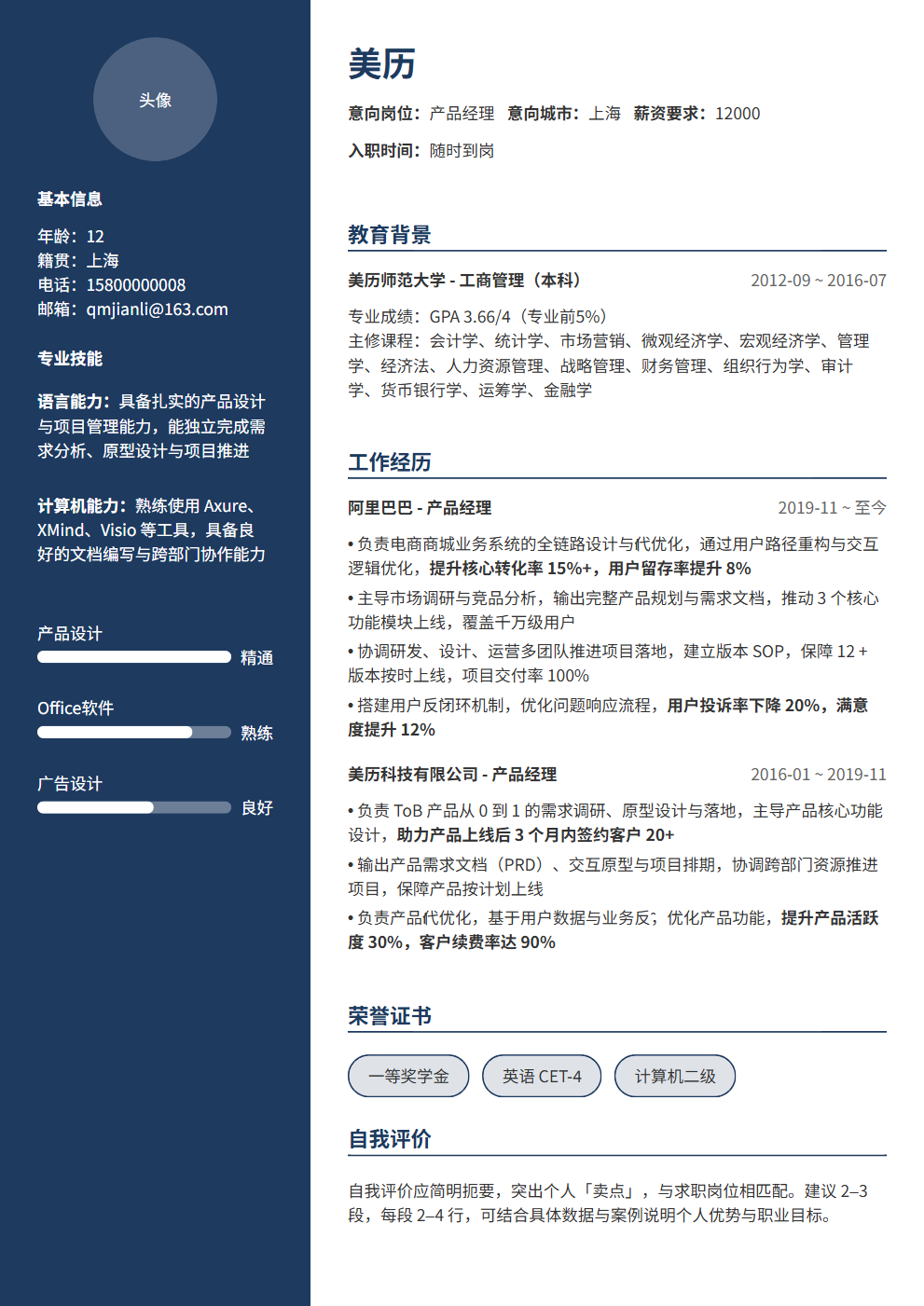
Decided to change jobs during burnout? The first step is letting your resume open new doors. Use BeautyResume to create a professional resume that highlights your achievements and growth — let new opportunities see your value, not your burnout.