How to Find a Job After 35? 3 Strategies to Break Through Age Discrimination
Sending resumes after 35 with no response? 3 strategies to break through age discrimination — prove your value with results, choose age-friendly industries and roles, and use networking and referrals to bypass system screening. Plus 3 key resume adjustments for 35+ candidates and how to address age questions in interviews.
At 35, you open a job board and see positions requiring "under 35," and your heart sinks; you send out dozens of resumes, all disappearing into the void; you finally land an interview, and the interviewer asks, "Do you think you can work well with younger colleagues?" — if you're experiencing this, you're not alone. Job seekers over 35 are the most easily overlooked and discriminated against group in the job market. But 35 isn't the end; it's a new beginning. The key is whether you can use the right strategies to turn age from a "deduction" into a "bonus."
Sending Resumes After 35 with No Response: Where's the Problem
Let's start with a harsh reality: many companies' recruitment systems automatically filter out resumes from candidates over 35. This isn't an official policy, but it's a default practice for many HR professionals. Why? Because the system assumes older candidates have "higher salary expectations," "are harder to manage," and "have less energy than younger people" — these biases are unreasonable but real. Your resume might never be seen by a human, filtered out by the system before anyone reads it. But the problem isn't just the system — your resume itself might be "revealing" your age without "proving" your value. If you're still using a fresh graduate's resume approach — listing job responsibilities, piling up years of experience — then being 35 only makes HR think "this person has worked this long but seems no different from a newcomer." You need a different approach: prove value with results, bypass bias with strategy.
Strategy 1: Prove Your Value with Results, Not Age
What's the biggest advantage of job seekers over 35? Experience, results, and the ability to solve complex problems. But on many 35+ resumes, these advantages are completely invisible — because they write about "what they did," not "what they achieved." HR doesn't care how many years you've worked; they care about what you've accomplished, what problems you can solve, and what value you can bring. Proving value with results is the most core strategy for 35+ job seekers.
- Shift from "responsibility description" to "results description": Don't write "responsible for company marketing"; write "led company marketing, increasing brand awareness by 40% and reducing customer acquisition cost by 25% within 6 months." Results description lets HR see "this person delivers results," not "this person is old"
- Speak with quantified data: Numbers are the most persuasive evidence. "Managed a 10-person team," "annual revenue growth of 30%," "saved 2 million in costs" — these numbers make HR unable to ignore your value, regardless of your age
- Highlight complex problem-solving ability: The biggest differentiating advantage of 35+ job seekers is experience handling complex problems. For example, "launched a product from 0 to 1 within 3 months with limited resources," "coordinated 5 departments to resolve 2-year-old technical debt" — these are things young people can't do
- Emphasize industry depth and resource accumulation: 10+ years of industry experience means you have connections, resources, and judgment. For example, "deeply engaged in e-commerce for 12 years, established relationships with 50+ brands," "familiar with entire supply chain, led 3 supply chain optimization projects" — these are gifts from time that young people don't have
- Replace "age label" with "value proposition": In your resume's self-evaluation or job objective, don't mention age — write your core value proposition: "10 years of product management experience, skilled at building product systems from 0 to 1, led team to grow DAU from 50K to 500K"
The core logic of proving value with results: let HR see "what this person can bring," not "how old this person is." When your results are impressive enough, age is no longer a filter criterion but a bonus — because achieving these results requires time and experience.
Strategy 2: Choose Age-Friendly Industries and Roles
Not all industries and roles discriminate against 35+ job seekers. Some actually prefer experienced veterans — because they need depth, judgment, and network resources, which are precisely young people's weaknesses. Choose the right industry and role, and your age becomes an advantage; choose wrong, and it's a disadvantage. The key is knowing which industries and roles are "age-friendly."
- Age-friendly industries: Consulting (partners at McKinsey, BCG, and other top consulting firms are all 40+), healthcare (doctors become more valued with age), education and training (experience is core competitiveness), finance and investment (judgment requires time to develop), legal (senior lawyers are scarce resources), manufacturing (industry experience and supply chain resources are irreplaceable)
- Age-friendly roles: Management positions (team management experience is a hard requirement), consulting advisors (industry depth is a core capability), technical specialist roles (architects, security experts require deep accumulation), business development (network resources are core competitiveness), trainers/instructors (teaching experience can't be fast-tracked)
- Avoid age-sensitive roles: Pure execution roles (like basic operations, junior development), physically intensive positions, roles requiring frequent overtime — these positions do tend to favor younger candidates, not out of discrimination but due to role characteristics
- Focus on foreign companies and mature enterprises: Foreign and mature companies typically value ability and experience more, with greater age inclusivity. Some startups with young-oriented cultures may not be the best fit for 35+ job seekers
- Watch for "silver economy" opportunities: With population aging, elderly care, health, age-friendly products, and related fields are growing rapidly — these fields naturally need 35+ professionals to understand and serve target users
The core logic of choosing age-friendly industries and roles: don't force your way into places that don't welcome you; go where you're needed and shine. Your experience and resources are scarce in certain fields — find those fields, and age becomes your moat.
Strategy 3: Use Networking and Referrals to Bypass System Screening
As mentioned earlier, many companies' recruitment systems automatically filter out 35+ resumes. So what do you do? Bypass the system. How? Through networking and referrals. Referred resumes typically aren't automatically filtered, and with internal endorsement, HR reviews them more carefully. For 35+ job seekers, networking and referrals aren't "nice-to-haves" but "necessities" — because your resume might not pass the system screening at all.
- Activate existing networks: List everyone you've met over the past 10 years — former colleagues, former managers, clients, vendors, industry friends. Contact them one by one, tell them you're looking for new opportunities, and ask them to keep an eye out. Don't feel embarrassed — most people are willing to help, especially former colleagues and managers
- Attend industry events: Offline salons, industry summits, professional forums — these occasions are the best places to meet potential referrers. Bring business cards, initiate conversations, build connections before asking for referrals
- Use professional networking platforms: LinkedIn, Maimai — search for employees at target companies, proactively add connections, and politely ask for referrals after establishing a relationship. Note: build the relationship first, then ask for a referral
- Join industry communities: WeChat groups, knowledge planets, Douban groups — many industry communities have people sharing referral opportunities. Participate actively in discussions, build presence, and referral opportunities will come naturally
- "Gift" former colleagues and managers: Not actual gifts, but help them first — share industry information, introduce contacts, provide professional advice. Give first, then request — this is the basic principle of network management
The core logic of using networking and referrals: when the system won't give you a chance, create opportunities through relationships. Referrals not only get your resume seen but also let HR evaluate you with the positive impression of "someone recommended this person" — far better than the "cold start" of system screening.
3 Key Resume Adjustments for 35+ Candidates
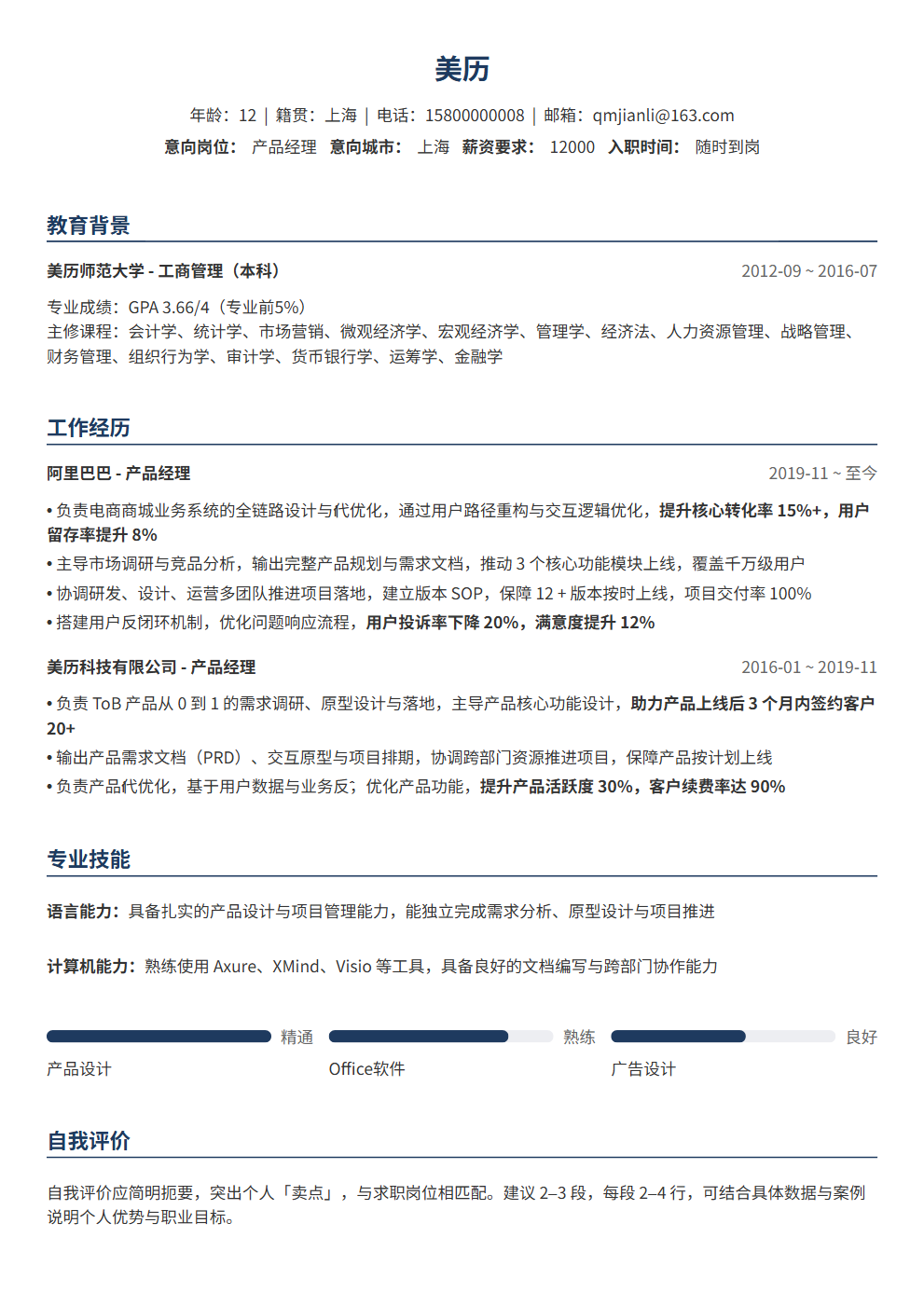
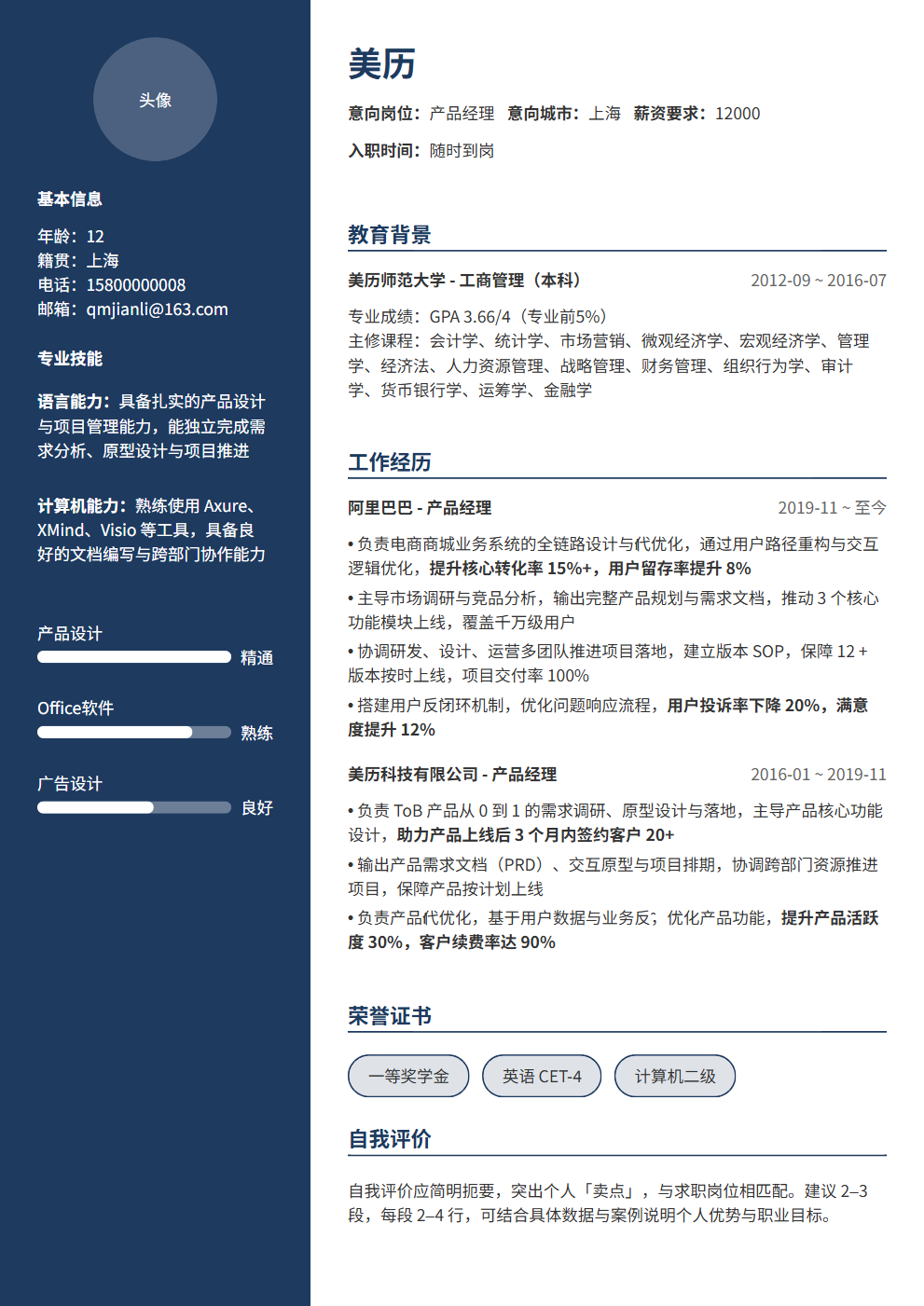
Resumes for 35+ job seekers can't follow the same approach as younger candidates. These 3 key adjustments will transform your resume from "revealing age" to "showcasing value."
- Adjustment 1: Cut early experience, focus on the recent 5 years. Work experience from 10+ years ago has almost no reference value for current job seeking and only exposes your age. Keep only the core experience from the last 5-8 years; summarize earlier experience in one line. For example, "2008-2015: Worked in marketing at Company X, growing from specialist to manager" — that's enough, no need to elaborate
- Adjustment 2: Replace "responsibilities + years" with "results + data." Don't write "10 years of marketing experience"; write "led 3 ten-million-level marketing projects, generating 50M+ in cumulative revenue." Results and data make HR focus on your capabilities, not your age
- Adjustment 3: Highlight "transferable skills" rather than "industry experience." If you're looking to change industries, don't only write about your original industry's experience — extract transferable skills like "project management ability," "team management ability," "data analysis ability" — these skills are valuable in any industry
The core of these 3 adjustments: make your resume a "value inventory" rather than an "age inventory." HR sees what you can do and what you've achieved, not how many years you've worked.
How to Address Age Questions in Interviews
In interviews, age-related questions are almost inevitable for 35+ job seekers. How you respond directly determines the interviewer's impression of you. Here are common scenarios and approaches.
- Scenario 1: "Do you think you can adapt to our team's pace?" — Don't rush to deny or defend. Respond: "I understand your concern. In my previous role, I led a team to complete a project in 3 months that typically takes 6 months, which shows I can not only adapt to a fast pace but also help the team improve efficiency."
- Scenario 2: "Will your salary expectations be relatively high?" — Don't avoid the salary topic, but don't show your hand first either. Respond: "Salary is one of my important considerations, but not the only one. I value the growth potential and team capabilities of this role more. We can discuss a reasonable salary range based on the specific responsibilities."
- Scenario 3: "Why do you want to leave your previous company?" — Never say "laid off" or "didn't get along with my manager," even if true. Respond: "I worked at my previous company for 8 years and accumulated rich experience. Now I'm looking for a larger platform to leverage these experiences." — Turn "leaving" into "advancing"
- Scenario 4: "Do you have any questions for us?" — This is your chance to demonstrate depth of thought. Ask substantive questions: "What's the biggest challenge for this role right now?" "What's the team's key focus for the next 6 months?" — These questions demonstrate strategic thinking that young candidates rarely display
The core principle for addressing age questions in interviews: don't avoid, don't defend, speak with facts. Turn age-related doubts into opportunities to showcase experience and capability, letting the interviewer see "age = value" rather than "age = burden."
3 Age-Friendly Directions
If you're still wondering "what can I do after 35," these 3 directions are worth serious consideration — they naturally require experience and depth, where age is a bonus, not a deduction.
- Direction 1: Independent consultant/freelancer. Turn your years of industry experience into consulting capability, providing strategic advice, industry insights, and project guidance for businesses. Many companies need "external brains" but can't afford full-time executives — independent consultants fill this gap. Charging by project or by day, income can be higher than full-time employment
- Direction 2: Training/education/knowledge monetization. 10+ years of industry experience is the best teaching material. Corporate trainers, vocational training instructors, online course creators — these roles require deep industry accumulation that young people can't replicate. Plus, knowledge monetization has marginal costs approaching zero, with high income ceilings
- Direction 3: Management track/expert track dual path. Don't only focus on management positions; expert tracks are equally suitable for 35+ job seekers. Many large companies have dual "professional" and "management" tracks — the professional track doesn't require team leadership but demands technical depth and industry insight, which are precisely 35+ job seekers' strengths
The common characteristic of these 3 directions: they all transform "experience" from "burden" to "asset." After 35, your greatest competitive advantage isn't physical stamina but brainpower, judgment, and networks — find directions that need these capabilities, and age becomes your moat.
Conclusion: 35 Isn't the End, It's a New Starting Point
Finding a job after 35 is indeed harder than at 25 — that's a fact that doesn't need to be avoided. But harder doesn't mean impossible. The 3 strategies — prove value with results rather than age, choose age-friendly industries and roles, use networking and referrals to bypass system screening — each helps you transform "age disadvantage" into "experience advantage." The 3 key resume adjustments let HR see your value not your age, addressing doubts with facts in interviews lets interviewers reassess your capabilities, and the 3 age-friendly directions tell you "where to go" rather than "where to escape." Remember, 35 isn't the end of your career — it's a new starting point for redefining your value. Your experience, judgment, networks, and ability to solve complex problems — these are things young people don't have and companies need. Find platforms that need these capabilities, and you can still shine brilliantly.
For 35+ job seekers, your resume is your first hurdle. Use BeautyResume resume editor — professional templates + results-oriented formatting — making your experience and value immediately clear. Don't be defined by age; speak with strength.