How to Explain Career Gaps Without Losing Points? 3 Script Sets for 3 Months/6 Months/1+ Year Gaps
Have a career gap on your resume and panic when interviewers ask? Different gap lengths require different explanation strategies. This article provides a script template for each of three gap durations — 3 months, 6 months, and 1+ year — helping you turn a negative into a positive.
The moment an interviewer asks, "What were you doing during this period?" many job seekers freeze. Career gaps are the most anxiety-inducing blank space on a resume—listing them invites questions, omitting them is impossible to hide. Some candidates get grilled repeatedly about their gaps, while others get eliminated for poor explanations. But here's the truth: the gap itself isn't the problem—how you explain it is. The same 3-month gap can sound reassuring from one candidate and alarming from another. The difference lies in your script. This article provides three ready-to-use script templates for the three most common gap durations—under 3 months, around 6 months, and over 1 year—helping you turn a potential liability into an asset.
What Are Interviewers Really Worried About When They Ask About Career Gaps?
Many job seekers assume interviewers ask about gaps to "find fault." They're not. Every interview question serves a specific evaluation purpose. Understanding their concerns lets you address them directly. When interviewers focus on career gaps, they're really asking about three things:
- Stability: Will you leave after a few months? A long gap might suggest you lack sustained commitment to work. HR's biggest fear is hiring someone who quits after three months—wasting the entire recruitment cost
- Skill degradation: Have your professional skills atrophied? Industries change fast—six months away from the field might mean your knowledge is outdated. Technical roles are especially scrutinized—three months without coding, and your hands get rusty
- Attitude: Are you gap-free because you couldn't find work, or because you chose this path? A passive gap suggests the market doesn't value you; an active gap raises the question of what you accomplished during that time. A "lying flat" attitude of doing nothing is the biggest red flag for HR
Once you understand these three concerns, the logic for explaining gaps becomes clear: prove your stability (you're not avoiding work—you're waiting for the right opportunity), prove your skills haven't degraded (you've been learning and improving during the gap), and prove your attitude is proactive (you planned this intentionally, not passively waited). Remember, interviewers aren't judging you—they're confirming you're a worthwhile investment.
3 Golden Rules for Explaining Career Gaps
Before diving into specific scripts, master these three rules. Regardless of your gap length or reason, these principles are non-negotiable—violating any of them can trigger a negative judgment from the interviewer.
- Don't lie: Never fabricate experiences to fill a gap. Interviewers have countless ways to verify—background checks, employment records, cross-referencing with former colleagues. Getting caught lying doesn't just cost you this opportunity—it damages your professional reputation. Honesty isn't embarrassing; lying is
- Be constructive: A career gap doesn't mean "doing nothing." Even rest can be framed as "recharging and clarifying direction." The key is showing the interviewer that you weren't idle—you were preparing for your next step. A constructive explanation transforms a gap from "blank space" into "recharging period"
- Look forward: When explaining your gap, always steer the conversation toward the future. Don't dwell on the past or fixate on why you left or couldn't find work. Your landing point should be: this experience clarified my direction, and now I'm ready—your company's X role is exactly the opportunity I want. A forward-looking attitude is what interviewers value most
Summarized in one sentence: face the past honestly, interpret the gap constructively, and look to the future proactively. With this framework in mind, let's look at how to explain three different gap durations.
Script Set 1: Gaps Under 3 Months—Emphasize Proactive Choice + Planning
A gap under 3 months is the least concerning. From an HR perspective, 3 months is perfectly normal for job searching—submitting resumes, waiting for interviews, going through processes can easily take 1-2 months. Yet many candidates get nervous and stumble through their explanation, which ironically makes interviewers suspicious. Remember: for gaps under 3 months, your attitude should be "this was my proactive choice," not "I couldn't find a job."
- HR mindset: 3 months is normal—finding a job takes time. As long as you can clearly explain what you did during this period, it won't count against you. HR is more interested in why you left and what you're looking for next
- Script template: "After leaving my previous role, I gave myself 1-2 months to do two things: first, I systematically reviewed my work achievements and experience from the past X years to clarify the direction for my next role; second, I targeted learning in XX skill (be specific) to prepare for my next position. Now I have a clear direction, and your company's XX role is exactly where I want to build my career"
- Key points: Emphasize "proactive choice"—not that you couldn't find work, but that you refused to settle; emphasize "planning"—this time wasn't spent waiting, but preparing; emphasize "clear direction"—you've figured it out, and their company is your target
- Specific example: "After leaving my previous role, I gave myself 2 months to do two things: first, I systematically reviewed my 3 years of operations experience, doing a complete post-mortem on my methodology for building user systems from scratch, and clarified that I want to focus on user growth in my next role; second, I learned Python data analysis and earned a Google Analytics certification, preparing the data-driven capabilities needed for user growth positions. Now my direction is clear—your User Growth Manager role is exactly where I want to build my career"
For gaps under 3 months, the core strategy is "turn passive into proactive." You're not "looking for a job"—you're "choosing your next career." This mindset shift doesn't just reassure interviewers—it makes you more confident and assertive throughout the interview.
Script Set 2: Gaps Around 6 Months—Clear Reason + Concrete Results + Direction
For gaps around 6 months, HR's alert level rises significantly. At 3 months you can say "I was job searching," but at 6 months, no one buys that anymore. Interviewers will wonder: Can this person not find work? Is there a capability issue? Is there an attitude problem? So for 6-month gaps, you must provide a clear reason and back it up with concrete results that prove you didn't waste the time.
- HR mindset: 6 months is getting long—can they not find work? Is there something they're not telling me? If they haven't found a job in 6 months, does the market not value them? I need a reasonable explanation
- Script template: "During this period, I did three things: first, I completed XX (grad school exam/certification/caring for family—your real reason); second, I used this time to systematically study XX field and completed XX project/portfolio (show results); third, I seriously reflected on my career direction—instead of applying everywhere, I'm now precisely targeting companies like yours"
- Key points: Have a clear reason—give HR a "reasonable" explanation, don't be vague; have concrete results—use visible output to prove you weren't idle; have a sense of direction—show HR you're not mass-applying, but targeting deliberately
- Specific example (certification track): "During this period, I did three things: first, I completed the final two sections of the CPA exam—a goal I'd been working toward for two years, and now I've finally achieved it; second, while studying, I systematically learned financial modeling and produced financial analysis reports for 3 publicly traded companies using public data, published on my personal blog; third, I seriously reflected on my career direction—I'm no longer applying indiscriminately, but precisely targeting investment banking roles like yours that value financial analysis capabilities"
- Specific example (family care track): "During this period, I did three things: first, I cared for a sick family member who has now recovered, and I can fully commit to work again; second, I used my time at home to systematically learn core product management skills, completing 2 product design case studies—one from-scratch product proposal and one competitive analysis report; third, I seriously reflected on my career direction—I want to transition from operations to product management, and your Product Manager role aligns perfectly with my operations background plus product learning experience"
For gaps around 6 months, the core strategy is "three haves": have a reason, have results, have direction. The reason helps HR understand your situation, the results make HR respect your capability, and the direction makes HR trust your sincerity. All three are essential—reason without results makes HR think you're making excuses; results without reason makes HR think you're hiding something; direction without reason or results makes HR think you're all talk.
Script Set 3: Gaps Over 1 Year—Honest Reason + Continued Learning + Readiness
Gaps over 1 year are the most challenging. The interviewer's first reaction: Have their skills atrophied? Can they still keep up with workplace pace? But gaps over 1 year often come with more complex reasons—entrepreneurship, caregiving, medical recovery, studying abroad. These reasons aren't shameful in themselves—the key is how you tell the story and how you prove you're ready to return.
- HR mindset: This long without work—have their skills deteriorated? Can they still keep up with industry pace? Have they become unaccustomed to the workplace? I need evidence that they've maintained their professional capabilities
- Script template: "Over the past year, I primarily focused on XX (entrepreneurship/caregiving/medical recovery, etc.), and this experience gave me XX (what I gained). At the same time, I've been keeping my professional skills current—for example, XX (specific learning/projects/freelance work). Now I'm fully ready to return to work, and your company's XX role aligns perfectly with my XX capabilities"
- Key points: Be honest about the reason—gaps over 1 year can't be explained away with "I was job hunting." Honesty is the best strategy; demonstrate continued learning—this is the most critical proof, showing HR that while you were out of the workplace, your professional skills didn't stagnate; show readiness—make HR believe you're fully prepared to return, with no adaptation period needed
- Specific example (entrepreneurship track): "Over the past year, I co-founded an edtech startup with two friends. Although we ultimately couldn't continue due to funding challenges, this experience gave me a deep understanding of the full product lifecycle from zero to one—from user research and MVP development to market validation, I experienced it all firsthand. At the same time, I kept my technical skills current—during the startup, I handled backend development, expanding my tech stack from Java to Go and cloud-native technologies. Now I'm fully ready to return to the workplace, and your Backend Architect role aligns perfectly with my full-stack plus entrepreneurship experience"
- Specific example (medical recovery track): "Over the past year, I focused on treatment and recovery. I'm now fully healthy, and my doctor has confirmed I can work normally. While my body was recovering, I kept my professional skills current—I earned the AWS Solutions Architect certification, contributed code to 2 open-source projects, and published a 3-part technical blog series. Now I'm fully ready to return to work, and your Cloud Architecture role aligns perfectly with my technical background"
For gaps over 1 year, the core strategy is "honesty + proof + readiness." Honesty earns trust, proof earns respect, and readiness earns opportunity. Don't try to avoid or downplay your gap—the more you avoid it, the more the interviewer assumes there's a problem. State it openly, then use facts to prove you weren't idle. That's the most powerful response.
3 Career Gap Explanations You Should NEVER Use
Knowing what to say is important—knowing what not to say is equally critical. The following three explanations, regardless of your gap length or reason, should never leave your mouth. They'll cost you points instantly, or even get you eliminated.
- "I couldn't find a job"—This is the most fatal response. It directly tells the interviewer: the market doesn't value you, other companies don't want you, so why should I? Even if it might be true, never say this. Reframe it as "I was carefully selecting the right opportunity"—turning passive into proactive
- "I just wanted to rest"—This response makes interviewers question your drive. The workplace isn't a place you can come and go as you please. Even if you genuinely needed rest, reframe it—"I used this time to recharge and upskill, preparing for my next chapter." Same meaning, different expression—night-and-day difference in impact
- "I don't want to talk about it"—Refusing to answer only makes interviewers think you're hiding something bigger. Interviews are a two-way discovery process—your evasion destroys trust. Even if the reason is private (health issues, family disputes), you can summarize it tactfully—"I needed to handle some family matters, which are now resolved"—no details needed, but honesty required
Remember this principle: interviewers aren't your enemies—they're doing due diligence. Every answer you give helps them form a judgment about you. Rather than letting them fill in the blanks themselves, proactively provide a reasonable explanation. An interview is an opportunity to showcase your communication skills, and explaining a career gap is the perfect scenario to demonstrate your ability to turn a weakness into a strength.
Conclusion: A Career Gap Isn't the End—It's a Turning Point in Your Story
Career gaps aren't scary—what's scary is not knowing how to tell your story. For gaps under 3 months, emphasize proactive choice and planning; for gaps around 6 months, provide a clear reason, showcase concrete results, and express direction; for gaps over 1 year, be honest about the reason, prove continued learning, and demonstrate full readiness. Three golden rules apply across the board: don't lie, be constructive, look forward. The three script templates can be used directly, but please adjust the details based on your real situation—sincerity is always the best strategy. Interviewers aren't looking for perfect people—they're looking for honest, proactive, capable people. Your career gap isn't a minus—it's just a turning point in your story, and that turning point can showcase your resilience and growth.
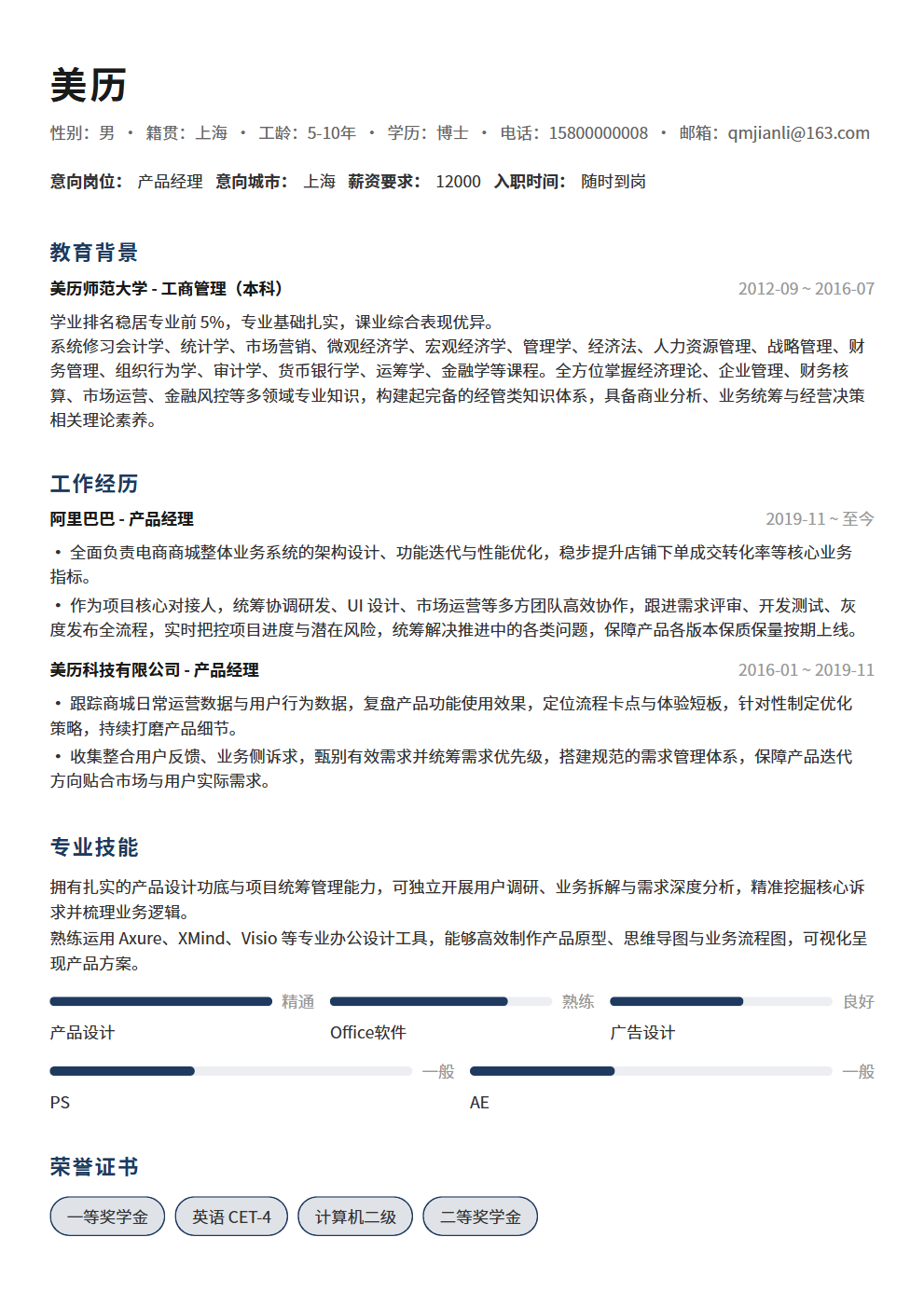
Use BeautyResume resume editor to professionally present every part of your career history—including gaps. Thoughtful resume formatting and wording build positive impressions before you even meet, minimizing the negative impact of career gaps.