How to Discuss Failure in Interviews: 3 Frameworks to Turn Setbacks Into Growth Stories
"What's your biggest failure?" "Tell me about a time you experienced a setback." These questions are appearing more frequently in interviews, yet most candidates…
The Interviewer Isn't Looking for Your Weaknesses — They're Looking at How You Face Challenges
"What's your biggest failure?" "Tell me about a time you experienced a setback." These questions are appearing more frequently in interviews, yet most candidates either dodge with a trivial "minor setback" or share a failure that actually undermines their image. The interviewer's real purpose in asking about failure isn't to set a trap — they're assessing your capacity for reflection, your resilience, and your level of self-awareness. Someone who can honestly face failure and grow from it is more valuable than someone who has never failed at all. The key lies in what framework you use to tell the story. These 3 narrative frameworks will help you turn setbacks into growth stories that impress interviewers.
3 Taboos When Discussing Failure in Interviews
Before choosing and narrating a failure experience, avoid these 3 minefields first:
- Don't choose overly personal failures: Relationship breakdowns, family conflicts, health issues. An interview is a professional setting — your failure should be work-related. Sharing personal failures makes the interviewer uncomfortable and suggests you lack professional boundaries.
- Don't choose moral failures: Being disciplined for integrity issues, penalized for policy violations, or receiving complaints for serious conflicts with colleagues. These failures reflect character problems, not growth opportunities. Interviewers won't give you a second chance to explain.
- Don't choose failures without reflection: If you tell a failure story but can't articulate any takeaways or changes, the interviewer will conclude you lack self-awareness. The value of telling a failure lies not in the failure itself, but in what you learned from it.
Framework 1: The CARL Model — The Standard Framework for Structured Failure Narratives
CARL is the most classic framework for narrating failure experiences. The 4 letters stand for:
- Context: Briefly describe the background of the failure — what project, what role, what objective. Keep it to 2–3 sentences; don't over-set the scene.
- Action: What you did that led to the failure, or what you did when the failure occurred. Focus on your actions, not others'. Owning your mistakes is more powerful than deflecting blame.
- Result: The specific consequences of the failure — how long the project was delayed, how much was lost, who was affected. Use data; don't be vague.
- Learning: What you learned from this failure and what changes you made afterward. This is the core of the entire answer and the part interviewers care about most. Make sure your takeaways are specific and verifiable — for example, "After that, I established a XX process that prevented similar issues from recurring."
Framework 2: The Turning Point Narrative — Using "I Thought... But... So I... And Ultimately..." for Dramatic Effect
The turning point narrative is more flexible than CARL and works well for those "I thought everything was fine until it wasn't" experiences:
The core sentence pattern is: "I thought XX (your initial judgment), but XX (the unexpected result), so I XX (your response and reflection), and ultimately XX (growth and change)." The power of this framework lies in its natural dramatic tension — the gap between "I thought" and "but" draws the listener in, "so I" demonstrates your ability to respond, and "ultimately" proves your growth. Example: "I thought this project could follow a standard process, but the client made major requirement changes midway, which nearly derailed the entire original plan. So I reprioritized the requirements and worked with the team for two extra weeks to deliver the core features. Ultimately, I learned to establish a requirement change mechanism with clients at the project's outset, and the next three projects had no similar issues."
Framework 3: Data-Driven — Using Data to Demonstrate Improvement and Growth After Failure
If you're a data-oriented person, telling your failure story with data will be more persuasive:
The core logic is: State the data consequences of the failure → Analyze the root cause → Describe the improvement measures taken → Compare the data before and after improvement. Example: "That project was delayed by two weeks and went 15% over budget. In our retrospective, we discovered the root cause was a missing requirement review step. After that, I introduced a requirement review checklist and a dual-confirmation mechanism. In the subsequent 5 projects, the requirement change rate dropped by 60%, and not a single project experienced delays." The advantage of the data-driven approach is that it makes both the failure and the growth quantifiable and verifiable — the interviewer can't question whether your improvements were genuinely effective.
3 Real-World Examples of Failure Narratives
Here are 3 failure narrative examples from different scenarios for your reference:
- Project delay: "A product launch project I was responsible for was delayed by 3 weeks because I didn't build buffer time into the schedule and failed to escalate risks promptly. This failure led me to establish a project risk early-warning mechanism — in subsequent projects, I set a 10% buffer for every milestone and synced risk status with stakeholders weekly. After that, 6 consecutive projects were all delivered on time."
- Plan failure: "A marketing campaign I led performed far below expectations after launch — the conversion rate was only 30% of the estimate. In the retrospective, I realized I had over-relied on historical data without considering changes in the market environment. After that, I adopted an A/B testing habit — every major campaign gets small-scale validation before full rollout. Campaign success rates improved from 40% to 85%."
- Team conflict: "A colleague and I had a serious disagreement over a technical approach, which stalled the project for a week. Looking back, my mistake was dismissing their reasoning without fully listening. After that, I learned a 'understand first, respond second' communication approach, and I never had a similar conflict in subsequent collaborations."
How to Choose the Right Failure Experience
The core principle for selecting a failure experience: Choose one with "growth," not one with "drama." A good failure experience should meet 3 criteria: First, the failure must be real, not fabricated — if the interviewer probes for details and you can't answer, you're done for. Second, the failure must have reflection — you can clearly articulate what you learned and what you changed. Third, the consequences of the failure must be manageable — don't choose a failure that caused major losses to the company; that will make the interviewer question your baseline competence. The best choices are those failures that "were painful at the time but are now valuable experiences" — they have enough depth to make the story compelling without causing your image to collapse.
Failure Isn't Scary — What's Scary Is Having No Reflection
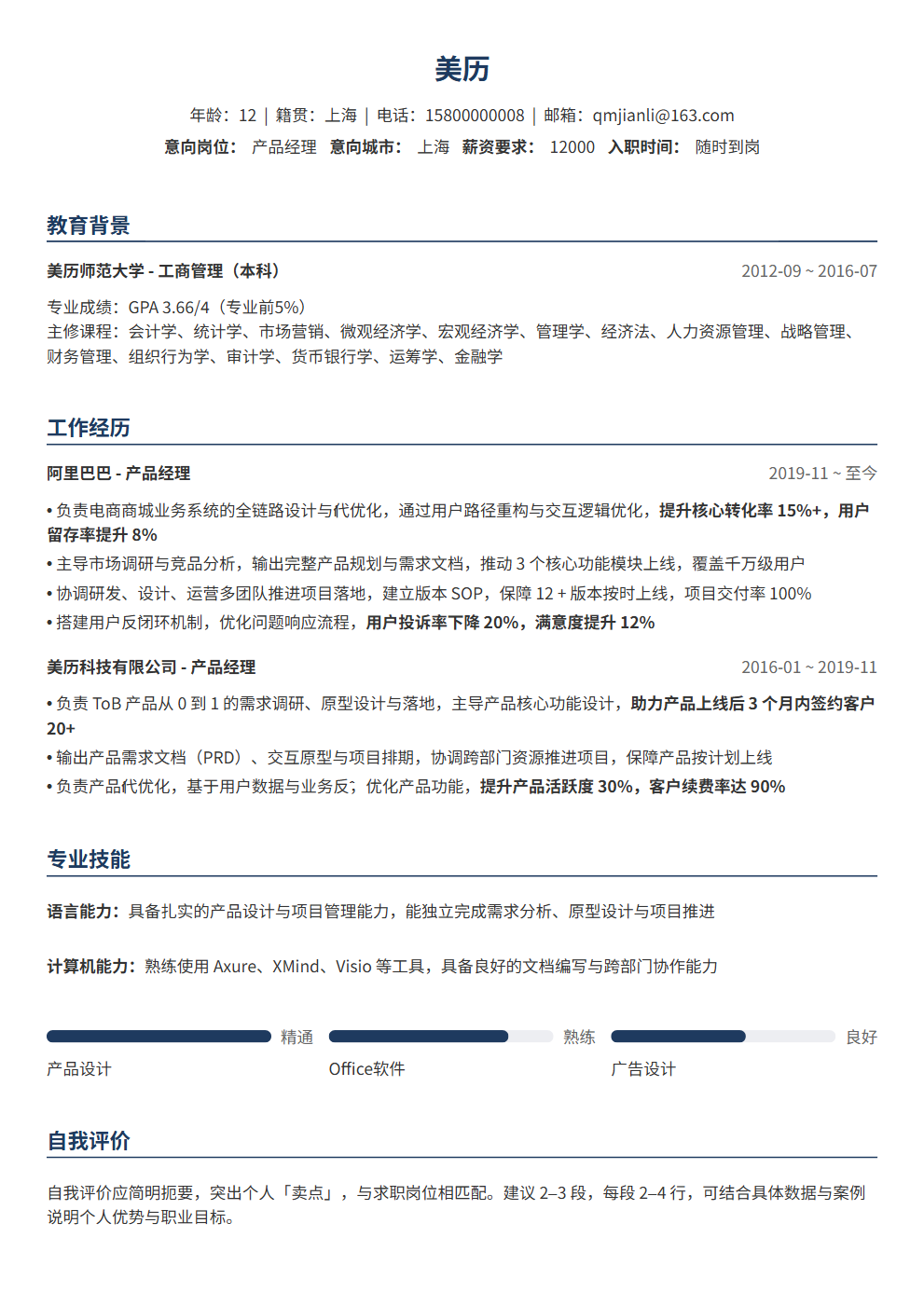
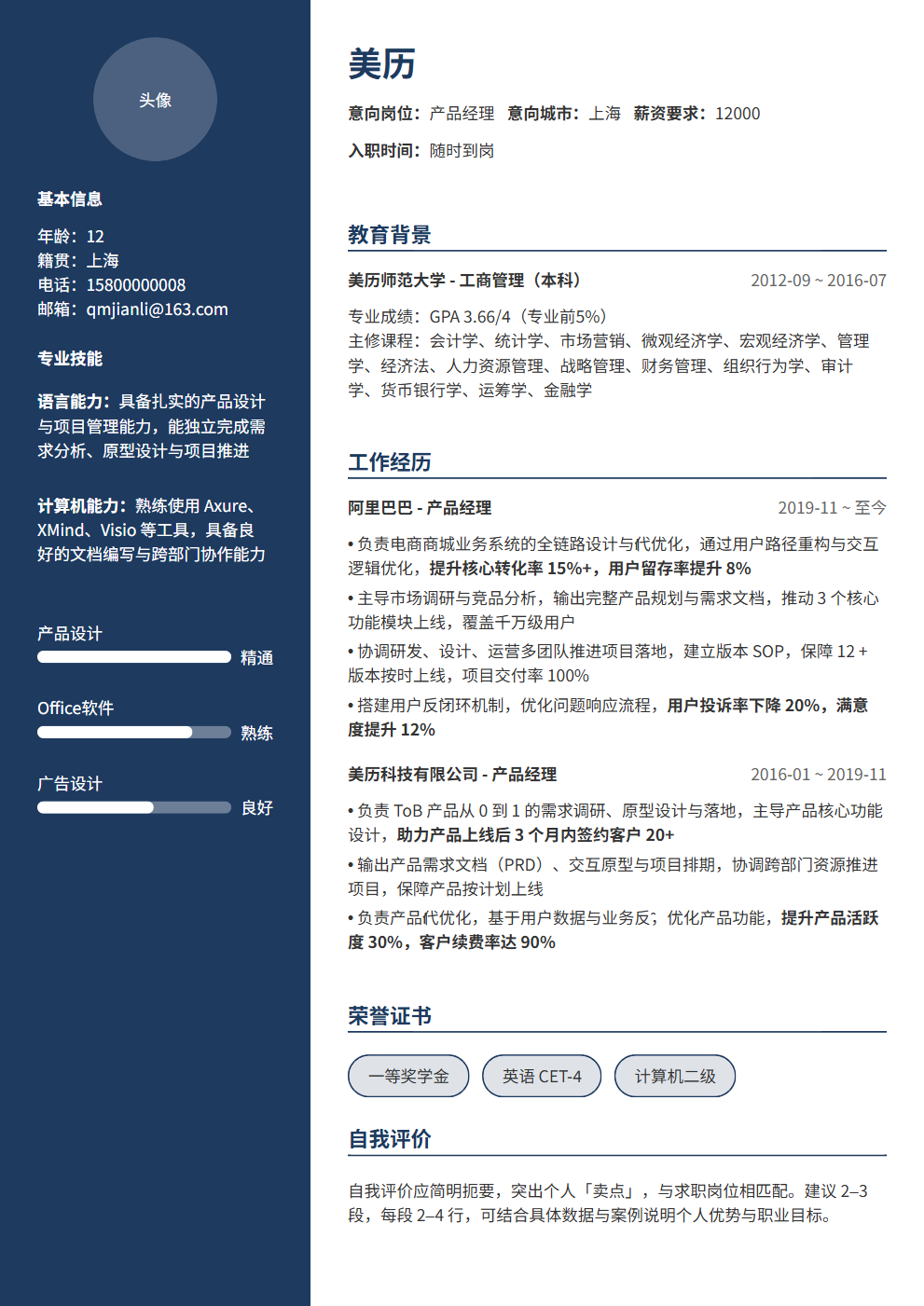
Being asked about failure in an interview isn't a trap — it's an opportunity to showcase your capacity for growth. The 3 narrative frameworks — the CARL model's structured storytelling, the turning point narrative's dramatic tension, and the data-driven approach's quantitative verification — help you transform failure experiences into growth stories that move interviewers. Remember, failure isn't scary — what's scary is having no reflection. If you're preparing for interviews and need to optimize how you describe experiences on your resume, try BeautyResume's resume editor — flexible layout modules let you easily showcase the growth and takeaways from every experience, and smart word suggestions help you transform setback experiences into compelling professional highlights, showing interviewers the power of your growth through failure.