How New Hires Can Report Work Clearly: Conclusions, Data, Anticipation, and Proactive Updates
Struggling to communicate with your boss as a new hire? These 5 practical reporting tips will help you build trust: lead with conclusions, back up with data, anticipate questions, proactively sync, and bring solutions when raising issues.
Why Does Your Boss Frown Every Time You Report?
Many new employees share the same frustration: you work hard, but when you report to your boss, you never get the recognition you deserve. Either you ramble on without making your point, or you get stumped by follow-up questions, leaving the impression that you're "not reliable enough." The problem isn't your work — it's how you communicate it. Reporting to your boss is a skill, and mastering these 5 techniques will transform your boss from "confused" to "convinced."
Tip 1: Lead with Conclusions — Results First, Process Second
Bosses dread reports like this: "Today I had a meeting, then I organized some data, and then I called the client..." — three minutes in and they still don't know the outcome.
Leading with your conclusion is the golden rule of workplace communication. No matter how much work you've done, always state the result first:
- Project update: "The project is 80% complete and on track to launch this Friday."
- Issue report: "Customer complaints are up 30%, primarily due to delivery delays."
- Proposal: "I recommend Option B — it's the most cost-effective with manageable risk."
Give the conclusion first so your boss has context, then fill in the process and details. This is the "Pyramid Principle" — McKinsey's go-to communication framework. The goal isn't to finish speaking; it's to make sure you're understood.
Tip 2: Back It Up with Data — Numbers Speak Louder Than Feelings
"I feel like user feedback has been negative lately" — this kind of report is worthless to a boss. "Good" or "bad" are subjective. Bosses want objective facts.
Turn feelings into data:
- ❌ "User feedback isn't great" → ✅ "Negative review rate rose from 2% to 5% this week, mainly in the payment flow"
- ❌ "The campaign did okay" → ✅ "The campaign brought in 1,200 new users with an 8.5% conversion rate, above the 6% industry average"
- ❌ "The team is really busy" → ✅ "Average tickets per person increased from 30 to 45 this month"
Data is the most persuasive language in the workplace. When you report with numbers, your boss sees you as professional, reliable, and detail-oriented. Build the habit of tracking metrics — when it's time to report, you'll always have substance behind your words.
Tip 3: Anticipate Questions — Think Like Your Boss to Prove You're Reliable
Getting hit with three follow-up questions you can't answer after a report is painfully awkward. But most of those questions are predictable — if you think ahead.
The method is simple: put yourself in your boss's shoes. If you were the boss, what would you ask after hearing this report?
Common areas bosses probe:
- Risks: "What are the risks? What's the backup plan?"
- Resources: "How many people and how much budget do we need?"
- Timeline: "When will it be done? Can we accelerate?"
- Comparisons: "How does this stack up against alternatives?"
Prepare this information before you report. When your boss asks, you answer confidently. When they don't, you volunteer it. This "thinking one step ahead" ability is a key signal bosses use to judge reliability.
Tip 4: Proactively Sync — Don't Wait to Be Asked
Many new hires have a bad habit: if the boss doesn't ask, they don't tell. By the time the boss checks in, either things have been delayed too long or problems have escalated. This reads as "not proactive" — and worse, you might get labeled as "someone who needs to be micromanaged."
Core principles of proactive syncing:
- Report at key milestones: project kickoff, mid-point review, and completion — three essential checkpoints
- Escalate issues early: don't wait until a problem blows up; the sooner you flag it, the more your boss can help
- Share regular updates: send a brief weekly summary so your boss always knows what you're working on
Proactive syncing isn't kissing up — it's giving your boss peace of mind. What bosses fear most isn't problems; it's finding out about problems last. When you take the initiative to report, your boss sees you as dependable, responsible, and trustworthy.
Tip 5: Bring Solutions, Not Just Problems — Always Offer Options
"Boss, the project is over budget — what should we do?" — this is the kind of problem-dumping that drives bosses crazy. They hired you to solve problems, not to hand them back untouched.
The right approach: bring solutions when raising problems.
For example:
- ❌ "Boss, the client wants early delivery — what should we do?"
- ✅ "Boss, the client wants early delivery. I've outlined two options: Option A is to add staff and rush the work, which needs an extra 20K budget; Option B is to deliver in two phases — core features on time, the rest in a follow-up. I recommend Option B since the risk is more manageable."
You don't need a perfect solution — just show your thinking and your recommendation. Even if your boss chooses differently, they'll see you as someone who thinks independently and takes ownership. In the workplace, people who solve problems always outvalue those who only raise them.
From "Invisible New Hire" to "Boss's Go-To Person"
Communicating with your boss isn't a talent — it's a method. Leading with conclusions makes you clear. Backing up with data makes you credible. Anticipating questions makes you look professional. Proactive syncing builds trust. Bringing solutions shows your value. These 5 techniques don't require high EQ — just 5 extra minutes of thought before each report.
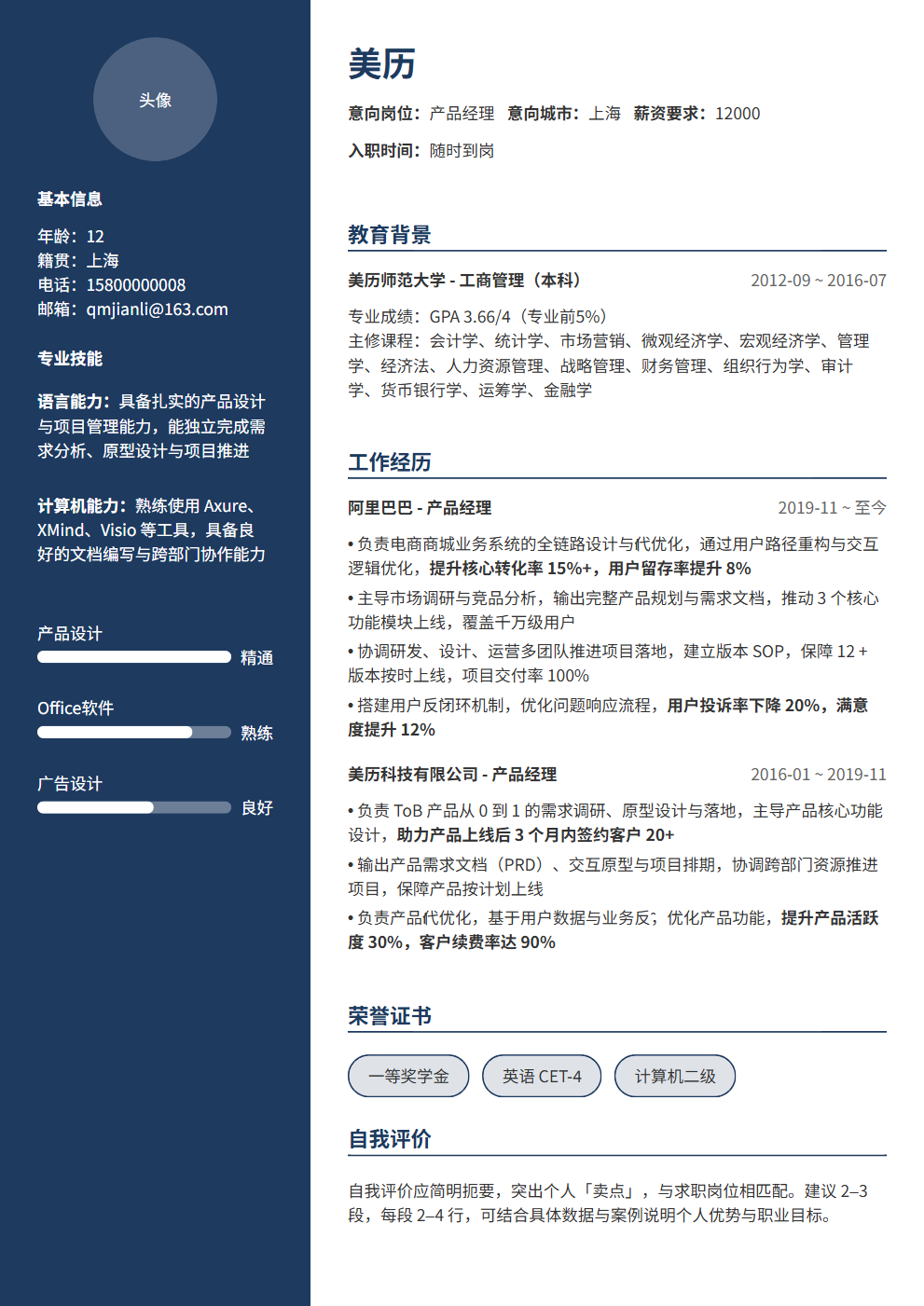
Of course, workplace communication is just one piece of the puzzle. If you're job hunting, your resume is your first "report" to HR — and how well it's written determines whether you even get an interview. BeautyResume offers professional templates and AI-powered optimization to help you craft your resume the way you'd craft a great report: clear, compelling, and impossible to ignore. Try BeautyResume and make your job search communication just as effective.