How to Build Your Workplace Persona? 3 Steps to Create Professional Labels That Attract Opportunities
Feeling invisible in your team? 3 steps to build your workplace persona (define labels / reinforce with actions / showcase at key moments), 5 workplace persona templates, and 3 persona-building pitfalls to make your professional label memorable and attract opportunities.
Do you ever feel like you do everything in your team, yet nobody seems to remember you? In meetings, others are always called on to speak while you feel invisible? When promotion opportunities arise, your boss thinks of someone else? It's not that you lack ability — it's that you haven't built your "workplace persona." When people mention you, what's the first word that pops into their heads? If the answer is "no impression," you need to seriously craft your professional label. A workplace persona isn't something you fake — it's the labeled presentation of your real capabilities. Three steps to make your professional label memorable and attract opportunities.
Step 1: Define the Label You Want to Be Remembered By
The first step in building your workplace persona is answering one question: when people mention you, what's the first word you want popping into their heads? That word is your professional label. A label isn't a self-appointed title — it's the cognitive anchor others have for you. A good label must meet three criteria: relevant to your core abilities, differentiated within the team, and something you can consistently deliver on.
- Label selection method: Review the three things you've been most praised for in the past six months — behind these praises lie your core abilities. If you're always praised as "reliable," the underlying ability might be strong execution; if praised for "great ideas," it might be creativity. Extract 1-2 labels from these praised areas. Don't be greedy — more labels mean less memorability
- Three criteria for labels: First, relevant to core abilities (if you choose "data expert" but your data analysis skills are average, the label will quickly collapse); Second, differentiated value ("responsible and diligent" is a basic requirement, not a label — "can spot patterns in data that others miss" is); Third, consistently deliverable (a label is a promise — if you can't deliver, it backfires)
- Common label directions: Problem Solver (the first person people think of when facing challenges), Data Expert (speaking with data carries the most weight), Creative Force (brainstorming isn't complete without you), Execution Master (tasks assigned to you are always completed on time), Coordination Specialist (you're the best at cross-department collaboration). Choose the direction that best fits your abilities and personality
- Label selection pitfalls: Don't choose labels that are too broad ("all-rounder" equals no label), don't choose labels unrelated to your role (you're a product manager but want to build a "PPT expert" label — wrong direction), don't choose labels you can't deliver on ("innovation pioneer" but you're better at optimization than zero-to-one creation — the label will collapse)
Defining your label is the foundation of persona building — choose the wrong label, and all subsequent efforts go in the wrong direction. Taking time to think clearly about the word you want to be remembered by is more important than rushing to showcase yourself.
Step 2: Reinforce Your Label Through Consistent Action
Once you've defined your label, the next step is reinforcing it through consistent action. A label isn't a slogan you shout — it's a perception built through repeated actions. If you call yourself a "data expert," then every report should speak with data; if you're a "problem solver," you should step up whenever challenges arise. One action is a coincidence; consistent action builds a label.
- Four action strategies for reinforcing labels: First, consciously showcase your label ability in daily work — if you chose "data expert," add data analysis to every proposal and cite data in every meeting, creating a conditioned reflex of "go to you for data"; Second, proactively take on label-related tasks — if you chose "problem solver," volunteer for tough problems instead of waiting to be assigned; Third, share label-related knowledge and experience with the team — if you chose "creative force," regularly share creative methodologies and cases, showing you can help others think creatively, not just yourself; Fourth, document and spread your label achievements — compile your success cases into documents or shares, letting more people know your label isn't self-appointed
- Label reinforcement rhythm: Label building isn't overnight — it takes 3-6 months of consistency to form perception. Months 1-2 are the "planting period" — each action plants seeds of perception; Months 3-4 are the "sprouting period" — people start proactively seeking you out for label-related tasks; Months 5-6 are the "harvest period" — your label becomes your synonym, and opportunities start finding you
- Label reinforcement pitfalls: Don't only showcase in front of your boss (colleagues' perception matters too — many opportunities come from peer referrals), don't only do without talking (if you do great work but don't share it, who knows?), don't expect instant results (labels need time to solidify — expecting results in one month is unrealistic)
The core of label reinforcement is "walking the talk" — whatever you claim to be, prove it through action. Every action consistent with your label deepens others' perception of you. After 6 consistent months, your label transforms from "self-appointed" to "widely recognized."
Step 3: Showcase Your Label at Key Moments
Daily action reinforces your label as a foundation, but showcasing at key moments is the "final kick." What are key moments? Performance reviews, project post-mortems, cross-department meetings, presentations with leadership present — these are high-exposure, high-impact occasions where labels upgrade from "known within the team" to "known across the organization."
- Label showcase in performance reviews: Performance reviews are your most important annual label showcase opportunity. In the "Core Achievements" section, select 2-3 achievements most aligned with your label for detailed presentation. If you chose "data expert," your review should be full of data comparisons and analysis; if "problem solver," present achievements using "challenge-action-result" structure, highlighting your problem-solving ability
- Label showcase in project post-mortems: During post-mortems, proactively share insights from your label's perspective. If you chose "coordination specialist," focus on sharing cross-department collaboration experiences and methodologies; if "execution master," share processes and techniques for ensuring on-time delivery. Make post-mortems not just reviews but showcases for your label ability
- Label showcase in cross-department meetings: Cross-department meetings are the best occasions for labels to "break out of the circle" — your label may be established within your team but still unknown in other departments. Consciously showcase your label ability: cite data in your comments, propose solutions, share reusable methodologies. Let other departments remember your label too
- Key moment showcase tips: Prepare your remarks (don't improvise — plan the label message you want to convey in advance), use specific cases over abstract descriptions ("I'm good at data analysis" is less effective than "Last quarter, my data analysis identified key user churn points, and after optimization, retention improved 20%"), control frequency (showcasing 1-2 times per key occasion is sufficient — over-showcasing backfires)
Key moment showcases aren't "performances" — they're presenting your accumulated label ability on higher-exposure stages. With thorough preparation, specific cases, and moderate frequency, your label can go from "known in a small circle" to "widely recognized."
5 Workplace Persona Templates
Not sure what label to choose? Here are 5 of the most common workplace persona templates, each with corresponding labels, reinforcement methods, and suitable personality types to help you quickly find your direction.
- Problem Solver: Label keyword "can handle it." Reinforcement method — volunteer for tough problems, summarize methodologies after each solution and share them, making "come to you for problems" a team consensus. Suitable for: people with strong logical thinking, good stress tolerance, who enjoy challenges. Note: don't just solve without summarizing, or you're just a "firefighter" not a "problem solver"
- Data Expert: Label keyword "speaks with data." Reinforcement method — cite data in every report and comment, proactively take on data analysis tasks, regularly share data insights. Suitable for: people sensitive to data, skilled at finding patterns in data. Note: don't use data for data's sake — data should serve conclusions, or you're just a "data mover"
- Creative Force: Label keyword "full of ideas." Reinforcement method — contribute high-quality ideas in brainstorming, proactively propose innovative solutions, regularly share industry creative cases. Suitable for: people with active thinking, strong curiosity, who enjoy cross-domain thinking. Note: creativity must be implementable — ideas without execution make you a "dreamer" not a "creative force"
- Execution Master: Label keyword "reliable." Reinforcement method — complete every task on time with quality, proactively communicate when facing obstacles instead of delaying, deliver beyond expectations. Suitable for: people with strong self-discipline, attention to detail, who follow through. Note: don't just execute without thinking, or you're an "execution machine" not an "execution master" — masters execute with thought
- Coordination Specialist: Label keyword "can sort it out." Reinforcement method — take on coordination roles in cross-department collaboration, establish cross-department communication mechanisms, summarize experience after each coordination. Suitable for: people with high EQ, good listening skills, who can understand different perspectives. Note: coordination isn't "smoothing things over" — you need principles and boundaries, or you're just a "people pleaser" not a "coordination specialist"
3 Persona-Building Pitfalls
On the path of building your workplace persona, there are 3 common pitfalls to avoid. These don't just fail to help you establish a label — they can backfire.
- Pitfall 1: Persona equals persona packaging — A persona isn't a packaged image but the labeled presentation of your real abilities. If you package a "data expert" persona but your actual data analysis skills are average, once exposed, the trust collapse costs far more than having no persona at all. The core of persona building is "amplifying real strengths," not "fabricating false images"
- Pitfall 2: Persona equals staying in your lane — Building a "data expert" persona doesn't mean you can only do data analysis. A persona is your label, not your prison. You can absolutely develop other abilities while reinforcing your data label. Just focus on one core label when communicating externally — it's easier to be remembered
- Pitfall 3: Persona equals pleasing everyone — The goal of persona building isn't making everyone like you, but making specific groups remember your professional value. If you choose the "problem solver" label, your audience is "people who have problems needing solutions"; if "creative force," your audience is "people who need creative output." Trying to please everyone results in no one remembering you
Conclusion: Your Persona Is the Amplifier of Your Professional Value
Feeling invisible in your team isn't because you lack ability — it's because your abilities haven't been labeled and communicated. Build your workplace persona in 3 steps: Step 1, define the label you want to be remembered by (relevant to core abilities, differentiated value, consistently deliverable); Step 2, reinforce your label through consistent action (showcase in daily work, proactively take on related tasks, share knowledge and experience, document and spread achievements); Step 3, showcase your label at key moments (performance reviews, project post-mortems, cross-department meetings). 5 workplace persona templates (Problem Solver, Data Expert, Creative Force, Execution Master, Coordination Specialist) help you quickly find your direction. 3 pitfalls (persona ≠ packaging, persona ≠ staying in your lane, persona ≠ pleasing everyone) help you avoid traps. A persona isn't false packaging — it's the amplifier of your professional value, making your abilities visible, memorable, and in demand.
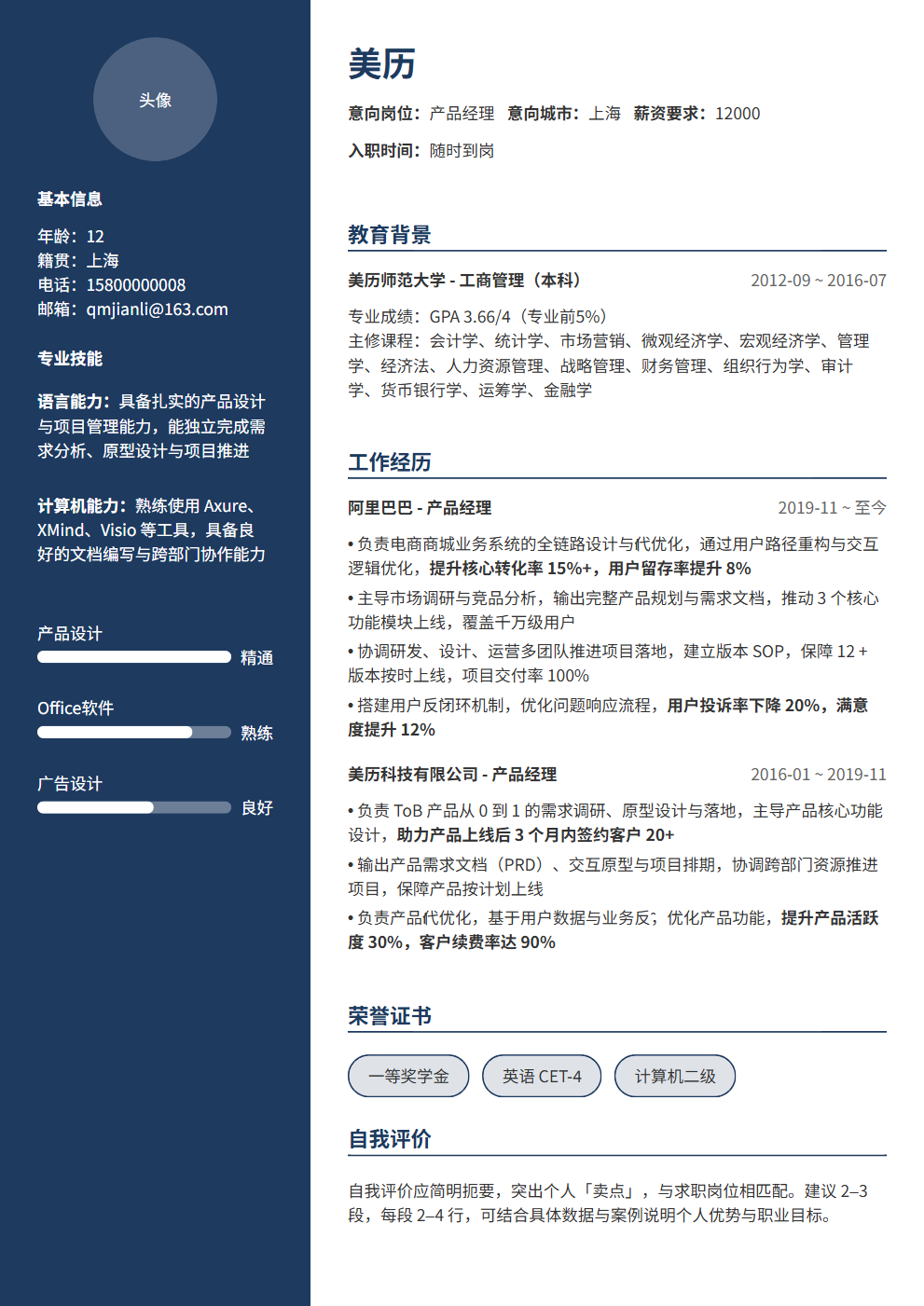
The first step in building your workplace persona is letting others clearly see your professional value. Use BeautyResume's resume editor to distill your professional labels and core achievements into a professional resume — your label starts being remembered from your resume.