How to Answer "Why Did You Leave Your Last Job?" — 5 Safe Answers and 4 Deal-Breakers
Interviewers always ask why you left your last job. Learn 5 safe answer templates and 4 absolute deal-breakers to navigate this tricky question in job-hopping interviews.
"Why did you leave your last job?" — it seems simple, but it's a minefield. Answer well, and the interviewer sees you as mature and rational. Answer poorly, and you're immediately labeled "unstable" or "difficult to manage." How do you navigate this question without stepping on landmines? Here are 5 safe answers and 4 absolute deal-breakers to help you sail through.
What Interviewers Are Really Evaluating When They Ask About Your Departure
Many candidates think interviewers are just making casual conversation, but "why did you leave" is one of the most information-dense questions in any interview. Through your answer, interviewers are evaluating four things:
- Your career stability: Was your departure a thoughtful, rational choice or an impulsive, emotional decision? Frequent job-hoppers' reasons rarely hold up under scrutiny
- Clarity of your career plan: Did you leave because you have a clear next goal, or just because you "wanted a change"? People with goals naturally give more convincing reasons
- Your interpersonal skills: When you mention your former company or boss, are you objective and rational or full of resentment? This directly reflects how you interact in the workplace
- Your level of self-awareness: Can you objectively analyze your situation and needs, or do you blame everything on external factors?
Once you understand what interviewers are evaluating, the core principle becomes clear: demonstrate that you're someone "with goals, plans, and the ability to handle problems rationally" — not someone who "runs away at the first sign of difficulty."
5 Safe Answers
Safe Answer 1: Career Development — The Most Reliable Universal Answer
Using "career development" as your reason for leaving is the safest, most versatile approach. The core logic: I achieved X at my previous company, but hit a development ceiling, and I hope to find greater growth opportunities at your company.
Answer templates:
- "Over three years at my previous company, I progressed from junior level to independently managing projects, but the promotion path in my current role is limited. I'm looking for more challenging responsibilities"
- "I've built experience in XX at my previous company, and now I want to deepen my expertise in XX direction — your company has a stronger advantage in this area"
Important: Don't just say "no room for growth" — that's too vague. Be specific about what you achieved, what ceiling you hit, and what the target role can offer you. That's what makes your answer convincing.
Safe Answer 2: Skill Development — Show Your Drive
Using "skill development" as your reason demonstrates your learning motivation and ambition. The core logic: I want to learn new skills and explore new areas that my previous company couldn't provide.
Answer templates:
- "At my previous company, I was primarily responsible for XX work and had become quite proficient. But I've always been interested in XX and want the opportunity to learn and practice it in depth"
- "My previous company's business model was relatively traditional. I'd like to work with more cutting-edge technologies and methods to continuously improve my professional capabilities"
Important: The skills you say you want to learn must be relevant to the target position. If you say you want to learn data analysis but you're interviewing for a marketing planning role, the interviewer will question your direction. Your skill development answer should form a closed loop with the target role.
Safe Answer 3: Organizational Restructuring — The Objective Reason That's Hardest to Question
If your previous company genuinely underwent organizational restructuring, business downsizing, or department mergers, this is the "safest" reason — it's an objective fact that's hard for interviewers to challenge.
Answer templates:
- "My previous company went through a business restructuring, and my department was downsized/merged. Under the new structure, my role's direction didn't align well with my career plan"
- "The company shifted its strategic direction, and the XX business line I was working on was scaled back. I want to continue building depth in XX"
Important: Organizational restructuring is a fact, but how you "package" it matters. Don't say "the company was failing" or "I was laid off" — even if true, use more neutral language like "business adjustment" or "organizational optimization." Also emphasize that even facing restructuring, you chose a direction aligned with your career plan rather than "any job will do."
Safe Answer 4: Commute Distance — A Real and Reasonable Life Factor
If your previous company genuinely required a long commute (over 1.5 hours each way), citing commute distance as one of your reasons is reasonable. Interviewers are human too and understand how long commutes affect quality of life and work efficiency.
Answer templates:
- "My commute to the previous company was nearly two hours each way. Over time, it affected both my work efficiency and quality of life. I'm looking for an opportunity closer to home so I can devote more energy to my work"
- "Due to relocation/family reasons, my commute has become very long, and I'm looking for a more conveniently located position"
Important: Commute distance works best as a "supporting reason" rather than your only reason. If you only say "too far from home," the interviewer may think you lack career ambition. Pair it with career development or skill growth — "On one hand, the commute was genuinely inconvenient; on the other, I also wanted better development opportunities in XX."
Safe Answer 5: Industry Direction — Demonstrate Your Professional Judgment
If you're moving from a declining industry to a growing one, or from a traditional sector to a digital field, using "industry direction" as your reason shows foresight and professional judgment.
Answer templates:
- "I was working in the XX industry, but I've observed that the industry is overall declining/transforming. I want to move toward the more promising XX field"
- "Growth in my previous company's industry has slowed. I want to enter a more dynamic sector and grow alongside the industry"
Important: When saying an industry direction isn't good, you need factual support — industry data, market trends, and policy changes can all serve as evidence. Don't just say "I feel like that industry is dying" based on gut feeling. Also, demonstrate your understanding of and passion for the target industry, rather than "I heard this industry pays well."
4 Absolute Deal-Breakers
Deal-Breaker 1: Complaining About Your Previous Company
This is the most fatal mistake in interviews. No matter how badly you were treated, never complain during an interview. The reasons are simple:
- The interviewer will think: If you talk about your previous company this way today, will you talk about our company this way tomorrow?
- Complaining reveals a negative thinking pattern — when facing problems, you blame the environment rather than seeking solutions
- The interviewer can't verify whether your claims are true, but your attitude has already been noted
Common landmine phrases: "The company management was chaotic," "The boss was unprofessional," "The systems were unreasonable," "Colleagues were hard to work with" — even if true, you can't say these things in an interview.
Alternative approach: Transform "complaints" into "objective descriptions + positive choices." For example, "chaotic management" → "The management style at my previous company differed from the collaborative approach I prefer. I'm looking for an environment with more structured processes."
Deal-Breaker 2: Clashing With Your Boss
"I didn't get along with my boss" is a red line in interviews. Regardless of the facts, this answer makes the interviewer immediately wonder:
- Are you difficult to manage?
- Do you resist following instructions?
- Do you lack communication skills?
Even if it truly was the boss's problem, you can't say this. The interviewer's logic: it takes two to tango. If you couldn't get along with your boss, it at least suggests issues with your upward communication.
Alternative approach: "My previous boss and I did have different working styles. I tried communicating and adjusting, but ultimately found that our understanding of XX wasn't aligned. This experience helped me better understand what kind of work environment and management style suits me." — Transform "didn't get along" into "style differences," and "conflict" into "self-awareness."
Deal-Breaker 3: Complaining About Low Salary
Salary is indeed a real reason many people job-hop, but directly saying "the pay was too low" in an interview is a major mistake. Reasons:
- It makes the interviewer think you only care about money and lack passion for the work itself
- It suggests you might jump ship again for a higher salary
- It attributes your departure to external conditions, lacking the depth of career planning
Alternative approach: Transform "low salary" into "seeking compensation that matches my capabilities." For example: "Over three years at my previous company, my skills and responsibilities grew significantly, but the compensation structure was relatively fixed. I'm looking for a platform that better reflects my value and offers more room for development." — The core shift is from "I want more money" to "I'm worth more."
Deal-Breaker 4: Being Fired or Laid Off
If you were indeed fired, directly saying "I was fired" is almost interview suicide. The interviewer will immediately question your competence or professional integrity.
But this doesn't mean you should lie. The right approach:
- Use more neutral language to describe the facts: "My previous company underwent workforce optimization, and my position was adjusted" or "There was a mutual misalignment in development direction, and we agreed to part ways after discussion"
- Proactively share what you learned from the experience: "This experience helped me better understand my strengths and areas for improvement. Since then, I've made improvements in XX"
- Prepare for follow-up questions: The interviewer might ask "Were you the only one affected?" — Answer honestly but strategically: "The department did undergo adjustments, and I wasn't the only one affected, but I've also reflected on how I could have done better in XX"
Key principle: Don't lie, but learn to "translate." Being fired is a fact, but how you tell that fact determines the interviewer's judgment.
3 Golden Rules for Answering Departure Questions
Regardless of which safe answer you use, follow these three principles:
- Keep it brief — don't go on and on: Explain your departure in 2-3 sentences. Saying too much makes you seem defensive. If the interviewer is interested, they'll ask follow-up questions
- Quickly pivot to "why this company": After answering the departure question, immediately redirect to your enthusiasm for and fit with the target role — "After leaving my previous company, I've been looking for opportunities in XX, and your company's XX position aligns perfectly with my expectations"
- Maintain a positive attitude throughout: No matter how bad your previous company was, always speak respectfully and objectively about your former employer. You're demonstrating not "how bad they were" but "how good you are"
Answer Strategies for Different Scenarios
Departure answers aren't one-size-fits-all. Adjust based on your situation:
- Leaving within 1 year: Interviewers will scrutinize your stability. Emphasize the rationality of "adjusting promptly after discovering a mismatch" rather than "impulsiveness." For example: "After joining, I found the role's direction differed significantly from my expectations. After careful consideration, I decided to adjust promptly rather than waste more time for both sides"
- Leaving after 3-5 years: This is the most normal job-hopping cycle — interviewers won't be too sensitive. Focus on "what I've achieved + what I want to break through"
- Frequent job-hopping (3+ companies in 5 years): Interviewers will directly question your stability. Give each departure a reasonable explanation while emphasizing "this time is different" — "My previous experiences helped me understand what suits me better. This time, I've done thorough research on your company and am confident this is a long-term choice"
- Being laid off: Emphasize objective reasons + proactive response. "The company underwent business adjustments, and my business line was cut. During this period, I improved my XX skills and now feel more confident about taking on new challenges"
Conclusion: The Core of Answering Departure Questions Is "Looking Forward"
How should you answer when asked about your departure reason? The core logic is simple: look forward. The interviewer asks "why did you leave," but what they really want to hear is "why are you coming." The common thread among the 5 safe answers: transforming the departure reason into a "positive choice for the future" rather than a "negative escape from the past." The common thread among the 4 deal-breakers: they're all "looking backward" — complaints, conflicts, dissatisfaction, and failures. Interviewers want to hire someone with goals, plans, and problem-solving ability — not someone running away from problems. Remember: your departure reason isn't explaining "why the past ended" — it's proving "why the future is worth starting."
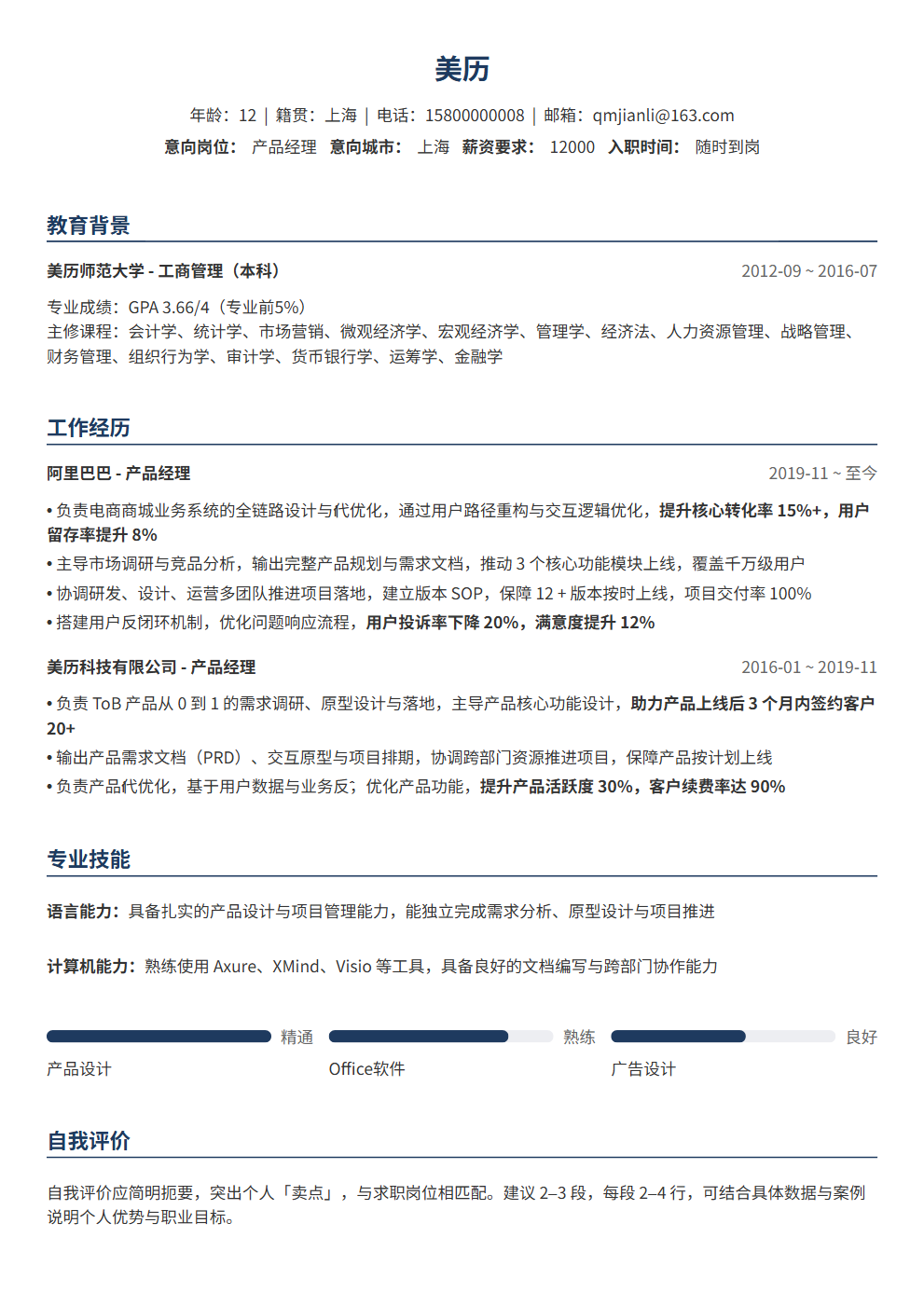
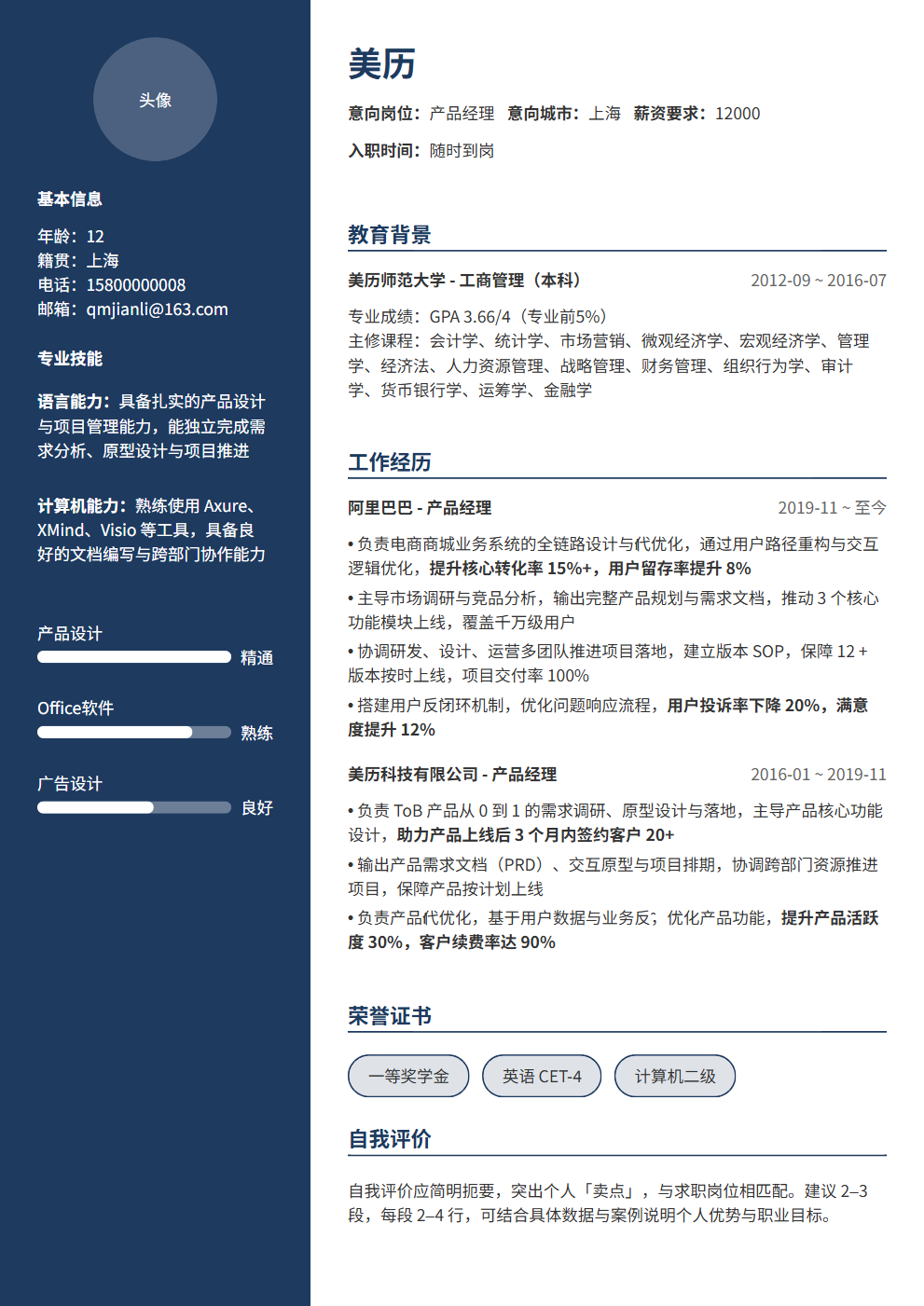
The quality of every interview answer is closely tied to the quality of your resume. BeautyResume offers professional templates and smart formatting to help you present key information like departure reasons and career development more convincingly. A well-written resume opens the door to interviews — optimize your resume with BeautyResume first, then use these techniques to ace your interview!