How to Answer 'Why Did You Leave Your Last Job': 5 Responses That Satisfy HR Without Losing Points
Reasons for leaving are a must-ask interview question — wrong answers cost points. Master 5 professional response strategies that avoid badmouthing former employers and negative emotions, satisfying HR without follow-up questions.
1. What Is HR Really Trying to Learn from This Question?
When interviewers ask about reasons for leaving, they're not gossiping about your career story — they're assessing three things:
- Stability: Do you jump ship at the slightest provocation? Will you leave us quickly too?
- Values: What matters to you? Can the company meet your core needs?
- Interpersonal skills: Did you leave for objective reasons, or because you can't handle workplace relationships?
So the core principle for answering: look forward, not backward. Focus not on "why I left" but on "why I want to join."
2. Five Professional Response Templates
Response 1: Seeking Greater Growth
Best for: Hitting a ceiling at your previous company
Example: "I built solid experience in X at my previous company, but the business scale was limited. I'm looking for a larger platform where I can take on more challenging work."
Pro tip: Be specific about the challenges you want to take on. Saying "I want to independently manage a full product line" or "I want to lead a team to build something from scratch" makes your answer far more convincing and signals you're already thinking about post-hire contributions.
Response 2: Career Direction Adjustment
Best for: Switching industries or functions
Example: "After several years of practice, I discovered my true passion lies in X. Your company is an industry leader in this area, and I'd love to deepen my expertise here."
Pro tip: Show what preparation you've done for the transition — self-study courses, certifications, or relevant projects. This proves it's a deliberate decision, not an impulsive one. Interviewers worry most about career changers who lose interest quickly.
Response 3: Company Business Changes
Best for: Layoffs, business contraction, organizational restructuring
Example: "My previous company underwent a strategic shift, and my department was consolidated. This prompted me to rethink my career path — I'd prefer to develop at a company with a clearer direction in X."
Pro tip: Watch your wording. Avoid saying "the company was failing" or "I was laid off." Use neutral terms like "strategic realignment" or "organizational consolidation." Emphasize that you weren't passive during the change but actively chose a direction better suited to your goals.
Response 4: Pursuing Professional Development
Best for: Wanting to learn new technologies or methods
Example: "I want to deepen my expertise in X, and your company's X practices are well-recognized in the industry — this is exactly the learning environment I'm seeking."
Pro tip: Name the specific skills you want to develop and explain why the target company is the ideal place. For instance: "Your company's AI deployment practices are the industry benchmark, and I want to transform theoretical knowledge into real product capabilities here."
Response 5: Location/Family Reasons
Best for: Relocation, commute, family care
Example: "I relocated to this city for family reasons and am looking for a long-term stable opportunity." — Objective fact; HR rarely probes further.
Pro tip: After stating the objective reason, proactively connect it to your enthusiasm for the new company. For example: "This city has excellent prospects in X industry, and your company is exactly the platform I've been looking for." This prevents the impression that you're applying only out of convenience.
3. Three Reasons You Must Never Mention
- Badmouthing your former employer or boss: "My boss was terrible" or "The company was poorly managed" — HR will think: will you say the same about us?
- Purely about money: "The pay was too low" — While this may be true, saying it directly makes you seem money-focused and likely to leave for a higher offer
- Interpersonal conflicts: "I couldn't get along with colleagues" or "I was excluded" — This reveals poor relationship management skills
Even if these are your real reasons, rephrase them using positive, forward-looking language.
4. Handling Follow-Up Questions
If your answer isn't convincing enough, interviewers may probe. Here's how to respond:
- "Why didn't you transfer internally?" — "I considered it, but the company's footprint in X was limited, and there were no suitable internal opportunities."
- "You left so quickly?" — "Though the tenure was short, I achieved X results on the Y project. Leaving was a carefully considered decision based on Z reason."
- "Do you job-hop frequently?" — Highlight your stable work history and explain this departure as an exception.
5. Consistency Between Your Answer and Resume
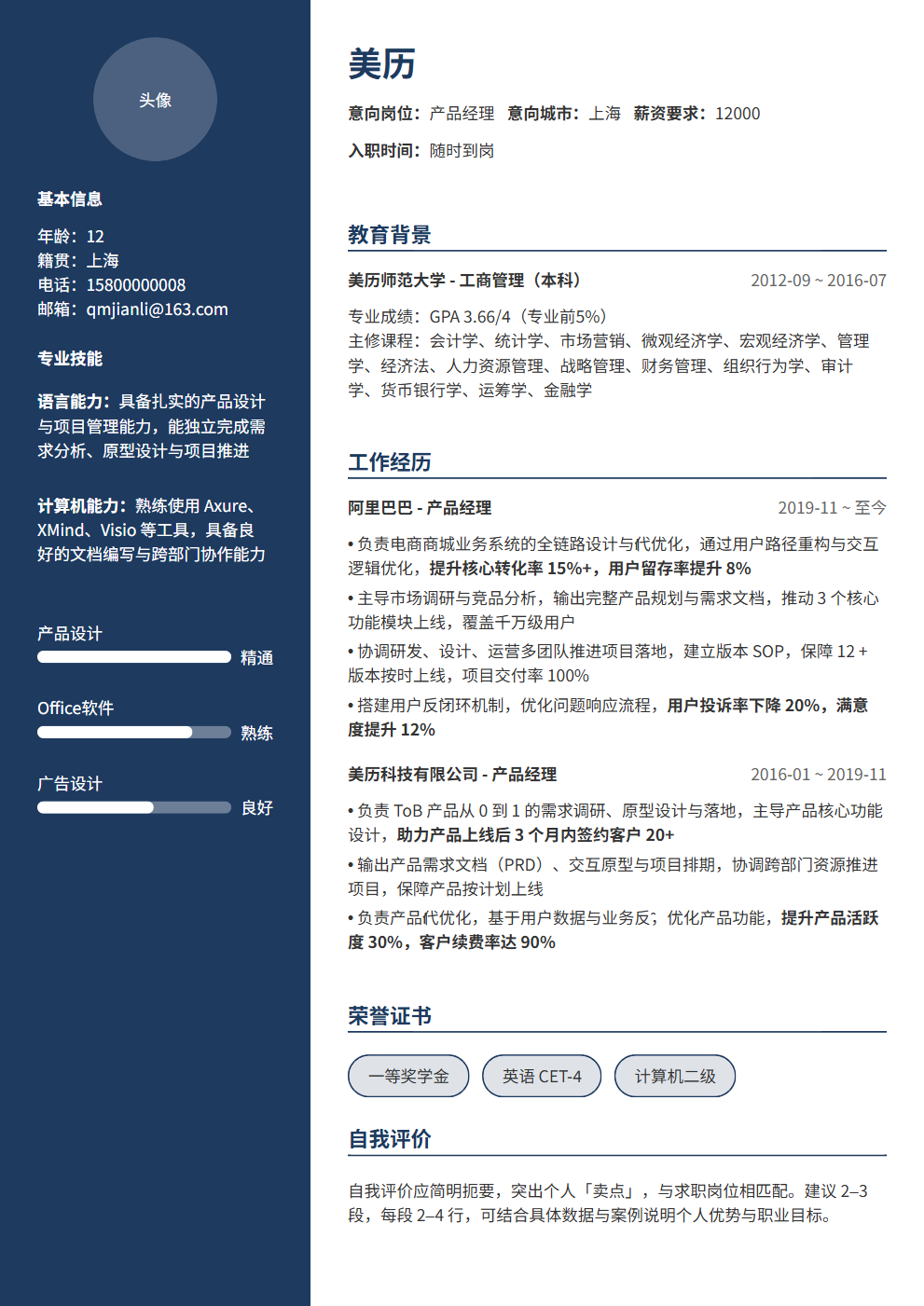
Your stated reasons must align with your resume timeline. If your resume shows frequent job changes, prepare explanations:
- Each move had a different, legitimate reason
- Emphasize that each change brought positive career development
- If there was a period of frequent changes, be honest and show you've found your direction
Every experience on your resume should tell a coherent career story, not a scattered record of job-hopping.
6. Answering Strategies for Different Tenure Lengths
How long you stayed directly affects how interviewers judge your stability. Different tenures call for different approaches.
Left During Probation (Under 3 Months)
This is the most sensitive scenario — interviewers will be on high alert. Emphasize that the role significantly differed from what was discussed during the interview, not that you "couldn't handle it." For example: "After joining, I found the actual responsibilities differed substantially from what was communicated during the interview. I'm looking for a role that's a better fit." The key is to stick to facts, avoid emotional language, and show that you still completed your duties diligently during the brief period.
Left Within One Year
Departures under a year require more substantial justification. The best strategy combines objective company changes with your development needs: "The company's strategic direction shifted, which changed my core responsibilities" or "After the project concluded, the team was downsized." Never say "the work was too hard" or "I couldn't adapt" — this raises red flags about your resilience.
Left After 3+ Years
Three or more years at one company is itself proof of stability, so your answer can be more relaxed. Focus on "growth" and "breakthrough": you've fully developed on one platform and now need new challenges. For example: "Over three years, I grew from an individual contributor to a project lead, but I want to validate my abilities on a larger scale." This showcases past contributions while expressing ambition.
7. Tone and Attitude When Answering
The same content delivered with different tones creates entirely different impressions. How you say it often matters more than what you say.
- Stay calm and confident: Speak at a steady pace. Don't speed up or stammer from nervousness. Leaving a job is a normal career decision — there's no reason to feel embarrassed.
- Don't show negative emotions: Even if your previous company truly mistreated you, avoid displaying anger, grievance, or complaints during the interview. Interviewers judge your professional maturity through your emotional state.
- Maintain eye contact: Look the interviewer in the eye when answering. This conveys honesty and confidence. If your eyes dart away, they'll instinctively feel you're hiding something.
- Practice your answer in advance: This is a high-frequency interview question — prepare thoroughly. Practice in front of a mirror or with a friend to ensure your delivery is smooth and natural, so you won't stumble or say something you shouldn't under pressure.
Remember: interviewers aren't your therapists. They care about how you view the past and plan the future — not what actually happened.
Summary
The golden rule for answering reasons for leaving: look forward, not backward; say "what I want," not "what I hated". Use the 5 templates — seeking growth, direction adjustment, business changes, skill development, and objective reasons — to frame your departure as a positive career planning expression. Avoid the 3 taboos: badmouthing former employers, focusing only on money, and revealing interpersonal conflicts. Different tenure lengths require different strategies: short tenures emphasize objective mismatch, while long tenures highlight growth and breakthroughs. Maintain a calm, confident tone without negative emotions, and practice your answer to ensure smooth delivery. A logically structured resume paired with professional departure explanations convinces HR you're a talent worth investing in long-term. If your resume doesn't yet tell a coherent career story, start by optimizing its structure so every experience becomes evidence of your professional growth.