How to Answer the Expected Salary Question in Interviews: 4 Strategies to Not Undersell Yourself or Scare Off HR
How to answer the expected salary question in interviews? 4 strategies — ask about the budget range, give a flexible range, back it up with market data, and think in total compensation terms — so you don't undersell yourself or scare off the interviewer, with specific scripts and tips.
"What's your expected salary?" — This is probably the most nerve-wracking question in any interview. Go too high and you risk getting eliminated; go too low and you'll regret it for months. Many people either mumble something about "following company standards" or blurt out a number they end up resenting. Salary negotiation in interviews isn't gambling — it's strategic communication. Master these 4 strategies, and you'll neither undersell yourself nor scare off the interviewer.
Strategy 1: Ask About the Budget Range — Bounce the Ball Back
The first principle of salary negotiation: whoever reveals their number first is at a disadvantage. When HR asks about your expected salary, your first instinct shouldn't be to name a figure — it should be to ask about the budget range for the role. This isn't being evasive; it's reasonable information parity. The company definitely has a budget for the position, and you just want to know if it falls within your acceptable range.
Specific scripts:
- "Before I answer that, I'd like to understand the salary budget range for this role at your company. That way I can see if it aligns with my expectations."
- "I'm currently open-minded about salary and care more about the role's growth potential and team culture. Would you mind sharing the salary range for this position?"
- "I'd like my compensation to match the market value of this role. Could you share what the budget range looks like on your end?"
The benefits of asking back are obvious: if their budget is far below your floor, you know early and avoid wasting everyone's time; if it's within your range, you have an anchor point for your subsequent ask. Of course, some HR reps will insist you go first — that's when you deploy the strategies below.
One detail to note: keep your tone natural when asking back. Don't make it sound like an interrogation. Say "Would you mind sharing?" rather than "You have to tell me." If HR explicitly says company policy prevents them from disclosing, don't press further — switch to Strategy 2.
Strategy 2: Give a Flexible Range — Leave Yourself Room
When you can't successfully ask back, or when the other party genuinely needs you to go first, never name a single fixed number. A fixed number is a trap — too high leaves no room to negotiate down, too low locks you in immediately. The right approach is to provide a flexible range, where the lower bound is the minimum you'd accept and the upper bound is appropriately higher.
How to set your range:
- Lower bound = your floor salary × 1.05: If your floor is 15K, your lower bound becomes 15.75K, rounded to 16K. Even if they negotiate to the lower end, you won't feel shortchanged.
- Upper bound = lower bound × ~1.3: If your lower bound is 16K, your upper bound can be 20-22K. This shows flexibility without being unrealistic.
- Keep range width within 30%: Too narrow (e.g., 16K-17K) means no real flexibility; too wide (e.g., 16K-30K) suggests you haven't positioned yourself.
How you express the range matters too:
- Don't say "I'm hoping for 15K to 20K" — this makes them automatically anchor on 15K. Instead say "Based on my understanding of the market and my experience, my expected salary is in the range of 18K to 22K, and I'm flexible depending on the scope of responsibilities and benefits package." Placing the anchor in the upper-middle of your range compresses their downward negotiation space.
- Add a "negotiable" qualifier: "My expected range is 18K-22K, though this is certainly negotiable — I care more about the overall growth opportunity and team fit." This states your expectation while showing goodwill.
A common mistake: don't use your current salary as the sole basis for your ask. Many people think "I'm at 12K now, so I should ask for 15K when switching jobs" — this linear thinking ignores market conditions and role differences. You should price the role, not your increment.
Strategy 3: Back It Up with Market Data — Make Your Ask Evidence-Based
The worst way to state your expected salary is "I feel like I should get 20K." HR's internal response? "Based on what?" But if you say "Based on my research, the market median for this role with 3-5 years of experience in this city is 18K-22K, and given my project experience, my expectation is around 20K" — that's entirely different. Your ask now has an objective basis that HR can't easily dismiss.
How to research market data:
- Job platform data: Check salary ranges for similar roles on LinkedIn, Glassdoor, Indeed, and Indeed Salary. Take the median as your reference. Remember to adjust for location — 20K in San Francisco and 20K in Austin are very different propositions.
- Industry salary reports: Many platforms publish annual salary surveys with more authoritative data. Glassdoor's salary reports, Robert Half's salary guides, and industry-specific surveys are all solid references.
- Peer conversations: Learn real salary levels through colleagues, former coworkers, and industry communities. Ask "what do you actually take home?" rather than "what does your offer letter say?" — some companies have lower base salaries but higher bonuses, and vice versa.
- Recruiter insights: If you have recruiter connections, they know market rates best. Simply ask "What can someone with my background typically command in the market?" and they'll usually give you a reliable benchmark.
Scripts for referencing market data in interviews:
- "I've been following the market recently, and the median salary for this role with 3-5 years of experience is around 18K-22K. Given my depth of experience in [specific area], my expectation is in the upper range of that bracket."
- "Based on my understanding, the salary range for this role at your company is approximately X-Y. My expected salary falls within that range, and I'm open to discussing specifics based on the depth of the role's responsibilities."
The key point: speak with data, not emotion. HR deals with dozens of candidates negotiating salary every day. What they resent most is "I feel I'm worth more" — but if you can present market data, they'll respect your professionalism instead.
Strategy 4: Think in Total Compensation — Don't Fixate on Monthly Salary Alone
Many people only focus on monthly salary during negotiations, which is remarkably one-dimensional. Compensation isn't just one monthly number — it's a "total package": monthly salary, annual bonus, stock options, 401(k) match, health insurance, meal and transportation allowances, flexible work arrangements, remote work days, training budgets, PTO days... All of these combined represent your true earnings.
Applying total compensation thinking:
- Lower monthly but higher annual bonus: Company A offers 18K/month with a 13th-month bonus; Company B offers 20K/month with 12 months. B looks higher, but A's annual total is 18K×13=234K vs. B's 20K×12=240K — not much difference. If A also offers equity, the total package could be even higher.
- Benefits contribution differences: Company C offers 20K/month with full 401(k) matching at 6%; Company D offers 22K/month but minimal matching. C's retirement contributions accumulate significantly more over time, far exceeding the monthly salary gap.
- Value of intangible benefits: Flexible hours mean avoiding rush hour commutes, saving 1-2 hours daily; remote work 2 days/week means saving hundreds monthly on transportation and meals; a $2,000 annual training budget means continuously upgrading your skills. These are hard to quantify but offer enormous long-term value.
Scripts for using total compensation thinking in interviews:
- "My monthly salary expectation is 18K-22K, but I'm also very interested in the overall compensation structure — for instance, how many months is the annual bonus? What's the 401(k) matching policy? Are there stock options? These factors combined form the basis of my evaluation."
- "I think about salary expectations in terms of total compensation. Could you walk me through your compensation structure and benefits package? That way I can give you a more accurate expected range."
A hidden benefit of total compensation thinking: when monthly salary negotiations stall, you can pivot to other dimensions. For example: "20K/month would be ideal, but if that's difficult right now, could we add another month to the annual bonus? Or increase the 401(k) match?" This flexibility makes it easier to reach agreement.
3 Golden Timing Windows and 2 Fatal Mistakes for Salary Negotiation
Beyond strategies themselves, timing is crucial:
- Best timing: After the final interview, before the verbal offer. The company has already decided they want you, giving you maximum leverage. Negotiating too early (asking about salary in the first interview) makes you seem money-focused; too late (after you've started) is pointless.
- Second-best timing: When HR proactively asks about your expected salary. This signals interest, so your ask won't be interpreted as "only caring about money."
- Worst timing: Bargaining before you even have an offer. You haven't proven your value yet, so you have zero leverage.
Two fatal mistakes:
- Mistake 1: Inflating your current salary. Many people think "I'm at 12K, so if I say 15K they'll offer me more" — dead wrong. More and more companies require pay stubs or tax documents. If they catch you lying, the offer gets rescinded immediately, and you might even end up on an industry blacklist. Honesty is the baseline.
- Mistake 2: Using other offers as threats. "I have another offer at 25K, so you need to at least match it" — this is extremely dangerous. HR's likely response: "Then go with that company." You can gently indicate "I am in discussions with other companies, which gives me some reference points for salary," but never use a threatening tone.
Salary Negotiation Is a Two-Way Selection, Not a One-Sided Game
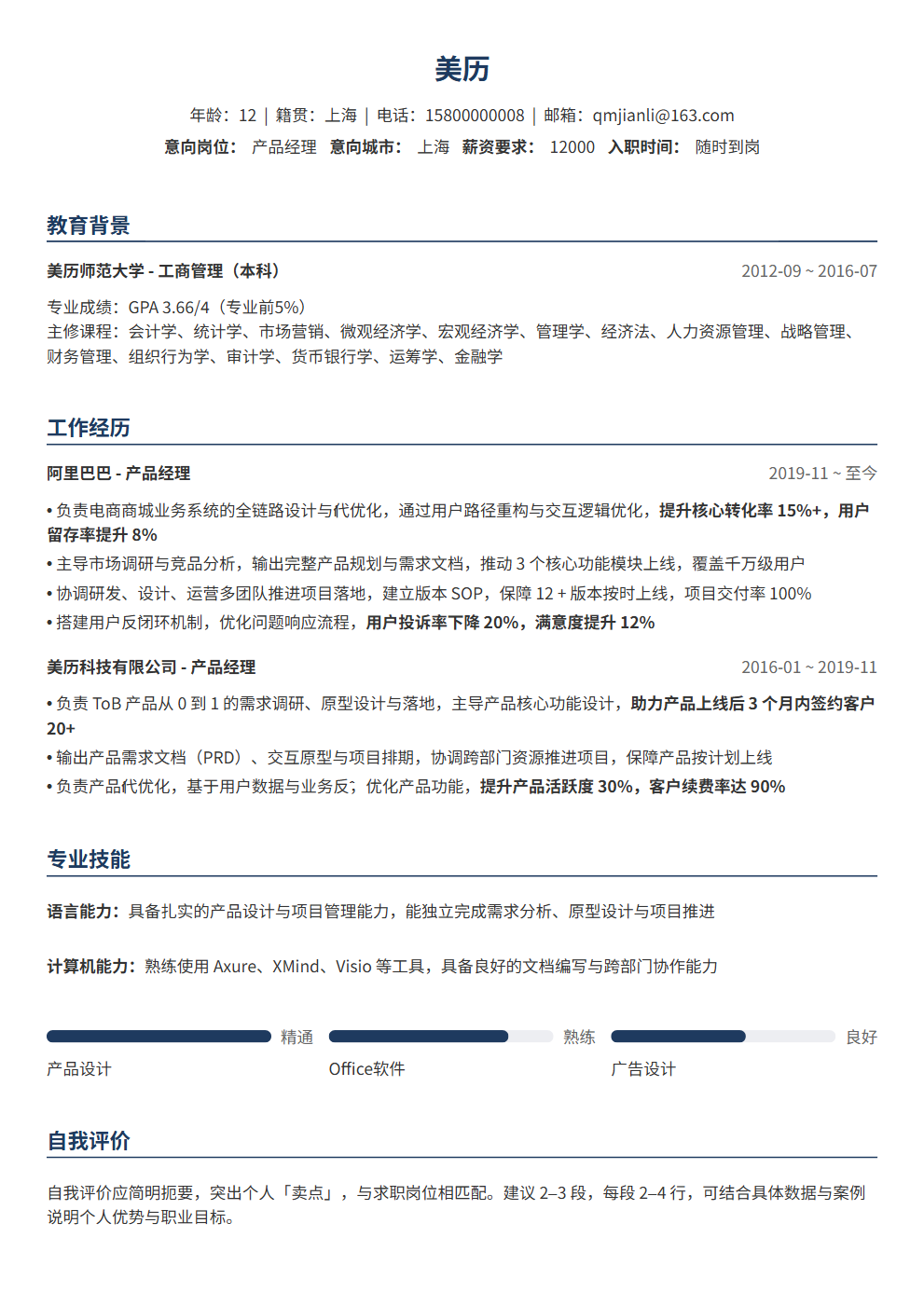
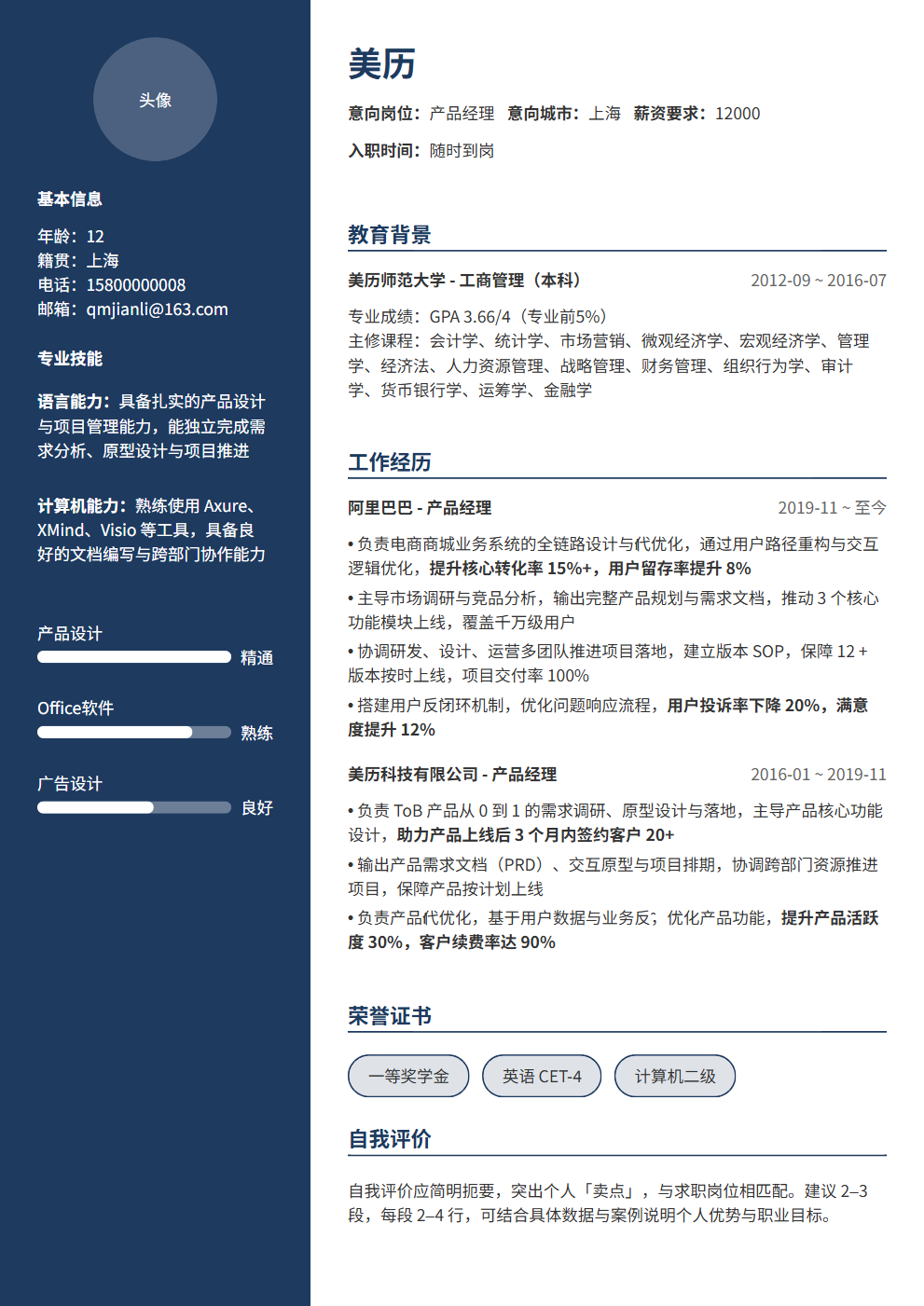
How you answer the expected salary question essentially communicates three signals: you have a clear understanding of your market value, you possess professional communication skills, and you value the opportunity without being desperate. The 4 strategies aren't isolated — you can first ask about the budget range, then provide a flexible range, back it up with market data, and finally expand the negotiation space using total compensation thinking. The key: don't be afraid to discuss salary, and don't feel embarrassed about it. Reasonable salary negotiation is a sign of professional maturity — good companies won't be put off by it; they'll respect you more. Before negotiating, make sure your resume already presents your value convincingly — a professional resume is your foundation for salary discussions. Try BeautyResume's resume editor to present your project achievements, data-driven contributions, and core skills with structured templates, so HR already recognizes your value before the salary conversation even begins — making your ask far more persuasive.