Grad School or Job Hunt? 4 Dimensions to Help You Make a Choice You Won't Regret
Grad school vs. employment isn't an either-or choice — 4 dimensions (major characteristics, career goals, financial situation, personal state) for rational analysis, plus common misconceptions and a decision framework for both paths.
Grad school or job hunting? This question haunts millions of fresh graduates. Some say grad school is "escaping employment," while others say entering the workforce with a bachelor's degree means "hitting a low ceiling" — the conflicting voices only make you more anxious. The truth is, grad school versus employment has never been an either-or proposition. Four dimensions (major characteristics, career goals, financial situation, personal state) will help you analyze rationally, plus common misconceptions and a decision framework for both paths, so you can make a choice you won't regret.
1. Dimension One: Major Characteristics — Your Major Determines the ROI of Grad School vs. Employment
Different majors have vastly different dependencies on academic credentials. Some majors make it nearly impossible to enter the field without a master's degree, while others offer more advantages with a bachelor's degree and work experience. Figure out which category your major falls into before making a choice.
- Majors that require grad school: Medicine, law, foundational sciences (math, physics, chemistry, biology) — core positions in these fields almost universally require a master's degree or higher. You can't even get through the door at top-tier hospitals without a medical master's; law graduates can become lawyers with just the bar exam, but elite firms primarily hire from top master's programs; foundational sciences require a PhD as the starting point for research or academic careers. If your major falls into this category, grad school isn't a choice — it's a requirement
- Majors with high grad school ROI: Computer science, finance, architecture, psychology — you can find employment with a bachelor's in these fields, but a master's significantly boosts starting salary and career platform. CS bachelor's can get into big tech, but algorithm and research roles generally require a master's; finance bachelor's can land bank teller positions easily, but investment banking, equity research, and core fund roles typically require a master's; five-year architecture bachelor's can find work, but top design institutes and international firms prefer master's graduates; psychology bachelor's face narrow employment options, while a master's opens paths in counseling, HR, and UX
- Majors where bachelor's employment has the edge: Marketing, sales, new media operations, design — these fields value practical experience and resource accumulation far more than academic credentials. Marketing and sales are "results-driven" domains where three years of work experience far outweigh three years of grad school; new media operations and design are "portfolio-driven" industries where your account metrics and design portfolio speak louder than any degree. Three years of grad school can't match three years of industry experience and networking
- The relationship between major and degree isn't absolute: Within the same major, different specializations have different degree requirements. CS development roles are fine with a bachelor's, but algorithm research needs a master's; accounting bookkeeping works with a bachelor's, but audit and consulting favor master's graduates. The key is identifying which direction you want to pursue, not making a blanket statement about whether "our major needs grad school"
2. Dimension Two: Career Goals — The Life You Want Determines the Path You Should Take
Grad school or employment is essentially choosing different career starting points and development trajectories. The clearer your career goals, the easier the choice becomes.
- If your goal is to enter the public sector: Civil service, public institutions, state-owned enterprises — academic credentials are hard requirements. Many central government ministries and provincial-level positions require master's degrees or above; professional title evaluations in public institutions are 2-3 years faster with a master's; SOE management trainee programs offer higher starting grades and salaries for master's graduates. If the public sector is your target, grad school significantly boosts your competitiveness
- If your goal is to join big tech: Technical, product, and operations roles at major internet companies — degrees are a door-opener but not the decisive factor. Technical roles favor master's graduates (especially in algorithm and AI), but strong bachelor's candidates can still get in; product and operations roles value internship experience and project track records more than graduate degrees. If you have big tech internship experience from your bachelor's years, entering the workforce directly may offer better ROI
- If your goal is entrepreneurship or freelancing: Academic credentials offer almost no direct help for entrepreneurship. What entrepreneurship requires — market insight, resource integration, execution ability, and resilience — aren't things you learn in grad school. If you have a clear entrepreneurial direction and sufficient preparation, entering the market to accumulate experience is more pragmatic than pursuing a degree
- If you're unsure about your career direction: This is the most common situation. When you're uncertain, grad school can provide a 2-3 year buffer, but "buffer" doesn't equal "finding direction" — many graduate students remain lost after three years. Recommendation: explore directions through 1-2 internships first. If you find a clear goal after interning, enter the workforce directly; if you discover your target position truly requires a master's, grad school is still an option. "Intern first, then decide" is far more efficient than "go to grad school first, then figure it out"
3. Dimension Three: Financial Situation — Your Wallet Determines How Much Trial-and-Error You Can Afford
Grad school or employment isn't just a career choice — it's a financial decision. The opportunity cost of 2-3 years of grad school (foregone wages + tuition + living expenses) can reach 200,000-400,000 RMB. Your financial situation determines how much trial-and-error cost you can bear.
- Relatively comfortable family finances: If your family can support your grad school expenses without requiring you to become financially independent quickly, you can choose grad school more freely — even if grad school doesn't work out or employment after graduation isn't ideal, the financial pressure is manageable. But note: comfortable family finances aren't an excuse to waste time. You still need to actively intern and build resources during grad school, or the gap between you and your bachelor's-employed classmates will only widen after three years
- Average family finances: If grad school means relying on student loans or part-time work to support yourself, you need to do the math carefully — total cost of 2-3 years of grad school (tuition + living expenses + foregone wages) vs. the salary premium from a master's degree. If the master's starting salary is 30%+ higher than a bachelor's and your field truly requires a master's, the investment is worthwhile. If the salary gap between master's and bachelor's is small (as in some humanities fields), the financial return from grad school may not cover the opportunity cost
- Tight family finances: If your family needs you to become financially independent soon, or if grad school would create a heavy financial burden, prioritizing employment is the more pragmatic choice. After working 2-3 years and achieving financial stability, you can consider part-time master's programs or an MBA — this path is harder but carries lower financial risk. Many companies also offer tuition reimbursement, making grad school after employment potentially less expensive
- Don't ignore opportunity cost: During 2-3 years of grad school, you're not just spending tuition and living expenses — you're also giving up 2-3 years of wage income and work experience. Based on a first-tier city bachelor's starting salary of 8,000 RMB/month, the 3-year opportunity cost is approximately 290,000 RMB (wages) + 30,000-60,000 RMB (tuition) = 320,000-350,000 RMB. How much higher is the master's starting salary compared to a bachelor's? How long will it take to recoup this investment? Every prospective grad student should run these numbers
4. Dimension Four: Personal State — Your Learning Ability and Mental State Determine Whether You Can Succeed in Grad School
You can't just decide to take the grad school entrance exam and expect to pass. Over 4 million people register annually, with an admission rate below 25%. Your learning ability and mental state determine whether you can succeed — if you fail the exam, you'll have neither a master's degree nor the golden autumn recruitment window, potentially losing on both fronts.
- Can your learning ability support grad school prep? Preparing for the entrance exam requires 6-12 months of intensive study — 8+ hours a day for half a year to a year. What were your study habits during college? Can you focus for extended periods? Are you good at test-taking? If your undergraduate grades were in the bottom half of your class and you barely maintained consistent study habits, the probability of exam success isn't high. Rather than gambling on a low-probability outcome, channel that energy into job hunting
- Is your mental state stable? Preparing for the exam is a lonely marathon — your classmates might be interning, socializing, or job hunting while you're in the library every day. This gap constantly drains your psychological energy. If you're prone to anxiety, self-doubt, and emotional volatility, the exam prep process may worsen your mental state. This isn't about "not being tough enough" — it's about being honest with yourself. Pushing through exam prep with an unstable mental state leads to a higher failure rate
- Do you have a backup plan? The riskiest strategy is "only prepare for the exam, don't prepare for job hunting" — if you fail, you have neither a master's degree nor the autumn recruitment window, leaving you with only spring recruitment or a second attempt. Spring recruitment offers far fewer and lower-quality positions than autumn recruitment, and a second attempt carries even greater psychological pressure. Recommendation: prepare for both simultaneously — focus on exam prep from September to November while applying to a few target companies; after the exam in December, go all-in on spring recruitment. Dual-track preparation is harder but ensures you won't lose on both fronts
- Is your motivation for grad school clear? Many people's motivation is "I don't want to work," "everyone else is doing it," or "I can't find a good job with a bachelor's" — none of these are good reasons. "I don't want to work" is avoidance; you'll still face employment after grad school. "Everyone else is doing it" is herd mentality; others' situations differ from yours. "I can't find a good job with a bachelor's" might be a resume or interview problem, not a degree problem. Good motivations for grad school: your target position genuinely requires a master's, or you want to switch to a different field. Clear motivation drives effective preparation
5. Common Misconceptions About Grad School and Employment
Whether you choose grad school or employment, there are common misconceptions to avoid. These traps can lead to wrong choices or detours along your chosen path.
- Misconception 1: "Grad school guarantees a better job": A master's degree doesn't equal better employment. In many fields, the employment gap between master's and bachelor's is minimal, and some positions actually prefer bachelor's graduates (lower salary expectations, greater malleability). Grad school boosts competitiveness only when your field and target position genuinely require a master's — otherwise, you're just delaying employment
- Misconception 2: "Bachelor's employment has no room for growth": Your growth potential depends on your industry, company, and personal ability — not your degree. Many big tech executives hold bachelor's degrees, and many industry leaders never even graduated college. Your degree is a starting point, not a ceiling — your growth potential is determined by your ability, choices, and effort
- Misconception 3: "Failing the grad school exam is the end": Failing the exam doesn't mean failing at life. Over 3 million people fail the exam each year, and most eventually find jobs. The key is having a backup plan — pivot quickly to spring recruitment after exam failure, or work first and pursue grad school later. The worst outcome is falling into self-doubt after failure and wasting even more time
- Misconception 4: "Working first makes grad school harder": Studying while working is indeed harder — reviewing at night after a full workday limits time and energy. But working first has advantages too: you know exactly what degree you need and why you're pursuing it, making your study more targeted; you have income, reducing financial pressure; you have work experience, making you more competitive in interviews. Part-time and full-time grad school each have pros and cons — the key is which fits your situation better
6. Decision Framework: Make Your Choice in 4 Steps
Now that you understand the 4 dimensions and common misconceptions, here's a simple decision framework to make a choice you won't regret in 4 steps.
- Step 1: Assess your major characteristics: Does your major require grad school? Is the ROI of grad school high? If it's required or high-ROI, lean toward grad school; if bachelor's employment has the edge, lean toward working
- Step 2: Clarify your career goals: What do you want to be doing in 3-5 years? Does that goal require a master's? If yes, grad school; if no, employment
- Step 3: Evaluate your financial situation: Can you afford the total cost of 2-3 years of grad school (tuition + living expenses + opportunity cost)? If yes, grad school remains a viable option; if it's a strain, prioritize employment
- Step 4: Examine your personal state: Can your learning ability and mental state support exam preparation? If yes, go all-in on prep; if not, employment is the safer choice. Whichever path you choose, have a backup plan — prepare for employment while studying for the exam, or keep the grad school option open while working
7. Conclusion: There's No Standard Answer — Only the Answer That Fits You
Grad school or job hunting? Four dimensions help you analyze rationally — major characteristics determine the necessity of grad school, career goals determine the value of a degree, financial situation determines the room for trial and error, and personal state determines the likelihood of exam success. No choice is absolutely correct; only the one that fits you. The key: don't follow the herd just because "everyone is taking the exam," and don't give up on advancement because you're afraid of failing. Make your choice based on your actual circumstances, then go all in — whether grad school or employment, taking every step seriously means you won't regret it.
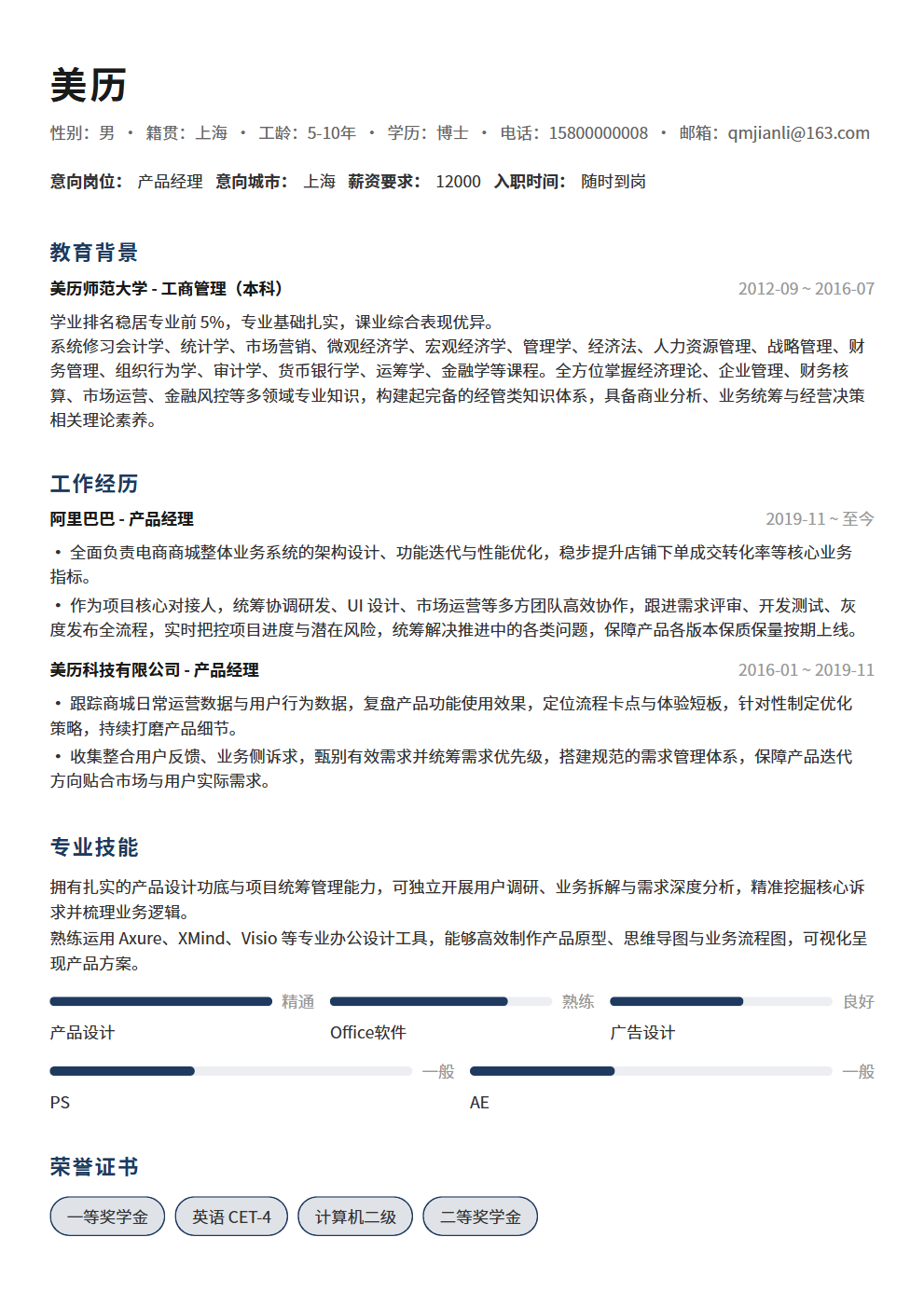
Whether you choose grad school or employment, an outstanding resume is your first calling card. BeautyResume Editor provides professional templates and smart optimization to help you precisely present your internship experience, project achievements, and academic accomplishments, making grad school interview panels or hiring managers see your highlights at a glance. There's no right or wrong choice, but your resume can be better — use BeautyResume to craft your personalized resume and win more possibilities for your next step!