5 Golden Rules of Salary Negotiation: How to Avoid Getting Shortchanged
Salary negotiation isn't haggling — it's a strategic value game. 5 golden rules — know the market, let the company bid first, use ranges not fixed numbers, think total package not just monthly pay, get it in writing — help you negotiate pay that matches your worth. Includes stage-specific strategies and practical scripts.
You get nervous when salary comes up in interviews — ask too high and you might lose the offer, ask too low and you'll resent it. Then you find out a colleague doing the same job makes significantly more, and you regret not negotiating harder. Salary negotiation isn't haggling — it's a strategic value game. Master these 5 golden rules and you'll never get shortchanged again.
1. Rule One: Know the Market — Don't Negotiate Blind
The first step in salary negotiation isn't "how much do I want" — it's "what is this position worth." If you don't know the market rate, you're walking into a casino blindfolded — winning or losing is pure luck.
- How to research the market: Job platform data — check salary ranges for the same role and city on LinkedIn, Glassdoor, and Indeed; use the median as your reference. Industry salary reports — major platforms publish annual salary benchmarking reports with more authoritative data. Recruiters and network — headhunters and industry peers can tell you real salary levels, since posted ranges tend to be on the low side. Cross-platform comparison — different platforms will show different numbers; averaging 3+ sources gives you a more accurate picture
- How to use market data correctly: Don't just look at the top end — when a posting says "$80K-$160K," the upper limit is usually bait; the lower end reflects reality. Focus on the median, not the average — averages get skewed by a few high earners; medians reflect the true midpoint. Factor in location — the same role can pay 30-50% more in a major metro versus a smaller city. Consider industry — a marketing manager in tech versus manufacturing can have vastly different pay scales
- Know your market positioning: Market data gives you the "range"; your positioning is the "point." The same title pays differently for 3 years versus 5 years of experience, big-brand versus startup background, management versus individual contributor track. You need to combine your experience, skills, and achievements to find your reasonable market position — not the highest, not the lowest, but the number that matches your current level
A practical tip: Before any salary conversation, spend at least 2 hours on market research. Build a spreadsheet listing salary ranges for the same role across 3+ platforms, cities, and experience requirements, then calculate the median. That number becomes your "negotiation anchor" — anything below it, you can confidently walk away.
2. Rule Two: Let the Company Bid First — Whoever Shows Their Hand First Loses Leverage
One of the most classic principles of salary negotiation: let the other side name a number first. Whoever reveals their hand first is at a disadvantage — if you state your expectation first, the company knows your floor; if they bid first, you learn their budget range.
- Why you should let the company bid first: Information asymmetry — the company knows their internal salary structure and budget; you don't. If you name a number below their budget, they'll happily accept, and you lose out without even knowing. If you name a number way above their budget, you might get eliminated immediately. Letting them bid first gives you crucial intelligence — their budget range
- How to handle "What's your salary expectation?": This is the most common trap question in interviews. Standard response strategy — "I'm more focused on role fit and growth opportunities. I trust your company will make a fair offer. Could you share the salary range for this position?" If the interviewer presses — "Based on my market research and experience level, my expectation is in the range of $X to $Y." Note: the top of this range should be about 1.2x your actual target, leaving room for negotiation
- Special case: When you should bid first: When you're very confident about your market value and that number is significantly above what they'd likely offer — bidding first can "anchor" the negotiation range around your number. But this strategy carries risk — if you misjudge, you could be out of the running immediately. For most people, letting the other side bid first is the safer play
A key principle: Salary negotiation isn't a test — you don't need to answer immediately. When asked about salary expectations, it's okay to buy time — "I'd like to understand the role's responsibilities and team dynamics better before giving a realistic expectation. Could you share the salary range for this position?" A reasonable pause isn't avoidance — it's professionalism.
3. Rule Three: Use Ranges, Not Fixed Numbers — Leave Yourself Negotiation Room
Saying "I expect $8,000 per month" versus "I expect $7,500 to $9,000 per month" — seems similar, but the difference is enormous. A fixed number is a "floor"; a range is a "zone." Once you state a fixed number, you can only negotiate up; any movement down feels like a concession. A range gives you room to maneuver in both directions.
- How to set your range: The floor is your "minimum acceptable number" — below this, you won't accept the offer. The ceiling should be 1.2-1.3x the floor — this should be your "ideal but reasonable" number, not fantasyland. The midpoint is your "target" — the number you genuinely want to land at, and the direction you steer negotiations toward
- How to express your range correctly: Don't say "$8K-$12K" — too wide a range signals you don't know your own value and gives the other side room to lowball. A reasonable range should be within 30% — e.g., "$8K-$10K." Always add a qualifier — "Based on my experience and capabilities, my salary expectation is in the range of $8K to $10K, and I'm open to discussing specifics based on the role's responsibilities and benefits." The qualifier says: this range isn't set in stone, but don't be unreasonable
- Practical range negotiation tactics: When they offer the bottom of your range, don't just accept — "I understand that range, but given my X experience and Y capabilities, I believe closer to the upper end would be more appropriate." When they offer the top of your range, you can accept but confirm other terms — "I can work with that number, but I'd like to clarify the performance bonus and annual bonus structure." When they go below your floor, walk away — "That number is below my expectation, and I may need to reconsider."
A practical tip: Never state your actual "minimum acceptable number" as the floor of your range. The floor should be 10-15% above your true minimum — that way, even if they negotiate down to the floor of your range, you're still within your acceptable zone.
4. Rule Four: Think Total Package — Look Beyond Monthly Salary
Many people fixate on monthly salary — $5K versus $6K feels like night and day. But compensation isn't just monthly pay. There's the annual bonus, stock options, retirement contribution base, supplemental insurance, meal and transportation allowances, flexible working arrangements, training budgets, and paid time off — combined, these can outweigh a $1K monthly difference by a huge margin.
- Components of total compensation: Fixed income — monthly salary × 12 months, the most visible part. Variable income — annual bonus (typically 1-6 months), quarterly bonuses, project bonuses, performance bonuses. Long-term incentives — stock options, restricted stock units (RSUs), common at tech companies and large corporations. Benefits — retirement contribution base and matching rate (a base that's twice as high means significantly more in retirement savings), supplemental health insurance, meal allowance, transportation allowance, phone allowance, housing subsidy. Hidden benefits — flexible hours, remote work options, PTO days, training budget, internal transfer opportunities
- Why total package thinking matters: $6K/month with a 1-month bonus and minimum retirement contributions versus $5K/month with a 4-month bonus and maximum retirement contributions — the latter could mean $10K+ more in annual income. Stock options can't be cashed immediately, but if the company goes public, they could be worth a fortune. Flexible hours and remote work aren't cash, but the time and money saved on commuting are very real
- How to calculate total compensation: Annual total package = monthly salary × 12 + annual bonus + allowances × 12 + employer retirement contributions + stock options (valued at the latest round's valuation). Use this formula to compare different offers — you might find that the offer with the lower monthly salary actually has a higher total package. You can also negotiate on total package terms — "I can be flexible on monthly salary, but I'd like the annual bonus guaranteed at 3+ months."
A key principle: Monthly salary is just one part of the total package. Don't pass up a better total package over a few hundred dollars difference in monthly pay. Conversely, don't be seduced by a "high total package" — examine how much is guaranteed versus uncertain. Monthly salary is guaranteed; annual bonuses may not be; stock options are even less certain. Guaranteed money is worth more than uncertain money.
5. Rule Five: Get It in Writing — Verbal Promises Don't Count
No matter how well the negotiation goes, without written confirmation it's all meaningless. "We'll adjust your salary after you join," "Annual bonus is typically 3-6 months," "Stock options are coming" — these verbal promises can morph into "company policy changes," "revenue was down this year," or "options are still being planned" once you're on board. The final step in salary negotiation — and the most overlooked — is getting everything in writing.
- What must be confirmed in writing: Monthly salary and structure — base salary, performance pay, specific allowance amounts and payment schedules. Annual bonus — is there a guaranteed minimum, what is it tied to, when is it paid. Stock options — quantity, strike price, vesting schedule. Probation period — duration, salary discount during probation (legally no less than 80% in most jurisdictions). Salary review mechanism — is there an annual review, what are the criteria and process
- How to confirm: The offer letter is the most basic written confirmation — review every item carefully after receiving it, ensuring it matches what was discussed in interviews. If verbal promises aren't in the offer — immediately confirm with HR: "During the interview, X was mentioned — can you confirm if that's included in the offer?" If HR says "that's not in the offer, but it'll definitely happen" — that's a red flag. Promises not written into the offer aren't legally binding
- Post-onboarding confirmation: Confirm salary terms in your employment contract match the offer letter immediately after joining. If they don't match — raise it immediately, don't "just start working and see." Verify retirement contribution bases — many companies promise high salaries but contribute at the minimum base, which directly affects your retirement savings. Confirm payroll dates and methods — when is payday each month, are there delays
A practical tip: After receiving an offer, don't rush to reply "accepted." Take 24 hours to carefully read every clause and compare it against everything discussed during interviews. If anything is inconsistent, send an email to confirm — email is written evidence, far more effective than verbal confirmation.
6. Stage-Specific Negotiation Strategies: Different Stages, Different Plays
Salary negotiation isn't just a one-time event at hiring — job changes, internal raises, promotions, and probation-to-permanent transitions each require different strategies.
- Fresh graduate negotiation: New grads have the least leverage, but it's not zero. Key strategies — use internship experience and project work to prove you're on par with someone who has 1-2 years of experience; research what alumni from your school and program are earning as a benchmark; don't skip negotiation just because it's your "first job" — starting salary determines your salary base for years to come, and a 10% difference at the start can compound to 20%+ after 5 years
- Job-hopping negotiation: Changing jobs is the biggest opportunity for salary growth, typically allowing 20-30% increases. Key strategies — don't negotiate based on your current salary; use market rates as your benchmark; if asked about current salary, say "I'm more focused on what this position offers"; if you must disclose current pay, ask for at least a 30% increase — job changes carry risk, and you deserve a risk premium
- Internal raise negotiation: Internal raises are the hardest because companies have salary band constraints. Key strategies — let results speak; prepare a detailed achievement list that quantifies your contributions; understand the company's review cycle and criteria, and start preparing 1-2 months before the review window; if your raise is denied, don't sulk — politely express "I understand the market rate for this role is X% above my current salary, and I hope the company can consider an adjustment"
- Promotion negotiation: Promotions usually come with raises, but the increase may not be ideal. Key strategies — research the new role's salary range before the promotion, don't wait until after; the logic isn't "I got promoted so I deserve more" but "my responsibilities and capabilities have reached the new level, and my compensation should match"
A key principle: Regardless of the stage, the core logic of salary negotiation is always "value equivalence" — not "how much I want" but "how much value I create, and what that value is worth." Speaking in terms of value is far more powerful than speaking in terms of need.
7. Conclusion: Negotiating Salary Is Professionalism, Not Greed
The 5 golden rules of salary negotiation — know the market (don't negotiate blind), let the company bid first (whoever shows their hand first loses leverage), use ranges not fixed numbers (leave yourself room), think total package (look beyond monthly salary), and get it in writing (verbal promises don't count) — all fundamentally shift negotiation from "gut feeling" to "strategy." Stage-specific strategies — fresh graduates prove with capability, job-hoppers benchmark against the market, internal raises speak with results, promotions match with value — help you negotiate pay that matches your worth at every career stage. Remember: negotiating salary isn't greed — it's professionalism. Your salary affects not just current income but your future salary base and growth trajectory. One good salary negotiation could earn you tens of thousands more over the next five years.
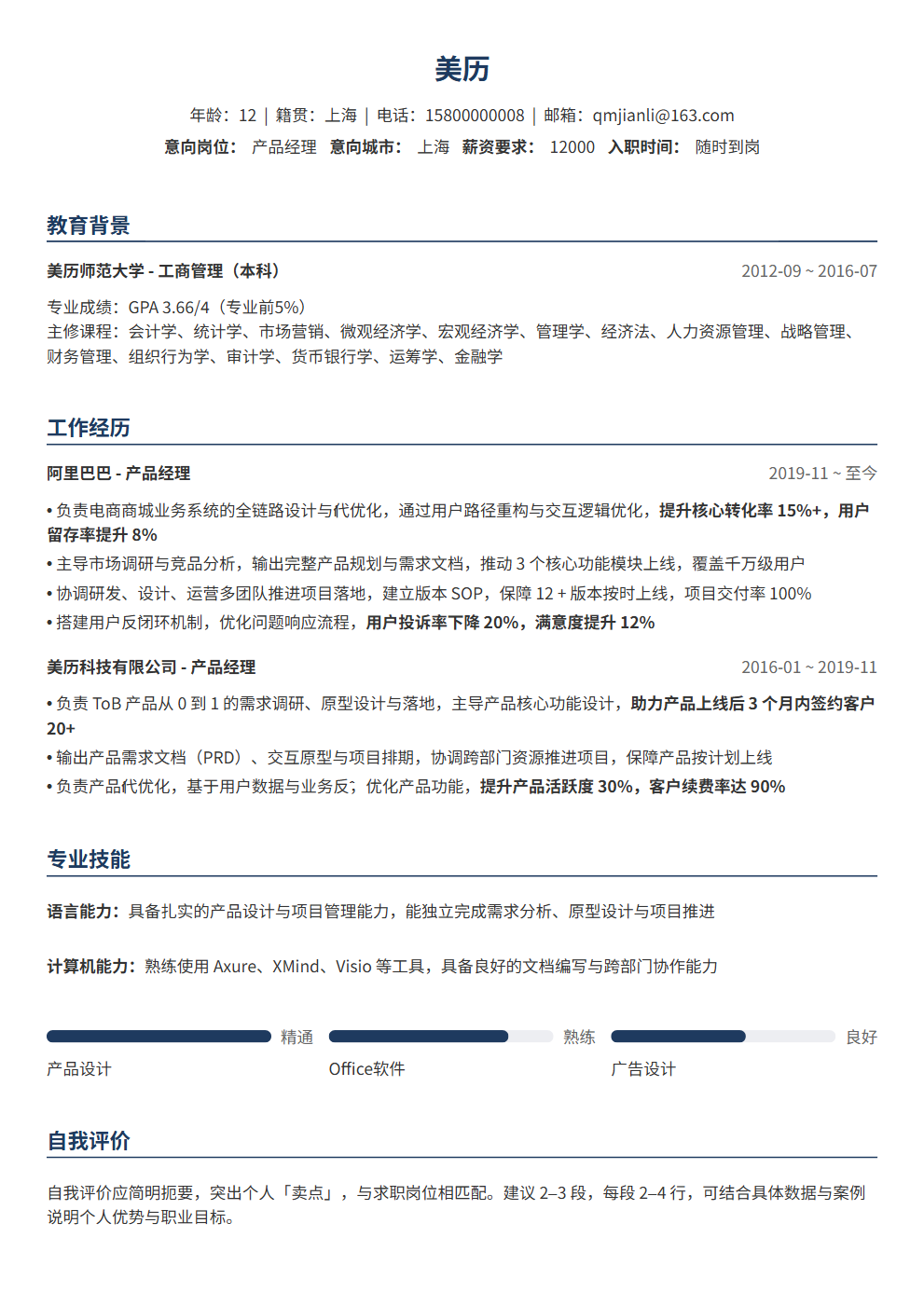
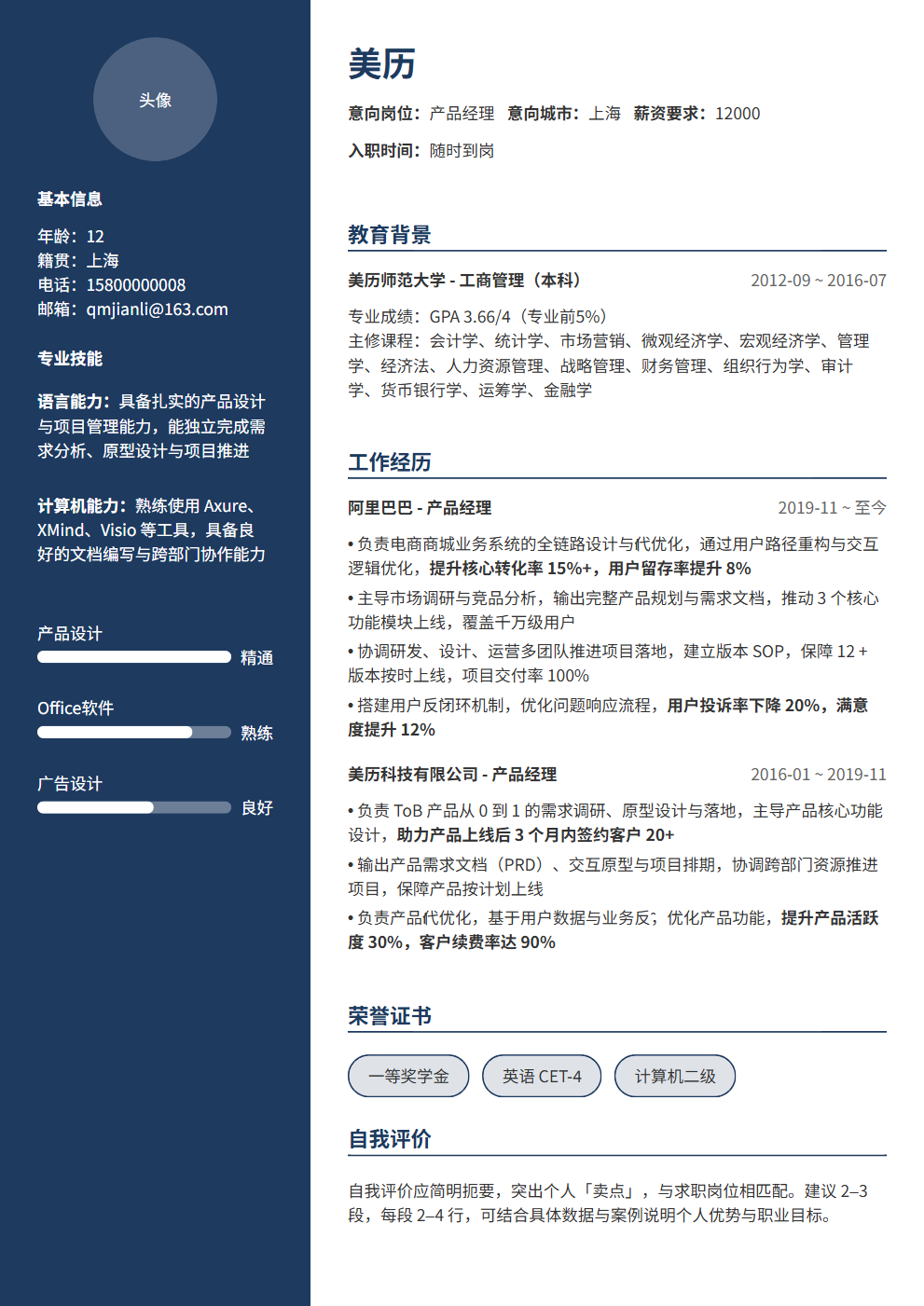
The prerequisite for salary negotiation is knowing your value — and your resume is the best vehicle for showcasing it. BeautyResume Editor provides professional templates and smart optimization to help you quantify your professional value with data and achievements, giving your salary negotiation a solid foundation. Negotiating salary isn't about asking for money — it's about letting your results speak. Use BeautyResume to craft a resume that makes HR sit up and take notice, and shift your salary negotiation from "begging" to "choosing"!