From Resume Writing to Salary Negotiation: 8 Scenarios Where AI Handles Your Entire Job Search
Every step of job hunting is time-consuming? 8 AI application scenarios cover the entire job search process — from analyzing job descriptions, optimizing resume wording, mock interviews, predicting interview questions, company research, salary analysis, writing thank-you notes to evaluating offers, with specific methods for each scenario to maximize your job search efficiency with AI.
Have you ever calculated how much time a complete job search takes? Writing your resume: 3 days. Revising it: 2 days. Submitting applications: 1 day. Waiting for replies: 3 days. Preparing for interviews: 2 days. The interview itself: 1 day. Waiting for results: 3 days. One position takes at least two weeks from start to finish, and you typically need to apply to 10-20 positions simultaneously. That makes job hunting practically a full-time job. But it's 2026 — are you still doing everything manually? AI can now help you through every stage of the job search process, from analyzing job descriptions to evaluating offers. Here are 8 scenarios where AI can save you hours or even days.
Scenario 1: Use AI to Analyze Job Descriptions — Understand What HR Really Wants in 3 Minutes
Many job seekers don't carefully read JDs before applying, or they read them but miss the key points. JDs hide HR's real needs — which requirements are mandatory, which are nice-to-haves, and which keywords must appear in your resume. AI can help you quickly break down a JD and extract the core information.
- How to do it: Copy the full JD text to AI with the prompt "Please analyze this position's core requirements, bonus qualifications, keywords, and tell me which experiences I should highlight in my resume." AI will give you a structured analysis in 30 seconds
- Advanced approach: Feed 3-5 similar JDs to AI simultaneously and ask it to summarize the common requirements and differentiators. This way you can adapt your resume from multiple angles with a single base document
- Real impact: Instead of spending 30 minutes reading a JD word by word and manually highlighting keywords, you get a clear requirements checklist in 3 minutes. More importantly, AI can spot implicit requirements you might overlook — like "cross-department collaboration experience" in the JD that you previously thought was irrelevant
- Caveat: AI analyzes JDs based on text logic and can't replace your judgment about company culture. If a JD is vague or misleading, AI's analysis will also be off, so always combine AI insights with your own industry knowledge
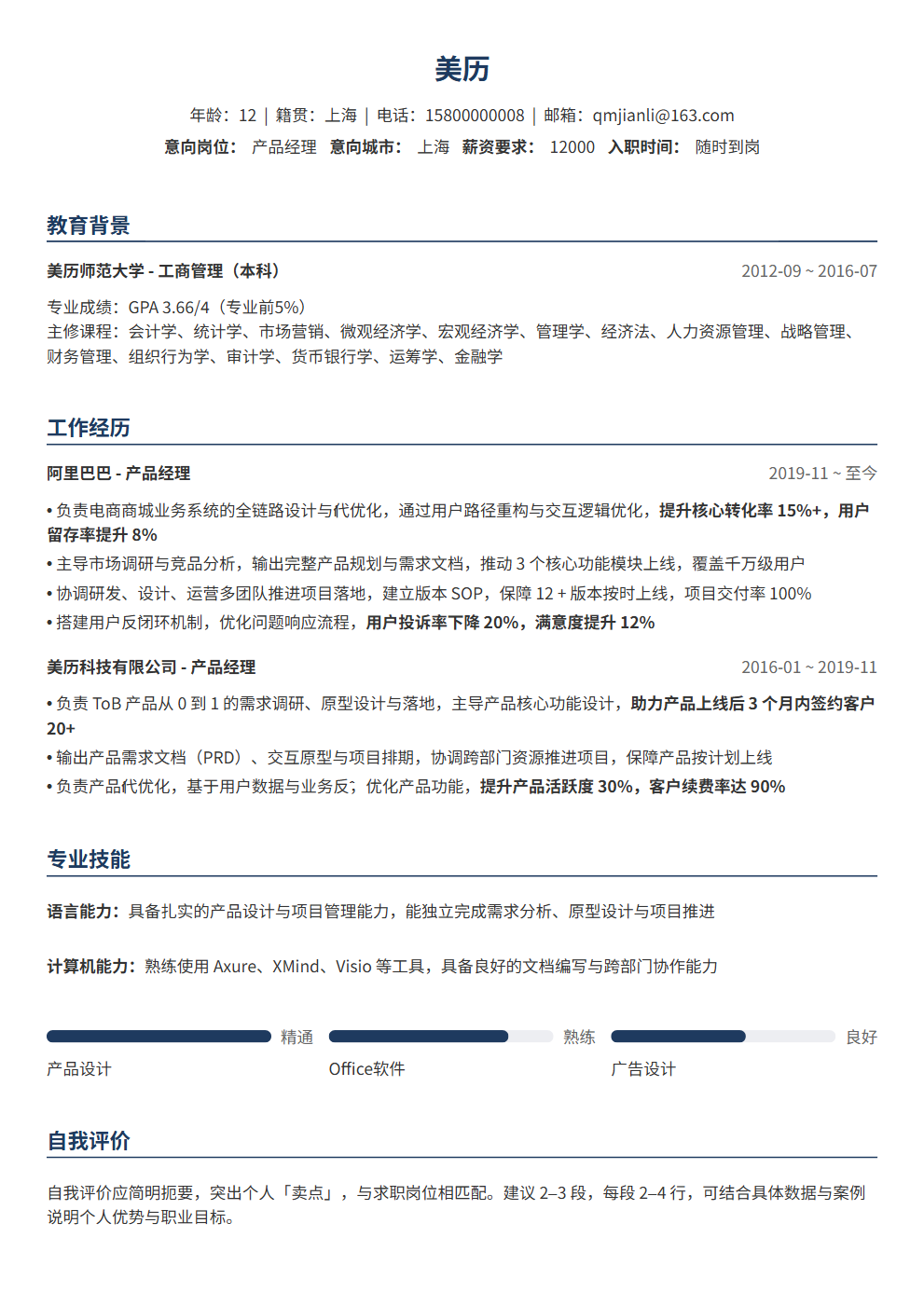
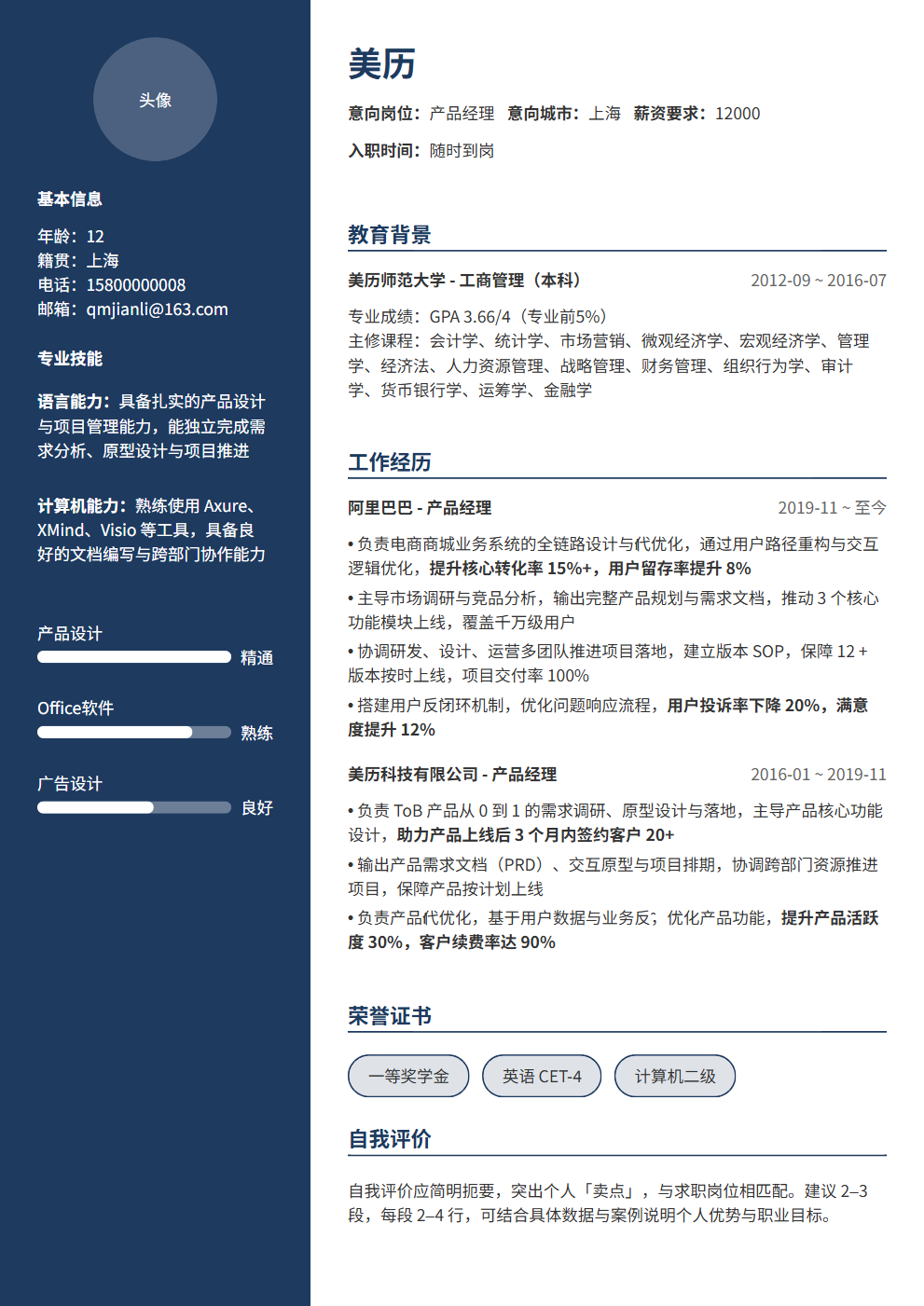
Scenario 2: Use AI to Optimize Resume Wording — Turn "Did Things" into "Delivered Results"
90% of resume problems aren't lack of experience — they're weak wording. "Responsible for project management" versus "Led an 8-person team to deliver 3 key projects, reducing delivery cycle by 20%" — which one impresses HR more? The answer is obvious. AI excels at upgrading bland descriptions into impactful statements.
- How to do it: Copy each experience from your resume to AI with the prompt "Please optimize the following resume description using the STAR method, adding quantitative data and results orientation while keeping it concise and professional." AI will transform "Responsible for user operations" into "Led user growth strategy, adding 20,000+ new registered users within 3 months, increasing active users by 35%"
- Advanced approach: Have AI optimize your wording based on the target position's JD keywords. For example, if the JD emphasizes "data-driven," AI will change "made decisions based on experience" to "developed strategies based on data analysis, improving decision accuracy to 90%"
- Real impact: After AI optimization, your resume's readability improves dramatically for HR. It's not fabrication — it's presenting achievements you already have but haven't expressed well in a more professional way
- Caveat: AI-optimized wording must be based on your real experience. If AI writes "increased by 35%" but you don't have that data, that's fabrication. Always verify that every optimized description is truthful
Scenario 3: Use AI for Mock Interviews — Build Interview Muscle Memory at Home
What's the biggest fear in interviews? Not knowing the answer — it's being so nervous your mind goes blank. Mock interviews are the best solution for nervousness, but asking friends isn't professional enough and hiring a coach is too expensive. AI mock interviews solve this perfectly — they're free, available anytime, and provide professional feedback.
- How to do it: Tell AI the position and company you're interviewing for with the prompt "Please act as the interviewer for this position and conduct a 30-minute mock interview with me. Ask one question at a time, wait for my answer, then ask the next. Provide evaluation and improvement suggestions at the end"
- Advanced approach: Have AI simulate different interview types — behavioral interviews (STAR method), technical interviews (domain questions), stress interviews (tricky questions), and group interviews (multiple roles). Each type requires different strategies, so practicing multiple types prepares you for anything
- Real impact: After 5-10 AI mock interviews, you'll notice you're significantly less nervous in real interviews. Because you've practiced answers to common questions until they become "muscle memory," you can express yourself more fluently during the actual interview
- Caveat: AI mock interview feedback is based on general standards and can't fully replace a real interviewer's perspective. Combine AI practice with feedback from professional friends for best results
Scenario 4: Use AI to Predict Interview Questions — Prepare 80% of Answers in Advance
Interview questions may seem infinitely varied, but 80% are predictable. AI can predict the most likely questions based on your resume and target position, helping you prepare answer frameworks in advance.
- How to do it: Send your resume and target JD to AI with the prompt "Based on my resume and this position's requirements, predict the 15 most likely interview questions, categorized into behavioral, technical, and motivational types, and provide an answer framework for each"
- Advanced approach: Have AI predict company-specific questions. For big tech, predict system design questions; for startups, predict "how would you build from zero to one" questions; for multinational companies, predict English behavioral interview questions
- Real impact: Preparing answers for 80% of interview questions in advance means you only need to handle 20% unexpected ones during the interview. Your mental pressure drops significantly, and your performance becomes more consistent
- Caveat: Predicted questions are only "most likely," not "guaranteed." Don't memorize answers word for word — understand the underlying assessment points and respond flexibly
Scenario 5: Use AI for Company Research — Show Interviewers You "Did Your Homework"
There's a free-point question in interviews: "What do you know about our company?" But many candidates answer poorly because they don't have time for research. AI can help you complete a high-quality company research report in 10 minutes.
- How to do it: Tell AI the target company name with the prompt "Please research this company, including: main business and business model, recent news and developments, competitors and industry position, company culture and values, and how this position fits within the company. Output in a structured format"
- Advanced approach: Have AI find natural opportunities to demonstrate your research during the interview. For example, "Based on my understanding of your company, you've recently been expanding into XX business, which aligns well with my previous project experience" — this kind of statement will catch the interviewer's attention
- Real impact: Interviewers dread candidates who know nothing about the company and position. Advance research not only helps you answer "what do you know about us" questions but also naturally demonstrates your sincerity and professionalism throughout the interview
- Caveat: AI's research information may not be up-to-date, especially regarding recent news and developments. Always cross-verify key information to avoid stating outdated or incorrect facts during the interview
Scenario 6: Use AI to Analyze Salary Benchmarks — Negotiate with Confidence and Data
What's the biggest fear in salary negotiation? Asking too high and getting rejected, or asking too low and shortchanging yourself. Many people negotiate based purely on gut feeling with zero data support. AI can help you quickly understand the salary landscape for your target position, giving you solid ground for negotiation.
- How to do it: Tell AI the target position, city, and your years of experience with the prompt "Please analyze the salary range for this position in XX city, including the 25th, 50th, and 75th percentiles, and the key factors that influence salary"
- Advanced approach: Have AI help you develop a salary negotiation strategy. Tell AI your expected salary and floor, and ask it to analyze the negotiation space, prepare talking points, and anticipate HR's possible responses with your counter-arguments
- Real impact: With salary data backing you up, you won't feel uncertain during negotiations. "Based on my research, the market median for this position with 3-5 years of experience is XX. Given my experience in XX, my expected salary is XX" — this is far more powerful than "I want XX"
- Caveat: AI-provided salary data is estimated and may vary across sources. Cross-verify with multiple channels (job sites, recruiters, industry peers) rather than relying on a single AI data point
Scenario 7: Use AI to Write Thank-You Notes — Follow Up Within 24 Hours Without Missing a Beat
Sending a thank-you note after an interview is a plus, but many people either forget or don't know what to write. AI can help you write a polished thank-you note within 10 minutes of your interview ending.
- How to do it: After the interview, tell AI the key topics discussed with the prompt "Please help me write an interview thank-you note that includes: thanking the interviewer for their time, reaffirming my interest in the position, mentioning the XX topic we discussed (showing I was paying attention), and adding one highlight I didn't get to mention during the interview"
- Advanced approach: Have AI write different versions of thank-you notes for different interviewer roles. Write process-oriented notes for HR, technical notes for business interviewers, and strategic-vision notes for executives
- Real impact: A good thank-you note won't directly win you an offer, but it can tip the scales when the interviewer is on the fence. Especially when two candidates are equally strong, the one who sent a thank-you note often gets the edge
- Caveat: Keep thank-you notes concise — no more than 200 words. Don't ask about interview results in the note, and don't repeat resume content. Focus on expressing gratitude and reaffirming interest
Scenario 8: Use AI to Evaluate Offers — Look Beyond the Salary Number to See the Full Picture
Getting an offer isn't the finish line — evaluating it is the key. Many people decide based solely on the salary number, overlooking equity, benefits, growth potential, work intensity, and other critical factors. AI can help you do a comprehensive offer evaluation.
- How to do it: Share the offer details with AI (salary, equity, benefits, level, reporting line, team size, etc.) with the prompt "Please help me comprehensively evaluate this offer, including: where the salary falls in the market percentile, estimated total compensation value, growth potential assessment, potential risk warnings, and your recommendation"
- Advanced approach: If you have multiple offers, have AI do a comparative analysis. List all offer details and ask AI to score and compare them across dimensions like compensation, growth, stability, and cultural fit
- Real impact: AI can help you spot details you might overlook — like "the salary is 20% higher, but there's severe overtime with no overtime pay, so the effective hourly rate might actually be lower." This kind of analysis you might not think of on your own
- Caveat: AI's evaluation is based on general logic and can't replace your personal judgment. For example, whether you value growth or stability more — AI doesn't know, only you do. AI's advice is a reference; the decision is yours
3 Important Notes: AI Is a Tool, Not a Substitute
AI can boost efficiency across the entire job search process, but there are 3 bottom lines you must maintain.
- First, AI-optimized content must be based on real experience. AI can help you turn "did things" into "delivered results," but it cannot turn "things you didn't do" into "things you did." Getting caught fabricating your resume has consequences a hundred times worse than having a mediocre one
- Second, AI-provided information needs cross-verification. Whether it's salary data, company information, or interview predictions, AI can be wrong. Treat AI as an assistant, not an authority. Always verify critical information through multiple channels
- Third, AI cannot replace your independent thinking. AI can help you analyze, optimize, and simulate, but you make the final decisions. Don't accept an offer just because AI says "this offer looks good," and don't give up on a position just because AI says "it doesn't match." You're the only one responsible for your career development
Conclusion: AI Is Your Job Search Accelerator, Not Autopilot
From analyzing JDs to evaluating offers, AI can dramatically boost your efficiency across all 8 scenarios of the job search process — analyze a JD in 3 minutes, optimize wording in 1 minute, do mock interviews anytime, predict questions in advance, complete research in 10 minutes, negotiate salary with data, write thank-you notes in 10 minutes, and evaluate offers comprehensively. But remember: AI is an accelerator, not autopilot. It helps you run faster, but you must hold the steering wheel. Use AI for efficiency, use your brain for decisions, and use authenticity to impress interviewers — that's the right approach to job hunting in 2026. Use BeautyResume resume editor to give your resume a head start from day one — professional templates, smart formatting, one-click export. AI-powered efficiency starts with writing your resume.