First 90 Days at a New Job: 5 Things That Determine Whether You'll Survive
The first 90 days at a new job are the golden adaptation period. 5 things (quickly understanding the business, building key relationships, proactively reporting work, finding small wins, managing your manager's expectations) determine whether you'll survive. Plus resume optimization tips for new hires.
Day one you're full of confidence; three months later you're more confused than ever. That's the reality for too many new hires. The first 90 days aren't an "adaptation period" — they're a "tone-setting period." Get these 5 things wrong and you'll spend the rest of the year playing catch-up. Get them right and you'll outpace 80% of your peers from the starting line.
1. Quickly Understand the Business: Don't Wait to Be Taught — Figure It Out Yourself
The biggest mistake new hires make is "waiting for training." The company hired you to work, not to attend classes. In your first week, you must figure out three things: how the company makes money, what your department does, and what problem your role solves. Without clarity on these three, everything you do afterward is just groping in the dark.
- Understand the business model: What are the company's main revenue streams? Who are the core customers? Who are the competitors? You can find this information on the company website, financial reports, and industry analyses. Spend half a day researching and you'll understand the company better than 90% of new hires
- Understand your department's positioning: What role does your department play in the company? Is it a profit center or a cost center? What are the department's core KPIs? Ask your direct manager directly — "I'd like to quickly understand our department's core objectives and key priorities. Could you walk me through them?" No manager refuses a new hire who proactively seeks to understand the business
- Understand your role's value: Why does your position exist? If it disappeared, what would the company lose? Answer this question and you'll know where to focus your energy. Many new hires work hard but on "unimportant things" — not because they're lazy, but because they don't know what matters
A practical method: In your first week, use the "3 Understandings" framework to create a mind map — business model, department positioning, role value. This map becomes your "cognitive compass" at the new company. All subsequent learning and work should revolve around it.
2. Build Key Relationships: It's Not Networking — It's Figuring Out Who Calls the Shots
The easiest mistake new hires make is only socializing with peers. Chatting with fellow newcomers is comfortable, but the people who can actually help you establish yourself are the ones in key positions. In your first 90 days, you must figure out three things: who are your key stakeholders, who is your information hub, and who are your potential allies.
- Key stakeholders: Who uses your work output? Who evaluates it? Who makes decisions about it? These are your key stakeholders. In your first week, proactively invite them for coffee or lunch to understand their needs and expectations. Remember: in the workplace, being visible matters more than being good — if the right people don't know about your work, it's as if you never did it
- Information hub: Every team has someone who "knows everything" — not the manager, but someone who controls the most information flow. This person might be in admin, a veteran employee, or a cross-functional coordinator. Find this person, build a good relationship, and you'll have the team's "information radar"
- Potential allies: Whose work is closely related to yours? Who shares similar goals? Who might become a future collaborator? These are your potential allies. Don't wait until you need help to build relationships — start cultivating them when you don't need anything
A practical tip: In your first 30 days, have 1-on-1 conversations with at least 10 key people. Keep each conversation under 30 minutes with three core questions — "What are your work priorities?", "How can we collaborate better?", "Is there anything I can help you with?" Simple and direct beats any networking technique.
3. Proactively Report Your Work: Don't Wait to Be Asked — Speak Up First
One of the most common mistakes new hires make is "heads-down work, waiting for the boss to ask." From your manager's perspective, no update means no progress. In your first 90 days, you must develop the habit of proactive reporting — not to show off, but to give your manager peace of mind.
- Daily/weekly reports aren't bureaucracy — they're your "visibility": Many new hires think writing daily and weekly reports is pointless red tape. But think about it from the other side — your manager oversees many people. If you don't proactively report, how do they know what you're doing? The core of a report isn't "what I did today" but "what I advanced today, what problems I encountered, and what I plan to do tomorrow"
- Report problems immediately — don't let them grow: New hires' biggest fear is "made a mistake, too scared to say anything, waited until it got worse." What managers hate most isn't that you made a mistake — it's that they didn't know about it. Report problems immediately with your preliminary solution — "Boss, there's an issue with this task. My initial thought is X — does that work?" This kind of report won't make your manager angry; it'll make them think you're reliable
- Reporting needs rhythm: Not everything needs reporting, and not everything should wait. Simple things: mention when done. Complex things: sync progress along the way. Important things: communicate your approach upfront. Mastering the rhythm of reporting is the first required course for any new hire
A key principle: The essence of reporting is "reducing your manager's uncertainty." When a manager assigns you a task, their biggest anxiety is "I don't know how it's going." Every report you give eliminates that anxiety. The more at ease your manager is, the more room you have.
4. Find a Quick Win: Build Trust Through Small Victories
In your first 90 days, you don't need earth-shattering achievements, but you must secure at least one "small victory." The significance of a small victory isn't the result itself — it's proving to the team that you can deliver and you're reliable.
- What is a small victory: A small victory is "a visible result achieved in a short time with low cost." For example: organizing a document nobody wanted to touch, solving a small problem everyone complained about, or making an above-expected contribution to a project. Small victories don't need to be dramatic — they need to be visible
- How to find a small victory: In your first week, carefully observe what "small problems everyone complains about but nobody solves" exist in the team. These problems are usually your small victory opportunities — everyone complains, so the problem is real; nobody solves it, so the bar is low; everyone's aware of it, so solving it gets noticed
- Three criteria for small victories: First, short cycle — ideally completed within 1-2 weeks, not a 3-month project. Second, high visibility — the whole team should feel the result, not just you. Third, low risk — don't pick something you might fail at. New hires can't afford failures
A practical tip: In your second week, find one thing "nobody wants to do but would be valuable if done" and finish it in a week. This "small victory" becomes your first trust anchor in the team.
5. Manage Your Manager's Expectations: Do What You Say, and Say It Early If You Can't
The most fatal mistake new hires make is "agreeing to everything, then delivering on nothing." In your first 90 days, your core task isn't "making the manager happy" — it's "matching the manager's expectations to your actual capabilities." Manage expectations well, and even average performance feels satisfactory. Manage them poorly, and even great performance feels insufficient.
- Don't over-commit: When your manager asks "Can you finish this by Friday?" and you're unsure, don't say "No problem." Say "Let me assess and get back to you today." Over-committing means you can't deliver on Friday, and your manager's trust drops to zero. Better to say "I might need two extra days" upfront than to say "No problem" and break your word
- If you can't deliver, say so early: If you realize a task can't be completed on time, tell your manager immediately — don't wait until the deadline. Telling them early means "I've hit a roadblock and need your help or adjusted expectations." Telling them on the deadline means "I messed up." These are completely different in your manager's eyes
- Build trust through "commit-deliver" cycles: Every time you "do what you said" you accumulate trust. In your first 90 days, under-promise and over-deliver rather than the reverse. A new hire who "consistently delivers on time" is more reliable in a manager's eyes than one who "occasionally produces stunning work but is often late"
A key insight: The essence of expectation management is "consistency." Your manager isn't afraid of limited capability — they're afraid of unpredictability. Not knowing when you'll deliver, not knowing the quality of your output, not knowing whether you'll speak up about problems. Consistency is more valuable than occasional brilliance.
6. Conclusion: The First 90 Days Set the Tone — Everything After Is Acceleration
The first 90 days for a new hire aren't a "slow adaptation" buffer period — they're a "fast tone-setting" critical period. 5 things — quickly understanding the business (how the company makes money, what the department does, what problem your role solves), building key relationships (finding stakeholders, information hubs, and potential allies), proactively reporting work (giving your manager peace of mind, reducing uncertainty), finding quick wins (building trust through small victories), and managing your manager's expectations (maintaining consistency, doing what you say) — master these 5 things and you transform from "the new person" to "one of us," enabling everything after to accelerate. Remember: the first 90 days aren't about how much you can do — they're about how much trust you can build. Trust is the foundation of every workplace relationship.
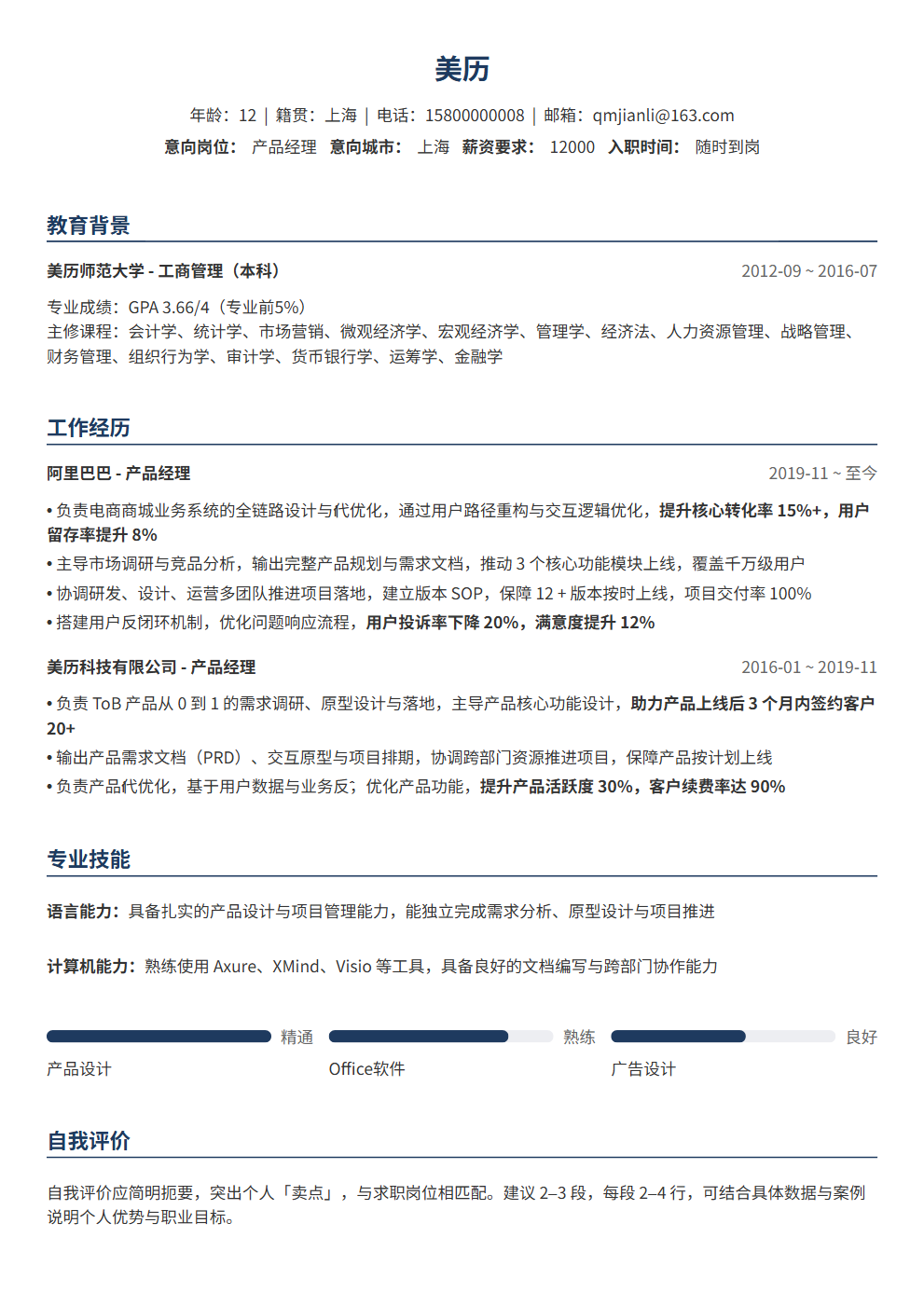
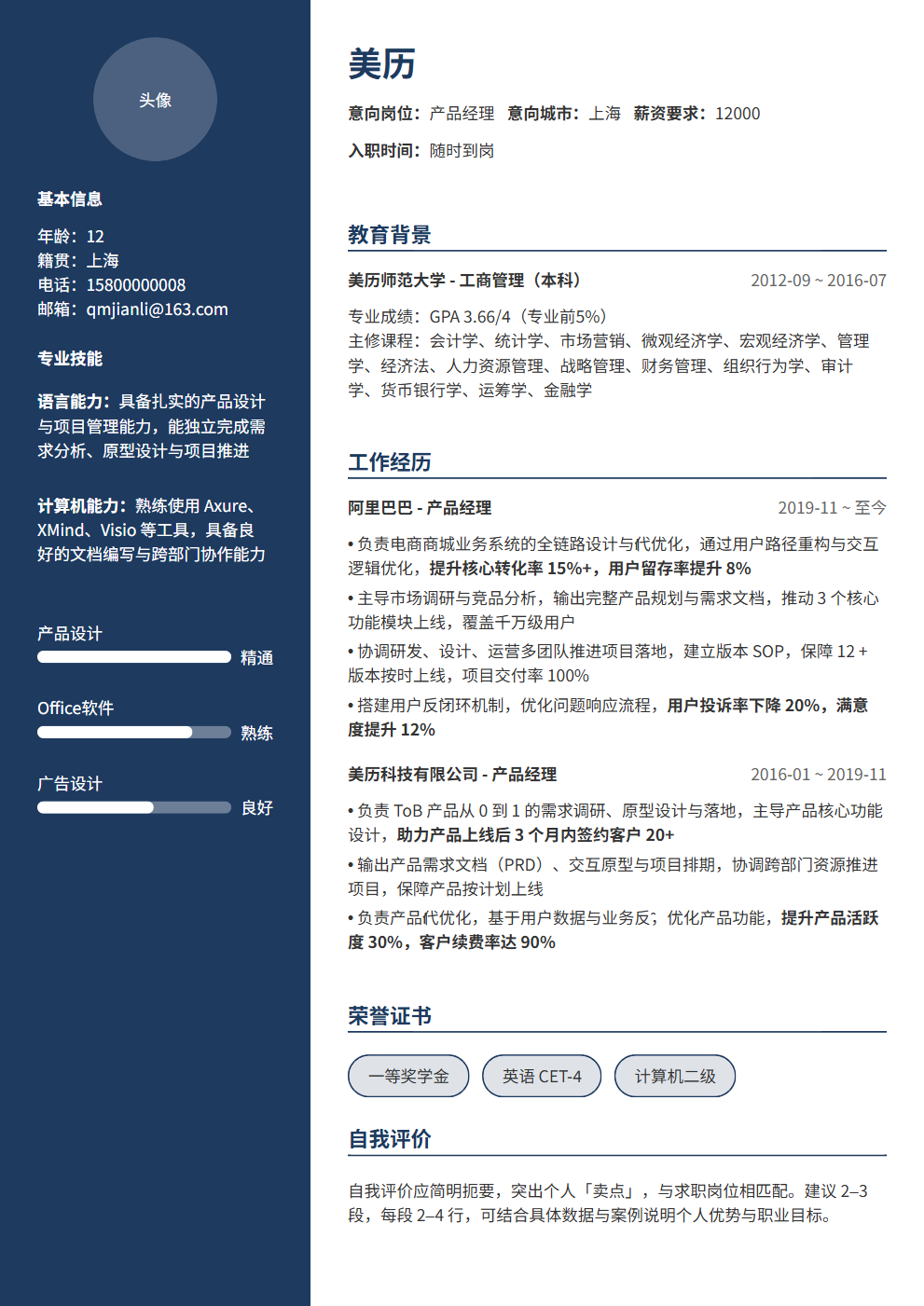
Your performance in the first 90 days begins the moment you start — and that starting point is your resume. BeautyResume Editor provides professional templates and smart optimization to help you present your best self during the job search. A great resume gets you in the door; the 90 days after get you established. From resume to workplace, BeautyResume walks every step with you!