Can You Really Not Find a Job Without AI? An AI Starter Checklist for Everyday Job Seekers
"You won't find a job if you don't know AI" — you've probably heard this countless times. But what's the truth?
"You won't find a job if you don't know AI" — you've probably heard this countless times. But what's the truth? Not knowing AI doesn't mean you can't find a job, but people who can use AI do have a competitive edge. Just like not knowing Excel ten years ago didn't prevent you from finding work, but those who knew Excel were simply more efficient and had more opportunities. AI is the same — it's not a monster coming to eliminate you, but a tool that can help you leap ahead. The question is, as an everyday job seeker, what AI skills do you actually need? Where should you start? How much is enough? Today I'm giving you a clear AI starter checklist so you can stop worrying, learn what you need, and steadily improve.
The Truth About AI Anxiety: Not Knowing AI Won't Cost You a Job, But the Gap Is Widening
Let's start with the conclusion: without AI skills, you can still find a job. Many traditional industries and roles don't require high AI proficiency — you can absolutely succeed through professional expertise and experience. But we must acknowledge one fact: people who use AI are pulling ahead. This shows up in three ways:
- Efficiency gap: People who use AI write reports twice as fast, analyze data twice as fast, and organize information twice as fast. The same workload takes them half a day while you need a full day.
- Opportunity gap: More and more job descriptions explicitly require "experience with AI tools" or "familiarity with AI applications." Without AI skills, you can't even meet the threshold for these positions.
- Salary gap: According to the latest 2026 salary report, job seekers with AI skills earn an average of 15%-25% more in the same role. That's not a small number.
So the right attitude is: don't panic, but don't be indifferent either. AI isn't a monster, but it's also not irrelevant to you. Treat it as a new tool and new skill — learn it as needed.
The AI Skills Checklist for Everyday Job Seekers
AI skills aren't a binary "know" or "don't know" — they exist on a gradient from basic to advanced. Choose the level that matches your role and career plan.
Basic Level: Using AI Conversation Tools
This is the minimum standard every job seeker should meet. AI conversation tools (like ChatGPT, Claude, and others) are like an always-online smart assistant that can help you with many daily tasks.
- Use AI to write emails and polish documents: Send your draft to AI and let it optimize your wording, adjust the tone, and check grammar. A professional email takes AI just 30 seconds to refine.
- Use AI to search for information and organize materials: Instead of scrolling through dozens of search engine pages, ask AI directly. It can quickly summarize information, extract key points, and provide comparative analysis, saving you significant time.
- Use AI to translate and rewrite content: Need to translate documents into another language? Need to convert colloquial text into formal writing? AI handles both quickly with quality far exceeding traditional translation tools.
- Use AI for brainstorming and expanding ideas: No inspiration for a proposal? Let AI list 10 directions. Not sure which to choose? Let AI analyze the pros and cons. AI doesn't replace your thinking — it opens up your thinking.
Intermediate Level: Using AI for Writing Assistance and Analysis
If you work in a role that involves extensive writing or data analysis (such as operations, marketing, product, or finance), intermediate skills can significantly boost your efficiency.
- Use AI to draft proposals and reports: Instead of starting from scratch, let AI generate a first draft based on your key points, then refine it. Writing efficiency improves by at least 50%.
- Use AI to analyze data and generate charts: Send your spreadsheet data to AI and let it identify trends, anomalies, and key insights, and even generate visualizations directly. Data analysis is no longer exclusive to data analysts.
- Use AI for competitive analysis and market research: Give AI an industry or product, and it will map out the competitive landscape, market trends, and user profiles. Research that used to take a week can be framed by AI in half a day.
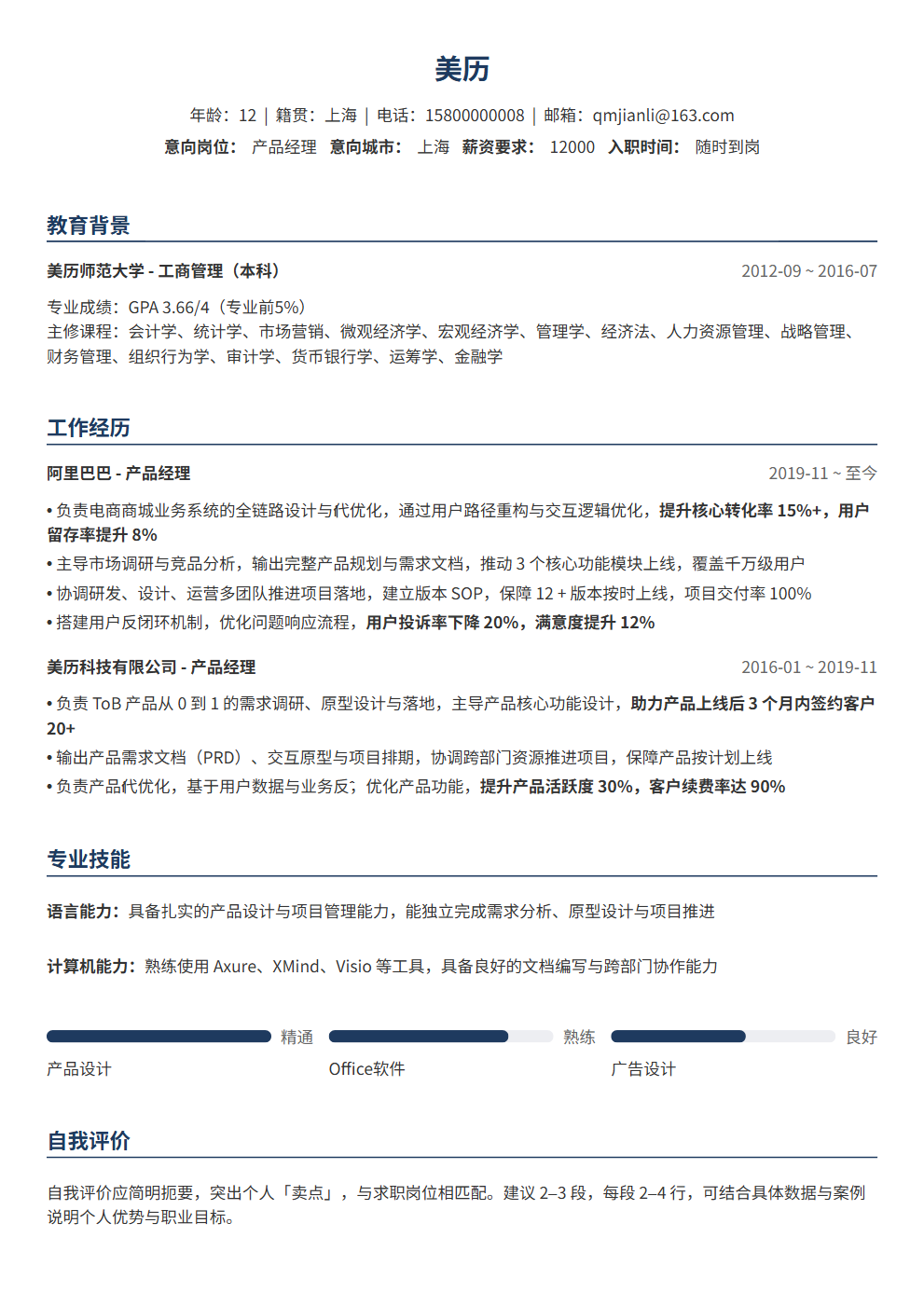
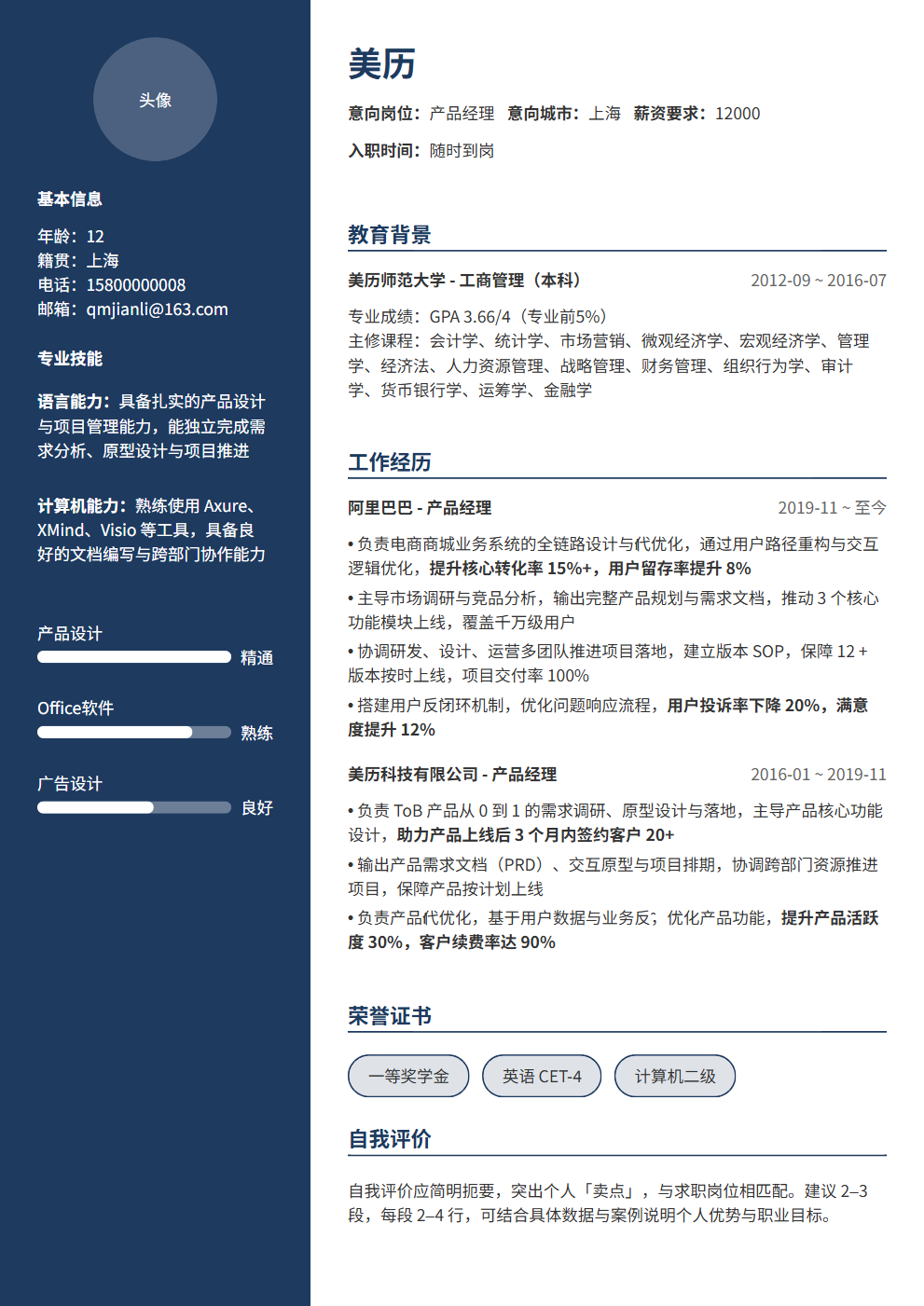
- Use AI to optimize your resume and cover letter: Send the JD and your resume to AI and let it identify match points and optimization directions. This is far more efficient than manually comparing against the JD line by line.
Advanced Level: Automating Workflows with AI
If you work in a technical role (such as development, data, or design) or want to build irreplaceable competitiveness in the workplace, advanced skills are worth the time investment.
- Use AI coding assistants: Tools like GitHub Copilot and Cursor can auto-generate code based on your comments, complete functions, and debug errors. Programming efficiency increases by 30%-50%.
- Use AI to build automated workflows: For example, use AI to automatically monitor data anomalies, generate daily reports, or respond to common customer questions. Hand repetitive work to AI so you can focus on high-value decisions.
- Use AI to train customized models: Fine-tune AI models for your business scenarios so they better understand your industry and needs. This isn't just for programmers — increasingly, low-code/no-code tools make this accessible to everyone.
- Use AI for deep content creation: Not having AI write a generic article, but using AI to assist with deep research, long-form reports, professional books, and other high-quality content creation.
AI Skill Focus by Role Type
Not every role requires every AI skill. Here are recommended AI skill focuses for different positions:
- Technical roles (development, data, algorithms): Focus on AI coding assistants and automated workflow building. AI is your productivity multiplier — not mastering it means giving up an efficiency advantage.
- Product/Operations roles: Focus on AI writing assistance and data analysis. Writing PRDs, conducting competitive analysis, reading data dashboards — AI can dramatically improve your efficiency.
- Marketing/Brand roles: Focus on AI content creation and visual generation. Writing copy, designing posters, editing videos — AI tools let one person do the work of three.
- Finance/Legal roles: Focus on AI document processing and information retrieval. Reviewing contracts, searching regulations, building reports — AI helps you quickly find key information from massive document collections.
- Admin/HR roles: Focus on AI conversation and process automation. Writing notices, scheduling, screening resumes — AI can automate tedious administrative work.
A Learning Path for AI Beginners
If you have zero AI experience, don't worry. Follow this path step by step, and you'll be up to speed in a month:
- Week 1: Sign up for an AI conversation tool account and use it to complete one small task daily — write an email, look up information, translate a document. Build the habit first and experience what AI can do for you.
- Week 2: Learn the basics of writing "prompts." AI output quality depends on your input quality. Learning to write clear prompts is the key to using AI efficiently. Core principle: tell AI who you are, what you want it to do, what format you want the output in, and any specific requirements.
- Week 3: Integrate AI into your daily work. When writing proposals, use AI to generate the first draft. When analyzing, use AI to organize data. When writing your resume, use AI to optimize content. Improve your AI skills through practice.
- Week 4: Based on your role's needs, learn 1-2 specialized AI tools. If you're a designer, learn AI image generation tools. If you're a developer, learn AI coding assistants. If you're in operations, learn AI data analysis tools.
3 Common Misconceptions About Learning AI
- Misconception 1: Thinking you need to learn programming to use AI. You absolutely don't. Today's AI tools use natural language interaction — you just converse with them in your language, no coding required.
- Misconception 2: Thinking AI can do everything. AI has strengths (text generation, information organization, data analysis) and weaknesses (tasks requiring deep judgment, interpersonal communication, creative breakthroughs). Use AI where it excels, rather than expecting it to be omnipotent.
- Misconception 3: Thinking learning AI takes a lot of time. Basic skills can be picked up in a week; intermediate skills in a month; advanced skills can be introduced in three months. The key is consistent use, not intensive cramming.
AI Won't Replace People — But People Who Use AI Will Replace Those Who Don't
This isn't a scare tactic — it's a reality that's already unfolding. In the 2026 workplace, AI has become a foundational tool, just like Excel and PowerPoint. Knowing Excel doesn't make you stand out, but not knowing it makes you unqualified for many roles. AI is the same — it won't instantly get you promoted or a raise, but not knowing AI will gradually put you behind in efficiency, opportunities, and salary.
So don't treat AI as an enemy, and don't mythologize it either. It's simply a tool — one that helps you work more efficiently. Learning to use it is a basic professional competency, just like learning Excel was a decade ago.
Starting today, spend 15 minutes a day using AI to complete one small task. After a month, you'll notice a clear improvement in your work efficiency and stronger job-seeking competitiveness. AI isn't here to steal your job — it's here to help you keep it.
Want to make your job search more efficient? Try BeautyResume — AI-powered smart resume optimization and one-click keyword matching to help your resume stand out from the crowd and land interview opportunities with ease.