Can HR Really Tell If Your Resume and Interview Answers Are AI-Generated? 3 Telltale Signs and 4 Optimization Methods
You used ChatGPT to write a resume — the wording is fluent, the logic is clear, and professional terminology rolls off effortlessly. It looks flawless.
You used ChatGPT to write a resume — the wording is fluent, the logic is clear, and professional terminology rolls off effortlessly. It looks flawless. But here's the thing: HR can probably tell it's AI-generated at a glance. It's not that HR has superpowers — it's that AI-generated content has a very distinct "flavor." In 2026, using AI to assist with job hunting isn't the problem; the problem is when your resume and interview answers look "AI-written." Here are 3 telltale signs and 4 optimization methods to help you use AI without being "exposed" by it.
Sign 1: Overly Perfect Wording — Like a Textbook, Not a Human
The biggest issue with AI-generated text is that it's "too perfect." Every sentence is structurally complete, logically rigorous, and precisely worded — but that's exactly not how real people write resumes. Real humans writing resumes use conversational expressions, varying sentence lengths, occasional repetition, and even slight grammatical imperfections. AI-generated content, on the other hand, is as neat as a textbook, which paradoxically reveals its "non-human" nature.
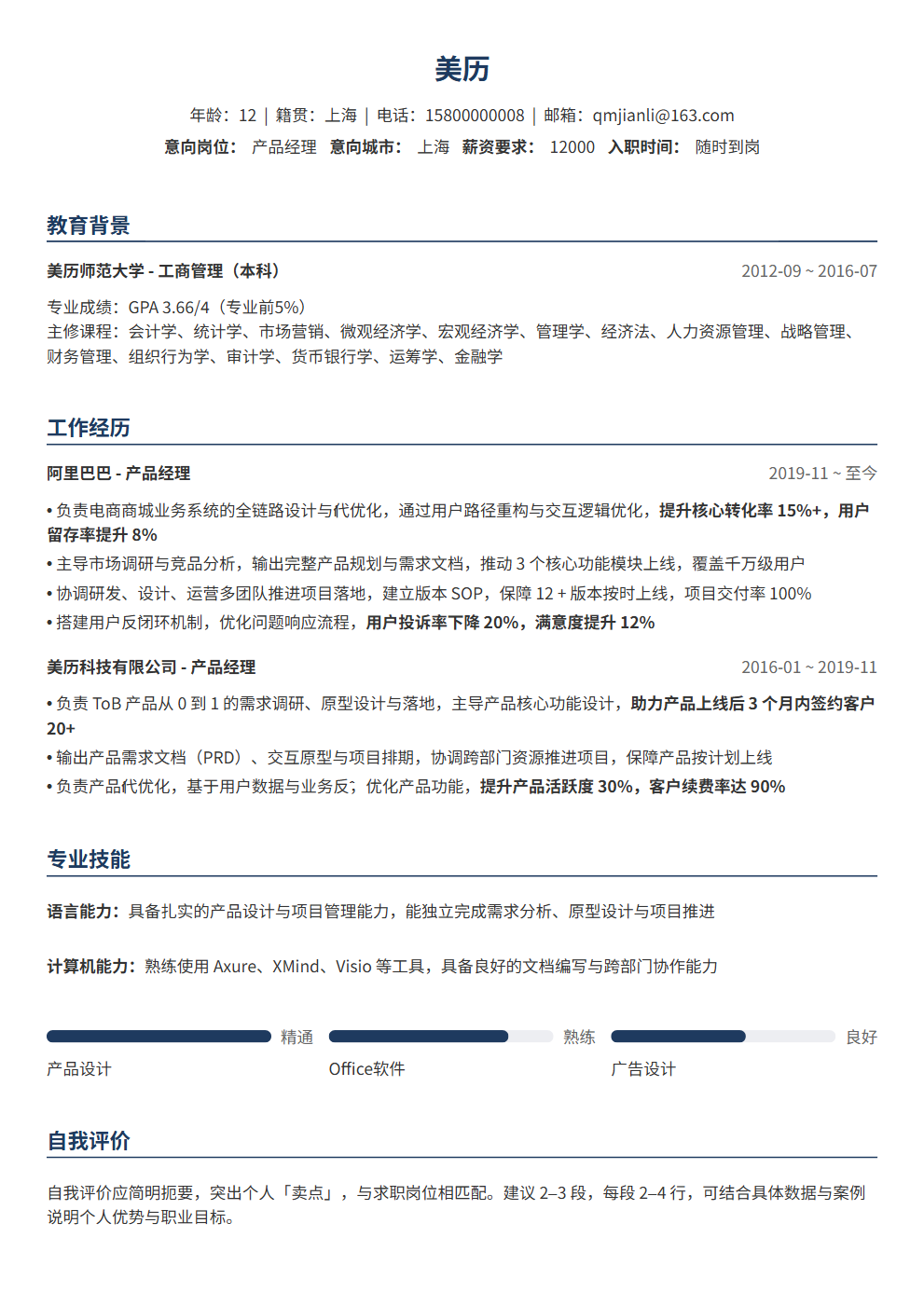
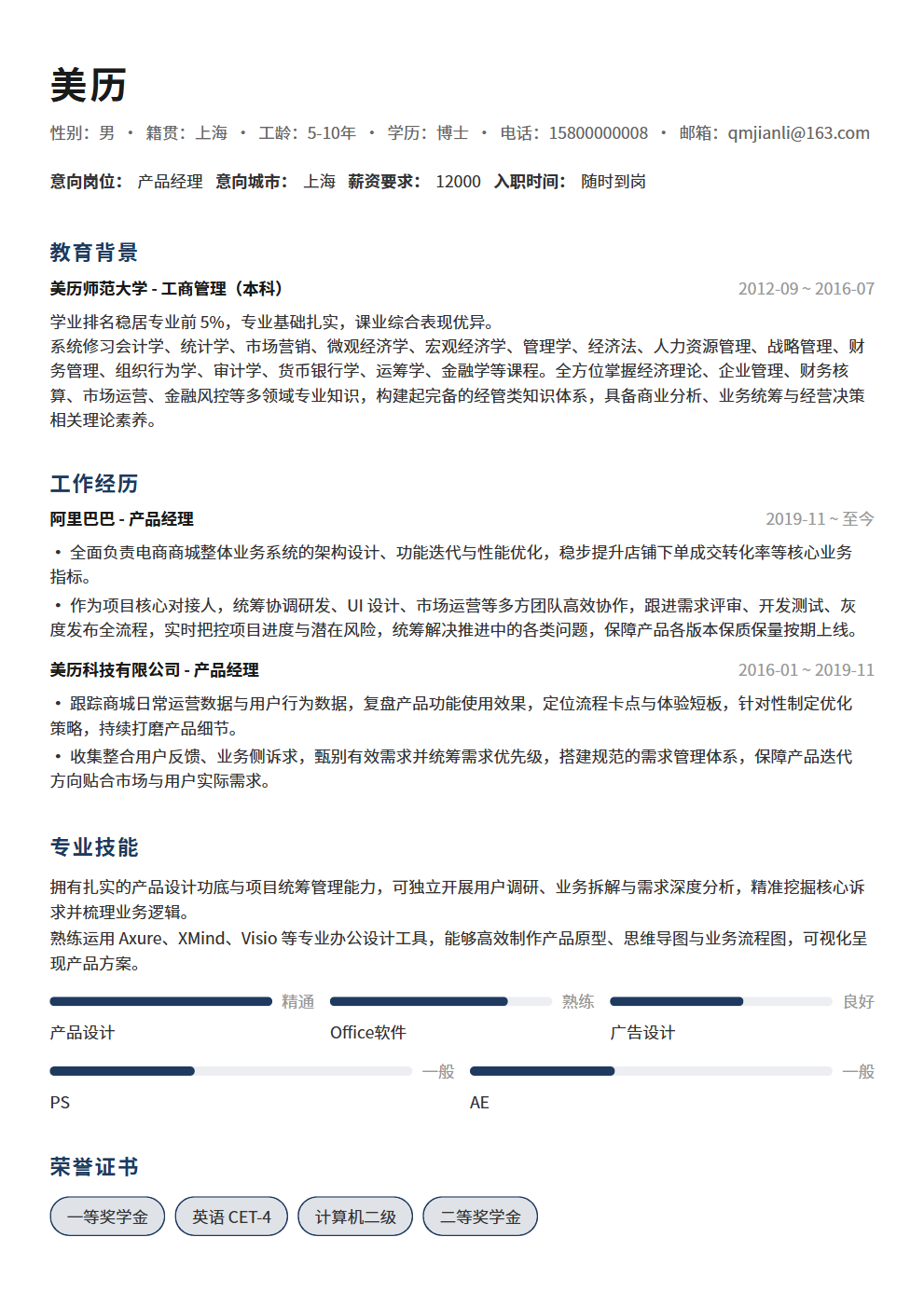
- Typical manifestation: Every experience entry starts with the same sentence pattern — "Led XX project, achieved XX goal, improved XX metric." This highly consistent structure is rarely seen in human-written resumes
- Typical manifestation: Heavy use of buzzwords and industry jargon without specific, grounded descriptions. Phrases like "empowered business growth," "built full-funnel closed loops," and "created differentiated competitive advantages" stacked together — HR immediately recognizes this as AI's "masterpiece"
- Typical manifestation: Transitions between paragraphs are too smooth. When real people write resumes, different experiences have varying description styles — some detailed, some brief, some data-focused, some story-focused. AI-generated content is highly uniform, like an assembly line product
- HR perspective: An HR manager at a major tech company says, "When I see three consecutive experience entries using the 'led + project + achieved + goal + improved + metric' pattern, I know it's AI. Real people don't write like that — real resumes have a 'breathing quality'"
Sign 2: Lack of Personal Details — Like a Template, Not a Story
AI-generated content's most fatal weakness is that it lacks your story. AI can help you write beautiful wording, but it doesn't know how you felt working until 3 AM to meet a deadline, how your heart raced during a client negotiation, or the anxiety and growth you experienced leading a team for the first time. These personal details are exactly what HR values most.
- Typical manifestation: The resume is full of abstract descriptions like "improved XX%," "optimized XX process," and "drove XX project" without any specific details only you would know. For example, "optimized customer service process" — how did you optimize it? What obstacles did you face? How did you convince the team? AI can't write these details
- Typical manifestation: Interview answers sound like recited scripts. AI-prepared answers are logically perfect and well-structured but lack the "hmm... let me think" or "the situation was like this" genuine thought processes. Interviewers can tell immediately you're reciting AI-written answers
- Typical manifestation: All experiences are "successful" with no failures, setbacks, or reflections. But in real career experiences, failures and reflections are often more convincing than successes. AI defaults to generating "positive" content, which paradoxically reveals its AI origin
- HR perspective: A headhunter says, "What I fear most when interviewing is candidates who answer questions like they're reading a script. Real answers should have pauses, thinking, and personal emotional expression. If an answer is too perfect and smooth, I actually become suspicious"
Sign 3: Cookie-Cutter Expressions — Like Copy-Paste, Not Customized
AI models are trained on data, and their outputs have a statistical "average" tendency — meaning AI tends to generate content that "most people would write." This means if 10 people use the same AI to write resumes, at least 5 will look nearly identical. This cookie-cutter quality is the third sign HR uses to identify AI content.
- Typical manifestation: Self-evaluations are nearly identical — "Possess strong goal orientation and self-drive, excel at cross-department communication and collaboration, and have excellent analytical and problem-solving abilities." You've probably seen this exact phrase in 99 out of 100 resumes
- Typical manifestation: The "universal template" for project descriptions — "Built XX system from zero to one, achieved XX goals, and developed XX methodology." This description "works" for any project, but also means it's "unremarkable" for any project
- Typical manifestation: "Standard answers" for interview responses — when asked about strengths, say "my biggest strength is pursuing perfection"; when asked about weaknesses, say "sometimes I'm too meticulous"; when asked why you chose the company, say "your company's culture highly aligns with my values." HR has heard these countless times
- HR perspective: An HR director says, "When I review 50 resumes a day and 5 of them have nearly identical self-evaluations, I know they used the same AI. I'm not saying you can't use AI, but at least modify it a bit, right?"
Optimization Method 1: Add Real Personal Stories — Give Your Resume a "Human Touch"
The most effective optimization method is adding real stories that only you know. AI can help you build the framework, but you must fill in the stories yourself.
- How to do it: Based on the AI-generated resume, add at least one specific personal story for each experience. For example, after "optimized customer service process," add "At the time, the customer service team had only 3 people handling 200+ tickets daily. I introduced an intelligent routing system that reduced average response time from 4 hours to 30 minutes"
- Key principle: Stories need details — time, numbers, people, conflicts, solutions. The more specific the details, the more authentic they feel, and the less AI-generated they appear. AI can't write "the product manager and developer had a heated argument over requirement priorities, so I as the project manager organized a requirements review meeting and ultimately convinced both sides with data"
- Interview application: When answering interview questions, start with "the situation was like this" and then tell a real story. This approach is more convincing than "I believe..." and also feels less like an AI-prepared answer
- Effect comparison: Before: "Possess excellent project management skills." After: "In a project with frequently changing requirements, I coordinated 12 people across 5 departments to deliver within 2 weeks, achieving a customer satisfaction score of 4.8/5.0" — the latter clearly has more "human touch"
Optimization Method 2: Replace Vague Descriptions with Specific Data — Give Your Resume "Substance"
AI loves writing vague descriptions like "significantly improved," "greatly optimized," and "effectively drove." But HR wants to see specific numbers — improved by how much? Which metric was optimized? How much growth was driven?
- How to do it: Replace every vague AI-generated description with specific data. "Significantly improved user retention" → "Increased next-day retention rate from 32% to 41% within 3 months." "Effectively drove project progress" → "Reduced project delivery cycle from 6 weeks to 4 weeks"
- Key principle: Data must be real. If you don't have exact numbers, use reasonable ranges — "approximately 30%-35%" is a hundred times better than "significantly improved." But never fabricate data — HR may追问 details during the interview
- Interview application: Speak with data in interviews. "In my previous role, I optimized the recommendation algorithm, increasing click-through rate from 2.1% to 3.8%" — this answer is far more convincing than "I optimized the recommendation algorithm and it worked well"
- Effect comparison: Before: "Responsible for team management with good results." After: "Managed an 8-person team, improving team performance rating from B to A within 6 months with zero turnover" — the latter clearly has more "substance"
Optimization Method 3: Preserve Your Personal Language Style — Give Your Resume "Distinctiveness"
Everyone's expression style is different — some prefer short sentences, some long; some are data-oriented, some story-oriented; some use formal language, some casual. AI flattens these differences, generating "standardized" text. What you need to do is restore your own language style on top of the AI-generated foundation.
- How to do it: After AI generates the first draft, read through it and change anything that "doesn't sound like something you'd say" to "your own expression style." If you normally speak concisely and directly, break AI's long sentences into short ones; if you're good at analogies, add your signature comparisons
- Key principle: A resume doesn't need to be "eloquent" — it needs to "sound like you wrote it." When the interviewer meets you, they should feel that "the person on the resume" and "the person in front of me" are the same person. If the resume is brilliantly written but you stumble over words in the interview, this contrast actually hurts you
- Interview application: Answer questions in your own way during interviews — don't recite AI-written "standard answers." If you normally speak directly, be direct in interviews; if you prefer to think before speaking, allow yourself a few seconds of pause. Authenticity matters more than perfection
- Effect comparison: AI version: "I possess exceptional cross-departmental collaboration capabilities and strategic thinking, excelling at driving transformation implementation in complex environments." Personal style version: "I'm good at bringing people from different departments together to solve problems — on one project, tech, product, and operations couldn't agree, so I organized 3 alignment meetings and got consensus within 2 weeks" — the latter clearly has more distinctiveness
Optimization Method 4: Manually Review Every Sentence — Give Your Resume "Authenticity"
The last optimization method is the simplest yet most important — review every AI-generated sentence one by one and ask yourself: "Is this statement true? Can I stand behind it?" If the answer is "not sure," delete it or rewrite it.
- How to do it: Print out the AI-generated resume (or export to PDF) and mark each sentence — green for content you can 100% confirm as true, yellow for content that needs additional details, and red for content that's uncertain or exaggerated. Then keep only the green and revised yellow content, and delete the red
- Key principle: Better to write one fewer sentence than to add one false one. A resume isn't an essay contest — it doesn't need every sentence to be brilliant. But every sentence must be true — because HR may追问 details about any statement during the interview
- Interview application: Before the interview, practice expanding on each resume statement for 1 minute. If you stumble when expanding on a particular statement, it means it's either untrue or you don't understand it well enough — and it should be removed
- Effect comparison: An AI-generated resume might have 20 experience descriptions, but 5 are "filler." After review, you might have only 15, but each one withstands scrutiny. 15 genuine experiences are far more convincing than 20 watered-down ones
The Right Way to Use AI: AI Is the Draft, You Are the Final Editor
Ultimately, AI's correct role in resume and interview preparation is "draft generator" — it helps you quickly build frameworks, produce first drafts, and provide suggestions, but the final content must go through your review, modification, and confirmation. Just like lawyers using AI to write legal documents — the lawyer who signs is the one responsible. AI is your writing assistant, not your substitute.
- Correct process: You provide real experiences and materials → AI helps build framework and optimize wording → You review and modify sentence by sentence → You add personal stories and specific data → You restore your language style → Final version. In this process, AI does 50% of the work, but you're responsible for 100% of the content
- Wrong process: You tell AI the job title → AI generates a complete resume → You submit it directly. With this process, your resume will likely be identified as AI-generated — because it lacks your stories, your data, and your style
- Core principle: AI helps you "write better," not "write things that don't exist." Your experiences, achievements, and stories are the raw materials; AI is the processing tool. Without good raw materials, even the best processing tool can't make a great dish
Conclusion: Use AI to Write Your Resume, But Make It Look Like You Wrote It
AI-generated content has 3 obvious telltale signs — overly perfect wording, lack of personal details, and cookie-cutter expressions. But through 4 optimization methods — adding real personal stories, replacing vague descriptions with specific data, preserving personal language style, and manually reviewing every sentence — you can make AI-assisted resumes and interview answers look authentic, substantial, and distinctive. Remember: AI is the draft generator; you are the final editor. Using AI for efficiency is fine, but you're the one who signs off on the final product. Use BeautyResume resume editor for a one-stop solution from templates to content — AI helps you build the framework, you fill in the stories, making your resume both efficient and authentic.