Big Company or Small Company for Your First Job? — 5 Dimensions to Help You Make a Choice You Won't Regret
Big companies offer stability but treat you like a cog; small companies offer rapid growth but come with higher risk — the classic dilemma for fresh grads choosing their first job. 5 dimensions to help you decide based on your career goals. There's no standard answer — only the answer that's right for you.
Big Company or Small Company for Your First Job? — No Standard Answer, Only the Answer That's Right for You
Big companies offer stability but treat you like a cog; small companies offer rapid growth but come with higher risk — this is the classic dilemma for fresh grads choosing their first job. Online you'll find people saying "you must go to a big company" and others saying "small companies are where real growth happens." Both sides make valid points, but neither is your answer. Here are 5 dimensions to help you decide based on your own career goals — no blind following, no regrets.
Dimension 1: What Are Your Career Goals? — Think About Who You Want to Be in 3 Years
Whether to choose a big or small company depends on what kind of professional you want to become. Different career goals suit different starting points.
- Want to go deep in a specialized field (technical expert, industry expert): Big companies are better. They have mature training systems, established methodologies, and deeper business depth that help you build a solid professional foundation. Three years of focused accumulation at a big company is more valuable than doing everything but mastering nothing at a small one.
- Want to quickly become a generalist (entrepreneur, full-stack talent): Small companies are better. With fewer people and more work, you'll be forced to touch every aspect of the business — product, operations, sales, customer service. This "wild growth" experience is the best soil for cultivating a holistic perspective and comprehensive capabilities.
- Want to pursue a management track: Big companies have clearer management paths with defined promotion channels and training mechanisms. Small companies offer management opportunities sooner, but may lack systematic management training.
- Still figuring it out: If you're uncertain about your direction, a big company is the safer choice. It gives you more room to explore and a broader perspective to help you find your direction. At a small company without clear direction, doing everything can easily lead to "knowing a little about everything but mastering nothing."
Dimension 2: How Much Uncertainty Can You Handle? — Risk Tolerance Determines Your Choice
The biggest difference between big and small companies isn't salary — it's certainty. Big companies give you certainty: stable pay, clear systems, predictable growth paths. Small companies give you possibility: higher ceilings, faster growth, but also the risk of company closure, layoffs, or strategic pivots at any time.
- Students with significant financial pressure: If you have a mortgage, family obligations, or don't have enough savings to cover 6+ months of unemployment, prioritize big companies. Certainty matters more than possibility when survival is at stake.
- Students with strong stress tolerance who are willing to take risks: If you're young, have no financial burdens, and aren't afraid to start over, a small company's possibilities are worth betting on. The worst case is the company shuts down, but you'll have accumulated full-stack experience others don't have — making you more competitive for your next job.
- A decision test: Ask yourself, "If this small company shuts down in 6 months, can I accept that?" If yes, choose the small company; if no, choose the big one. This isn't about courage — it's rational judgment.
- A compromise path: Start at a big company for 2-3 years to build your professional foundation and network, then move to a small company to leverage it. This is a proven optimal path for many — big companies give you "credibility," small companies give you a "stage."
Dimension 3: What's Your Learning Style? — Some Need Structure, Others Need Hands-On Experience
Different people learn differently, which directly affects which type of company will help you grow faster.
- Structured learners: You need clear knowledge frameworks, systematic training, and experienced mentors to guide you. Big companies suit you better — comprehensive onboarding, mentorship programs, knowledge bases, and standardized processes help you quickly build a professional system. At a big company, you grow standing on the shoulders of giants.
- Hands-on learners: You prefer learning by doing — encountering problems and solving them, summarizing methodologies from practice. Small companies suit you better — no rigid rules, no standard answers. You need to figure things out yourself, make your own mistakes, and draw your own conclusions. At a small company, you grow by fighting through the mud.
- Hybrid learners: Most people are actually hybrids — needing both a structured foundation and hands-on tempering. If this is you, the "big first, then small" path is optimal. Big companies build the foundation; small companies sharpen the practice.
- A simple test: When learning a new skill, do you prefer reading tutorials first before starting (structured), or diving in and looking things up when you hit problems (hands-on)? Your learning preference mirrors your company preference.
Dimension 4: The Quality of the Specific Offer — Don't Just Look at the "Big" or "Small" Label
Many people agonize over "big company or small company" while ignoring the most important thing: the quality of the specific offer matters more than company size. Not every big company offer is good, and not every small company offer is bad.
- Look at the team and direct manager: Regardless of company size, your direct manager determines 80% of your work experience. During interviews, make sure to understand: What's your manager's style? What's the team atmosphere? Is the manager willing to mentor newcomers? A good manager at a small company is more valuable than a bad one at a big company.
- Look at the business and sector: A big company's marginal business vs. a small company's core business — choose the latter. Working on marginal business at a big company means fewer resources, less attention, and limited growth. Working on core business at a small company gives you access to the most critical decisions and resources, with growth far exceeding the former.
- Look at growth potential: Promotion at big companies is "queuing" — you can't advance if someone's ahead of you. Promotion at small companies is "grabbing" — if you have the ability, you can step up. But big company "queuing" also means fairness, while small company "grabbing" can also mean chaos.
- Look at compensation and benefits: Big company salaries aren't necessarily higher than small companies, but benefits are more comprehensive (social insurance, paid leave, health checkups, training budgets). Small companies might offer higher base salary but skimp on benefits. Calculate the total package — don't just look at monthly pay.
Dimension 5: Your Long-Term Career Assets — The Value of Your First Job on Your Resume
Your first job isn't just "your first job" — it's also the first line of experience on your resume. From a long-term career development perspective, the "brand value" of your first job matters.
- Big company brand effect: BAT, Fortune 500, well-known tech companies — these names are door-openers on your resume. Recruiters and HR see these names and assume you've passed rigorous screening and have guaranteed professional competence. Three years at a big company gives you broader options when you switch jobs.
- Small company differentiation value: If the small company has unique achievements (like building a product from 0 to 1, or becoming a leader in a niche market), this experience is equally persuasive on a resume — potentially even more impressive than a cog-in-the-machine experience at a big company.
- Industry choice matters more than company size: For the same first job, choosing the right industry (AI, new energy, overseas expansion) has a bigger impact than choosing the right company size. A mid-size company in a rising industry has better prospects than a big company in a declining one.
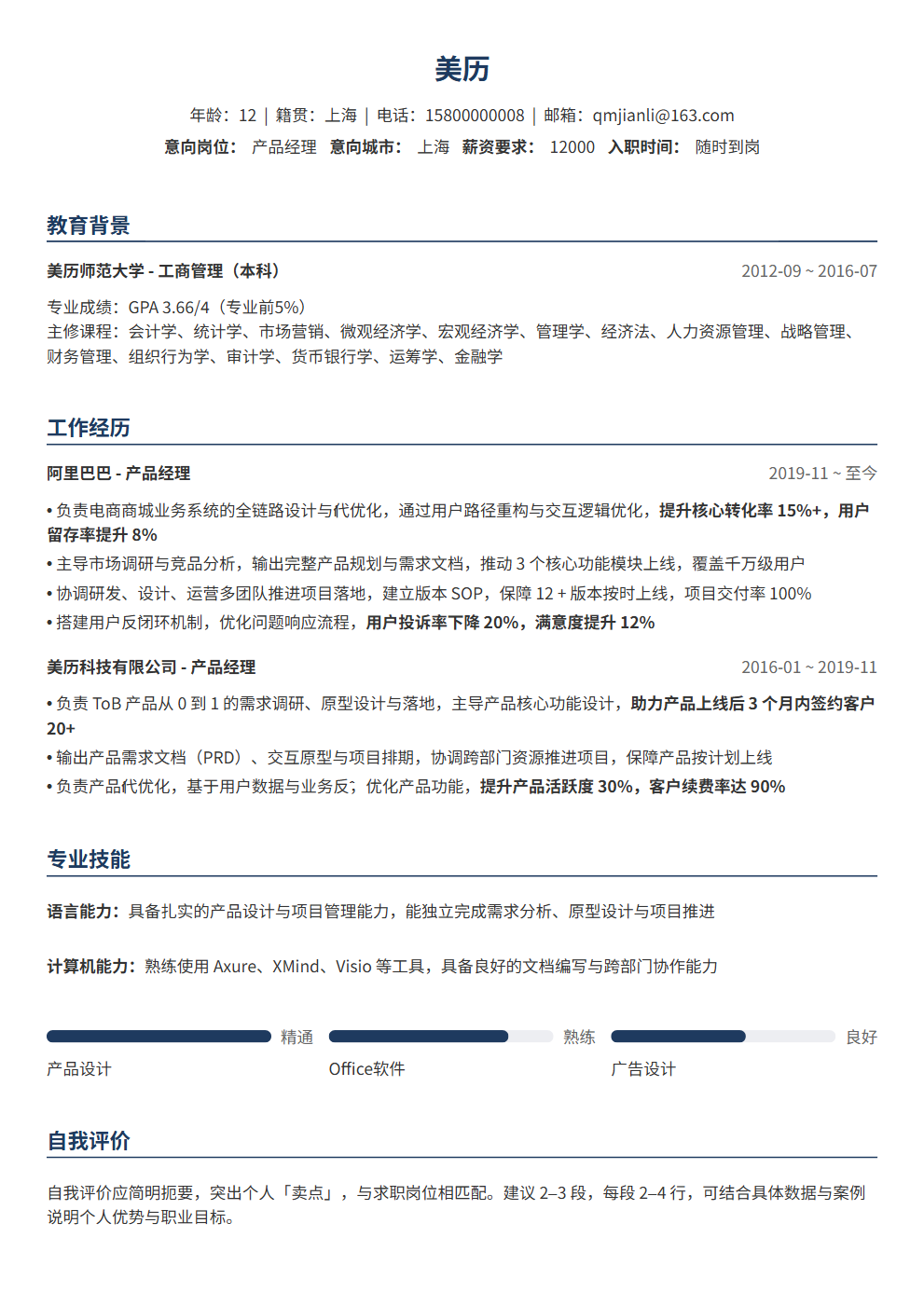
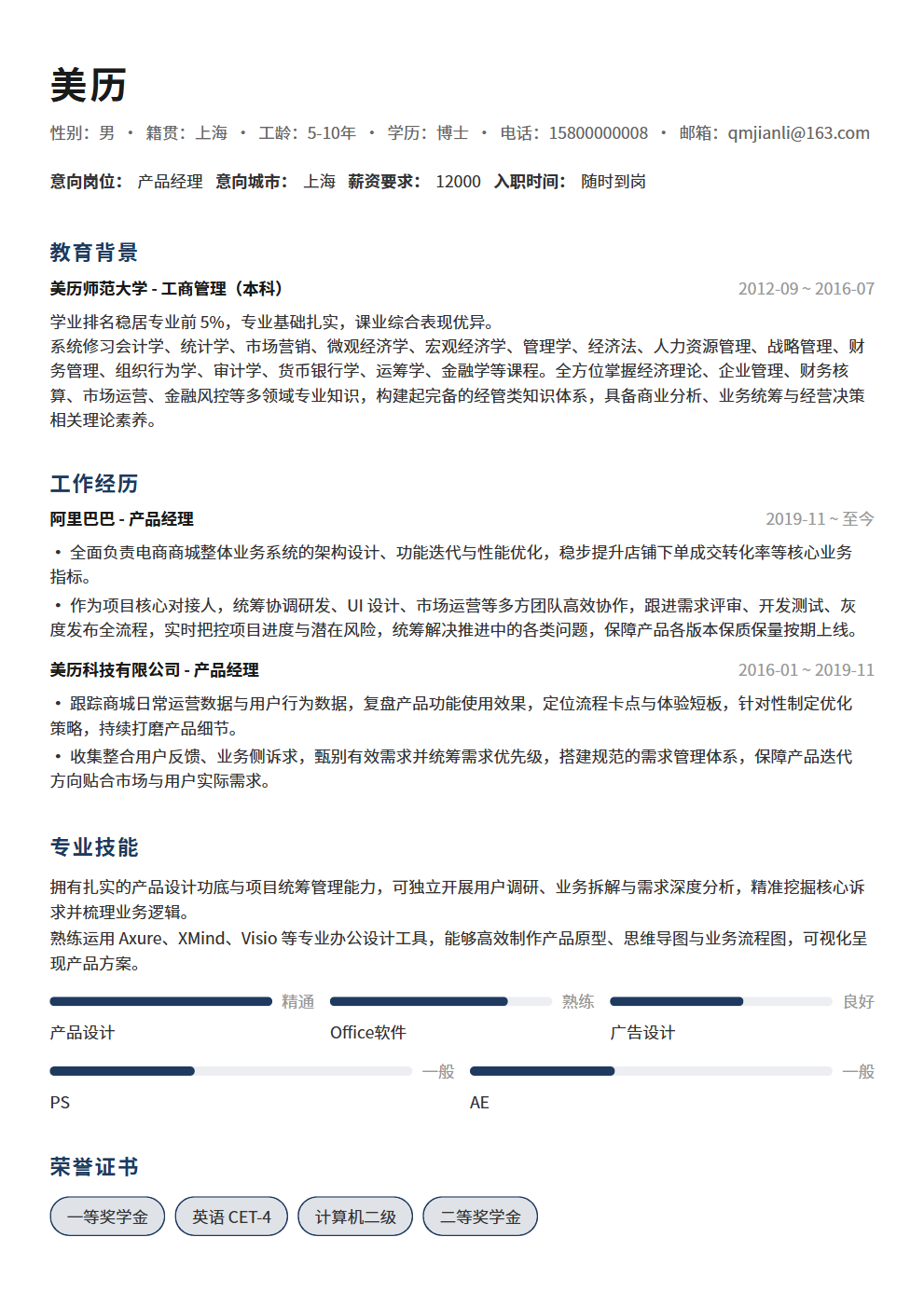
- How to write it on your resume: Big company experience: "Completed XX project within the XX system, mastered XX methodology." Small company experience: "Built XX system from 0 to 1, independently managed XX business, achieved XX growth." Both writing styles have their advantages — the key is that you actually delivered results.
No Standard Answer — 5 Dimensions Help You Find the Answer That's Right for You
For fresh grads choosing their first job, there's no standard answer for big company vs. small company. 5 dimensions help you decide: your career goals (deep specialization → big company, generalist → small company), risk tolerance (stability → big company, willing to bet → small company), learning style (structured → big company, hands-on → small company), specific offer quality (team/manager > business/sector > growth potential > compensation/benefits), and long-term career assets (big company brand effect vs. small company differentiation value). The "big first, then small" path is a proven compromise. Whichever you choose, the key is to go all in after making your decision, rather than endlessly second-guessing. If you're preparing your resume for your first job, try BeautyResume's resume editor — fresh grad-specific templates help you highlight internship and project experience, and smart content suggestions make your resume stand out among many candidates.