Big Company or Small Company? 5 Decision Dimensions for Your First Job as a Fresh Graduate
Big company or small company for your first job? 5 decision dimensions (learning & growth / salary & benefits / brand endorsement / promotion space / work intensity), 3 types suited for big companies and 3 for small companies, helping you make the best choice for yourself.
You've received two offers — one from a big company, one from a startup, with similar salaries. Which do you choose? This question has puzzled countless fresh graduates. Some say "big companies look good on your resume," others say "small companies build character and accelerate growth," and still others say "just go wherever pays more." But choosing your first job isn't rolling dice — it determines your career starting point, growth rate, and future options. Rather than listening to others, use 5 dimensions to judge for yourself.
The Essence of the Big vs. Small Company Dilemma
The dilemma between big and small companies is fundamentally about weighing "certainty" against "possibility." Big companies offer certainty — stable salaries, standardized processes, recognized brands — but may turn you into a cog. Small companies offer possibility — more responsibility, faster growth, greater influence — but may leave you without systematic training. Neither is absolutely better; it's about which suits you best.
- Big company certainty: Standardized processes (someone teaches you how to work), stable salaries (no sudden payroll issues), brand endorsement (a big tech name on your resume is a plus), abundant resources (access to large-scale projects and top colleagues). But certainty also means — you might only handle a narrow domain, unable to see the full picture
- Small company possibility: Greater responsibility (one person might do three people's work), faster growth (forced to learn quickly), more influence (your opinion might directly impact the product). But possibility also means — high uncertainty, the company might fail, processes are informal, and you might take many detours
- The root of the dilemma: You want both the certainty of big companies and the possibility of small companies. But you can't have your cake and eat it too — you need to figure out what you value more and what you're willing to sacrifice
Understanding the essence of the dilemma, let's compare across 5 dimensions to help you make a clear choice.
Dimension 1: Learning and Growth
Learning and growth is the most important dimension for fresh graduates choosing their first job — what you learn in your first 3 years determines your career ceiling for the next 10.
- Big company learning advantages: Systematic training (onboarding programs, mentorship, internal courses), standardized workflows (you learn the "right" way to do things), excellent colleagues (working with talented people is learning in itself), large project experience (products with millions of users). But big company learning is "narrow and deep" — you might only own one module, lacking understanding of the whole
- Small company learning advantages: Full-chain participation (you touch everything from requirements to launch), rapid iteration (small companies iterate fast, you see results sooner), multi-role training (product, operations, data might all be your job). But small company learning is "broad and shallow" — you might have done everything but mastered nothing
- Key difference: Big companies teach you "how to do one thing extremely well," small companies teach you "how to take something from 0 to 1." The former is depth, the latter is breadth. For fresh graduates, whether to pursue depth or breadth first depends on your career direction — aspiring specialists should start at big companies, aspiring generalists/entrepreneurs should start at small companies
- An easily overlooked point: Big companies offer "implicit learning" — chatting with senior colleagues at lunch, attending internal tech talks, reading internal documentation — learning resources that small companies can't provide. Big company learning comes not just from your work, but from your entire environment
If you're someone who needs systematic learning, big companies suit you better; if you learn better through hands-on practice, small companies might be a better fit.
Dimension 2: Salary and Benefits
Salary is many people's first consideration, but fresh graduates often only look at monthly pay numbers, overlooking total compensation and long-term returns.
- Big company salary advantages: Monthly salary typically 10%-30% higher than small companies in the same city, social insurance and housing fund based on actual salary (many small companies use minimum base), guaranteed year-end bonus (usually 2-4 months), comprehensive benefits like supplemental medical, meal allowance, housing subsidy, gym. But big company salary increases may be smaller — long promotion tracks, fixed raise percentages
- Small company salary characteristics: Monthly salary may be lower, but more room for increases (good performers might get raises every 6 months), equity/stock options (if the company IPOs or gets acquired, returns could far exceed big company salaries), more flexible compensation structure (high performance bonus ratio — do well, earn more). But small company salary risk is also higher — poor company performance might mean pay cuts or layoffs
- Easily overlooked costs: Big company overtime usually comes with overtime pay or comp time; small company overtime is often "voluntary" (unpaid). The difference in social insurance and housing fund contributions could be 1000-2000 yuan per month — that's real money. Calculate total compensation, not just monthly salary
- Long-term returns: Big company brand premium shows when you change jobs — leaving a big tech company usually means a 30%-50% salary increase. Small company brand premium is lower, but if you achieved significant results at a startup, your jump could be even bigger
If you prioritize short-term stability and certainty, big company compensation is better; if you're willing to take risks for potentially higher returns, small companies might be more suitable.
Dimension 3: Brand Endorsement
Brand endorsement is the dimension fresh graduates most easily overlook but with the deepest long-term impact — your first job is your career "pedigree."
- Big company brand value: Having "ByteDance," "Tencent," or "Alibaba" on your resume makes HR look twice — this isn't bias, it's efficiency. Big company hiring standards are themselves a filter; getting in means you passed rigorous interviews, providing trust endorsement for the next employer. People from big companies are 2-3x more likely to pass resume screening when changing jobs
- Small company brand challenge: Having "XX Technology Co., Ltd." on your resume means HR might not recognize it — you need more specific achievements to prove your capability. This means your resume needs more careful crafting and you need to showcase more in interviews. Small company background isn't a negative, but you need to work harder to prove yourself
- Time sensitivity of brand effect: Big company brand endorsement is most valuable in the first 5 years of your career — after 5 years, HR cares more about your actual results than your pedigree. So if you plan to stay long-term at a small company, the brand effect gradually diminishes; if you plan to jump in 2-3 years, big company brand premium is very worthwhile
- Industry-specific brand differences: In some industries, small companies can also be industry leaders — certain vertical SaaS companies, consulting firms, design studios. In these industries, "industry-leading small company" brand value rivals big companies
If you plan to change jobs in 2-3 years, big company brand endorsement is very important; if you plan to深耕 a specific industry long-term, industry-leading brand matters more than company size.
Dimension 4: Promotion Space
Promotion space determines how long you can stay at a company and how far you can go. Fresh graduates often only look at entry-level titles, overlooking promotion possibilities 3-5 years out.
- Big company promotion characteristics: Clear career ladders (P5-P6-P7-P8...), defined promotion criteria (what conditions must be met), but fierce competition (multiple people competing for one promotion slot), long promotion cycles (usually 2-3 years per promotion). Big company promotion is "queuing" — you wait for people ahead of you to move
- Small company promotion characteristics: Informal career ladders (may lack clear promotion paths), but fast promotion (deliver results and you advance, no queuing), large promotion jumps (might go from specialist directly to manager). Small company promotion is "sprinting" — whoever delivers first gets ahead
- Key difference: Big company promotion is "predictable" — you know when you can be promoted and what standards you need to meet. Small company promotion is "unpredictable but faster" — you might get promoted in 6 months, or have no opportunity for 2 years (because the company doesn't have more positions)
- A harsh reality: Big companies have limited mid-level management positions; many people hit a ceiling at P7. If a small company grows well, your promotion space might far exceed big companies — because the company is expanding, positions are increasing, and you're a "veteran" employee
If you prefer clear rules and predictable growth paths, big companies suit you better; if you'd rather let results speak and quickly seize positions, small companies might be more suitable.
Dimension 5: Work Intensity
Work intensity directly affects your quality of life, physical and mental health, and learning time. Fresh graduates often underestimate the impact of work intensity on their lives.
- Big company work intensity: Varies by team. Core business teams (like ByteDance's Douyin, Tencent's WeChat) might be 996 or busier; peripheral teams might be relatively relaxed. Big company "busy" is usually project-driven — extremely busy during projects, relatively free between them. But big company "busy" has boundaries — generally no one contacts you after hours
- Small company work intensity: Usually busier than big companies. Fewer people, more work — one person does multiple people's jobs. Small company "busy" is the norm — there's always more to do. And small company work boundaries are blurry — the boss might contact you anytime after hours, weekends might require overtime for projects
- Work intensity's impact on learning: Moderate intensity promotes learning (practice is the best teacher), but excessive intensity squeezes out learning time — you're always "fighting fires" with no time for systematic learning or deep thinking. What fresh graduates need most is "work that leaves time for learning," not "work so busy you can't grow"
- How to judge work intensity: In interviews, ask "When was the team's most recent overtime? What was it for?" — if the answer is a month ago for a product launch, intensity is manageable; if it's "last week, for regular requirements," intensity is high. You can also ask "What's the team's work rhythm?" — see how they describe it
If you can accept high-intensity work in exchange for rapid growth, small companies might be more suitable; if you need time outside work for self-improvement, certain big company teams might be a better fit.
3 Types of People Suited for Big Companies
If you match any of the following 3 types, a big company might be the better choice.
- Type 1: People who need systematic learning. You prefer working with established methods and don't like "figuring it out as you go." You want someone to teach you the "right" way rather than fumbling on your own. Big company training systems, mentorship programs, and standardized processes are exactly what you need
- Type 2: People pursuing brand premium. You plan to change jobs in 2-3 years and want your first job to boost your resume. You're willing to trade a few years as a "cog" for future brand premium. A big company name is your best investment
- Type 3: People who value stability and certainty. You dislike uncertainty and don't want your company to go under tomorrow. You want stable salaries, comprehensive benefits, and predictable promotions. Big company certainty is exactly what you need
3 Types of People Suited for Small Companies
If you match any of the following 3 types, a small company might be the better choice.
- Type 1: Fast learners who thrive in practice. You don't like following step-by-step procedures and prefer learning quickly through hands-on work. You enjoy the "do everything" generalist feel rather than specializing in one module. Small company full-chain participation is exactly what you need
- Type 2: People with entrepreneurial aspirations. You want to start a business someday and need to observe "how a company operates" up close at a startup. You want to understand the entire 0-to-1 process rather than seeing just the tip of the iceberg at a big company. A small company is the best "entrepreneurship prep school"
- Type 3: People who refuse to "queue." You dislike seniority-based systems and prefer letting results speak. You want promotion based on merit without waiting 2-3 years for your turn. Small company "sprint" mechanisms are exactly what you need
How to Judge Whether a Small Company Is Worth Joining
If you're leaning toward a small company but unsure if it's reliable, use these criteria to evaluate.
- Check funding: Companies backed by well-known investors have higher survival odds. Look up the company's latest funding round — which firm invested, when, and how much. If they've reached Series B or beyond, the capital market validates the company
- Check the team: The founding team's background determines the company's ceiling. Research where the founders and core team previously worked and what they did. If founders came from core teams at big companies, the company's starting point is different
- Check the business: Does the product solve a real need? Are users growing? Is revenue increasing? If the company hasn't even validated its business model and is just "telling stories," the risk is high
- Check the culture: Feel the team vibe during interviews — energetic or lifeless? Is the boss open and inclusive or autocratic? Would you want to work with these people? Cultural fit matters more than salary
- Check turnover rate: If the company's annual turnover exceeds 30%, something's wrong. You can check the company's real reputation on platforms like Maimai or Zhihu
Small companies aren't off-limits, but go to "worthwhile" ones — with good teams, good business, and good culture. Otherwise, you might waste 1-2 years at an unreliable company.
Conclusion: There's No Standard Answer — Only the Answer Best for You
Big companies give you certainty, systematic learning, brand endorsement, and stable salaries, but may turn you into a cog with slow promotions and narrow vision. Small companies give you possibility, full-chain training, rapid promotion, and greater influence, but may leave you without systems, with high risk and weak branding. Evaluate across 5 dimensions: learning and growth, salary and benefits, brand endorsement, promotion space, work intensity — whichever dimension matters most to you, prioritize the company that's stronger in that area. Three types suited for big companies, three for small — which type are you? Once you know who you are and what you want, the choice isn't hard. Remember: your first job isn't the destination — it's the starting point. Whether you choose big or small, what matters most is growing rapidly in your first 3 years, so you have the power to choose.
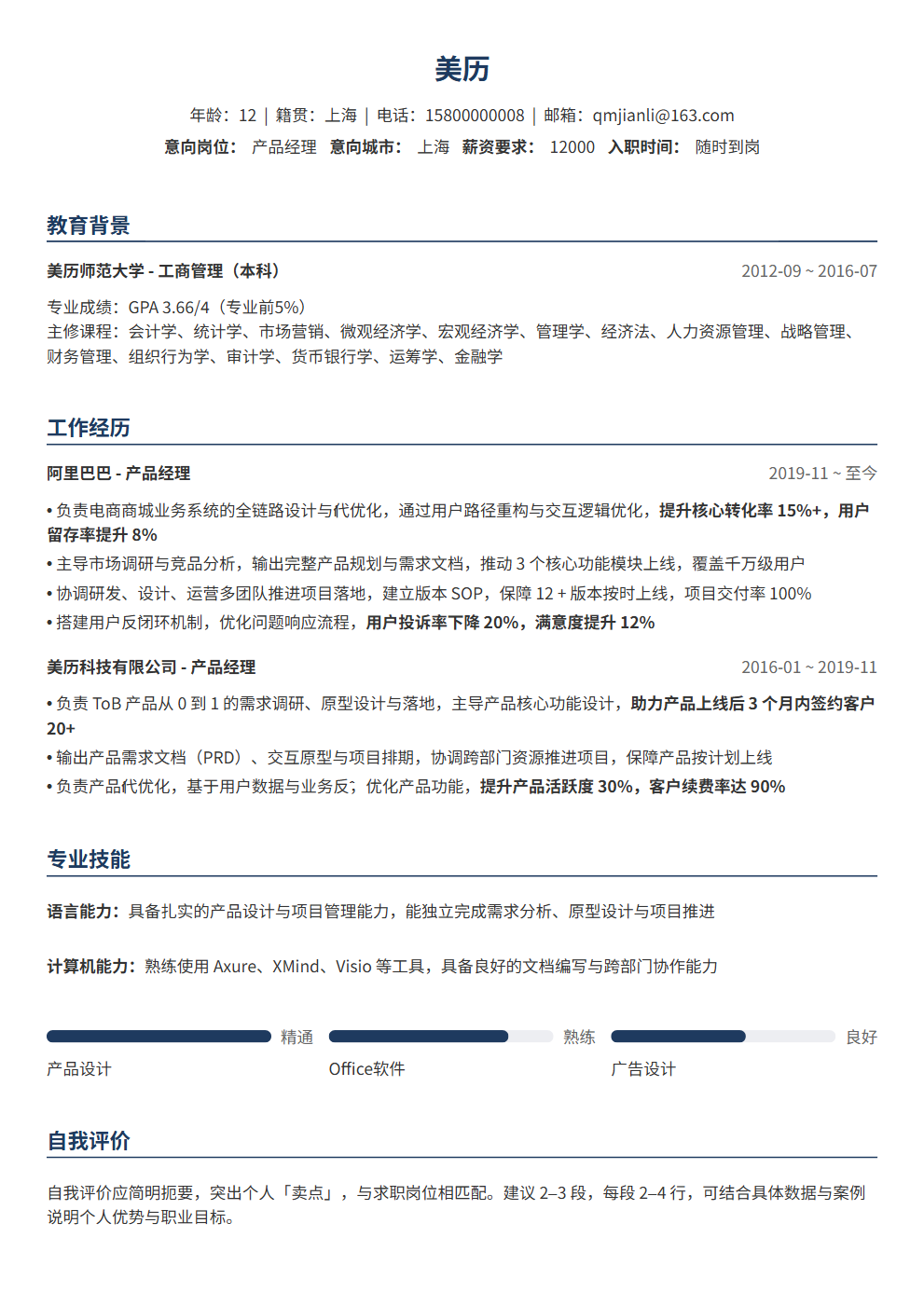
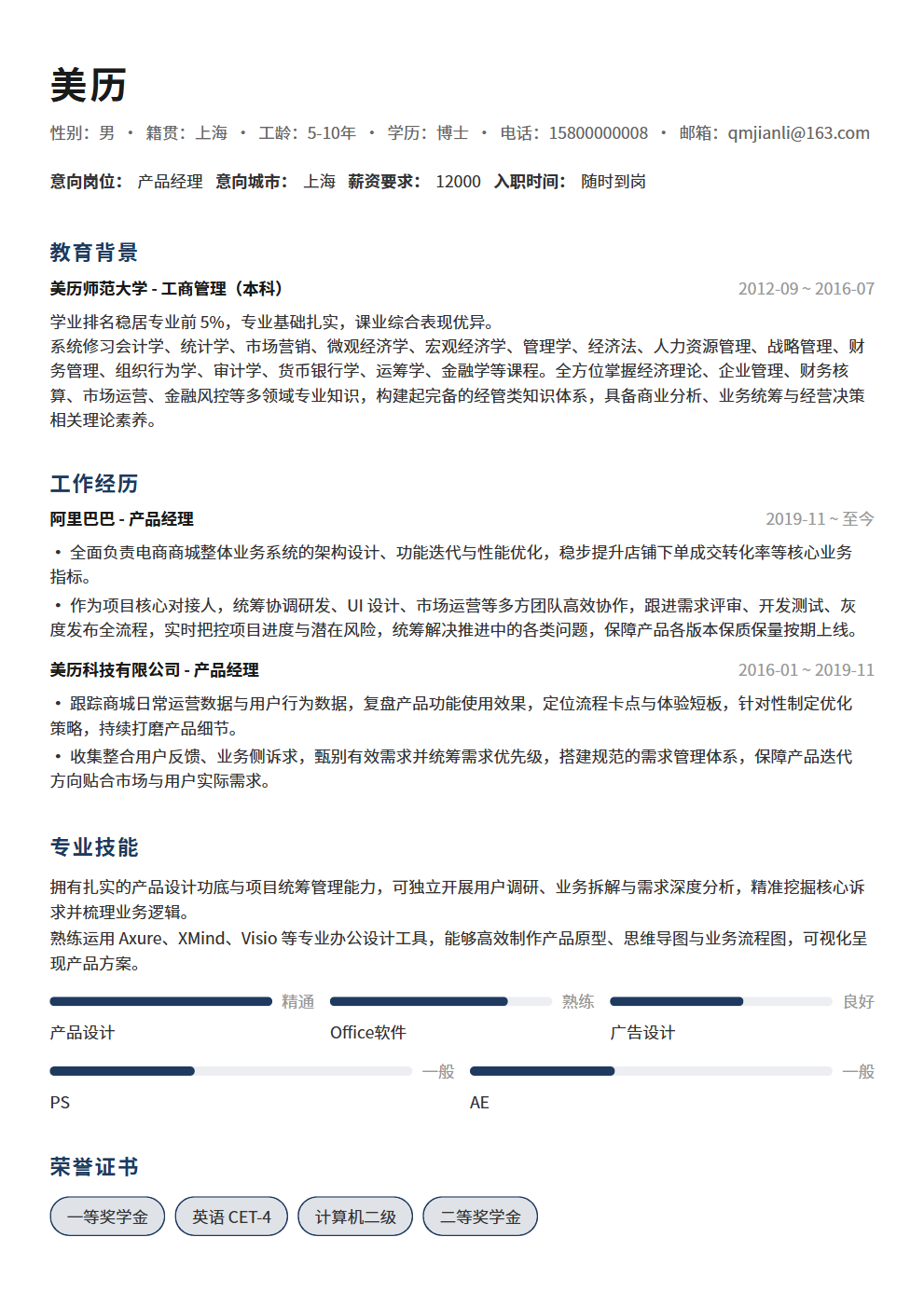
Whether you choose a big company or a small one, a professional resume is your first step to getting an offer. Use BeautyResume to create a resume that highlights your strengths and potential — put the power of choice for your first job in your own hands.