At the End of the Interview, Ask These 5 Questions to Show Professionalism and Avoid Pitfalls
What to ask in the interview reverse Q&A? 5 high-quality questions to show professionalism and learn the real situation.
When the interview wraps up and the interviewer smiles and asks, "Do you have any questions for us?" — most people simply say, "No, thank you." With that one sentence, they've wasted the only part of the interview they get to control. The Q&A session isn't a formality. It's your chance to demonstrate professionalism, uncover the real working conditions, and decide whether this company is worth joining. Ask well, and the interviewer will see you in a whole new light. Ask poorly, and all your earlier effort may go to waste. Let's talk about what you should actually ask during the Q&A session.
Why the Q&A Session Matters
Many people treat the Q&A session as a mere "closing ritual" and just go through the motions. But in reality, it serves three important functions you can't afford to ignore.
- Show professionalism: The quality of your questions directly reflects the depth of your thinking and professional competence. One insightful question can impress an interviewer far more than any amount of self-promotion. The interviewer will think: "If this person asks such professional questions, their work must be just as impressive."
- Uncover the real situation: An interview is a two-way street, not a one-sided interrogation. Job descriptions only show the glamorous side — the real work environment, team culture, and management style can only be understood through asking questions. If you don't ask, you won't discover the pitfalls until after you've joined
- Take the initiative: Throughout the interview, you've been on the defensive, answering questions. The Q&A session is your only chance to take the offensive. Good questions can steer the conversation toward topics you excel at, and even turn around a previously underwhelming performance
So the next time an interviewer asks, "Do you have any questions?" — never say "no." Prepare 2-3 high-quality questions and show the interviewer your professionalism and thoughtfulness.
Question 1: "What is the biggest challenge this position currently faces?"
This question is the "golden opener" of the Q&A session. It shows you're focused on the actual work, while helping you understand how difficult the role really is. When the interviewer responds, you can not only gauge the difficulty but also naturally showcase your experience solving similar problems.
- Impression it creates: The interviewer will see you as someone who cares about the work itself, not just perks and benefits. This "problem-oriented" mindset is one of the most valued traits in the workplace
- Pitfall-dodging value: If the interviewer says "the biggest challenge is the workload — frequent overtime is needed" or "the last few people couldn't make it work," you know this role might be a trap. If the interviewer is vague and can't articulate the challenges clearly, the role itself may lack clear definition
- Follow-up technique: After the interviewer answers, you can naturally say, "I've dealt with a similar situation before..." and seamlessly showcase your relevant experience, turning a one-sided Q&A into a genuine conversation
For example, if the interviewer says "the biggest challenge is cross-departmental coordination," you can respond: "In my previous role, I also frequently needed to collaborate across departments. I usually start by aligning everyone's goals, then establish regular communication cadences — it worked quite well." This shows your problem-solving ability while making the interviewer feel you're "one of us."
Question 2: "What common traits do you see in people who perform well on this team?"
This question is remarkably clever — on the surface, you're learning what the team defines as "excellent," but you're also sending a powerful signal: I want to be one of your top performers. Meanwhile, the interviewer's answer will tell you what the team truly values, which is a hundred times more real than the "requirements" listed on the job description.
- Impression it creates: This question sends two signals — you have ambition, and you want to make a real impact on the team. The interviewer will sense your proactive attitude, which is far more convincing than simply saying "I'm very hardworking"
- Pitfall-dodging value: If the interviewer says "excellent people are the ones who volunteer for overtime" or "people who can handle extreme pressure," you should be wary — this may signal a burnout culture. If they say "people who think proactively and collaborate well," the team culture is likely healthy
- Culture fit: Through the "excellent traits" the interviewer describes, you can judge whether you'd be a good fit for this team. If you're someone who values collaboration but the interviewer says top performers are "lone wolves," this might not be the right place for you
Remember, an interview isn't just the company choosing you — it's also you choosing the company. This question helps you determine whether the team's definition of success aligns with your own professional values. If it doesn't, you'll likely be miserable after joining.
Question 3: "What are the performance evaluation criteria for this position?"
This question directly demonstrates your results-oriented mindset — you're not asking "what do I need to do every day," but rather "what level of achievement counts as good." In the workplace, results-oriented people are always valued more than process-oriented ones. Meanwhile, the interviewer's answer will tell you whether the company's management approach is clear and reasonable.
- Impression it creates: The interviewer will see you as someone who focuses on results and has a strong sense of purpose. Most interviewers want to hire people who "let results speak," not people who "just kill time until clock-out"
- Pitfall-dodging value: If the interviewer can clearly articulate the evaluation criteria, it means the company has structured management and clear goals. If they hem and haw and say "it depends" or "it's fairly flexible," be careful — vague evaluation criteria often lead to unfair assessments and arbitrary management
- Understanding expectations: Knowing the evaluation criteria tells you what level you need to reach after joining. If the standards are unrealistically high, the role may come with extreme pressure. If they're reasonable, the company's expectations of employees are likely pragmatic
For example, if the interviewer says "we evaluate quarterly, mainly looking at project completion rates and client satisfaction," the evaluation system is relatively mature. If they say "it's mainly based on the manager's assessment," you should pay attention — subjective evaluation systems often foster a culture of favoritism.
Question 4: "What is the current team structure and how does the team collaborate?"
This question shows you value teamwork — you're not just focused on your own silo, but care about how the whole team works together. Meanwhile, the interviewer's answer reveals whether the team is healthy or plagued by internal competition and blame-shifting.
- Impression it creates: The interviewer will see you as a team player who values collaboration over solo performance. In today's workplace, collaboration skills are often more important than individual capability
- Pitfall-dodging value: If the interviewer says "the team just went through a wave of resignations" or "we're currently short-staffed," be wary — high turnover often signals deeper problems. If they say "everyone handles their own thing independently," team collaboration may be very poor
- Understanding the atmosphere: Through the interviewer's description of how the team collaborates, you can gauge whether the atmosphere is "mutual support" or "every person for themselves." A good team is "1+1>2"; a bad team is "1+1<1"
Pay special attention to the interviewer's tone and expression when they answer. If they look uncomfortable or hesitate when discussing team collaboration, there are likely internal issues. Sometimes, the interviewer's body language speaks louder than their words.
Question 5: "Why did the previous person in this role leave?"
This is a bold but critically important question. Many people are afraid to ask it, worried it comes across as too direct. But think about it from another angle — if the previous person left because they couldn't stand it, wouldn't you want to know in advance? Of course, how you ask matters. Don't make it sound like an interrogation — use a tone of genuine curiosity and concern.
- Impression it creates: While this question is direct, if asked tactfully, the interviewer will see you as someone with sharp insight who isn't afraid to address core issues. This trait is incredibly valuable in the workplace
- Pitfall-dodging value: This is the most direct "pitfall-dodging" question. If the interviewer says "the previous person left for personal reasons," you can follow up with "did they change careers or move to a competitor?" If they say "this position has been vacant for a while," ask why it's been hard to fill. If they say "the last person left after 3 months," this role almost certainly has problems
- Gauging stability: If this position has high turnover (say, two or three people in a year), you need to think very carefully regardless of how the company packages it. Frequent turnover means either the role itself is problematic, the management is problematic, or both
Of course, the interviewer may not tell you the whole truth, but their reaction itself is information. If they answer openly and explain clearly, the company is likely transparent. If they dodge or change the subject, that's a red flag worth noting.
3 Questions You Should Absolutely Never Ask
Knowing what to ask is only half the battle — you also need to know what not to ask. The following three types of questions should never come up during the Q&A session. They'll instantly downgrade you from "professional candidate" to "minus-point player."
- Salary details: Don't ask "Can we negotiate the salary?" "How much is the annual bonus typically?" or "When do stock options vest?" Salary negotiation belongs in a separate conversation. Asking about it during the Q&A makes the interviewer think you only care about money. Even if you genuinely care, wait until you have an offer in hand
- Overtime frequency: Don't ask "Do you work a lot of overtime?" "Is it 996 or 955?" or "Do I need to come in on weekends?" While these are things you genuinely want to know, asking directly makes the interviewer think you can't handle pressure and aren't willing to put in effort. You can learn this indirectly through earlier questions — asking about role challenges and team collaboration often reveals the true workload
- Early departure/remote work and other benefit questions: Don't ask "Can I leave early?" "Can I work remotely?" or "How many vacation days do I get?" The subtext of these questions is "I want to work less and rest more," and interviewers will only deduct points. Benefits and perks should be confirmed after you receive an offer
Here's a guiding principle: in the Q&A session, ask about "the work itself," not "the work perks." The former demonstrates your professionalism and genuine interest; the latter only makes people think you're already nickel-and-diming before you've even started.
3 Practical Tips for the Q&A Session
Now that you know what to ask and what not to ask, here are three final tips to make the Q&A session work to your maximum advantage.
- 2-3 questions is ideal: Don't ask just one (it suggests poor preparation), and don't ask more than five (the interviewer will get annoyed). Two or three well-prepared questions show thoughtfulness without taking up too much time. Pick the 2-3 most suitable questions from the five above and adjust flexibly based on how the interview is going
- Tailor questions to the interviewer's role: If the interviewer is your future direct manager, questions about role challenges and team collaboration are most appropriate. If it's HR, questions about company culture and evaluation criteria work better. If it's a senior executive, questions about business direction and strategic planning are more fitting. Different roles care about different topics — your questions should be "tailored to the person"
- Listen sincerely and respond: After asking a question, listen carefully to the interviewer's answer — don't just wait for them to finish talking. Respond naturally with "I understand that" or "That makes sense," and even ask a relevant follow-up question to keep the conversation flowing. The interviewer will feel you're genuinely engaging, not just going through the motions
The essence of the Q&A session is an equal conversation. You're not "taking a test" — you're chatting with a future colleague. Relax, ask sincerely, and the interviewer will sense your professionalism and genuine interest.
Summary: The Q&A Session Is Your Interview's "Bonus Round"
The Q&A session at the end of an interview isn't an optional formality — it's a critical moment to demonstrate professionalism, uncover the real situation, and decide whether the company is worth joining. Asking about "the biggest challenge the position faces" shows your problem-oriented thinking. Asking about "traits of top performers" shows your ambition. Asking about "performance evaluation criteria" shows you're results-oriented. Asking about "team collaboration" shows your team awareness. And asking about "why the previous person left" helps you dodge potential pitfalls. At the same time, never ask about salary details, overtime frequency, or benefit-related questions — they'll only cost you points. Remember: prepare 2-3 high-quality questions, adjust based on the interviewer's role, listen sincerely and respond, and your interview performance will definitely level up.
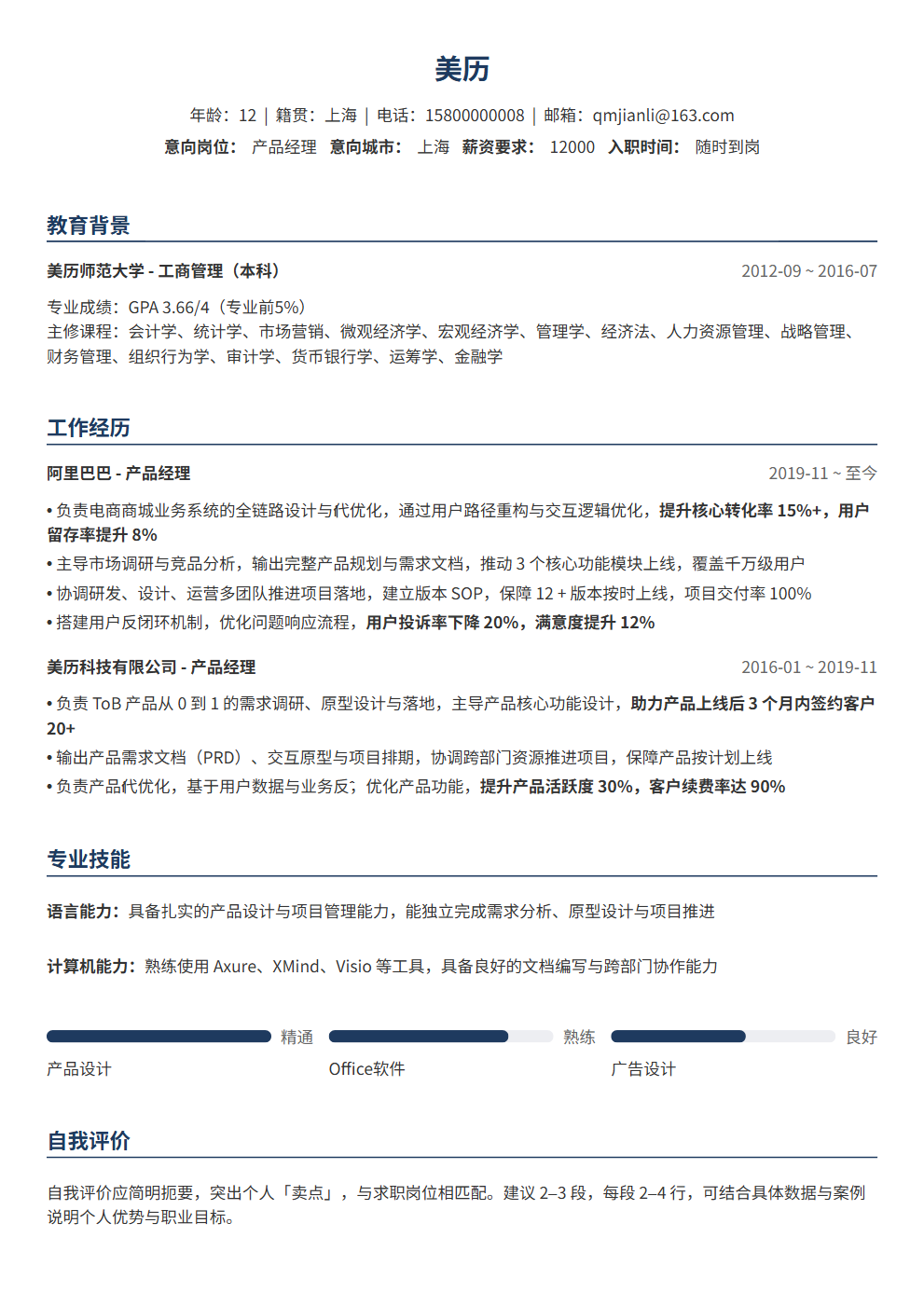
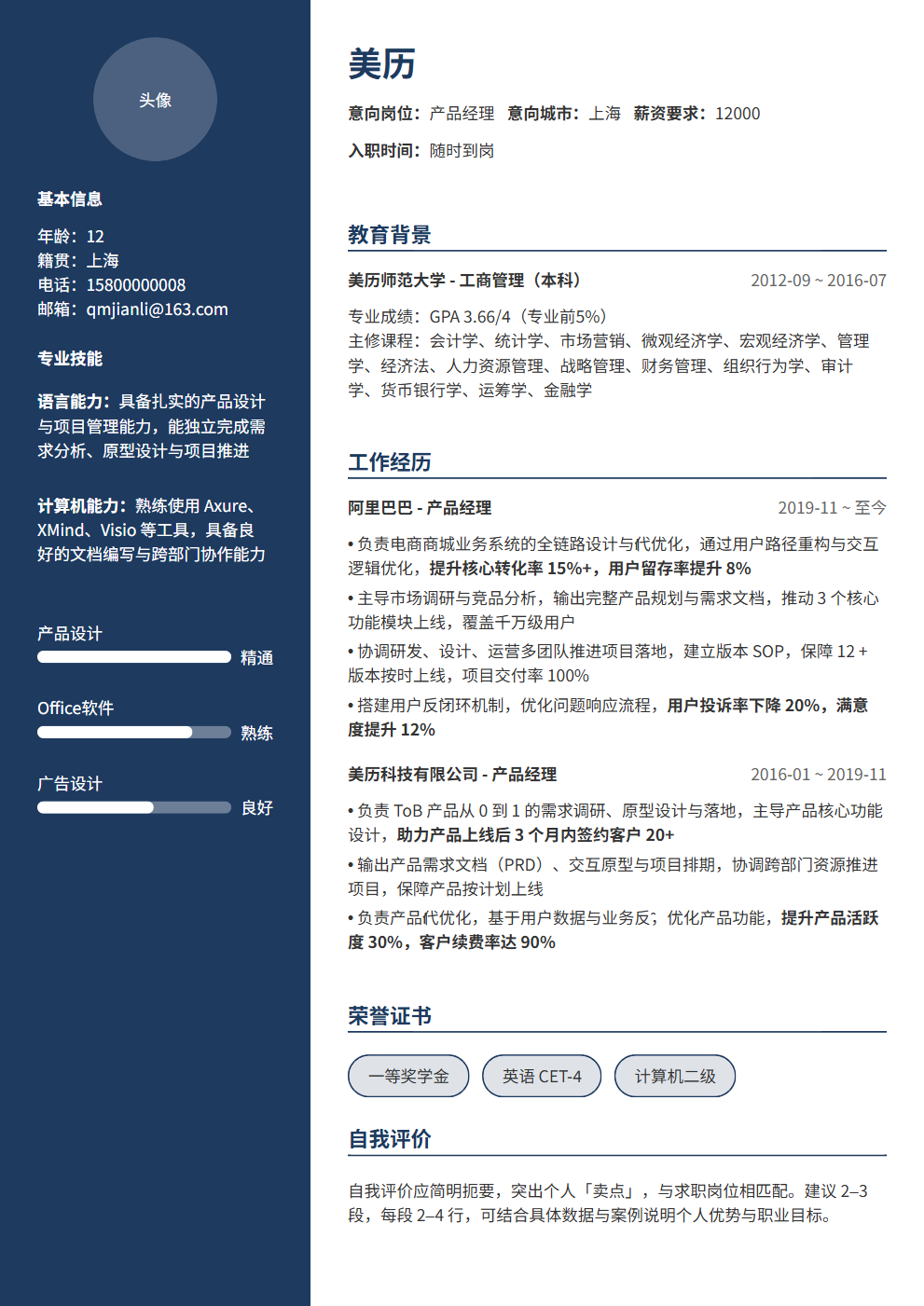
The first step in your job search is having a resume that makes interviewers take notice. Use BeautyResume to effortlessly create a professional resume that gives your job hunt a winning start right from the beginning.