Asked Why You Chose Our Company Four Answers That Show You Are Serious
"Why did you choose our company?" — this question comes up in almost every interview, yet most people's answers are either too fake ("Your company is an industry…
Asked "Why Did You Choose Our Company" in an Interview? 4 Answers That Show You're Serious
"Why did you choose our company?" — this question comes up in almost every interview, yet most people's answers are either too fake ("Your company is an industry leader with excellent culture"), too vague ("I think there's great growth potential here"), or too blunt ("It's close to home and pays well"). Interviewers aren't asking this to hear you flatter them — they want to confirm you've done your homework and that you and the company are genuinely a good match. Today I'll share 4 answer strategies that make interviewers feel you came prepared.
The Real Intent Behind This Question
Many people think this is a "free points" question — just say a few nice things and move on. But when interviewers ask "Why did you choose our company," there are three real intentions behind it: First, to see if you've done your research — have you studied the company's business, products, and industry position, or are you just mass-applying? Second, to understand your motivation — are you genuinely interested in this company, or will any offer do? Third, to assess fit — are your career direction and values aligned with the company? So the core of this question isn't "praise the company" but "show you understand the company and why you're a good fit."
- What the interviewer is really asking: "Do you know us?" — If you don't even know what the company has been doing lately, it shows you don't take this interview seriously
- What the interviewer is really asking: "Are you serious?" — If you give the same answer to every company, it shows you're just casting a wide net
- What the interviewer is really asking: "Are we a match?" — If your answer only focuses on salary and benefits, it shows you care more about money than the work itself
Answer Strategy 1: Industry Alignment + Company Strengths
This approach works when you have deep knowledge of the company's industry and can articulate its unique advantages. The core logic: I'm optimistic about this industry's direction, and your company has clear strengths in that direction, so I chose you.
- Answer framework: Express your understanding of industry trends → Point out the company's unique advantages in the industry → Explain why you want to be part of it
- Example: "I've been following the new energy industry, especially the energy storage sector. Last year, domestic energy storage installations grew over 200%, and I believe the next 3-5 years will see explosive growth. Your company ranks top three in residential energy storage in China, and your proprietary BMS system has an excellent reputation in the industry. I want to join a company with technical moats in an upward industry, not one still searching for direction."
- Why it works: You demonstrate industry knowledge (not generic statements), you identify specific advantages (showing you've done your homework), and you express a desire to participate (not passively waiting for opportunities)
- Best for: When you have deep industry knowledge, the company has genuine industry advantages, or you're switching within the same industry
- Key points: Industry data must be accurate (don't fabricate numbers), company advantages must be specific (avoid empty phrases like "industry-leading"), and your reasoning must be logical (don't just say "I think this track is hot")
The key to this answer is specificity — the more specific your industry trends and company advantages, the more the interviewer believes you've genuinely researched them. "Your company does well in energy storage" is far less effective than "Your residential energy storage products ranked top three in domestic shipments last year, and your BMS system is proprietary, which is rare in the industry."
Answer Strategy 2: Role Fit + Personal Development
This approach works when you have a clear career direction and can articulate how this role aligns perfectly with it. The core logic: My career direction is X, your role needs someone with X, and we need each other.
- Answer framework: State your career direction → Explain how the role matches your direction → Describe what you can bring to the role
- Example: "My career direction is user growth for B2B products. Over the past two years, I've been building growth strategies for SaaS products — from acquisition to activation to retention — and have developed a complete methodology. This role focuses on user growth for your enterprise product, which aligns perfectly with what I've been doing. Plus, your enterprise version launched just a year ago, which is exactly the stage where a growth system needs to be built, and my experience can be directly applied."
- Why it works: You show a clear career direction (not randomly applying), you demonstrate role fit (not vague statements), and you emphasize the value you bring (not just what you want to gain)
- Best for: When you have relevant experience for the role, your career direction closely matches the position, and you can articulate transferable skills
- Key points: Don't just say "I want to learn and grow" (interviewers hire people to work, not to train them), emphasize "what I can contribute" over "what I can gain," and be specific about fit (which skill maps to which job responsibility)
The essence of this answer is "mutual fit" — not just expressing "I want to join," but demonstrating "we need each other." Interviewers' biggest fear is hiring someone who "wants to learn"; their ideal candidate is someone who "can hit the ground running."
Answer Strategy 3: Culture Fit + Values
This approach works when you genuinely identify with the company's culture and values and can provide specific examples. The core logic: I understand your culture, I resonate with it, and I perform best in this kind of environment.
- Answer framework: Describe the company culture/values you've observed → Explain why you resonate with them → Use your experience to prove you thrive in similar environments
- Example: "I've been following your company for a long time and really identify with your 'users first' value. I read your founder's open letter last year, where they mentioned preferring to delay a launch rather than ship a half-finished product. That commitment to quality really impressed me. My previous company had a similar philosophy — we once delayed a release by two weeks to fix a bug affecting 5% of users. The pressure was intense, but user satisfaction actually increased afterward. I feel I can perform at my best in a team that doesn't cut corners."
- Why it works: You show deep understanding (not surface-level), you use specific events as proof (not empty slogans), and you back it up with personal experience (not just self-proclamation)
- Best for: When you have genuine familiarity with the company culture (e.g., you've used their products, followed the founder's public statements), your work style truly matches the culture, and you can provide concrete examples
- Key points: Cultural alignment must be genuine (don't fabricate it to please), values must be specific (don't just say "your culture is great"), and your experience must support your claims (don't just say "I'm the same way" without examples)
The biggest pitfall with culture-fit answers is being "fake" — interviewers hear "I identify with your culture" every day, but most people can't even articulate what that culture is. Only when you can name specific values, specific events, and specific feelings will the interviewer believe you genuinely identify with the culture rather than reciting a script.
Answer Strategy 4: Product Experience + Improvement Suggestions
This approach works when you've used the company's product and can share genuine experiences and improvement ideas. The core logic: I'm your user, I know your product, and I even know how it could be better.
- Answer framework: Establish that you're a real user → Share your experience (positive aspects) → Offer a specific improvement suggestion → Explain why you want to help improve it
- Example: "A major reason I chose your company is that I'm a power user of your product. I've been using your app for two years and love your recommendation algorithm — it's remarkably accurate. But I noticed an area for optimization: the search results page currently only supports single-dimension filtering. If you added multi-dimensional combined filtering, the user experience would be much better. I implemented a similar feature when working on a search product, and conversion rates increased by 15%. I want to join the team of a product I use every day and use my professional skills to make it even better."
- Why it works: You prove you're a real user (not someone who just downloaded the app for the interview), you demonstrate a professional perspective (not a casual user's complaint but a product-minded improvement suggestion), and you explain what you can contribute (not just "I want to join")
- Best for: When you're genuinely a product user, you can analyze the product from a professional angle, and you have relevant improvement experience
- Key points: Improvement suggestions should be constructive (not complaints), specific (not "I think it could be optimized"), and positive in tone (affirm first, then suggest — don't start by pointing out flaws)
This is the most persuasive approach — because you're a user, your feelings are authentic; because you're a professional, your suggestions are valuable. But the prerequisite is that you've genuinely used the product deeply. If you just downloaded it right before the interview and took a quick glance, you'll be exposed the moment they probe deeper.
3 Answers You Should Never Give
Some answers immediately tell the interviewer you haven't prepared seriously, or even cost you points. Avoid these three at all costs.
- "Your company is an industry leader with excellent culture and great team atmosphere" — This is a universal template you could use for any company. Interviewers will only think you're reciting a script and haven't bothered to learn about them. If you can't specify where they "lead" or what's "excellent," don't use such empty phrases
- "It's close to home / pays well / has great benefits" — These might be your real considerations, but stating them directly in an interview makes the interviewer think you only care about compensation, not the work itself. You can mention these as secondary reasons, but never as primary ones
- "I applied to many companies and you gave me an interview" — This tells the interviewer "you're just one of my backup options." Even if it's true, don't say it. Interviewers want to know "why you chose them," not "why you didn't reject them"
Answer Template
Here's a universal answer template you can customize based on your situation:
- Opening: "I chose your company based on three main considerations —"
- First point (industry/business direction): "From an industry/business perspective, I've been following the XX field, and your company has clear advantages in XX, such as..."
- Second point (role fit): "From a role-fit perspective, I've been working in XX for the past X years, building XX experience that closely matches this position's requirements..."
- Third point (culture/product alignment): "From a culture/product perspective, I (have used your product / followed your updates) and really identify with your XX philosophy / XX approach..."
- Closing: "Combining these three points, I believe your company is the best choice for my career development, and I'm confident I can bring XX value to the team."
Summary: The Key to Answering "Why Our Company" Is Specificity
When interviewers ask "Why did you choose our company," they're not looking for flattery — they want to confirm you've done your homework, you're serious, and you're a good match. The four answer strategies — industry alignment + company strengths, role fit + personal development, culture fit + values, product experience + improvement suggestions — all share one core principle: specificity. Specific industry insights, specific role alignment, specific cultural observations, specific product experiences. The more specific you are, the more the interviewer believes you came prepared. The more vague you are, the more they think you're reciting a template. Remember: interviewers want to hire someone who "chose carefully," not someone who "applied randomly."
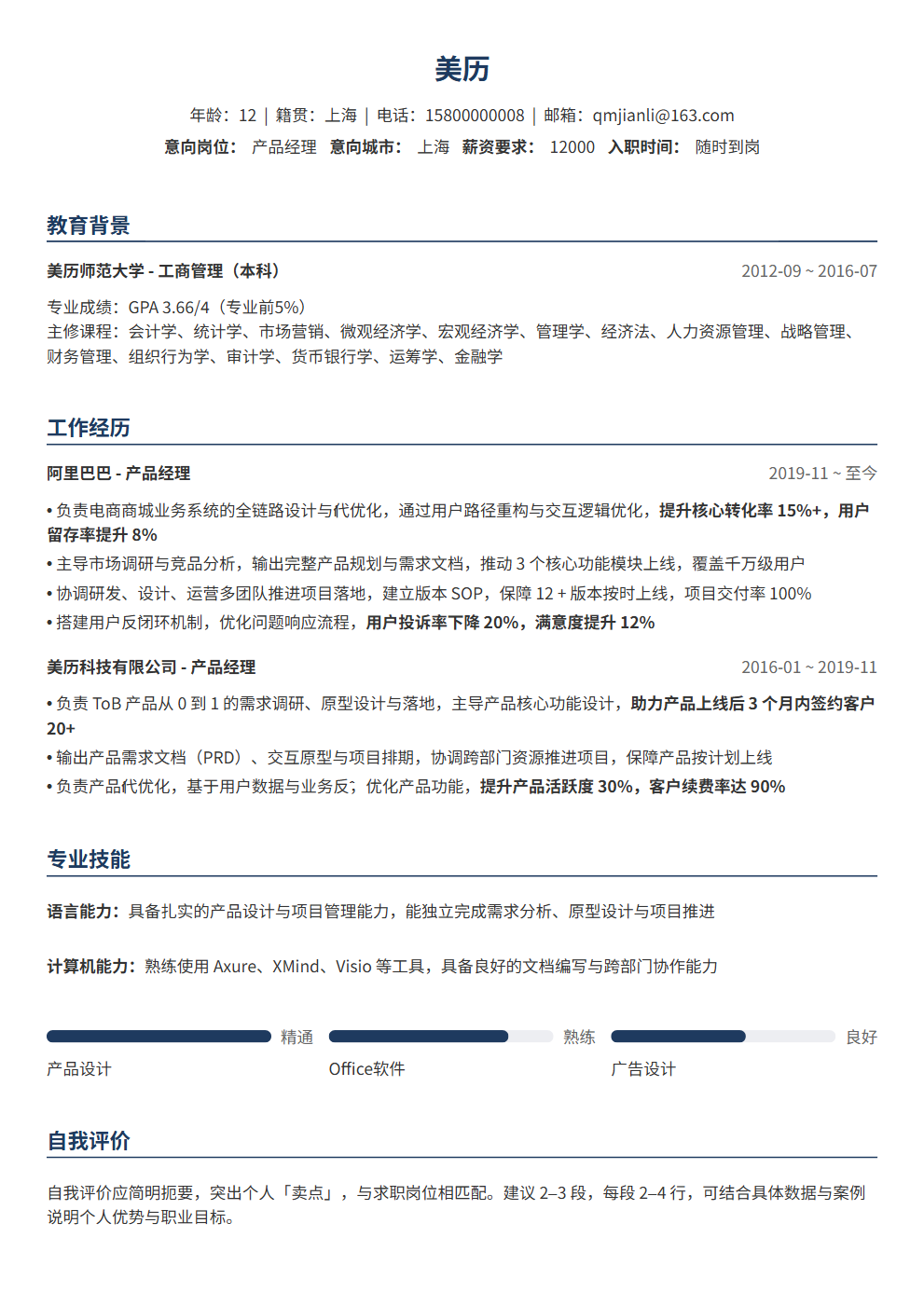
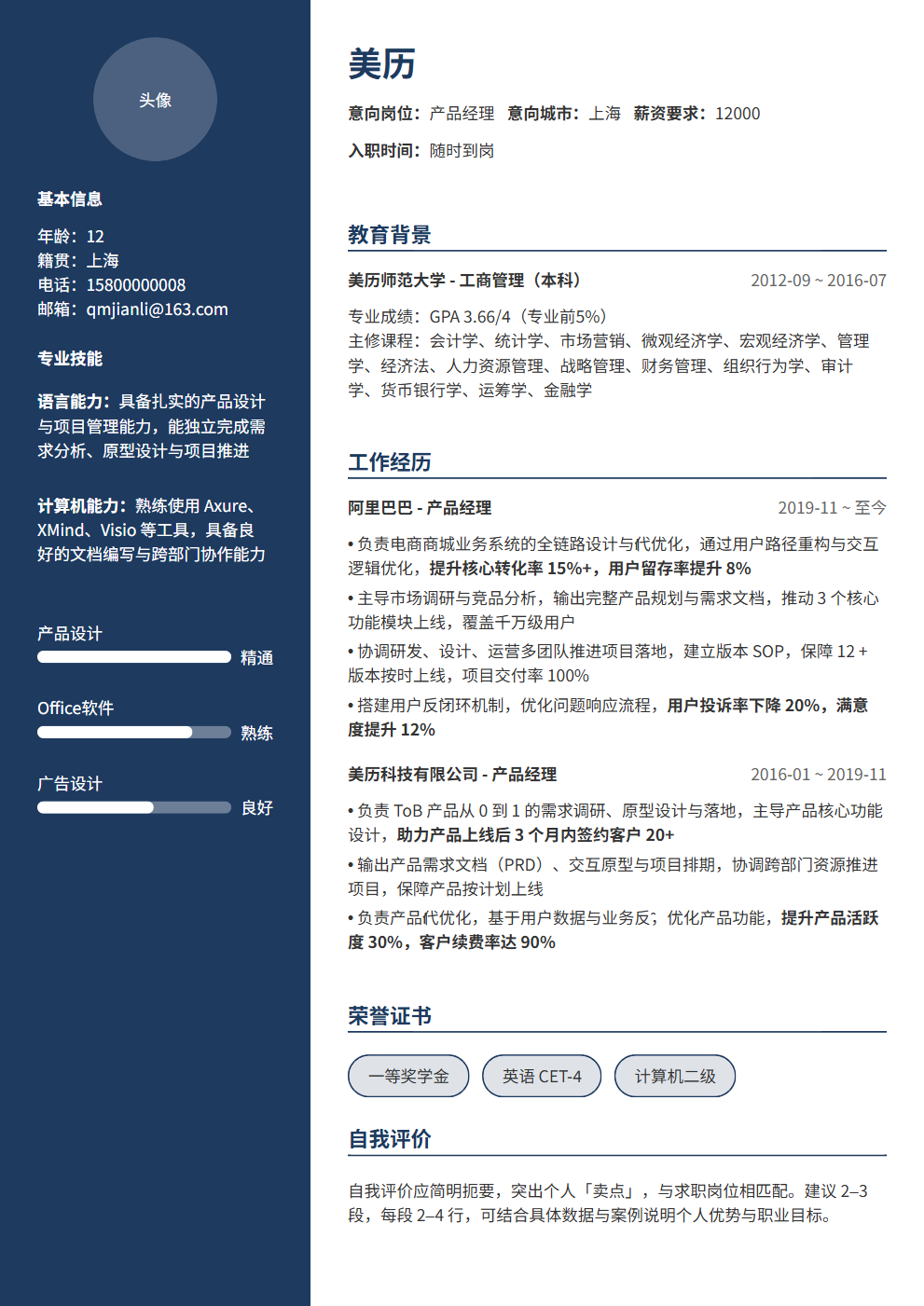
Researching the company before your interview is the first step in showing you're serious. Use BeautyResume to precisely match your experience with job requirements, so interviewers can see at a glance that you're exactly who they're looking for — people who prepare seriously tend to have good luck.