Asked How You View Failure Three Frameworks That Turn Setbacks Into Strengths
The interviewer suddenly asks: "How do you view failure? Can you tell me about a time you failed?" Your heart races — should I talk about it or not?
Asked "How Do You View Failure" in an Interview? 3 Answer Frameworks to Turn Setbacks into Bonus Points
The interviewer suddenly asks: "How do you view failure? Can you tell me about a time you failed?" Your heart races — should I talk about it or not? If I downplay it, I seem shallow; if I overstate it, the interviewer might think I'm incompetent. This question is a "landmine" in interviews — step on it right and you gain points, step wrong and you're out. But don't panic. Today I'll break down the real intent behind this question and give you 3 answer frameworks to turn setbacks into bonus points.
Why Do Interviewers Love Asking About Failure?
Many job seekers think interviewers ask about failure to "set a trap." They don't. Interviewers ask this question with 3 real intentions — once you understand them, you won't panic.
- Intent 1: Testing your self-awareness. People who can honestly face failure usually have more mature self-awareness. Those who say "I've never experienced failure" only make interviewers think they're either lying or lack reflection ability. No one succeeds forever — being able to face failure honestly shows you have a clear understanding of yourself
- Intent 2: Testing your growth capacity. What interviewers really care about isn't that you failed, but what you did after failing. Failure itself is neutral — what adds points is what you learned and changed from it. Someone who can quickly learn and improve from failure is more valuable than someone who's never failed
- Intent 3: Testing your resilience. The workplace isn't always smooth sailing. Interviewers want to know whether you'll crumble or adjust when facing setbacks. Your way of answering itself demonstrates your resilience — are you flustered, deflecting, complaining, or calm, reflective, and action-oriented?
So when interviewers ask about failure, they're not looking for your weaknesses — they're looking for your growth potential. You don't need to fear this question; you need to answer it the right way.
Framework 1: Failure + Reflection + Improvement
This is the most classic and safest answer framework. The logic is simple: describe the failure, then your reflection, then your improvement. The emphasis is on "reflection" and "improvement" — failure is just the setup; reflection and improvement are the main event.
- Failure: Briefly describe a real failure experience without dodging or over-dramatizing. "In my previous job, I was responsible for a client project. Because I didn't understand the requirements deeply enough, the client was unsatisfied with the first delivery and asked for a complete redo"
- Reflection: Analyze the causes of failure, focusing on "my" causes rather than "others'" or "bad luck." "Afterward, I reflected and identified three issues: First, I didn't do thorough requirement confirmation with the client at project kickoff, making assumptions about what they wanted; Second, I didn't establish milestone review mechanisms, letting problems accumulate until final delivery; Third, I relied too heavily on email communication instead of scheduling face-to-face requirement discussions"
- Improvement: Explain what specific actions you took to prevent the same failure from happening again. "Since then, I made three changes: First, I schedule at least 2 face-to-face requirement confirmation meetings at the start of every project to ensure alignment; Second, I established weekly milestone reviews so clients can see progress and give feedback in real time; Third, I created a requirement confirmation checklist template to ensure no key information is missed. The 5 projects I managed after that were all delivered on time with client satisfaction scores above 4.5 out of 5"
The core of this framework: failure is past tense, reflection and improvement are present tense. The interviewer sees someone who learns from mistakes, not someone who repeats them.
Framework 2: Failure + Growth + Gain
This framework is more "advanced" — it emphasizes not just that you improved from failure, but that you gained new growth because of it. It's suited for "blessing in disguise" failure experiences.
- Failure: Describe a failure experience. "I once made a serious mistake during an important product launch — the system crashed during the demo. There were over 200 clients and media in the audience, and it was extremely awkward"
- Growth: Explain what new understanding or capability this failure gave you. "This failure taught me two things deeply: First, never use an untested system in a live demo; Second, when facing unexpected situations, the most important thing is to stay calm and quickly find an alternative. That day, I took a deep breath and switched to a pre-recorded product video to complete the demo. It wasn't perfect, but at least the situation didn't spiral out of control"
- Gain: Explain what long-term value this failure brought you. "After this experience, I did three things: First, I created a 'launch emergency plan' template covering response plans for 6 common scenarios including system crashes, network failures, and absent speakers; Second, I pushed the team to establish a pre-launch stress testing process ensuring every release goes through complete testing; Third, my on-the-spot adaptability improved dramatically — I later encountered 2 more unexpected situations and handled both calmly. This 'launch emergency plan' was later adopted by the entire department as the standard process"
The beauty of this framework: failure isn't the endpoint — it's a turning point. The interviewer sees not "someone who failed" but "someone who became stronger because of failure."
Framework 3: Failure + Persistence + Breakthrough
This framework suits stories of "failing repeatedly but ultimately succeeding." It showcases not what you learned from failure, but your resilience in not giving up. This quality is extremely valuable in the workplace.
- Failure: Describe one or more failures you experienced. "My first startup was a campus food delivery platform. It shut down after 8 months because the cash flow dried up. I'd invested all my savings and even owed friends some money. Many people around me advised me to 'stop messing around and just get a proper job'"
- Persistence: Describe how you didn't give up after failure but continued striving. "After shutting down the platform, I spent 2 weeks analyzing why it failed: insufficient supply chain management capability, high customer acquisition costs, unclear team division of labor. I didn't choose to give up — instead, I joined an established internet company to learn supply chain and user growth methodologies. Two years later, I felt ready and tried again"
- Breakthrough: Describe the results you ultimately achieved. "The second time, I chose a more niche segment — corporate catering — avoiding the high C-end acquisition costs. Using the supply chain management methods I learned at my previous company, I reached breakeven within 3 months and exceeded 500K yuan in monthly revenue by month 6. This company has now been running for 2 years, the team has grown from 3 to 25 people, and we serve over 200 corporate clients"
The power of this framework: it showcases not just reflection after one failure, but persistence and ultimate breakthrough after failure. The interviewer sees someone with resilience and long-term commitment — the kind of person every company wants.
3 Types of Failures You Should Never Mention
Not all failures are appropriate to discuss in interviews. The following 3 types will only hurt your chances.
- Never mention 1: Moral or ethical failures. "I was once warned by my company for inflating expense reports" — this kind of failure involves integrity issues. Mentioning it is basically self-elimination. The interviewer won't think you're being honest; they'll think you're dishonest. Similarly, tax evasion, resume fraud, leaking company secrets, and other failures involving professional ethics should absolutely never be mentioned
- Never mention 2: Repeatedly making the same mistake. "I often miss project deadlines because of procrastination" — if you describe your failure as "often" making the same mistake, the interviewer will only think you lack reflection and improvement ability. Making a mistake once is understandable, but "often" making the same mistake shows you lack learning and self-management skills
- Never mention 3: Blaming others for your failure. "My biggest failure was being dragged down by an unreliable colleague" — this only makes the interviewer think you lack accountability. The causes of failure can involve external factors, but the focus should be on "what I could have done to prevent or mitigate this outcome," not "it was all someone else's fault"
The principle for selecting failure experiences: choose a real failure that you've already grown from and that doesn't involve moral issues. Such failures won't cost you points — they'll make you seem more authentic and mature.
Answer Template: A Complete Example
With all these frameworks discussed, here's a complete answer example you can reference when structuring your own response.
- "I experienced a fairly significant failure. I was leading a cross-departmental project that required coordinating product, engineering, and operations teams. Because I had no prior experience managing cross-departmental projects, I didn't establish clear communication mechanisms and milestones at the outset. Halfway through, the three teams' work directions diverged, and the project was ultimately delivered 2 weeks late"
- "This failure made me deeply reflect on my project management abilities. I realized that the core of cross-departmental projects isn't 'pushing people to do things' but 'keeping everyone's information aligned.' I'd been too focused on task assignment and neglected information synchronization"
- "Since then, I made three improvements: First, at the start of every project, I create a detailed communication plan specifying who needs to know what and when; Second, I introduced weekly cross-departmental standups to ensure real-time information sync; Third, I set up a project board where all team members can see the full project picture and their task status"
- "These improvements yielded clear results in subsequent projects — all 4 cross-departmental projects I managed afterward were delivered on time, with 2 even finishing early. The department head later asked me to give a presentation to other project managers on cross-departmental project management best practices"
This answer uses the "failure + reflection + improvement" framework — clear structure, with reflection, action, and results. The interviewer walks away thinking: this person can face their shortcomings honestly and has the initiative to improve — exactly the quality they want to see.
Conclusion: Failure Isn't Scary — Not Knowing How to Talk About Failure Is
Being asked "how do you view failure" isn't a trap — it's an opportunity to showcase your growth potential. 3 answer frameworks help you turn setbacks into bonus points: "failure + reflection + improvement" for most scenarios, "failure + growth + gain" for blessing-in-disguise experiences, and "failure + persistence + breakthrough" for comeback stories. Remember the 3 types of failures you should never mention — moral/ethical ones, repeated mistakes, and blame-shifting. Choose a real failure you've grown from, present it using a framework, and this question won't cost you points — it'll become the brightest part of your interview. Because someone who can honestly face failure and grow from it is more trustworthy than someone who's never failed.
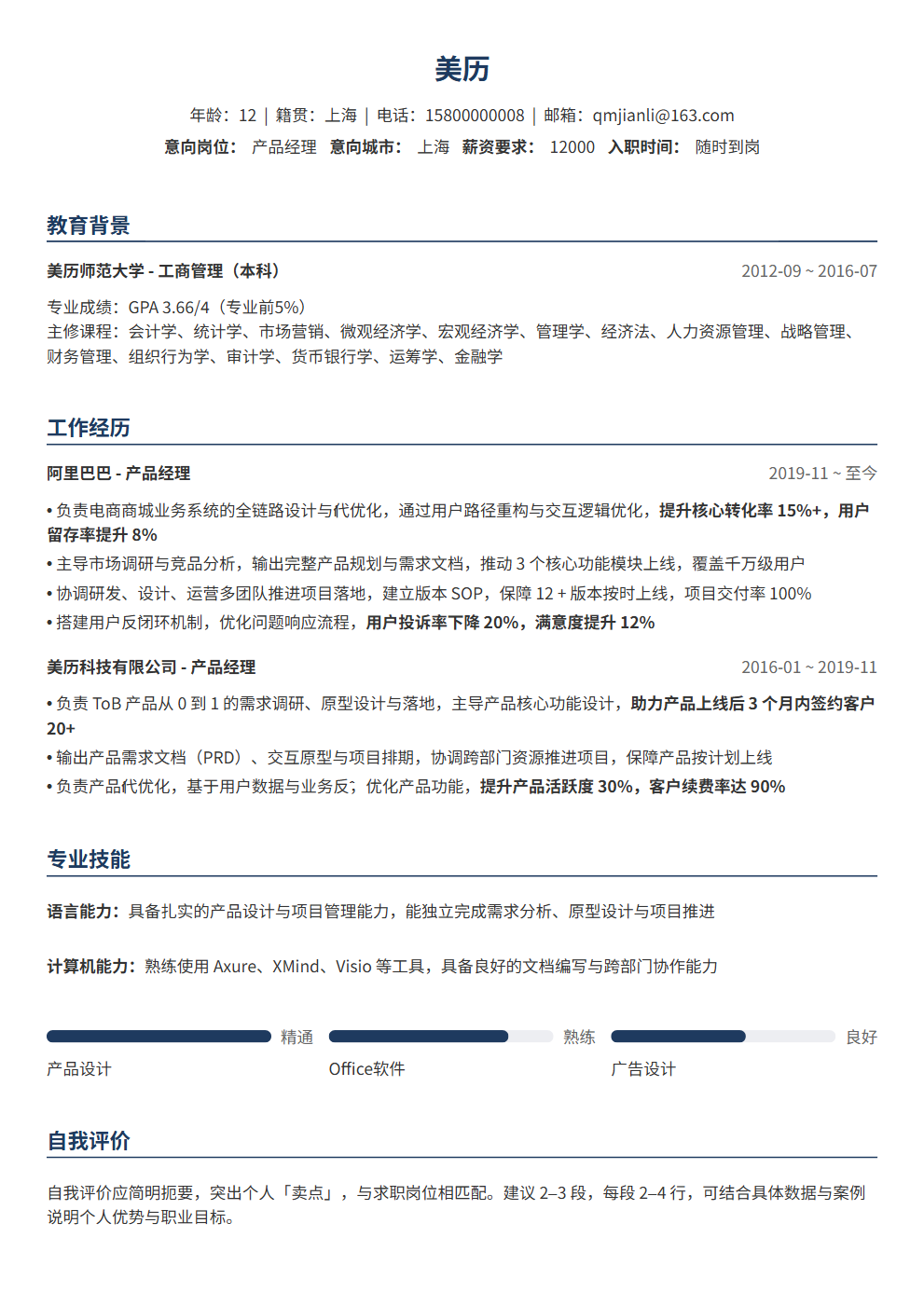
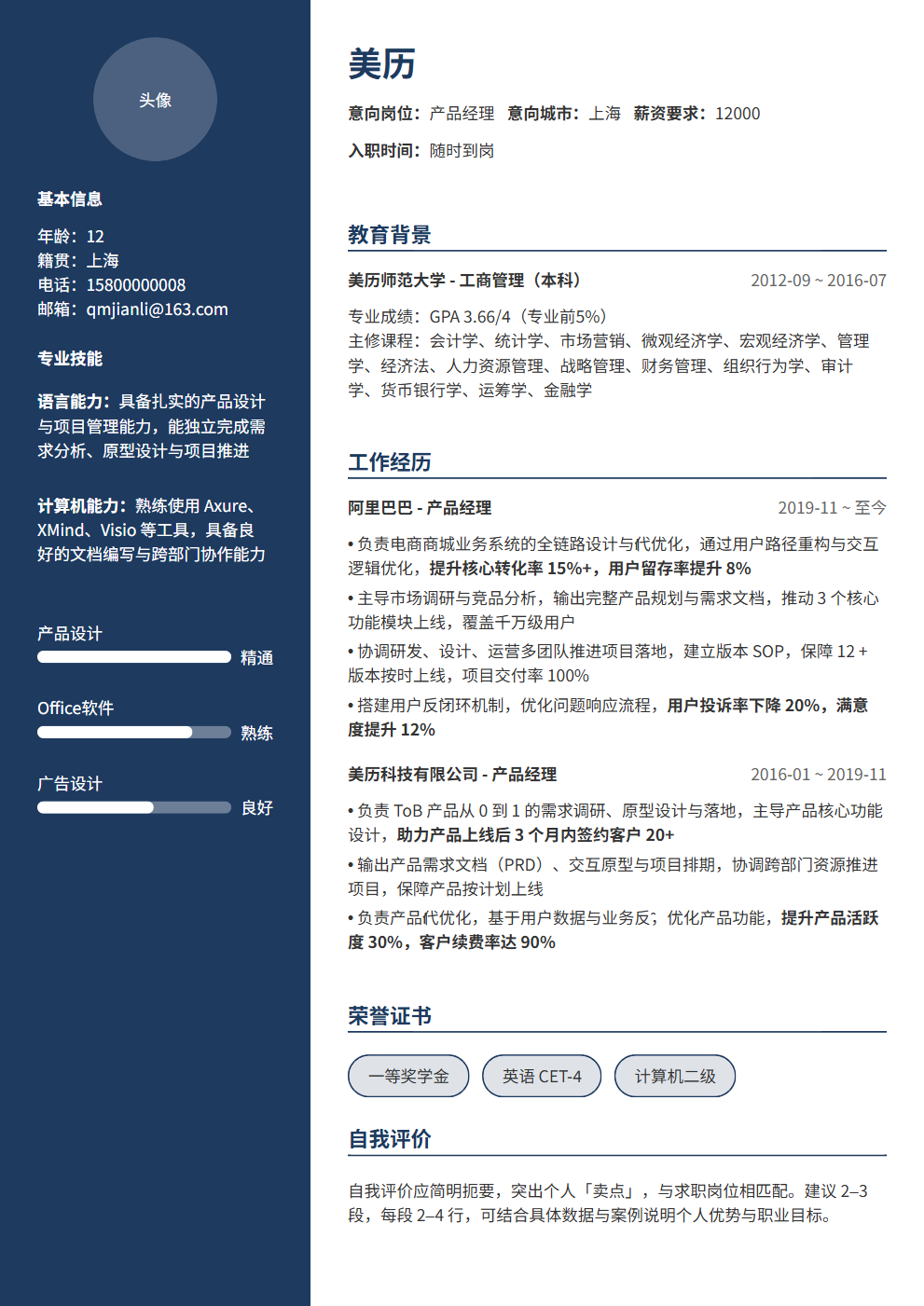
Showcase your growth story in interviews, starting with a professional resume. Use BeautyResume resume editor to clearly present your experiences and growth, letting interviewers see every step of your progress — because growth is your greatest competitive advantage.