Asked About Your Career Plan Three Answer Templates That Show Direction
"What's your career plan?" — this question comes up in every interview, but 90% of people answer like they're reciting a textbook: "I hope to become a supervisor in…
Asked "What's Your Career Plan" in an Interview? 3 Answer Templates That Show You Have Direction
"What's your career plan?" — this question comes up in every interview, but 90% of people answer like they're reciting a textbook: "I hope to become a supervisor in 3 years, a manager in 5 years, and a director in 8 years." Sounds complete, but the interviewer is thinking: "Another one painting grand visions." Career planning isn't about painting grand visions, and interviewers don't ask this to hear your "life dream" — they want to confirm: Do you have a sense of direction? Will you leave after six months? Have you thought about your own development? Today I'll share 3 answer templates that make interviewers see you as someone "with direction."
The Real Purpose Behind This Question
Many people think interviewers ask about career plans to hear your "ambition," but that's not the case. There are three real purposes behind this question.
- Purpose 1: Assess your stability. If your plan is "I want to start my own business" or "I want to switch industries," the interviewer will worry you won't stay long. They want someone who can consistently contribute value, not someone ready to jump ship at any moment
- Purpose 2: Evaluate your self-awareness. Someone who has clearly thought about their development usually has more goal orientation and execution ability at work. Conversely, if you don't even know where you want to go, you'll likely just drift at work too
- Purpose 3: Check if your plans match what the company can offer. If your plan is "I want to be in management," but this role is purely technical, there's a mismatch. Interviewers want to confirm: what you want, we can provide; what you can do, we need
So the core of answering career planning isn't "painting grand visions" but "showing direction + fit." The more specific and role-relevant your plan, the more the interviewer believes you've genuinely thought it through.
Template 1: Short-Mid-Long Term Framework
This is the most classic and safest answer framework — breaking down your plan by time dimension, showing the interviewer you have short-term goals (actionable), mid-term direction (growth), and long-term vision (ambition). The key: every phase must relate to the role, not be disconnected from reality.
- Short-term (1-2 years): Quickly familiarize yourself with the business, master core skills, become someone who can work independently on the team. Focus on "execution" — how you plan to get up to speed and prove yourself
- Mid-term (3-5 years): Deepen expertise in your field, take on larger projects or lead small teams, become an expert or key contributor in a specific direction. Focus on "growth" — how you plan to level up and expand your impact
- Long-term (5+ years): Become an influential expert in the industry, or lead teams solving more complex problems. Focus on "vision" — what kind of person you want to become, what kind of problems you want to solve
- Example answer: "In the short term, 1-2 years, I want to quickly familiarize myself with the company's business and products, become capable of independently owning front-end modules, and be a reliable team member. In the mid-term, 3-5 years, I want to deepen my expertise in front-end performance optimization, lead technical solution design, and manage a small group of 2-3 people on projects. Long-term, I want to become an expert in front-end technology, solving more complex architectural problems and elevating the team's technical capabilities."
- Why it works: Clear time dimensions (not just saying "I want to grow"), specific phases (not empty slogans), highly relevant to the role (not disconnected fantasies)
The key to this framework is "every phase must relate to the role." If your plan is "short-term learn tech, mid-term switch to management, long-term become CEO," the interviewer will think you're just using this role as a stepping stone. Each phase should revolve around this role's career path to show you're serious about going down this road.
Template 2: Capability Growth Framework
If you prefer not to break things down by time, you can plan by capability dimension — which capabilities you intend to grow, how, and to what level. This framework works better for technical and professional roles, where advancement depends more on capability than title.
- Core capabilities: Professional skills directly related to the role. For front-end development, core capabilities include JavaScript/TypeScript, framework mastery, performance optimization, and engineering capabilities
- Extended capabilities: Skills indirectly related to the role that add value. For front-end development, extended capabilities include understanding backend API design, basic UI design principles, and data analysis
- Leadership: The ability to lead teams, make decisions, and drive projects. Not just for management roles — technical leaders also need to drive technical solutions and influence team technical direction
- Example answer: "My career plan revolves around three capability dimensions. First, deepening core capabilities — in front-end development, I plan to continuously improve in the React ecosystem and performance optimization, with the goal of independently owning complex module architecture design. Second, expanding extended capabilities — I want to learn server-side rendering and Node.js so I can communicate and solve problems more efficiently in frontend-backend collaboration. Third, developing leadership — I hope to lead small project teams within 2-3 years and drive technical solutions across the team."
- Why it works: Clear capability dimensions (not just saying "I want to improve"), defined growth paths (how to improve each capability), highly relevant to the role (not generic capability planning)
The advantage of the capability growth framework is "verifiability" — when you say you plan to improve a certain capability, the interviewer can follow up with "how do you plan to do that?" If you can articulate specific learning plans and practice methods, it shows you've genuinely thought about it, not made it up on the spot.
Template 3: Value Contribution Framework
The core logic of this framework: my career plan isn't about "what I want to get" but "what I can contribute." Planning from a value contribution perspective shows the interviewer you're an "output-oriented" person, not a "take-oriented" person.
- Phase 1: Integrate into the team, understand the business, make measurable contributions. For example, "Within 6 months of joining, independently complete 2-3 core feature modules"
- Phase 2: Expand your impact, solve more complex problems, help the team improve efficiency. For example, "Within 2-3 years, lead a technical optimization project that improves page load speed by 30%+"
- Phase 3: Become an authority in a specific field, drive organization-level improvements. For example, "After 5+ years, establish a methodology in performance optimization that helps multiple business lines improve user experience"
- Example answer: "My career plan is framed from a contribution perspective. In the first phase, I want to quickly learn the business within 6 months, independently deliver 2-3 core features, and prove I can handle this role. In the second phase, 2-3 years, I want to lead a technical optimization project — for example, improving core page load speed by over 30% — proving my professional depth through concrete results. In the third phase, 5+ years, I want to establish a methodology in front-end performance optimization that not only helps my own team but can be extended to other business lines, benefiting more people."
- Why it works: Contribution-oriented (not take-oriented), measurable outcomes at each phase (not empty talk), demonstrates long-term value (not just short-term thinking)
The value contribution framework is the most popular with interviewers — because every company wants to hire someone who "contributes value," not someone who "just wants growth opportunities." When you plan your career from the angle of "what I can contribute," interviewers see you as someone with an ownership mentality.
3 Pitfalls to Avoid
When answering career planning questions, certain missteps will cost you points immediately. Keep these three points in mind.
- Don't say "I want to start my own business" — Even if you genuinely want to, don't say it in an interview. Interviewers will think you're just using this job as a stepping stone and might leave anytime. You can say "I want to deepen my expertise in this field," which is much safer than "I want to start a business"
- Don't say "I want to switch to management" — Unless you're interviewing for a management role, don't make "switching to management" the focus of your career plan. Many interviewers interpret "want to switch to management" as "don't want to do technical work anymore = not good enough technically." You can say "I want to grow in both professional depth and team influence," which is safer than "I want to switch to management"
- Don't say "I haven't figured it out yet" — This is worse than painting grand visions. Interviewers will think you lack direction and will likely just drift at work too. Even if you genuinely haven't figured it out, give a "direction under consideration," such as "I'm currently leaning toward deepening my expertise in XX, but I'll adjust based on actual circumstances"
Career Plan Examples for Different Role Types
Different roles have different emphases in career planning. Here are examples for several common roles for your reference.
- Technical development: "Short-term 1-2 years, achieve mastery in the XX tech stack and independently own core modules; mid-term 3-5 years, become an expert in a specific technical direction and lead technical solution design; long-term 5+ years, drive technical architecture upgrades and help the team solve more complex technical problems."
- Product manager: "Short-term 1-2 years, deeply understand business and users, independently own 1-2 product line iterations; mid-term 3-5 years, own a complete product from 0 to 1 planning and build my own product methodology; long-term 5+ years, become a product expert in a specific industry domain, driving product strategic direction."
- Operations: "Short-term 1-2 years, master core operations methods (user ops/content ops/campaign ops), independently plan and execute operations projects; mid-term 3-5 years, own overall operations strategy for a business line, build a data-driven operations system; long-term 5+ years, become an operations domain expert, helping the organization build efficient operations mechanisms."
- Design: "Short-term 1-2 years, familiarize with brand and product tone, independently complete core feature design; mid-term 3-5 years, lead product experience upgrade projects, establish design system standards; long-term 5+ years, become a design domain expert, driving design-led product innovation."
Summary: The Key to Answering Career Planning Is "Directional + Actionable"
When interviewers ask about career plans, they don't want to hear grand visions — they want to confirm you have direction, won't leave after six months, and your plans match the role. The three answer templates — short-mid-long term framework, capability growth framework, value contribution framework — all share a core principle: "directional + actionable." Directional means you've thought about it; actionable means you're pragmatic. The two extremes to avoid are: too vague ("I want to be an industry leader") and too fake ("I want to work here forever"). The best answer: clear direction, defined path, role-relevant, and verifiable. Remember: interviewers want to hire someone who "knows where they're going," not someone who "goes wherever the wind blows."
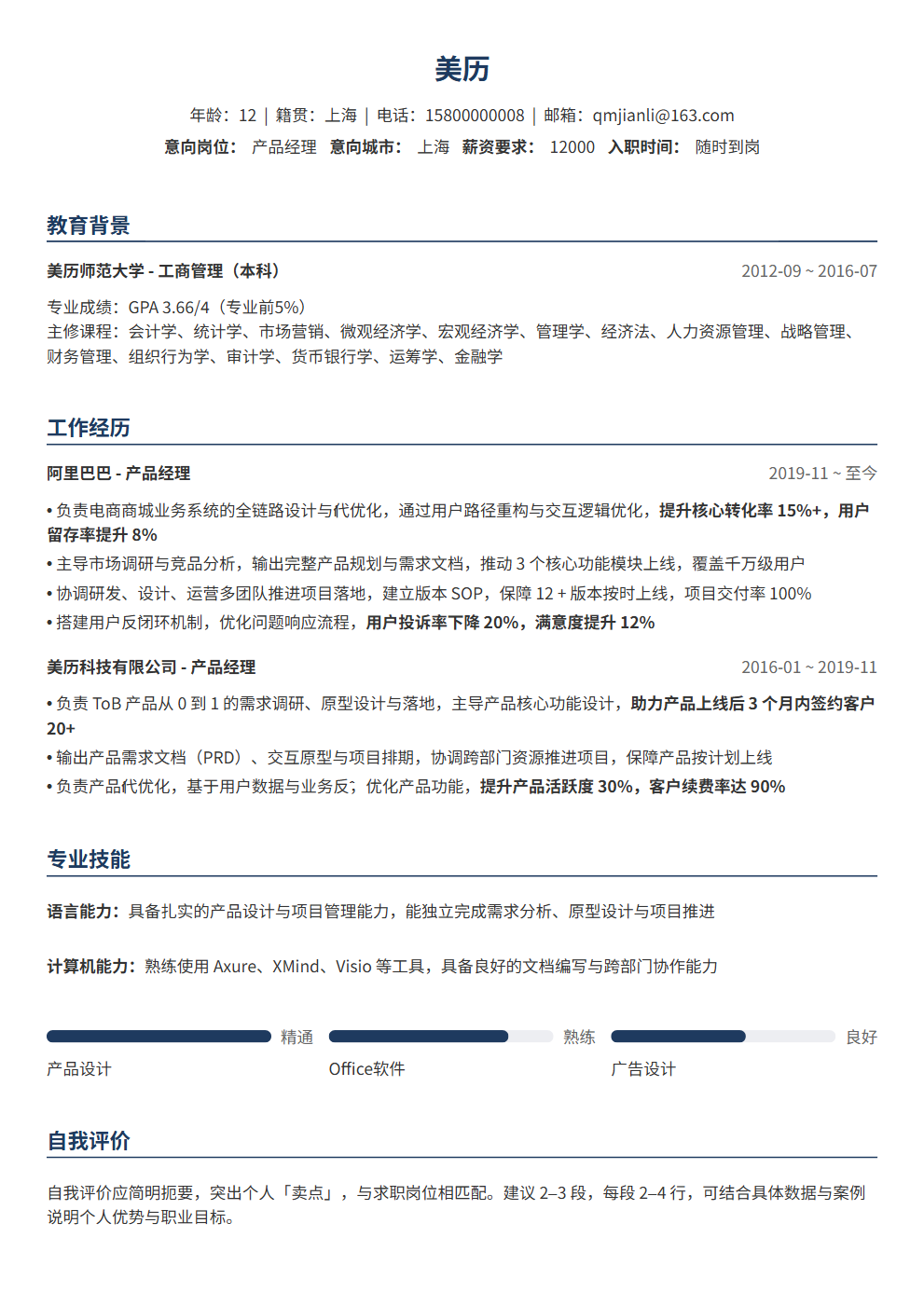
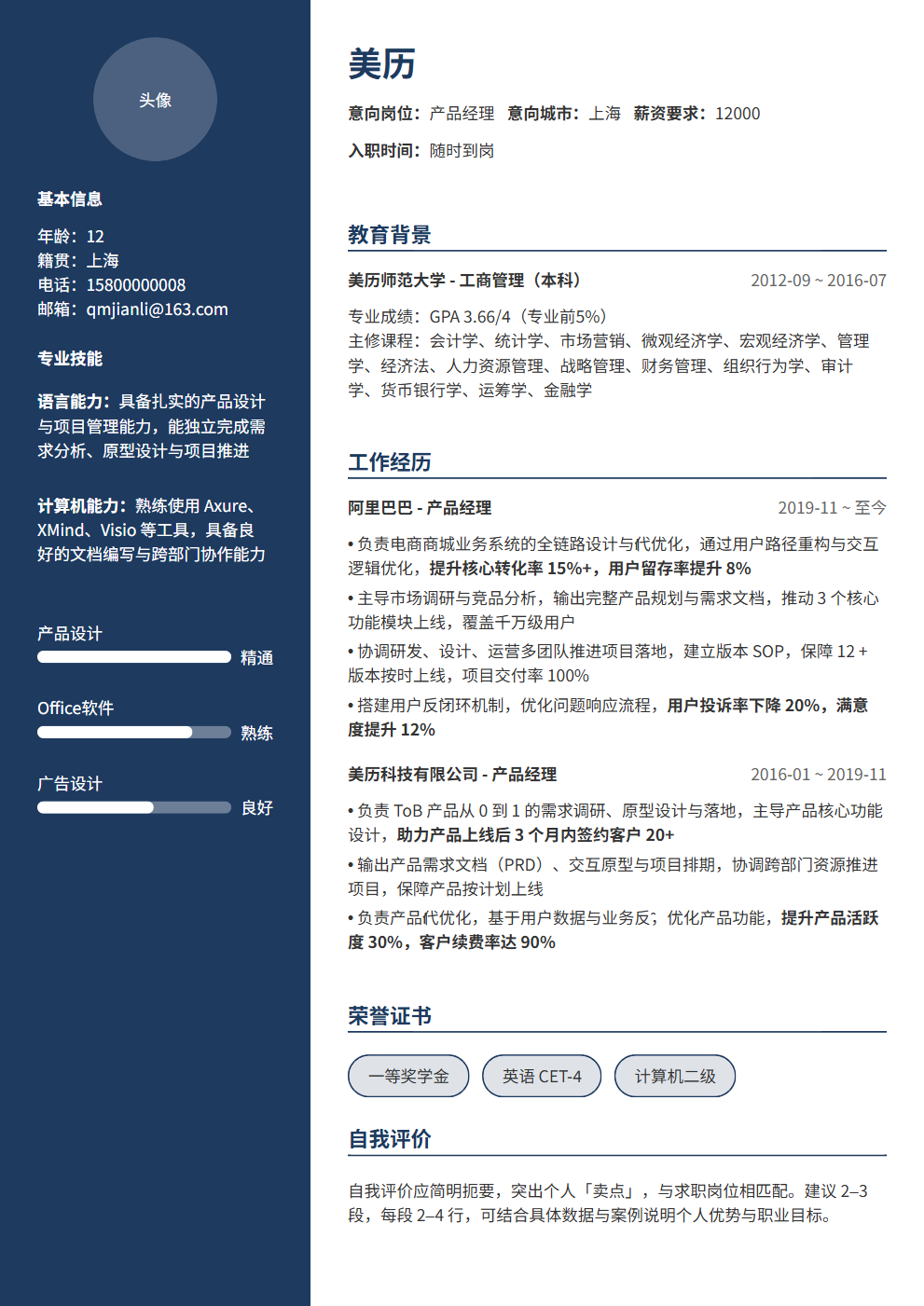
A clear career plan starts with a clear resume. Use BeautyResume to precisely present your career direction and core capabilities, so interviewers can see your sense of direction at a glance — people with direction never get lost, no matter where they go.