AI Salary Research: 3 Steps to Precisely Understand Your Market Value
Don't know your market worth? This article teaches you 3 steps for AI salary research, recommends 3 AI salary tools, and helps you precisely understand your market value for more confident salary negotiations.
When you reach the salary negotiation stage and HR asks "what's your expected salary," do you panic? Quote too high and risk being passed over; quote too low and shortchange yourself. Even worse, many people have no idea what they're worth — after working 3-5 years, they don't know if their salary has kept pace or fallen behind. Stop guessing — in 2026, AI can help you do precise salary research in just 3 steps. Let me walk you through it.
Why Do You Need Salary Research?
Salary research isn't just "seeing what others earn" — it directly determines the quality of your career decisions. Without understanding market rates, you might: accept below-market offers without realizing it, lack confidence during salary negotiations, miss higher-paying opportunities you didn't know existed, or work at low salaries for years thinking "that's just how it is."
- Consequences of no salary research: Accepting lowball offers (many people are just happy to get an offer, unaware they could earn more); feeling uncertain during negotiations (no data to back up your number); passive career development (not knowing when to switch jobs or ask for raises)
- Benefits of salary research: Understanding your market value gives you confidence and evidence in negotiations; discovering higher-paying roles and directions; judging whether your current salary is reasonable and deciding whether to job-hop; providing data support for career planning
- Pain points of traditional salary research: Scattered data (salary information spread across platforms, requiring individual searches); outdated data (much salary data is 1-2 years old); imprecise data (only ranges without distributions, not knowing where you fall); sample bias (people sharing salaries online tend to be high earners, creating survivorship bias)
- Advantages of AI salary research: Quickly aggregates multiple data sources; real-time updates with latest data; personalized analysis based on your specific situation; provides salary distribution and trend analysis
Step 1: Use AI to Analyze Target Role Salary Ranges
The first step in salary research is understanding the market salary range for your target role. Not "roughly how much" but "specific range + distribution" — minimum, median, 75th percentile, and maximum. These numbers define your "reasonable zone" for negotiation.
- How to do it: Tell AI your target role, city, and years of experience, and ask it to aggregate salary data. Example: "I'm a product manager with 5 years of experience, targeting Shanghai. Please analyze the salary range for this role, including minimum, 25th percentile, median, 75th percentile, and maximum"
- Data sources: AI aggregates from multiple channels — job board salary postings, anonymous sharing on professional communities, industry report salary data, government salary guidelines. Multi-source cross-verification is more reliable than single sources
- Key metrics: Minimum (market floor — don't consider offers below this); 25th percentile (lower range — you'd need a reason to accept this); Median (market middle — the most useful reference); 75th percentile (upper range — your target to strive for); Maximum (market ceiling — hard to reach unless you're exceptional)
- Notes: Salary varies significantly by company type — big tech > unicorns > traditional companies > startups; different business lines also vary — core business > peripheral business; salary ranges change over time, so use data from the last 6 months when possible
- Real example: Shanghai product manager, 5 years experience, AI analysis results — minimum 18K, 25th percentile 22K, median 28K, 75th percentile 35K, maximum 45K. If your current salary is 25K, you're slightly below median with room to grow; a 30K offer puts you near the 75th percentile — a good offer
Step 2: Use AI to Compare Salary Differences Across Cities
The same role can have vastly different salaries across cities — Beijing might pay 50%+ more than Chengdu, but the cost of living is also much higher. AI can quickly compare salary levels and living costs across target cities, helping you make smarter location decisions.
- How to do it: Tell AI your target role and years of experience, and ask it to compare salaries across several target cities. Example: "Please compare product manager (5 years experience) salaries in Beijing, Shanghai, Shenzhen, Hangzhou, and Chengdu, and analyze cost-of-living differences"
- Typical salary differences: Tier 1 cities (Beijing/Shanghai/Shenzhen) pay the most but have the highest living costs; new Tier 1 cities (Hangzhou/Chengdu/Wuhan) pay about 70-85% of Tier 1 but cost 30-40% less; Tier 2 cities pay about 50-70% of Tier 1 but cost 40-50% less
- Value analysis: AI doesn't just compare salaries — it factors in living costs. The key metric is "disposable income" — what's left after rent, transportation, food, and other essentials. Sometimes a city with 30% lower salaries but 40% lower costs actually gives you more disposable income
- City selection strategy: If you prioritize career growth and high salaries → choose Tier 1 cities; if you prioritize quality of life and value → choose new Tier 1 cities; if you prioritize stability and low stress → choose Tier 2 cities. No absolute right or wrong — it depends on your priorities
- Notes: Salary differences aren't just about numbers — they also reflect benefits, overtime intensity, and career growth space. Tier 1 city high salaries often come with heavy overtime; new Tier 1 cities may pay less but offer better work-life balance
Step 3: Use AI to Assess Your Personal Market Value
After understanding role salary ranges and city differences, the most crucial step is assessing your personal market value — where do you fall in the salary range? What are you worth? AI can give you a relatively precise valuation based on your specific skills, experience, project history, and educational background.
- How to do it: Share your complete resume or skills list with AI and ask it to assess your market value. Example: "Here's my resume — I'm a product manager with 5 years of experience. Please assess my market salary level in Shanghai and explain your reasoning"
- AI assessment dimensions: Scarcity of core skills (scarce skills command more money); project experience quality (big-tech projects > small-company projects); industry background (hot industries > traditional ones); educational background (top schools add value but aren't decisive); management experience (leading teams pays 20-30% more)
- Interpreting results: AI will likely give you a salary range rather than an exact number — this is normal, as salary depends on many factors. The range floor is your "guaranteed minimum" (you should get at least this), and the ceiling is your "stretch target" (achievable if you perform exceptionally)
- How to increase your market value: Fill skill gaps (AI will tell you which skills are most valuable for your target role — if you lack them, start learning); accumulate high-impact project experience (aim for influential projects, even peripheral involvement helps); develop cross-domain capabilities ("product + data" or "operations + tech" hybrid talent is worth more)
- Notes: AI assessments are based on historical data and can't be 100% accurate — they give you a reference, not a price quote. Your actual salary also depends on interview performance, negotiation skills, company budget, and other uncontrollable factors. AI's value is giving you a "reasonable range" so you're not flying blind
3 AI Salary Research Tool Recommendations
Choose the right tools for the job. Here are 3 good options for salary research.
- Tool 1: ChatGPT/Claude. Strengths: Most flexible, supports deep conversational analysis; personalized assessment based on your specific situation; free tier available. Weaknesses: Data sources aren't transparent and may be inaccurate; requires writing your own prompts; can't directly query specific company salaries. Best for: Job seekers wanting deep analysis of their market value
- Tool 2: Glassdoor/Kanzhun. Strengths: Real data from anonymous employee sharing; can query specific company salaries; has salary distribution charts. Weaknesses: Chinese data coverage isn't as comprehensive as overseas; some data may be outdated; small-sample roles may have inaccurate data. Best for: Job seekers wanting to know specific company salaries
- Tool 3: Maimau/BOSS Zhipin salary sections. Strengths: Most comprehensive and real-time Chinese data; can see salary ranges on specific job postings; anonymous sharing from real professionals. Weaknesses: Data quality varies (high earners are more likely to share, creating survivorship bias); requires self-filtering and judgment. Best for: Job seekers wanting the latest Chinese market salary information
Best strategy: Use all three together — Glassdoor/Kanzhun for specific company salaries, Maimau/BOSS Zhipin for market trends, and ChatGPT/Claude for personalized analysis and assessment.
3 Use Cases for Research Results
Salary research isn't "look and forget" — use your findings at critical moments.
- Use case 1: During salary negotiation. When HR asks your expected salary, don't say "whatever you decide" or throw out a random number. Based on your research, give a reasonable range: "Based on my understanding, this role in [city] pays between X and X. Given my experience and capabilities, my expectation is X." A data-backed number is far more persuasive than a gut-feel figure
- Use case 2: Evaluating whether to switch jobs. If your current salary is clearly below market (below the 25th percentile), you're undervalued — switching could bring a 20-30% raise. If you're above the 75th percentile, salary growth from switching is limited — consider other factors (career development, work environment, etc.)
- Use case 3: Career planning. Salary research can reveal "which direction pays more" — for example, AI product managers might earn 30-50% more than general product managers. If you find a higher-paying direction that you're capable of pivoting to, that's your next career target
3 Precautions
Salary research is useful, but don't fall into these traps.
- Precaution 1: Salary data is a reference, not a price quote. Market salaries are ranges, not exact numbers. Your actual salary depends on many factors — interview performance, company budget, competitor situations, negotiation skills. Salary research gives you a "reasonable range," not a "guaranteed number"
- Precaution 2: Beware of survivorship bias. People who share salaries online tend to be high earners — someone making 30K/month is more likely to share than someone making 8K. So the "average salary" you see may be inflated. Median is more reliable than average, and salary distributions are more useful than single numbers
- Precaution 3: Salary isn't the only consideration. A job paying 30% more with daily overtime until 11 PM versus one paying 30% less with 9-to-5 hours — which is better? It depends on your priorities. Salary research tells you "what you're worth," but career choices must also consider growth potential, work content, team culture, and work-life balance
Conclusion: Understanding Your Market Value Is a Career Essential
Not knowing your worth is like going shopping without knowing prices — you'll either get ripped off or miss out. AI salary research in 3 steps: analyze target role salary ranges, compare salary differences across cities, and assess your personal market value. Combined with 3 tools (ChatGPT/Claude for deep analysis, Glassdoor/Kanzhun for specific companies, Maimau/BOSS Zhipin for market trends), you can precisely understand your market value. Remember, salary research isn't a one-time thing — markets change, your value changes. Do salary research every 6 months to stay market-aware. Understanding your value helps you make better decisions at every step of your career.
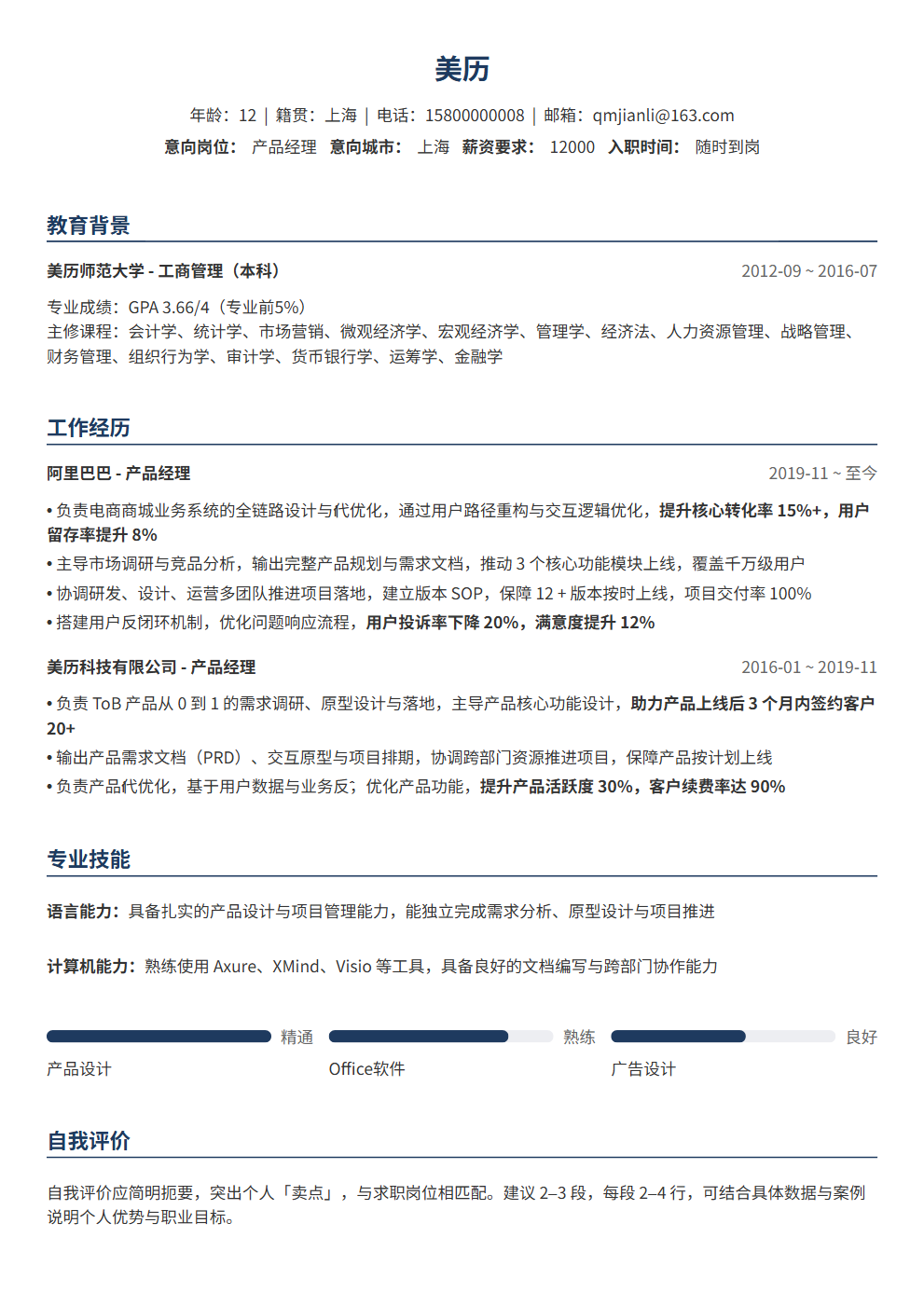
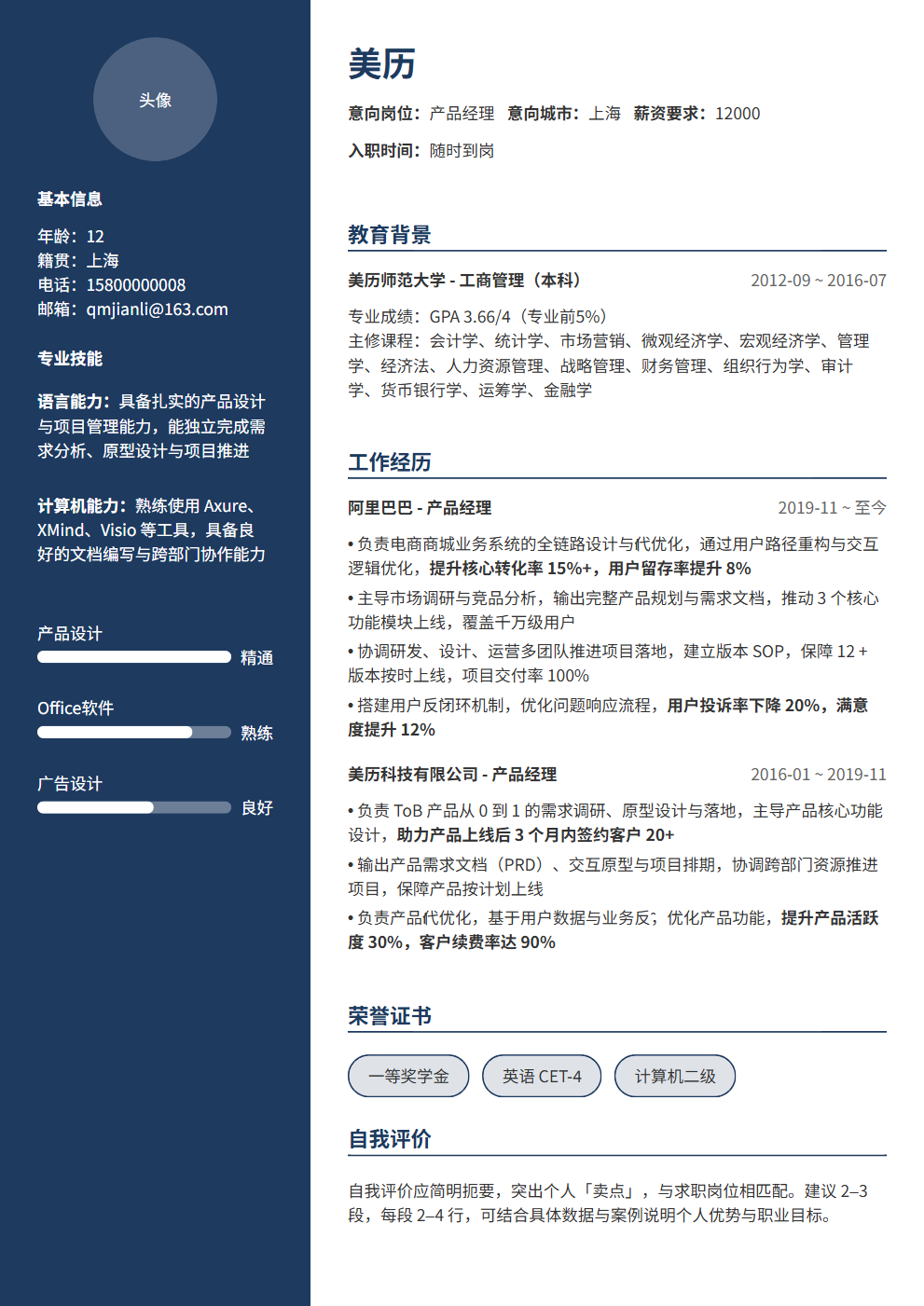
Want to accurately assess your market value? Start with a resume that fully showcases your capabilities. Use BeautyResume to create a professional resume that makes your value crystal clear — and gives you confidence in salary negotiations.