STAR Method for Behavioral Interviews: 5 Steps to Decode What Interviewers Really Ask
Master the STAR method for behavioral interviews. Decode big tech follow-up logic with 6 scenario templates and pitfall guides to ace your next behavioral interview.
Why Do Big Tech Companies Love Behavioral Interviews?
Behavioral interviews are the core assessment method at major tech companies. Meta, Google, Amazon, and others use the STAR method in business and cross-functional interviews to probe your past experiences. The logic is simple: past behavior is the best predictor of future performance.
Many candidates fail behavioral interviews not because they lack ability, but because they cannot present their experiences in a structured way. This guide will walk you through 5 steps to master the STAR method for behavioral interviews.
1. What Is the STAR Method? Breaking Down the 4 Elements
STAR is an acronym that provides a structured framework for telling your story:
- S (Situation): What was the context? Team size, business stage, core challenge.
- T (Task): What were you responsible for? What was the goal? Your role.
- A (Action): What key steps did you take? Why this approach? What obstacles did you face?
- R (Result): What was the outcome? Quantify with data, e.g., "DAU increased 32%", "cost reduced 40%".
Key insight: STAR is not about reciting a script. It ensures your answer has logic, focus, and results. Interviewers care most about A (Action) and R (Result). S and T are just setup—don't let them overshadow the main content.
2. The 5-Step Breakdown: From Experience to High-Scoring Answers
Step 1: Build Your "Experience Library"
Before the interview, list your core experiences across these dimensions:
- Projects: Key projects you led or contributed to, highlighting your impact
- Conflicts: Disagreements with colleagues/managers, showing communication skills
- Adversity: Delayed projects, missed targets, resource constraints
- Innovation: New proposals, process improvements, pain-point solutions
- Leadership: Leading teams, coordinating resources, driving execution
Summarize each experience in one sentence with a core outcome, e.g., "Led XX project, grew DAU from 50K to 120K in 3 months."
Step 2: Complete the STAR Elements for Each Experience
Example: "Led a user growth project"
- S: Company hit a growth plateau—DAU stalled at 50K for 3 months, growth team had only 3 people
- T: I was responsible for designing and executing a new growth strategy, targeting 100K DAU in 3 months
- A: ①Analyzed the funnel and found 65% drop-off from registration to activation; ②Designed onboarding optimization; ③Coordinated product and design resources to ship V1 in 2 weeks; ④Iterated 3 versions based on data
- R: Activation rate rose from 35% to 58%, DAU hit 120K in 2.5 months, exceeding the target by 20%
Step 3: Trim S and T, Expand A and R
The most common mistake in behavioral interviews is spending too long on background and too little on actions. The interviewer already knows your role. Ideal time allocation:
- S+T: 20% of total time (~15-20 seconds)
- A: 50% of total time (~40-50 seconds)
- R: 30% of total time (~25-30 seconds)
Golden rule for describing actions: Use "I" not "we." Clarify your personal decision logic and specific actions, not vague team outcomes.
Step 4: Anticipate Follow-ups with "Onion-Peeling" Answers
Big tech interviewers won't stop at surface-level STAR answers. They'll peel back layers. Common follow-up directions:
- "Why did you choose this approach over another?" → Tests decision logic
- "What would you do differently next time?" → Tests reflection ability
- "What was your biggest challenge in this project?" → Tests resilience and problem-solving
- "How much of the improvement can be attributed to your solution?" → Tests honesty and attribution
Strategy: For each core experience, prepare 2-3 layers of follow-up answers. Layer 1 is the standard STAR, Layer 2 is decision rationale and trade-offs, Layer 3 is reflection and lessons learned.
Step 5: Connect All Answers with a "Role-Fit Thread"
Behavioral interviews aren't isolated Q&A. The interviewer evaluates whether all your answers point to one conclusion: you fit this role.
During preparation, identify 3-5 core competency requirements from the JD, then ensure each STAR story covers at least one. For example, if a PM role requires "data-driven," "user insight," and "cross-team collaboration," your 3 stories should map to these 3 competencies.
3. Six High-Frequency Scenario Templates
Scenario 1: Tell me about a time you solved a complex problem
S: Three days before launch, we discovered a critical performance bottleneck—page load time exceeded 8 seconds.
T: I needed to optimize load time to under 3 seconds without delaying the launch.
A: ①Identified database queries as the bottleneck; ②Designed a caching solution for high-frequency queries; ③Collaborated with backend engineers to implement; ④Validated with canary deployment.
R: Load time dropped to 2.1 seconds, launched on time, and the solution was adopted by 3 other business lines.
Scenario 2: Tell me about a disagreement with a colleague
S: The design lead and I disagreed on the homepage redesign—they prioritized visuals, I prioritized conversion.
T: Find a solution that respects design expertise while improving conversion.
A: ①Listened to their full rationale; ②Proposed an A/B test to let data decide; ③Coordinated dev resources for both versions.
R: Data showed the compromise version had the best conversion. Both sides agreed, and future collaboration improved.
Scenario 3: Tell me about a time you proactively drove improvement
S: Weekly reports were superficial—leadership said they lacked useful information.
T: Redesign the report template for more effective communication.
A: ①Researched formats from 5 teams; ②Designed a 3-section template: "Key Metrics + Risk Alerts + Next Week's Focus"; ③Piloted with the team and collected feedback.
R: Leadership reported significantly better information access. Template was rolled out department-wide.
Scenario 4: Tell me about completing a task under pressure
S: A key colleague suddenly left, leaving a deliverable due in one week.
T: Deliver on time with high quality despite being short-staffed.
A: ①Quickly assessed remaining work and priorities; ②Requested temporary support from management; ③Simplified non-core modules to focus on key deliverables.
R: Delivered on time with a client satisfaction score of 4.5/5. Was later appointed project lead.
Scenario 5: Tell me about a failure
S: A marketing campaign I led fell far short of expectations—ROI was only 0.3.
T: Analyze the failure and develop an improvement plan.
A: ①Analyzed data at each stage and found the main issue was misaligned target audience; ②Redefefined user personas; ③Designed a small-scale test to validate the new strategy.
R: Revised campaign achieved an ROI of 2.8, and a standardized user-targeting process was created.
Scenario 6: Tell me about a time you influenced others
S: The team was divided on adopting a new tech stack. The tech lead was conservative.
T: Drive the technology decision without damaging team trust.
A: ①Created a comparison document listing risks and benefits; ②Built a demo to prove feasibility; ③Proposed a gradual migration plan to reduce risk.
R: The tech lead approved. Migration completed in 3 months, and dev efficiency improved by 25%.
4. Three Pitfalls to Avoid in Behavioral Interviews
Pitfall 1: Using "We" Instead of "I"
Interviewers assess your individual capabilities, not the team's collective output. Saying "We did XX" is a non-answer. The right approach: "Within the team's overall solution, I was responsible for XX, and specifically I did..."
Pitfall 2: Results Without Data
Vague statements like "It worked well" or "It was well received" are unconvincing. The R (Result) in behavioral interviews must be quantified: percentage improvement, time saved, users reached. If you lack exact numbers, provide reasonable estimates with your reasoning.
Pitfall 3: Stories Irrelevant to the Role
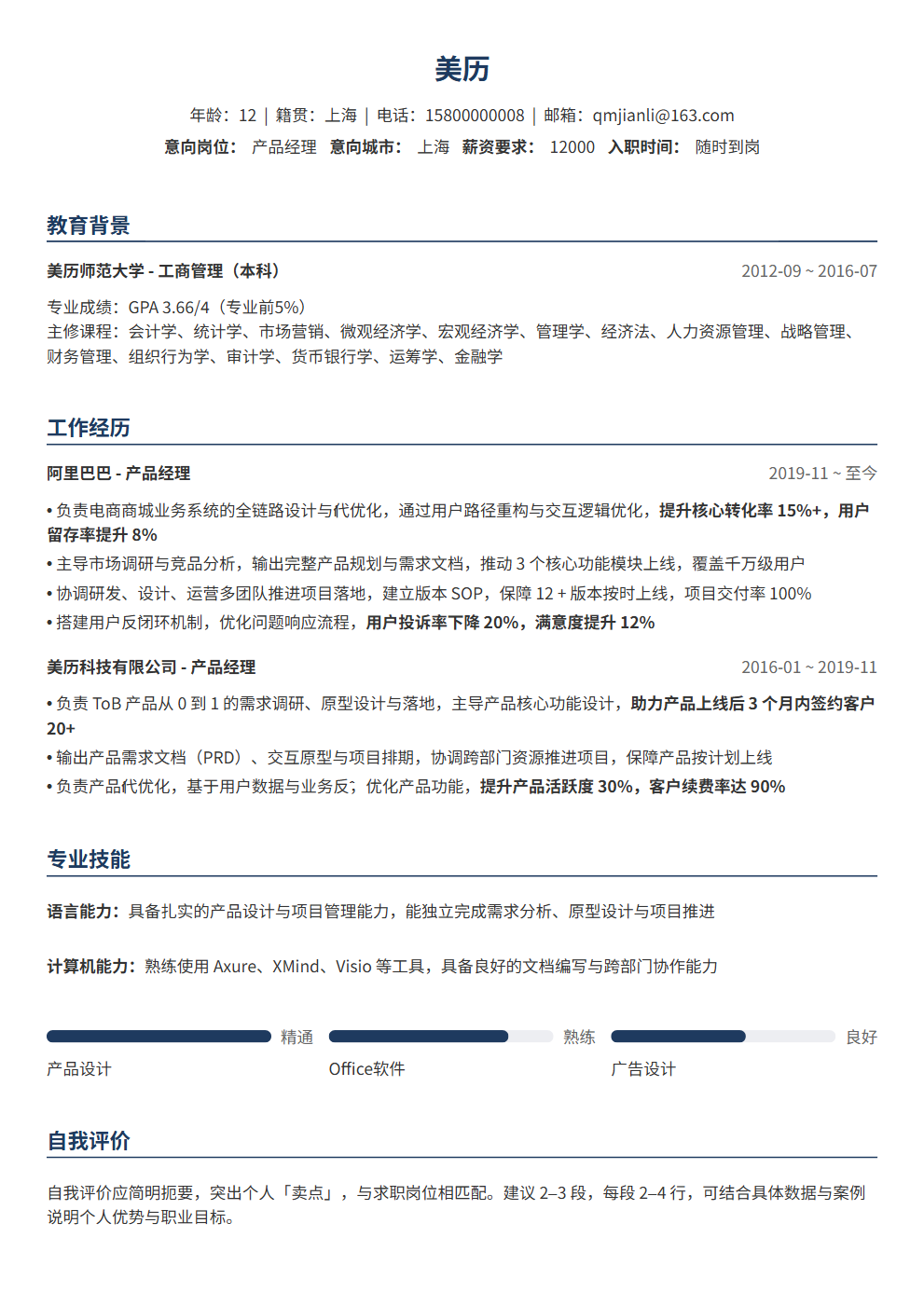
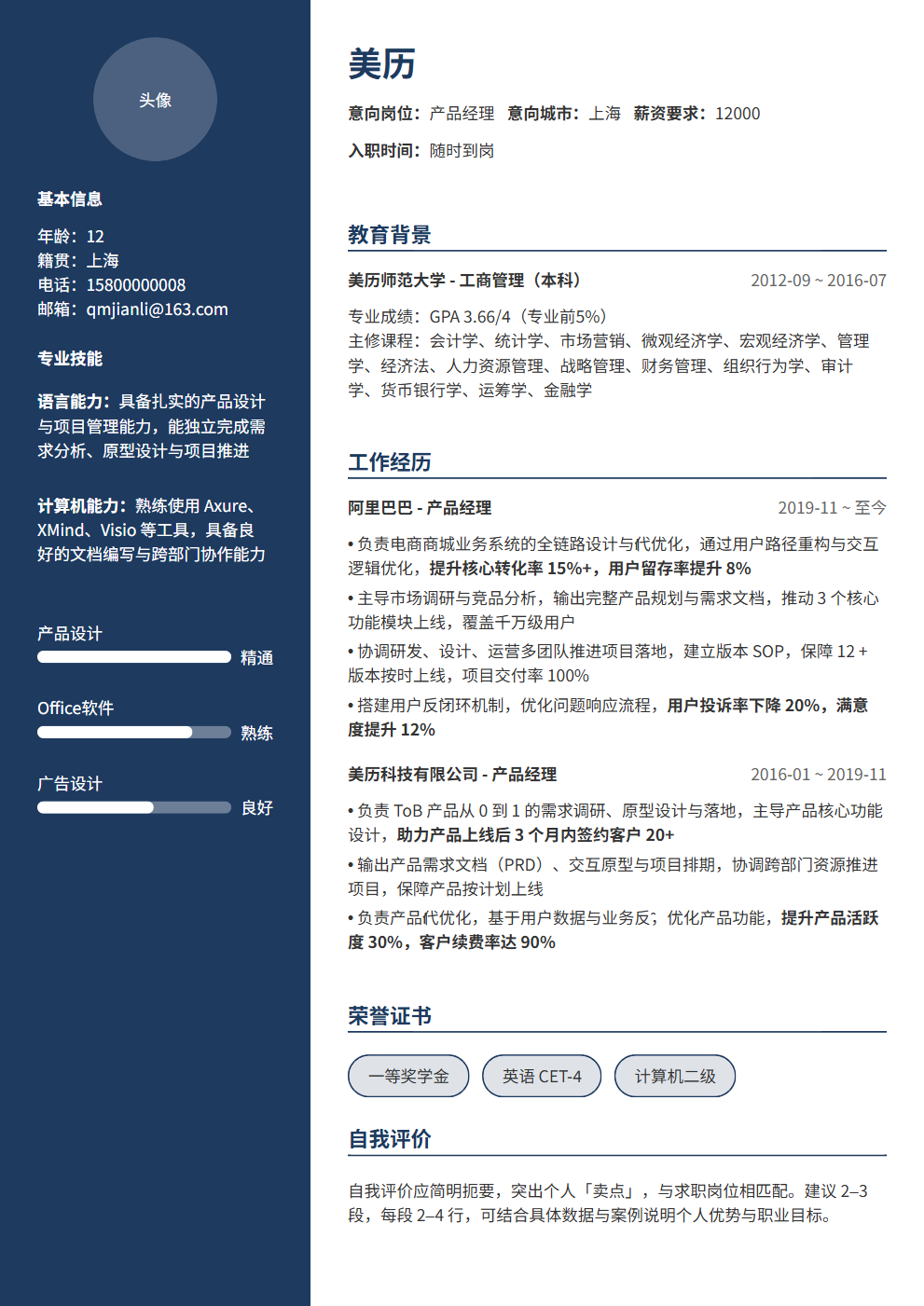
You may have many impressive STAR stories, but interview time is limited. Choose 3-4 stories that best match the target role's core competencies. Your resume is the first gate—a JD-matched resume can boost interview invitation rates by 60%. Similarly, JD-matched behavioral answers significantly improve pass rates.
5. Hidden Scoring Dimensions in Behavioral Interviews
Big tech interviewers also evaluate these implicit dimensions:
- Growth mindset: What did you learn? Do you have the ability to self-iterate?
- Boundary awareness: Do you clearly delineate your contribution? Are you taking too much credit or being overly modest?
- Depth of thinking: Is your decision-making supported by a clear logical chain? Did you consider alternatives?
- Communication efficiency: Can you explain a complex issue clearly in 2 minutes?
These dimensions won't appear on the evaluation form, but they directly influence the interviewer's "overall impression" score.
6. 24-Hour Pre-Interview Sprint Checklist
- Confirm 3-4 core STAR stories, each tellable in under 2 minutes
- Prepare 2 layers of follow-up answers for each story
- Check role fit—ensure stories cover the JD's core competency requirements
- Practice out loud—record yourself and review for timing and fluency
- Prepare 1-2 questions to ask back, showing depth of thought about the role
FAQ
Q1: Can S and T in the STAR method be combined?
Yes. When the situation and task overlap significantly, combining them is more efficient. For example, "The project faced XX issue, and I was responsible for solving XX" covers both S and T in one sentence. Just don't omit critical context that the interviewer needs to understand why your actions were necessary.
Q2: What if I don't have quantitative data?
Use qualitative descriptions with comparative references. For example, "Customer complaints went from the highest in the department to the lowest" or "The solution was adopted by 3 other teams." You can also use time dimensions: "Reduced a 2-day process to half a day." If you truly lack data, be honest and explain your estimation logic.
Q3: Can I make up stories for behavioral interviews?
Absolutely not. Big tech interviewers are skilled at probing. Fabricated stories fall apart after 2-3 layers of follow-up. Background checks will also verify your claims. Use real experiences—even imperfect ones. Authenticity plus reflection beats fabrication plus perfection.
Q4: Can one STAR story be used for different questions?
Yes, but adjust the emphasis. For the same project, highlight the problem-solving aspect of A when asked about "overcoming challenges," and the communication aspect when asked about "teamwork." The core story stays the same, but the angle shifts.
Q5: What if the interviewer asks about something I don't know?
Acknowledge the knowledge gap honestly, then demonstrate your thinking process: "I'm not deeply familiar with this area, but based on XX principle, I would hypothesize..." Interviewers value your thinking approach more than your knowledge base. A professional resume also helps build the interviewer's initial trust—consider starting with resume optimization to lay the first stone for your interview success.