Presenting Project Management Experience: STAR+5-Step Method for More Persuasive Interviews
Master the STAR+5-Step method for presenting project management experience, from project context to quantified results, making your project stories more persuasive and convincing.
Why Most People's Project Stories Sound Like a Boring Timeline
In project management interviews, the most common problem isn't "you lack project experience" — it's "you have experience but can't articulate it." Many candidates start with: I built System A, used Technology B, was responsible for Module C, and then the project launched. The whole thing reads like a timeline, leaving the interviewer with zero impression.
Timeline-style storytelling has three classic traits:
- All process, no focus: You narrate the project from start to finish, and the interviewer can't grasp your core contribution
- All description, no decisions: You only say "what I did," not "why I did it that way"
- All qualitative, no quantitative: You say "the results were great," but how great? No data to back it up
What interviewers really want to hear isn't the project itself, but how you thought, how you decided, and how you solved problems within the project. That's the key distinction between "having done projects" and "being able to manage projects."
To solve this, you need a structured storytelling framework — the STAR+5-Step Method.
The STAR+5-Step Method Explained
The STAR framework is familiar to most: Situation → Task → Action → Result. But using STAR alone, many people's stories still fall flat. The problem? STAR gives you the skeleton, but not the flesh.
The 5-Step Method adds depth to each STAR component, transforming your experience from "passable" to "outstanding."
S — Situation
Clearly explain the project's business context and challenges, helping the interviewer understand what difficulties you faced.
- What was the project? What business did it serve?
- How large was the team? At what stage did you join?
- What were the core challenges? Insufficient resources? Tight deadlines? Technical complexity?
5-Step Enhancement ①: Quantify Results — Plant the seeds of data right in the background. Don't say "a large project"; say "a recommendation system refactor serving 2 million DAU."
T — Task
Clarify your specific responsibilities and objectives, rather than vaguely stating "I was responsible for development."
- What task were you assigned?
- What were the target metrics?
- What role did you play?
5-Step Enhancement ②: Highlight Your Role — Make it clear whether you were a leader or contributor, a tech lead or module owner. Different roles come with different evaluation criteria from interviewers.
A — Action
This is the most critical part and also where most people are weakest. You need to demonstrate what key decisions you made and why.
- What key actions did you take?
- What problems did you encounter? How did you solve them?
- What were the key decision points? Why did you choose Option A over Option B?
5-Step Enhancement ③: Showcase Decisions — This is what sets you apart. Interviewers don't want to hear "I used Redis"; they want to hear "why I chose Redis over Memcached and what the trade-offs were." The thinking behind decisions is the true measure of capability.
R — Result
Present outcomes using quantifiable data, not vague adjectives.
- What were the results after launch?
- How much did key metrics improve?
- What recognition or growth did you personally gain?
5-Step Enhancement ④: Review Lessons Learned — Only talking about successes isn't enough. Proactively share regrets and lessons from the project to demonstrate your reflective ability. For example: "Looking back, if we had done load testing earlier, the Day 1 launch incident could have been entirely avoided."
5-Step Enhancement ⑤: Connect to the Role — Build a bridge between your experience and the target position. For example: "This cross-team collaboration experience aligns directly with this role's requirement to coordinate across multiple business lines."
Presentation Templates for 6 Types of Project Experience
Different types of projects require completely different storytelling emphases. Below are specific templates for 6 common project types.
1. Ground-Up (0-to-1) Projects
Core Focus: Your planning ability and execution from scratch
- S: Business starting from zero, no existing solutions to reference
- T: Needed to complete everything from requirements analysis to launch within X months
- A: How you handled tech selection, built foundational architecture, defined standards
- R: Core metrics after launch, user feedback
Key Talking Point: "The biggest challenge in 0-to-1 isn't writing code — it's making decisions with incomplete information. I addressed this by..."
2. Optimization and Iteration Projects
Core Focus: Your problem-diagnosis ability and optimization thinking
- S: Existing system had performance bottlenecks or UX issues
- T: Needed to optimize without disrupting live services
- A: How you diagnosed problems, designed solutions, implemented gradual rollouts
- R: Before-and-after comparison data
Key Talking Point: "The hardest part of optimization isn't changing code — it's finding the root cause. Through... I discovered the real bottleneck was..."
3. Emergency Firefighting Projects
Core Focus: Your crisis management ability and composure under pressure
- S: Sudden production incident or urgent requirement
- T: Needed to restore service or deliver within an extremely tight timeframe
- A: How you quickly investigated, applied temporary fixes, and resolved root causes
- R: Recovery time, subsequent preventive measures
Key Talking Point: "In emergencies, the most important thing is calmly assessing priorities. My first action was..."
4. Cross-Team Projects
Core Focus: Your communication and coordination skills and driving force
- S: Project involved multiple teams with misaligned interests
- T: Needed to coordinate resources across teams to ensure on-time delivery
- A: How you aligned goals, resolved conflicts, established collaboration mechanisms
- R: Project delivery status, feedback from stakeholders
Key Talking Point: "The core of cross-team collaboration is finding the intersection of everyone's interests. I achieved this by..."
5. Technology Selection Projects
Core Focus: Your technical judgment and trade-off analysis ability
- S: Business growth required adopting new technology or replacing existing solutions
- T: Needed to choose among multiple candidate solutions
- A: How you conducted research and evaluation, ran POCs, developed migration plans
- R: Results after selection, risk control during migration
Key Talking Point: "Tech selection isn't about choosing the newest — it's about choosing the most appropriate. My evaluation criteria were..."
6. Failed Projects
Core Focus: Your reflective ability and growth mindset
- S: Project didn't meet expectations or ultimately failed
- T: Objectively review the reasons for failure
- A: What you did in the project, which decisions were wrong
- R: What you learned, how you prevented similar issues afterward
Key Talking Point: "Although this project failed, my biggest takeaway was... which helped me in subsequent projects by..."
Note: When discussing failed projects, don't shift blame or avoid responsibility. Interviewers value your honesty and depth of reflection.
4 Common Pitfalls in Project Management Interviews
Pitfall 1: Only Discussing Technology, Not Management
A project management interview is not a technical interview. Interviewers care more about how you coordinate resources, control risks, and drive progress — not how many lines of code you wrote. Mention technical details briefly and focus on the management dimension.
Pitfall 2: Using "We" Instead of "I"
Many candidates habitually say "we did this," but interviewers want to hear what you did. Team achievements can certainly be mentioned, but you must clarify your personal contribution and role. Replace vague "we" with "I led..." "I drove..." "I decided..."
Pitfall 3: Stacking Project Quantity Over Depth
Rather than covering 5 projects superficially, deeply discuss 2-3 projects, thoroughly explaining decision processes, trade-offs, and retrospective insights. Interviewers would rather hear one well-told project than ten timelines.
Pitfall 4: Only Preparing Success Stories
Interviewers often follow up with "What difficulties have you encountered?" or "What wrong decisions have you made?" If you only have success stories, it either means your experience isn't rich enough or you lack reflective ability. Prepare 1-2 in-depth failure stories — they can actually better demonstrate your maturity.
How to Write Project Experience into Your Resume
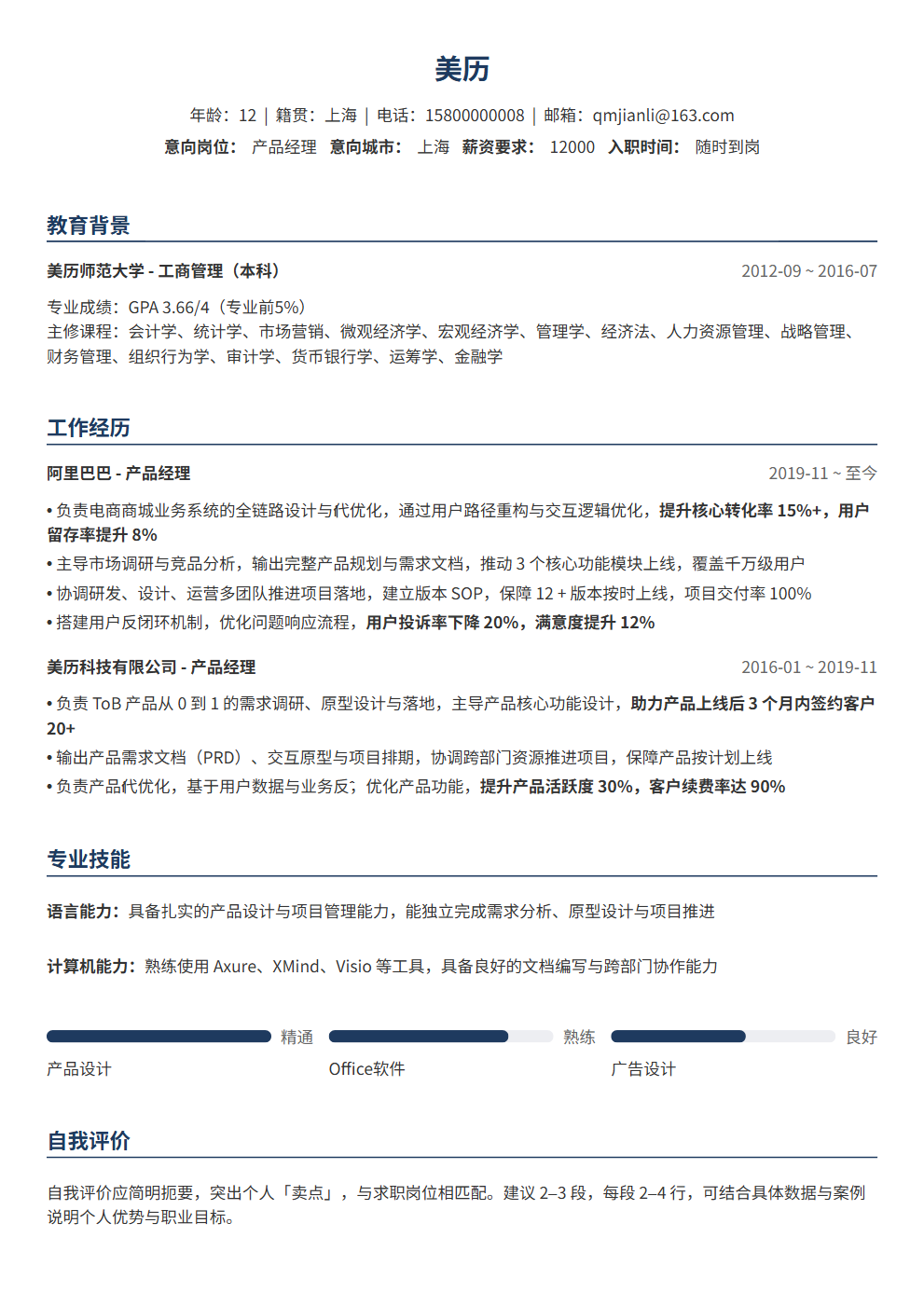
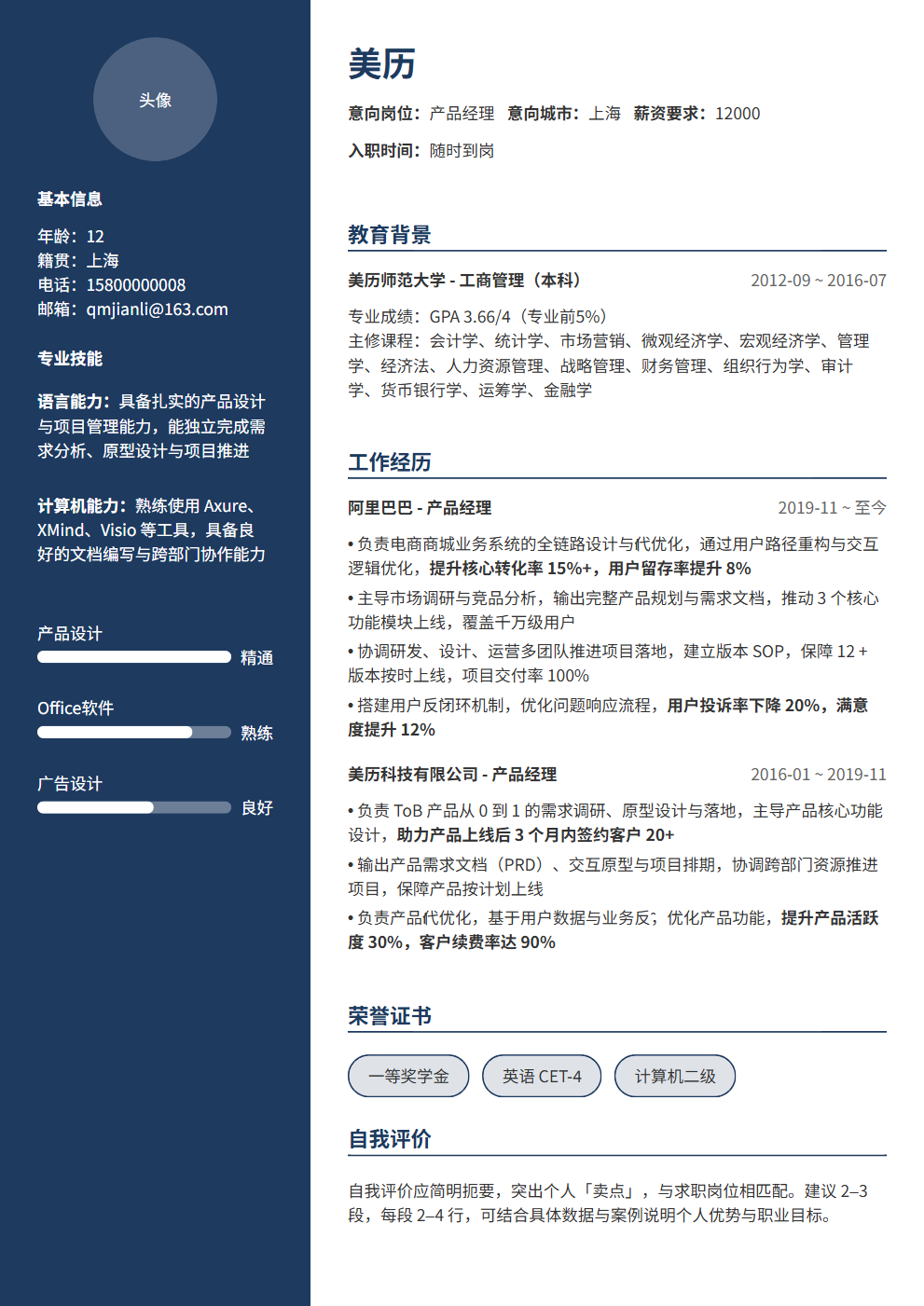
Project storytelling in interviews and project descriptions on resumes go hand in hand. Resume project descriptions should use a compressed STAR format: one-sentence context + your core contribution + quantified results.
For example:
- ❌ "Responsible for development and maintenance of the XX system"
- ✅ "Led XX system refactoring (context), introduced tiered caching strategy (action), reduced API response time from 800ms to 120ms, increased QPS by 3x (result)"
If you're unsure whether your project experience is well-written, try a resume generator — it can automatically optimize your project descriptions using the STAR structure, helping your resume stand out at the screening stage.
FAQ
Q: What if I don't have much project experience?
Quality over quantity. Even with just one project, if you clearly articulate your decision-making process and growth takeaways, it can be equally persuasive. Start with smaller projects and focus on demonstrating depth of thinking.
Q: How do I show individual contribution when the project was done by a team?
Clarify your role and responsibility boundaries. Explain the modules you owned, the decisions you made, the progress you drove. Team collaboration doesn't mean zero individual contribution — the key is articulating your "I" part clearly.
Q: Do I need to use the full STAR+5-Step Method every time?
No. Adjust flexibly based on interview time and questions. The core is preserving Action and Result; Situation and Task can be brief. Among the 5 enhancements, "Showcase Decisions" and "Quantify Results" are essential; the other three are situational.
Q: What if the interviewer interrupts my project story?
This usually means you're being too detailed or drifting off-topic. Lead with conclusions, then expand on details. If interrupted, quickly summarize your current point, then ask the interviewer which aspect they'd like to explore.
Q: What if I'm interviewing across industries and my project experience isn't relevant?
Focus on transferable skills: project management methods, communication and coordination abilities, problem-solving approaches. Use the "Connect to the Role" enhancement to map your experience to the target position's requirements.
Q: How do I judge whether my project storytelling is effective?
Use this self-check: After hearing your story, can the interviewer recap what key decisions you made and what quantified results you achieved within 30 seconds? If not, your key points aren't prominent enough — restructure using the STAR+5-Step Method.