Nervous in Interviews? 7 Practical Tips to Stay Calm in Big Tech Interviews
Interview nervousness is the biggest pain point for job seekers. 7 practical tips from mental adjustment to body management help you overcome interview anxiety and calmly face big tech interviews.
Interview Nervousness Isn't Your Fault—But Letting It Cost You an Offer Is
Before every big tech interview, do you feel your heart racing, palms sweating, and mind going blank? You're not alone. Research shows over 78% of job seekers experience noticeable nervousness during interviews—even seasoned professionals get nervous when facing their dream company.
The root cause isn't "you're not good enough"—it's your sense of losing control over the unknown. You don't know what the interviewer will ask, whether you'll answer well, or what the outcome will be. This uncertainty is the real culprit. So the core strategy isn't "don't be nervous"—it's rebuilding a sense of control through systematic preparation.
Next, I'll share 7 battle-tested techniques across three dimensions: mental adjustment, body management, and on-site response. These aren't motivational quotes—they're methods I've distilled from observing thousands of candidates as an interviewer.
Technique 1: The "3-3-3 Breathing Method" to Quickly Calm Physical Reactions
The most direct physical symptoms of interview nervousness are shallow breathing, racing heart, and muscle tension. These three reactions form a vicious cycle: shallow breathing → brain hypoxia → more anxiety → even shallower breathing. The fastest way to break this cycle is to control your breathing.
3-3-3 Breathing Method Steps:
- Inhale through your nose for 3 seconds, feeling your abdomen rise
- Hold your breath for 3 seconds, allowing full oxygen exchange
- Exhale slowly through your mouth for 3 seconds, feeling your shoulders drop
Do 3-5 rounds 5 minutes before the interview. You'll notice your heartbeat slowing and your body relaxing. The principle is activating the parasympathetic nervous system through extended exhalation, telling your brain "the current environment is safe." You can do this in the waiting area, the elevator, or even during the gap when the interviewer says "let me review your resume."
Pitfall warning: Don't do deep breathing—excessive deep breathing can actually cause dizziness. The 3-second rhythm is optimal—not too long, not too short, just right for entering a relaxed state.
Technique 2: The "Worst-Case Deduction Method" to Eliminate Fear Amplification
The essence of interview nervousness is fear, and the essence of fear is imagining the worst outcome. What you fear isn't the interview itself, but the result of "failing the interview." The problem is that your brain automatically amplifies the worst case infinitely—"Fail the interview → Can't find a job → Life is over." This catastrophic thinking is what makes you nervous.
Worst-Case Deduction Method Steps:
- Write down your worst fear: "I don't pass this interview"
- Ask yourself: Then what? "Then I keep applying to other companies"
- Ask again: What's the absolute worst case? "At worst, I find a transitional job and try again in six months"
- Evaluate: Can you handle this worst case? 99% of people answer "yes"
When you truly face the worst outcome, you'll find it's far less scary than you imagined. Fear is most afraid of being seen—once you write it down and think it through, its power diminishes significantly. Spend 5 minutes on this exercise before your interview, and you'll notice your nervousness drop noticeably.
Technique 3: The "Muscle Anchoring Method" to Build Confident Body Memory
Psychological research confirms: body posture reversely influences mental state. When you're nervous, your body unconsciously hunches, caves in your chest, and lowers your head—these postures send "I'm weak" signals to your brain, making you more nervous. Conversely, if you deliberately adopt confident postures, your brain releases more testosterone and less cortisol, making you genuinely feel more confident.
Muscle Anchoring Method Steps:
- Find a private space before the interview (a restroom works)
- Stand with feet shoulder-width apart, hands on hips, chest out and head up—hold for 2 minutes
- Simultaneously recall your most proud achievement, letting your body remember "the feeling of success"
- During the interview, if nervousness hits, slightly puff your chest and plant your feet firmly to reactivate the anchored confidence
This isn't pseudoscience—it's backed by solid psychological experiments. Social psychologist Amy Cuddy's research shows that 2 minutes of power posing can significantly reduce stress hormone levels. Doing this before an interview is like pre-installing a "confidence switch" in your brain.
Technique 4: The "Dimensionality Reduction Preparation Method" to Turn Unknowns into Knowns
As mentioned earlier, the root of nervousness is the sense of losing control over the unknown. The most fundamental solution is to turn unknowns into knowns. But many candidates prepare by "reading everything, memorizing everything," which only increases anxiety—because you always feel underprepared.
Core Logic of Dimensionality Reduction Preparation: Interview questions vary endlessly, but assessment dimensions are finite. You don't need to prepare for every question—just cover the core assessment dimensions.
Steps:
- List 5-8 core assessment dimensions for your target role (e.g., professional skills, project experience, problem-solving, communication, career planning)
- Prepare 2-3 deep cases for each dimension, polished using the STAR method
- Organize all cases into a one-page "cheat sheet" for quick review before the interview
- Do 2-3 mock interviews with friends or AI tools simulating follow-up questions
When you have 15-20 polished cases that cover 80%+ of interview questions, your confidence will be completely different. Because you know that no matter how the interviewer asks, you have material to draw from. This "prepared" feeling is the best anti-nervousness medicine.
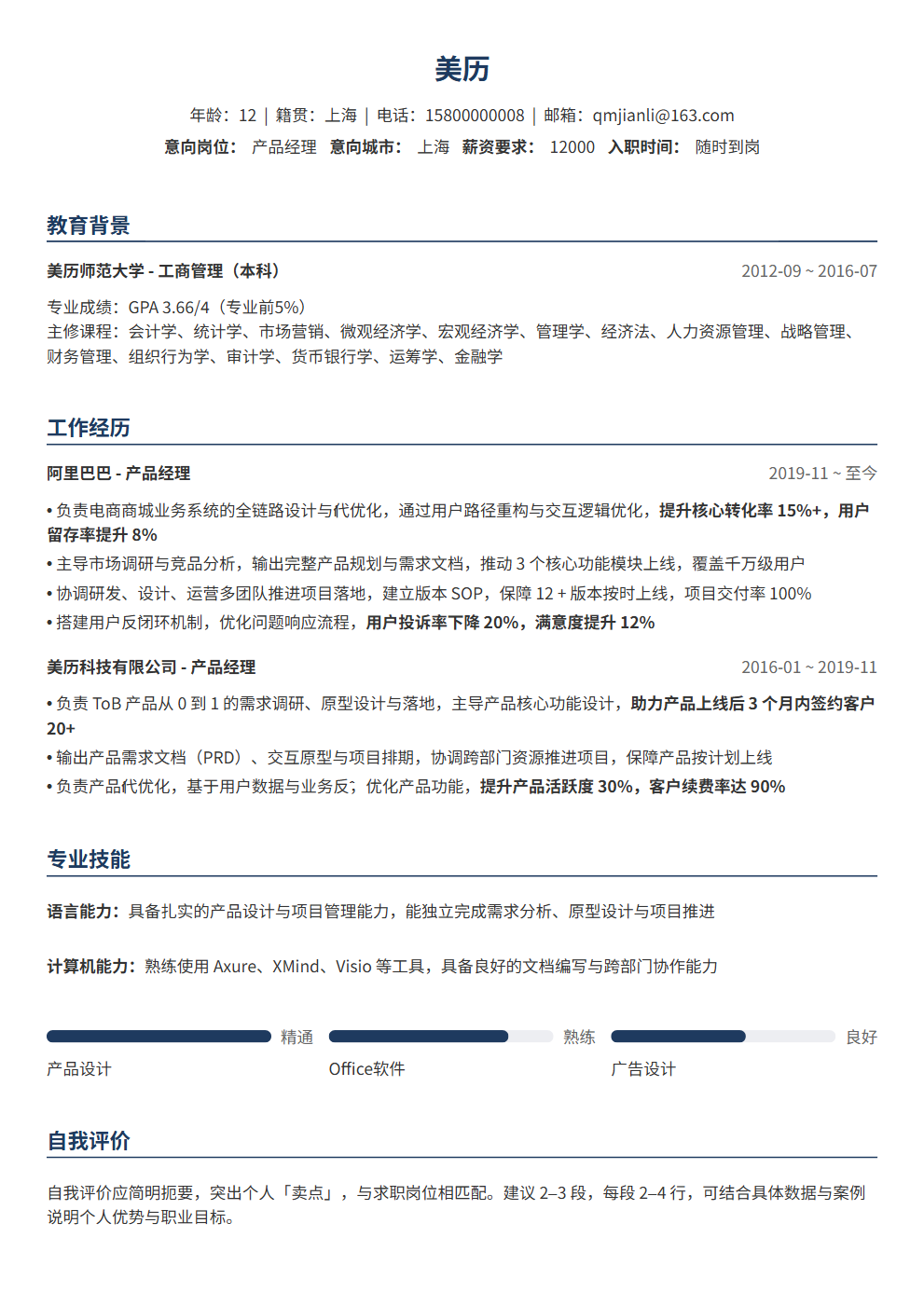
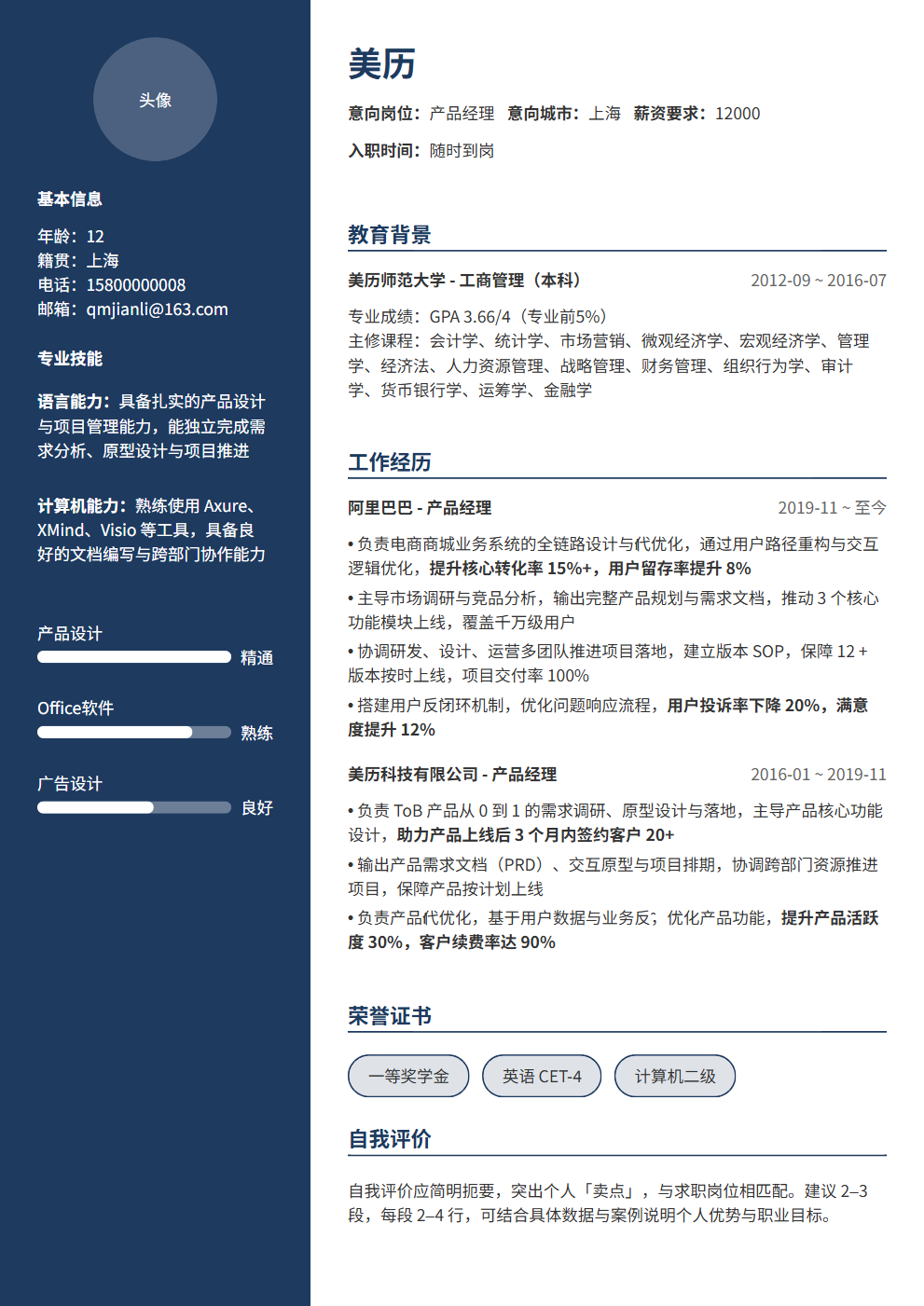
If you're unsure whether your project experience is compelling enough, use our resume builder to restructure your project descriptions—upgrade "what I did" to "what problems I solved and what value I created," making your experience more powerful in interviews.
Technique 5: The "Opening 30-Second Tone-Setting Method" to Seize Psychological Initiative
The first 30 seconds of an interview determine its psychological tone. If you start with a trembling voice and incoherent speech, it's hard to turn things around—because the interviewer's "anchoring effect" has already formed. Conversely, if you start composed and confident, the interviewer will be more forgiving of minor mistakes later.
Opening 30-Second Tone-Setting Method:
- Entering: Walk steadily, smile, and proactively greet "Hello, I'm [Name]"
- Sitting down: Don't rush to speak; adjust your posture first, feet planted, hands naturally on the desk or lap
- Starting: When the interviewer says "please introduce yourself," pause for 1 second (not freezing—it's the rhythm of thought), then speak calmly
- Self-introduction: Keep it to 1.5-2 minutes, use "overview-detail-summary" structure, ending with "why I'm a great fit for this role"
Key detail: Speak 10% slower than usual. When nervous, people unconsciously speed up, and fast speech signals "panic." Deliberately slowing down not only makes you appear more composed but also gives you more thinking time.
Technique 6: The "Pause-Reorganize Method" to Handle Mind Blanks
The scariest thing in an interview isn't answering poorly—it's your mind suddenly going blank. You clearly prepared, but in that moment, you can't recall anything. This is a typical stress response: the brain's amygdala (responsible for fear) is activated, suppressing the prefrontal cortex (responsible for rational thinking), causing your memory to temporarily "disconnect."
Pause-Reorganize Method Steps:
- When you realize your mind is blank, don't panic, don't rush to speak
- Say a buffer phrase: "That's a great question, let me think for a moment"—giving yourself 5-8 seconds of recovery time
- Take a sip of water (have it ready)—physical action helps the prefrontal cortex come back online
- Start answering from what you definitely know; don't aim for perfection, just get the thoughts flowing
- If you truly can't remember, be honest: "I can't recall this specific detail right now, but my understanding is..."—this is 100 times better than making things up
Interviewer's perspective: I never deduct points for a candidate pausing a few seconds to think. I deduct points for those who answer without thinking, go off-topic, and won't stop. Pausing is a signal of thought, not incompetence.
Technique 7: The "Post-Interview Review Method" to Turn Every Nervous Moment into Growth Fuel
Many people forget about an interview after it ends or wallow in "I performed so poorly." But every instance of interview nervousness is precious diagnostic data—it precisely tells you which areas you're underprepared for and which skills need improvement.
Post-Interview Review Method Steps:
- Within 30 minutes after the interview, while memories are fresh, write down all questions you remember and your answers
- Rate your nervousness level for each question (1-10), identify the 3 questions that made you most nervous
- Analyze the cause: Was it insufficient preparation? A weak knowledge point? Or a specific type of question that makes you uncomfortable?
- For the 3 most nerve-wracking questions, prepare new answers and polish them until you can deliver them effortlessly
- Before the next interview, focus on reviewing the "weak spots" from the previous review
The core value of this method: turning nervousness from an "emotional burden" into a "growth signal". Each post-interview review makes your preparation more precise and your confidence more solid. After 5 interviews, you'll find that the questions that once made you nervous have become the ones you answer best.
3 Truths About Interview Nervousness
Truth 1: Moderate Nervousness Actually Improves Performance
The Yerkes-Dodson Law in psychology tells us: moderate arousal (i.e., moderate nervousness) produces optimal performance. Being completely calm can lead to carelessness and superficial answers. So don't aim for "zero nervousness"—instead, keep your nervousness at the level of "making me more focused." If you feel your heart beating slightly faster and your thinking becoming clearer—congratulations, you're in the optimal state.
Truth 2: Interviewers Can't Tell How Nervous You Are
You feel incredibly nervous, but to the interviewer, you might just seem "a bit serious." This is because there's a huge perception gap between internal feelings and external presentation—psychologically known as the "illusion of transparency." You think your nervousness is "clearly visible," but others can't tell at all. So don't get more nervous thinking "the interviewer must have noticed"—they probably haven't.
Truth 3: Interviewers Won't Eliminate You for Being Nervous
As an interviewer, I've seen countless nervous candidates. Nervousness itself is never a reason for elimination, because being nervous恰恰 shows you care about this opportunity. I eliminate people who are "so nervous they can't demonstrate their abilities," not people who are "nervous but still give quality answers." So your goal isn't to eliminate nervousness, but to still perform normally while nervous—that's exactly what the 7 techniques above help you achieve.
FAQ
What if I'm too nervous to sleep the night before an interview?
The core cause of insomnia is your brain repeatedly rehearsing interview scenarios, getting more excited the more you think. Countermeasure: Stop all interview preparation 1 hour before bed; do something completely unrelated (listen to music, take a walk, watch something light). If you're still awake after 20 minutes in bed, get up and do the 3-3-3 breathing method or the "worst-case deduction"—write down your fears so your brain doesn't need to keep cycling through them. Remember: one night of poor sleep affects your interview performance far less than you imagine—don't give yourself negative suggestions because you "didn't sleep well."
Is nervousness different in online vs. in-person interviews?
Online interview nervousness is typically more subtle but more persistent—because you lack face-to-face social cues, it's easy to fall into self-doubt like "did I say something wrong?" Tips: Position your camera at eye level so you're "looking at" the interviewer; test your equipment in advance to eliminate tech anxiety; stick a note with key talking points next to your screen so you can glance at it to regain your rhythm.
What if I'm especially nervous during group interviews?
The root of group interview nervousness is "comparison anxiety"—feeling everyone else is better than you. Strategy: Don't treat the group interview as competition, but as collaboration. Your goal isn't to "perform better than others" but to "contribute unique value to the team." Find the role that suits you best—you don't have to be the Leader; Time Keeper, Summarizer, and Contributor are all effective roles. Group interviews don't eliminate quiet people—they eliminate people who contribute nothing.
How do I quickly adjust if my voice is shaking from nervousness?
A shaking voice is a direct manifestation of tense vocal cord muscles. Quick adjustment: Do "lip trills" (vibrate your lips like blowing a raspberry) for 10 seconds before the interview to relax your vocal cords; when you start speaking, deliberately lower your pitch and slow your pace—lower pitch and slower pace convey stability while also helping you relax your vocal cords. If your voice starts shaking mid-interview, pause for 2 seconds, take a sip of water, take one deep breath, then continue.
What if I've developed a fear of interviews after multiple failures?
This is typical conditioned anxiety—you've formed a conditioned reflex linking "interview" with "failure." How to break it: First, do 2-3 "low-risk interviews"—apply for positions you're not that interested in but can use for practice. When you gain positive experiences from these interviews (even just "I was less nervous this time"), your brain will start rebuilding the "interview = possible success" conditioned reflex. Then go interview at the companies you really want.
Interview nervousness isn't your weakness—it's proof that you care. Use these 7 techniques to transform nervousness into focus, and you can show your true self in big tech interviews. But first, you need to land the interview opportunity—use our resume builder to optimize your resume according to interviewer scoring standards, so your abilities aren't buried, and every interview becomes a stage to showcase your value.